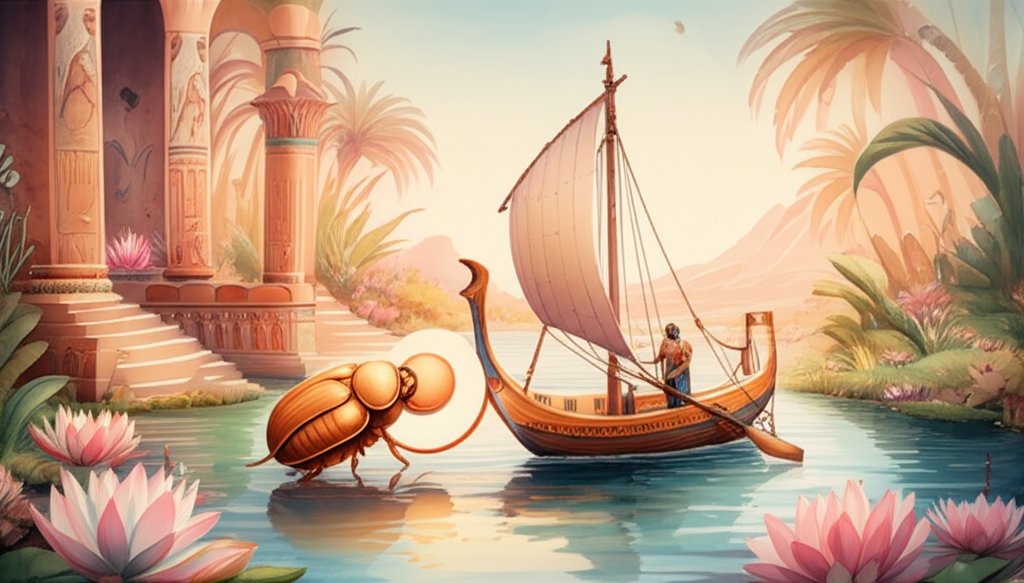
Ancient Egyptian culture, a civilization that thrived for millennia (roughly 6000 BCE to 30 BCE), continues to fascinate and inspire. Often misunderstood as being preoccupied with death, the ancient Egyptians actually embraced life, viewing tombs and mummification as essential components of their belief in eternal existence. Their devotion to harmony and balance, known as ma’at, shaped all aspects of their society, from religion and technology to daily life and leisure.
This hub serves as your portal into the rich tapestry of ancient Egyptian civilization. We’ll explore their beliefs, innovations, social structures, and artistic achievements, providing a comprehensive overview and guiding you to deeper dives into specific areas of interest.
Unveiling the Spiritual Core: Gods, Souls, and the Afterlife
Religion permeated every facet of ancient Egyptian life. They believed the gods had already created order in the universe, and their rituals and practices were centered on celebrating that fact. The Egyptian creation myth speaks of the primordial waters, the emergence of the ben-ben hill, and the god Atum (or Ptah) bringing the world into being through Heka, or magic.
Central to their beliefs was the concept of the eternal soul. Egyptians believed that each person possessed a complex soul with nine distinct parts, including the Khat (physical body), Ka (double-form), and Ba (human-headed bird). Mummification was practiced to preserve the Khat, ensuring the soul’s continued existence in the afterlife. The Ren, or secret name, held power and offered protection against malevolent forces. Gods were seen as consistently willing to aid petitioners, offering guidance and support in both life and death.
Delving deeper into this realm, you can explore how these spiritual beliefs influenced their daily routines and monumental architectural feats.
Technological Marvels: Innovations That Shaped the World
The ancient Egyptians were not only deeply spiritual but also remarkably innovative. Their technological advancements were crucial to their civilization’s success and left a lasting impact on the world. From the invention of papyrus and the development of sophisticated irrigation systems to the construction of monumental pyramids and temples, their ingenuity is evident.
They mastered the use of ramps, levers, geometry, mathematics, and astronomy. Their understanding of medicine was also noteworthy, as evidenced by texts like the Kahun Gynaecological Papyrus (c. 1800 BCE), which addressed women’s health, and the Edwin Smith Papyrus (c. 1600 BCE), which covered surgical procedures. They even invented toothpaste, toothbrushes, and breath mints to keep themselves healthy and clean.
These advancements contributed significantly to the prosperity and longevity of their civilization. Understanding these inventions will help you appreciate their society as a whole.
Society and Daily Life: A Glimpse into Ancient Homes and Habits
Daily life in ancient Egypt was structured around the Nile River and its fertile land. The majority of the population were farmers, whose lives were dictated by the river’s annual cycle of flooding and receding. Homes ranged from simple mud-brick structures for the poor to elaborate multi-storied dwellings for the wealthy. Even the simplest homes often featured small gardens because Egyptians greatly prized nature and thought of them as a connection to their eternal home.
Clothing was typically made of linen, with the quality and style reflecting social status. Personal hygiene was highly valued. Women held a relatively high status in Egyptian society, with the right to own property, run businesses, and even become pharaohs. For those curious how this translated into modern trends, consider exploring egyptian style outfits.
To learn more about how the land was managed and crops raised, take a moment to read about ancient egyptian farmers.
From Royal Courts to Common Tables: Exploring Egyptian Cuisine
Food played a significant role in ancient Egyptian culture, reflecting both the abundance of the Nile Valley and the social hierarchy. The staples of the Egyptian diet included bread, beer, vegetables, and fruits. Meat was less common, primarily consumed by the wealthy. Understanding the ancient egypt food provides insight into the daily existence of ancient Egyptians.
Different types of food were consumed during different times in history. To learn more about the specific ways food changed throughout the years, check out ancient egypt cuisine.
Power and Governance: Pharaohs, Viziers, and the Bureaucracy
Ancient Egypt was ruled by pharaohs, considered divine rulers who held absolute power. The pharaoh relied on a vizier and a complex bureaucracy to administer the kingdom, which was divided into 42 administrative regions called nomes, each governed by a nomarch. The temples played a vital role in the economy.
Egyptian society was highly stratified, with farmers forming the bulk of the population. Scribes and officials comprised the upper class. Egyptian law, with the pharaoh as the head of the legal system, emphasized agreements and conflict resolution. Understanding the role of the pharaoh and the structure of the government is essential for comprehending the dynamics of ancient Egyptian civilization.
Leisure and Entertainment: Games, Festivals, and the Joy of Life
Despite the demands of daily life and the focus on the afterlife, ancient Egyptians also enjoyed various forms of leisure and entertainment. Senet, a board game similar to chess, was a popular pastime, as were wrestling, racing, hunting, archery, and sailing. Religious festivals were celebrated with great enthusiasm, offering opportunities for socializing and entertainment.
Swimming and rowing were popular activities, and gardens were prized for their beauty and tranquility. To get a more in-depth view of these past times, you can read our guide to recreation in ancient egypt.
The Rise and Fall: A Timeline of Egyptian History
Ancient Egypt’s history is a long and complex tapestry woven with periods of stability, innovation, and decline. The unification of Upper and Lower Egypt around 3150 BC by Menes (Narmer) marked the beginning of the Dynastic Period. Over the centuries, Egypt experienced periods of great prosperity and expansion, as well as periods of internal strife and foreign invasion.
The Old Kingdom, Middle Kingdom, and New Kingdom represent the most powerful and influential periods in Egyptian history. Invasions by the Hyksos, Kushites, Assyrians, Persians, Greeks, and Romans ultimately led to the decline and eventual assimilation of ancient Egyptian culture.
Language and Writing: Unlocking the Secrets of the Past
The Egyptian language, an Afro-Asiatic language, has a rich history dating back to around 3200 BC. Its phases include Old, Middle, Late Egyptian, Demotic, and Coptic. Hieroglyphic writing, dating from around 3000 BC, used symbols representing words, sounds, or silent determinatives. Scribes used cursive hieratic script for daily writing. Interested in learning more? Take a look at our primer on ancient egypt words.
Treasures and Adornments: Embellishing Life and the Afterlife
The ancient Egyptians deeply valued adornment. Jewelry, crafted from gold, silver, and precious stones, held both aesthetic and symbolic value. Adornments like amulets, bracelets, and necklaces were worn by both the living and the dead, believed to offer protection and ensure a favorable afterlife. For a closer look at these treasures, visit our article on real ancient egyptian jewelry.
A Culture of Enduring Influence
Ancient Egyptian culture left an indelible mark on the world, influencing art, architecture, religion, and science. Their innovations and achievements continue to inspire and fascinate us today. By exploring the various facets of their civilization, we can gain a deeper appreciation for their ingenuity, their spiritual beliefs, and their enduring legacy.
Ancient Egypt may be long gone, but its culture continues to whisper to us across the millennia. The secrets it holds are vast and rewarding, and understanding its complexities will enrich your appreciation for one of history’s most enduring civilizations. Begin your journey now!










