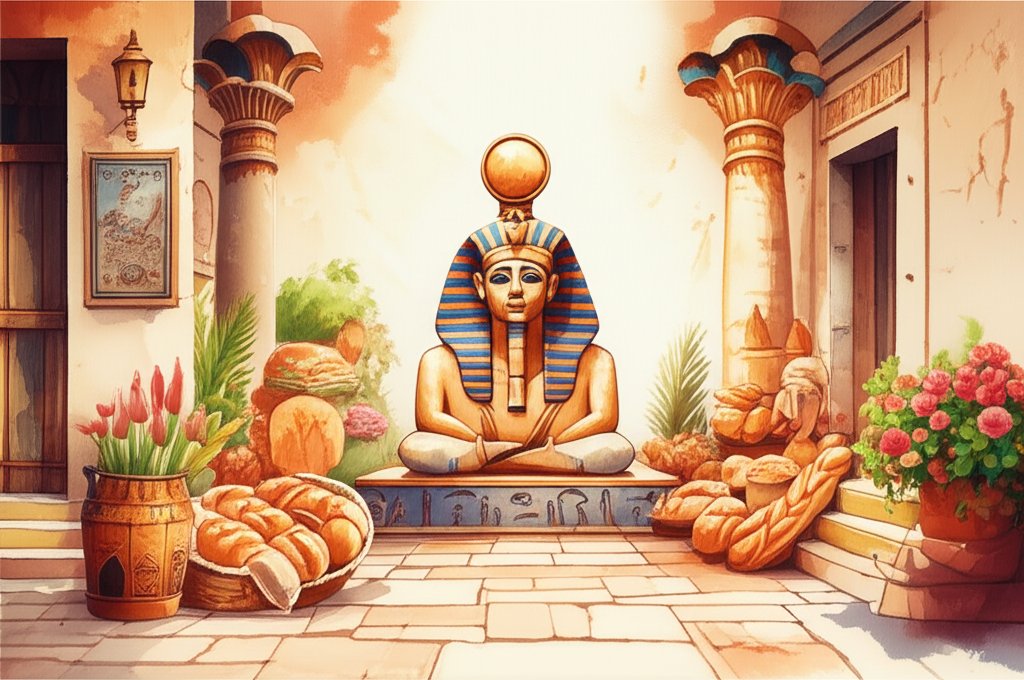
Imagine sitting down to a meal in ancient Egypt. What’s on the menu? More than likely, bread and beer are the cornerstones, but what else graced the tables of pharaohs and farmers alike? Ancient Egypt cuisine offers a fascinating glimpse into a world where food was sustenance, currency, and a reflection of social status.
At a glance:
- Bread and beer were dietary staples for all social classes.
- Ancient Egyptians used a variety of cooking methods, including baking, boiling, grilling, and frying.
- Their diet included vegetables, fruits, legumes, and meat (though meat was less common for the poor).
- Honey was the primary sweetener, and oils were derived from various plants.
- Modern Egyptian cuisine retains many influences from its ancient past.
The Cornerstones: Bread and Beer
Bread and beer weren’t just food and drink in ancient Egypt; they were fundamental to daily life. Think of them as the rice and sake of ancient Egypt. Both were consumed by everyone, regardless of social standing, and even served as a form of payment. Discover Ancient Egyptian Cuisine They were so integral that their presence (or lack thereof) could make or break you financially.
Bread: More Than Just a Slice
Emmer wheat was the go-to grain for breadmaking. The process was labor-intensive, involving moistening, pounding, drying, winnowing, sieving, and grinding – all done by hand! The saddle quern was the primary tool for grinding, unfortunately leaving grit in the final product that contributed to dental problems.
Baking methods evolved over time, from simple pottery molds to cones on hearths and eventually to cylindrical clay ovens remarkably similar to modern tandoor ovens. Flavorings like coriander and dates were sometimes added to the dough. Other ingredients like barley, lily seeds or roots, or tiger nut were also incorporated into specific bread types.
Beer: Liquid Bread and Nutritional Powerhouse
Beer was a staple beverage enjoyed by all ages, even young children. However, school teachers cautioned their young scribes regarding the negative effects of intoxication. Crucially, it was also a significant source of nutrition. Ancient Egyptian beer was far from the clear, filtered beverage we know today. It was cloudy, gruel-like, and packed with protein, minerals, and vitamins.
Barley was the main ingredient. Two common brewing methods existed: one involved baking “beer bread” – lightly baked to preserve the yeasts – then crumbling it, sieving it, and washing it with water to initiate fermentation. The other method involved sprouting one batch of grain to create enzymes, which was then mixed with a cooked batch of grain.
Beyond Bread and Beer: What Else Was on the Menu?
While bread and beer were the foundations, Uncover Ancient Egyptian Cuisine the ancient Egyptian diet included a surprisingly diverse range of foods.
Vegetables and Fruits: Seasonal Delights
Ancient Egyptians cultivated a variety of vegetables, including long-shooted scallions, garlic, lettuce, celery, cucumbers, gourds, and melons. They even consumed the tubers of sedges, including papyrus, raw, boiled, roasted, or ground into flour. Tiger nut, with its naturally sweet flavor, found its way into desserts along with honey. Lily was also consumed raw or grounded into flour.
Pulses and legumes, like peas, beans, lentils, and chickpeas, provided vital protein. Common fruits included dates, figs, grapes, dom palm nuts, Mimusops species, and nabk berries (jujube/ Ziziphus). Dates were often dried, used in winemaking, or as a sweetener. Fruits were seasonal, a fact reflected in their occasional inclusion as funerary offerings. Olive oil was used as early as the 4th Dynasty.
Meat and Protein: A Matter of Status
Meat consumption varied greatly based on social class. Wealthier Egyptians had more access to meat than poorer citizens.
- Domesticated animals: Cattle, sheep, goats, and, later, pigs were raised for food. While the Greek historian Herodotus claimed Egyptians abstained from consuming female cows and viewed pigs as unclean, archaeological evidence contradicts this, showing large-scale slaughter of oxen, sheep, and pigs.
- Poultry: Partridge, quail, pigeon, ducks, and geese were common sources of protein. Chickens arrived later, around the 5th to 4th century BC. Interestingly, the ancient Egyptians invented foie gras, a delicacy still enjoyed today.
- Fish: The Nile River provided an abundance of fish, making it a readily available food source.
- Other Sources: Legumes, eggs, cheese, and the amino acids present in bread and beer contributed to protein intake. Mice and hedgehogs were also reportedly consumed. A 14th-century book even includes recipes for sparrows, believed to have aphrodisiac properties.
Culinary Techniques: From Stews to Roasts
Ancient Egyptian cooks employed a range of techniques to prepare their food. Stewing, baking, boiling, grilling, frying, and roasting were all common. Spices and herbs were used to enhance flavors with expensive spices reserved for those who had the means. Preservation techniques included salting meats and drying fruits like dates and raisins.
Sweeteners and Oils: Flavor Enhancers
Honey was the primary sweetener, sourced from both wild and domesticated bees. Dates and carob served as more affordable alternatives. Oils were extracted from various plants, including lettuce, radish seed, safflower, ben, balanites, and sesame. Animal fat was also utilized for cooking.
Meals and Dining Customs: A Social Affair
Wealthier Egyptians likely enjoyed two or three meals a day: breakfast, a midday meal, and dinner. Poorer Egyptians probably ate two meals: bread in the morning and a more substantial meal in the afternoon, consisting of bread, beer, onions, and perhaps some poultry.
Banquets were significant social events, often starting in the afternoon and lasting for hours. Social status dictated seating arrangements, with the elite occupying chairs or stools while others sat on the floor. Basins were provided for washing, and aromatics were burned to create a pleasant atmosphere. It was also customary to separate men and women who were not married during these banquets. The tomb of Tutankhamun held various foods, including emmer wheat, chickpeas, garlic, cumin, lentils, fenugreek, coriander seeds, watermelon, figs, dates, palm fruits, juniper berries, pomegranates, Christ thorn, and almonds.
Modern Echoes: Ancient Flavors Still with Us
Many modern Egyptian dishes have roots in ancient cuisine. These include sun bread, fesikh (fermented fish), fol medemes (fava bean stew), kahk (biscuits), molokhia (jute mallow soup), bosara (spiced fava bean dip), beer, doum palm fruit, feteer meshaltet (layered pastry), rumi cheese, and spring onions. Explore Ancient Egyptian Cuisine These modern dishes provide a tangible link to the culinary traditions of the past.
Unanswered Questions and Further Exploration
While we know a great deal about ancient Egyptian cuisine, there are still gaps in our knowledge. For instance, understanding the precise recipes and methods used for some dishes remains a challenge. pharaoh food Further archaeological discoveries and analysis of ancient texts may shed more light on these fascinating aspects of ancient Egyptian life.
So What Can We Learn From Ancient Egyptian Cuisine?
Studying ancient Egyptian cuisine shows us that food is more than just sustenance. It’s a reflection of culture, social status, and the environment. We can take inspiration from their resourcefulness in utilizing available ingredients and their innovative cooking methods. While we may not be grinding our own emmer wheat anytime soon, understanding the culinary practices of ancient Egypt offers a unique perspective on a fascinating civilization. Just imagine the complexity of grinding wheat to make beer. You can now try some new cooking methods in your kitchen.










