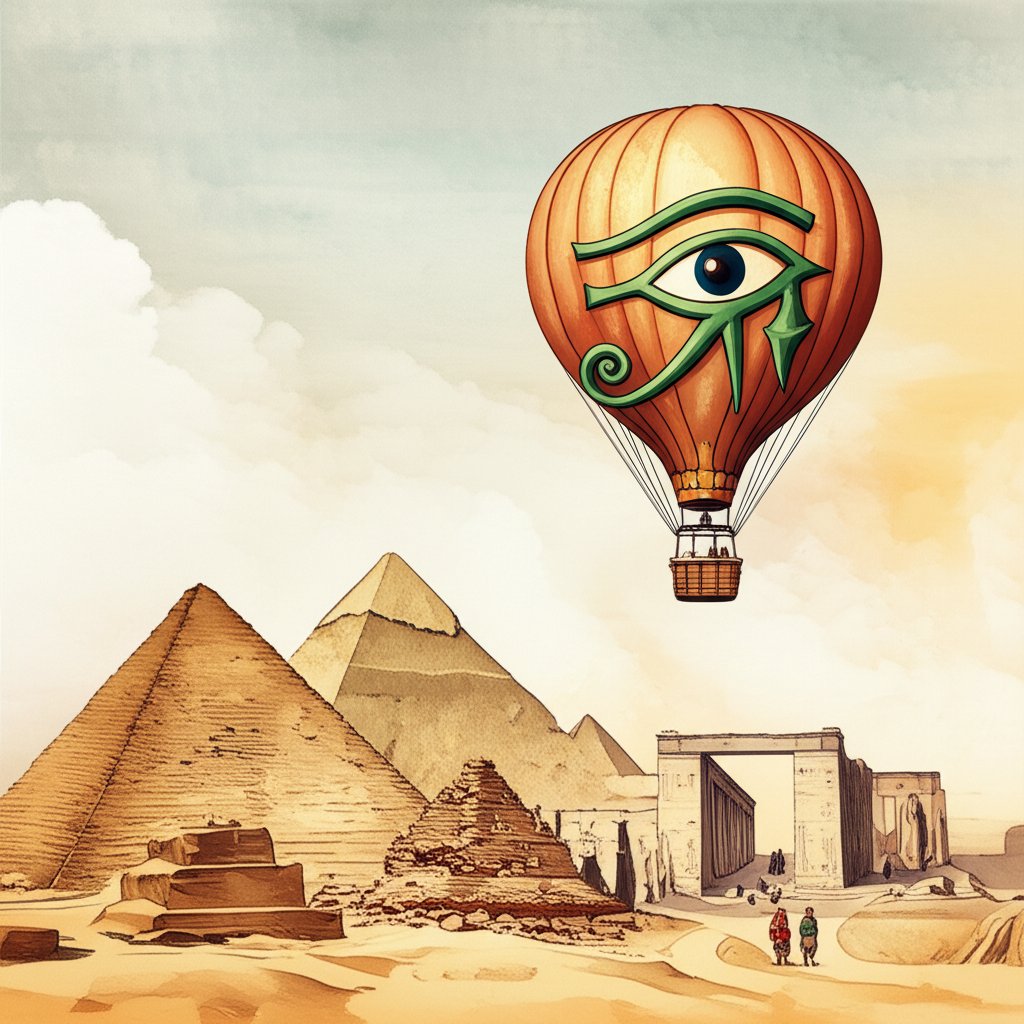
Ever wondered about the story behind a name? The very word “Egypt” conjures images of pyramids, pharaohs, and the mighty Nile, but have you ever stopped to consider the egypt meaning and where that name actually came from? It’s a fascinating journey that takes us through ancient languages, powerful gods, and the enduring legacy of one of history’s greatest civilizations.
At a Glance:
- The name “Egypt” comes from the Greek “Aegyptos,” derived from the Egyptian “Hwt-Ptah,” meaning “Temple of Ptah.”
- The ancient Egyptians themselves called their land “Keme,” meaning “the Black Land.”
- Egypt’s strategic location has made it a crucial hub for trade and cultural exchange throughout history.
- The Nile River valley and delta form the heartland of ancient Egyptian civilization.
- Understanding the evolution of the name “Egypt” provides insight into the country’s rich and complex past.
From Temple to Territory: Unpacking “Egypt”
The name “Egypt,” as we know it, has a surprisingly indirect route to us. It’s not a direct translation of what the ancient Egyptians called their own land. Instead, it’s a linguistic borrowing, shaped by cultural interaction and historical events.
The trail begins with the ancient Greeks, who referred to the land as Aiguptos. Ancient Egypt Through Greek Eyes But even that wasn’t their own invention. It was a transliteration of the Egyptian name Hwt-Ptah.
Hwt-Ptah: House of the God Ptah
Hwt-Ptah translates to “Temple of Ptah,” or more literally, “Enclosure of the Ka of Ptah.” Ptah was a major creator-god in Egyptian mythology, particularly revered in Memphis, one of Egypt’s most important ancient cities. He was considered the patron of craftsmen and architects, responsible for creating the world through the power of thought and word.
So how did a temple dedicated to Ptah become the name for an entire country? It’s likely that the Greeks, when interacting with the region, initially encountered this prominent temple complex, associating it with the whole area. Over time, this association solidified, and Hwt-Ptah, filtered through the Greek language, morphed into Aiguptos, and eventually, our modern “Egypt.”
Keme: The Black Land
While “Egypt” has its roots in a specific temple, the ancient Egyptians themselves used a different name for their country: Keme (Kemet, Khemet, etc.). This name translates to “the Black Land,” a reference to the fertile, dark soil deposited by the annual Nile floods. This rich soil was the lifeblood of Egyptian agriculture, the foundation upon which their civilization thrived.
The contrast between “the Black Land” (Keme) and “the Red Land” (Deshret), referring to the surrounding desert, was a fundamental concept in ancient Egyptian worldview. It symbolized the duality of life and death, order and chaos, that permeated their culture.
Why “Black Land” Matters
- Agricultural Foundation: It highlights the crucial role of the Nile and its fertile soil in sustaining the population.
- Worldview: It reflects the Egyptian understanding of their place in the world, surrounded by harsh desert but blessed with a life-giving river.
- Cultural Identity: It provides insight into how the Egyptians perceived themselves and their connection to the land.
Mizraim: The Biblical Name For Egypt
In the Hebrew Bible, Egypt is consistently referred to as Mizraim. This name appears throughout the Old Testament and is often associated with the descendants of Ham, one of Noah’s sons. The origin and precise meaning of “Mizraim” are debated among scholars, but it remains a significant name for Egypt within a religious and historical context.
Egypt’s Enduring Legacy: Beyond the Name
The story of the name “Egypt” is a microcosm of the country’s long and complex history. It’s a tale of cultural exchange, linguistic evolution, and the enduring power of place. From its origins as a temple dedicated to a creator god to its association with the fertile black soil of the Nile, the name “Egypt” carries within it echoes of a civilization that has captivated the world for millennia.
Key Historical Moments That Shaped Egypt
- Pharaonic Period (c. 3100-30 BCE): The rise and fall of dynasties, the construction of monumental architecture, and the development of a unique religious and cultural system.
- Hellenistic Period (323-30 BCE): Alexander the Great’s conquest brought Egypt under Greek rule, leading to the establishment of Alexandria as a major center of learning and culture.
- Roman Period (30 BCE-641 CE): Egypt became a province of the Roman Empire, and later the Byzantine Empire, experiencing both prosperity and periods of unrest.
- Arab Conquest (641 CE): The arrival of Arab armies brought Islam and the Arabic language to Egypt, shaping its culture and identity in profound ways.
- Ottoman and Modern Periods (1517-Present): Egypt experienced periods of Ottoman rule, European influence, and ultimately, independence as a modern nation-state.
Frequently Asked Questions
Why do different cultures have different names for Egypt?
Different names arise from various interactions and perspectives. The Greeks encountered the Temple of Ptah, leading to “Aegyptos.” The Egyptians focused on the fertile land, hence “Keme.” The Hebrew Bible uses “Mizraim,” reflecting its own historical and cultural context.
Is “Egyptology” the same as “Khemitology?”
While both study ancient Egypt, they differ in approach. Egyptology is the traditional academic discipline, relying heavily on Greco-Roman sources. Khemitology seeks to incorporate indigenous wisdom and perspectives, focusing on the name the people used for themselves rather than the Greek name.
What is the significance of the Nile River to Egypt?
The Nile is the lifeblood of Egypt, providing water for agriculture, transportation, and sustenance. Its annual floods deposited fertile soil, allowing for the development of a thriving civilization in an otherwise arid region. The Nile was also central to Egyptian mythology and religious beliefs.
Understanding Modern Egypt
Modern Egypt is a vibrant country with a rich blend of ancient and modern influences. Its strategic location continues to make it a vital player in regional and global affairs.
Key Aspects of Modern Egypt
- Geography: Located in northeastern Africa, bordered by the Mediterranean Sea, Red Sea, Libya, Sudan, and Israel.
- Culture: A diverse mix of ancient Egyptian, Arab, Islamic, and Western influences.
- Economy: A developing economy with key sectors including agriculture, tourism, and industry.
- Politics: A republic with a complex political landscape and a history of political change.
Continuing the Journey: Further Exploration
Learning about the egypt meaning is just a starting point. Delve deeper into ancient Egyptian history, explore its mythology, and discover the wonders of its art and architecture. By doing so, you will gain a richer appreciation for this remarkable civilization and its enduring impact on the world.










