
Imagine a world where waste is not simply discarded, but transformed into a life-giving resource, enriching the earth and sustaining future generations. This isn’t a futuristic dream; it’s the ancient wisdom of composting, a practice that has quietly shaped human civilization for millennia. From the earliest farmers nurturing their crops to modern environmentalists combating climate change, the history of composting is a remarkable journey of ingenuity, adaptation, and an enduring respect for the land.
In an era increasingly focused on sustainability, understanding this heritage offers crucial insights into how we can better manage organic waste and revitalize our precious soil. This comprehensive guide will delve into the rich tapestry of composting’s past, revealing its pivotal role in agriculture, its temporary decline, and its powerful resurgence as a cornerstone of ecological balance. Prepare to discover how this humble process has consistently provided a solution to the fundamental challenge of waste, transforming it into the ultimate soil amendment.
The Dawn of Soil Enrichment: Composting in Ancient Civilizations
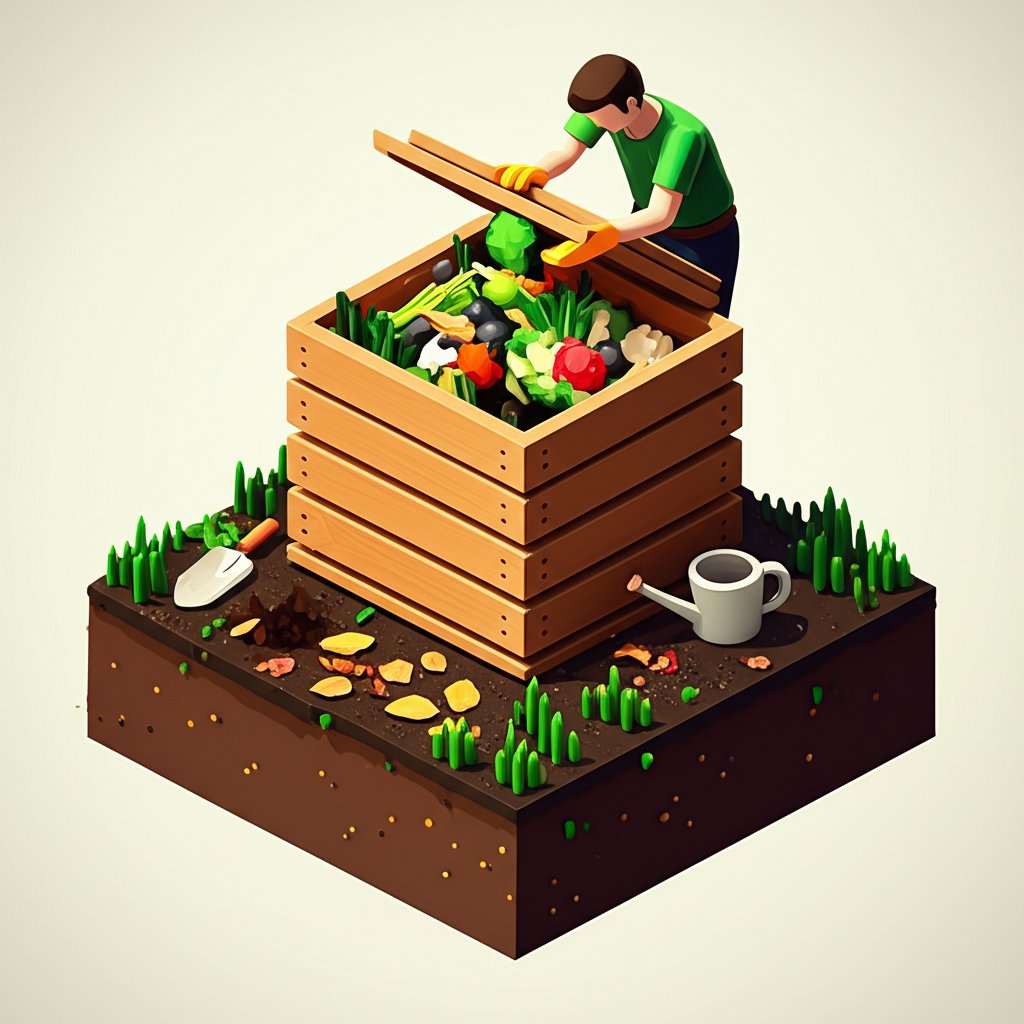
The origins of composting are intrinsically linked to the birth of agriculture, when early farmers quickly learned that returning organic matter to the earth was essential for continued productivity. This fundamental understanding laid the groundwork for thousands of years of soil stewardship.
Early Agricultural Innovations and Organic Waste Management
Evidence suggests that rudimentary forms of composting and manure management appeared shortly after the advent of cultivation itself. Civilizations across the globe independently discovered the transformative power of decaying plant and animal matter.
- Mesopotamia (Akkadian Empire, ~2334 BC): Clay tablets from this period record early forms of sustainable gardening, indicating an awareness of soil fertility and how to maintain it. While not explicitly “composting,” these practices were foundational to understanding nutrient cycling.
- Ancient Egypt, Greece, and Rome: These agricultural powerhouses were pioneers in utilizing animal manure and other organic waste to enhance their fields. The Romans, in particular, meticulously collected animal waste in dung hills and even used urine-soaked straw as a fertilizer, a direct precursor to modern compost. Philosophers and agricultural writers like Cato the Elder advocated for manuring and the careful management of farm waste.
- Biblical and Talmudic References: Ancient texts frequently mention the importance of manure and fertilizers, underscoring their critical role in agricultural success and reflecting a deep-seated knowledge of soil health.
These early methods, though simple, demonstrate a profound recognition: waste was not an endpoint but a vital resource that could be recycled to maintain the fertility and productivity of the soil.
Global Ancient Practices: India, China, and Beyond
The wisdom of composting wasn’t confined to the Mediterranean cradle of civilization. Diverse cultures worldwide developed their own unique techniques, often passed down through generations.
- India: Traditional Indian farming practices, some dating back millennia, incorporated sophisticated methods of using animal dung and plant residues to create rich compost. The teachings of ancient agriculturalists often emphasized the sacred connection between healthy soil and bountiful harvests.
- China: With its dense populations and intensive agriculture, China developed highly efficient systems for handling both human and animal organic waste. Techniques included elaborate pit composting and the use of “night soil” (human excrement) after controlled decomposition to ensure safety and maximize nutrient return to the soil.
- Japan: The “Bokashi” method, a fermentation-based composting technique, has roots dating back to 1591, showcasing a sophisticated understanding of anaerobic decomposition long before Western science caught up.
These global practices highlight a universal principle: nature’s own cycles, like the decomposition of leaves in a forest, served as the ultimate inspiration for turning organic waste into life-giving humus.
Medieval to Enlightenment: Europe’s Evolving Relationship with Organic Matter
As agricultural societies evolved in Europe, the practices of composting and manure management became even more ingrained, adapting to changing social structures and burgeoning scientific understanding.
Feudal Systems and Manure-Based Farming
During the medieval period, the limited availability of land and the reliance on animal husbandry meant that animal waste was an invaluable resource. Manure, often mixed with straw and other farm residues, was systematically collected and spread on fields. This organic matter was the primary means of replenishing soil nutrients, playing a critical role in sustaining peasant communities and feudal estates. The economic prosperity of a manor was directly linked to the health of its soil, and composting (even if not explicitly named as such) was a core practice.
The Agricultural Revolution and Scientific Inquiry
The Enlightenment brought a new wave of scientific inquiry that began to unravel the mysteries of soil fertility. Agronomists and early scientists started to understand the chemical composition of plants and the nutrients they drew from the soil. Figures like Justus von Liebig, though later advocating for synthetic fertilizers, initially explored the benefits of organic amendments.
Early agricultural treatises of the 17th and 18th centuries often detailed methods for improving soil health through crop rotation, manuring, and the combining of various organic waste materials to create compost. This period marked a transition from purely observational farming to a more systematic, though still organic, approach to land management, laying intellectual groundwork for future sustainability efforts.
A New World’s Approach: Composting in Early America
The founders of the United States, many of whom were accomplished farmers and keen observers of agricultural science, recognized the importance of composting for the long-term health of their new nation’s soil.
Founding Fathers as Farmers and Soil Stewards
Several prominent American historical figures were not just statesmen, but also dedicated agricultural innovators who championed composting and sustainable land practices.
- George Washington: A meticulous farmer, Washington understood the importance of soil conservation. He experimented with various crop rotations and extensively used manure and compost to maintain the fertility of his Mount Vernon estate. His detailed agricultural journals document his composting techniques, showcasing his commitment to returning organic matter to the land.
- Thomas Jefferson: An avid horticulturist and agriculturalist, Jefferson emphasized the need for diligent soil management at Monticello. He advocated for sophisticated practices, including the use of legumes to fix nitrogen and the systematic application of compost to enhance his fields.
- James Madison: Another Virginian president with a deep interest in agriculture, Madison exchanged ideas on soil improvement with Jefferson and others, recognizing that the nation’s prosperity depended on healthy land.
George Washington Carver: A Pioneer of Soil Sustainability
Decades later, agricultural scientist George Washington Carver emerged as a pivotal figure in American soil health. Working at the Tuskegee Institute in the late 19th and early 20th centuries, Carver passionately advocated for practices that protected and restored soil fertility, particularly for impoverished farmers in the American South. He taught farmers how to use crop rotation, cover crops, and composting to enrich their degraded soil without relying on expensive (and often unavailable) synthetic inputs. His work was a powerful early example of practical sustainability, showing how organic waste could be transformed into a valuable resource for soil and community uplift.
The Modern Era: Rediscovering Composting for Sustainability
The 20th century witnessed a dramatic shift in agricultural practices, with the rise of industrial farming and synthetic fertilizers. Yet, this very shift eventually spurred a powerful resurgence of interest in composting as a vital component of sustainability.
The Ecological Awakening: From Dust Bowl to Earth Day
The early 20th century saw the widespread adoption of chemical fertilizers and pesticides, promising increased yields but often at the expense of soil health. The environmental consequences became starkly apparent with events like the Dust Bowl in the 1930s. This ecological disaster, caused by intensive farming, drought, and a lack of sound soil conservation practices, served as a painful reminder of the fragility of our land. It prompted a renewed focus on soil health and conservative farming methods, including a re-evaluation of composting.
However, the true turning point for modern composting awareness came with the burgeoning environmental movement of the mid-20th century.
- Earth Day (1970): The first Earth Day galvanized millions, raising awareness about pollution, waste, and the need for environmental protection. Composting was naturally positioned as a simple yet powerful act of sustainability that individuals and communities could adopt to reduce organic waste and benefit the soil. The movement challenged the “take-make-dispose” mentality and championed circular economy principles, with composting at its heart.
- The Rise of Organic Farming: Organizations like the Rodale Institute championed organic farming, providing scientific backing and practical methods for
compostingand naturalsoilbuilding, influencing a generation of gardeners and farmers.
Institutionalization and Community Composting Initiatives
As environmental awareness grew, so did the recognition that organic waste was a significant contributor to landfill volume and greenhouse gas emissions (primarily methane). This led to the development of large-scale composting programs.
- Municipal Composting Programs: Cities like San Francisco became pioneers, implementing curbside collection programs for food scraps and yard waste. The success of these initiatives demonstrated that
compostingcould be an effective and economically viable solution for diverting massive amounts oforganic wastefrom landfills. - The NYC Compost Project (1993): This project exemplified community-level engagement, providing education and resources to New Yorkers to manage their
organic waste, further embeddingcompostinginto the urban fabric. - Technological Advances: The modern era has also seen advancements in industrial
compostingtechnologies, from in-vessel systems to aerated static piles, making large-scale processing oforganic wastemore efficient and environmentally controlled.
Today, composting is widely recognized as a cornerstone of sustainability, integral to waste management, climate change mitigation, and the promotion of healthy ecosystems.
For a deeper dive into the modern applications of this process and its ecological benefits, explore our resource covering composting food facts and its impact.
The Science of Transformation: How Composting Enriches Soil and Combats Waste
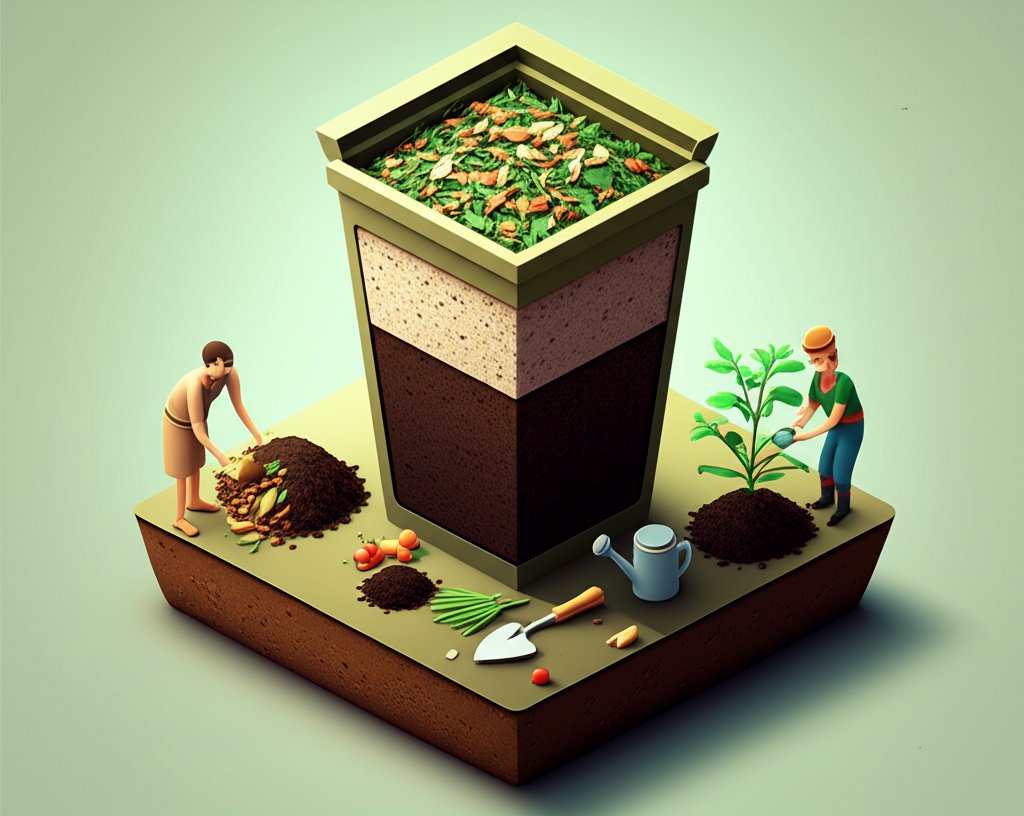
Beyond its rich history of composting, the appeal of this practice lies in its profound ecological benefits, rooted in fundamental biological processes. It’s a natural cycle that transforms problematic organic waste into a precious resource for soil health.
Defining Organic Waste and its Environmental Impact
Organic waste refers to any material that is biodegradable and comes from plants or animals. This includes food scraps (fruit and vegetable peelings, coffee grounds, eggshells), yard trimmings (leaves, grass clippings, small branches), and other natural materials.
When organic waste is sent to landfills, it decomposes anaerobically (without oxygen), producing methane – a potent greenhouse gas significantly more impactful than carbon dioxide over the short term. Landfill emissions are a major contributor to climate change. Diverting organic waste through composting directly addresses this problem, demonstrating a powerful commitment to sustainability.
The Composting Process: A Natural Cycle for Soil Health
Composting is essentially an accelerated, controlled version of natural decomposition, orchestrated by a diverse community of microorganisms (bacteria, fungi, actinomycetes). These microscopic workers break down complex organic materials into simpler, stable compounds, ultimately creating humus.
The “ingredients” for successful composting are simple:
- Carbon-rich materials (“Browns”): Dry leaves, straw, wood chips, shredded paper. These provide energy for microorganisms.
- Nitrogen-rich materials (“Greens”): Food scraps, grass clippings, fresh plant trimmings. These provide protein for microbial growth.
- Water (Moisture): Essential for microbial activity, keeping the pile consistently damp like a wrung-out sponge.
- Air (Oxygen): Crucial for aerobic decomposition, which prevents methane production and speeds up the process.
As microorganisms consume the organic waste, they generate heat, which helps kill pathogens and weed seeds. The end product is compost: a dark, crumbly, earthy-smelling material that is a treasure trove for soil health.
Benefits of Compost for Soil:
- Improves Soil Structure: Compost aggregates soil particles, leading to better aeration and drainage in heavy clays, and increased water retention in sandy soils.
- Enhances Nutrient Availability: It slowly releases essential plant nutrients, providing a steady food source for plants.
- Boosts Microbial Life: Compost introduces a rich diversity of beneficial microorganisms, which suppress plant diseases and contribute to nutrient cycling.
- Buffers Soil pH: It helps stabilize soil pH, making nutrients more accessible to plants.
- Reduces Reliance on Chemical Fertilizers: By providing natural nutrients, compost lessens the need for synthetic inputs, further promoting
sustainability.
By understanding and engaging with this transformative process, we continue a legacy of stewardship that began thousands of years ago, using organic waste to cultivate vibrant soil and ensure a more sustainable future.
Conclusion
The history of composting is far more than a chronicle of waste management; it is a testament to human ingenuity and our enduring connection to the earth. From ancient civilizations who first understood that returning organic waste to the land was key to survival, to modern movements championing sustainability, composting has consistently provided a natural, powerful solution. It demonstrates a wisdom passed down through generations – that waste is merely a resource out of place, waiting to be transformed.
Today, as we face pressing environmental challenges, the significance of composting has never been greater. It is a vital tool for enriching our soil, reducing greenhouse gas emissions, and creating a truly circular economy. By embracing composting at home, in our communities, and at industrial scales, we honor this ancient practice and actively participate in building a more sustainable and regenerative future for our planet. Unlock the power of composting – transform your waste, enrich your soil, and join a legacy of environmental stewardship that spans millennia.
FAQ
What are some early civilizations that practiced composting?
Composting has a rich history, with evidence of its practice in ancient civilizations such as Mesopotamia (Akkadian Empire), Egypt, Greece, Rome, India, and China. These cultures recognized the value of organic matter for soil fertility.
When was the first known use of compost or manure?
The first known use of compost or manure likely occurred shortly after the advent of cultivation, with records suggesting practices as early as 2334 BC in Mesopotamia. Farmers observed that returning organic waste to the land boosted crop yields.
Are there any references to compost and fertilizers in ancient texts?
Yes, the importance of compost and various forms of fertilizers is referenced in ancient texts, including the Talmud and the Bible, reflecting their critical role in historical agricultural practices.
Which other countries developed diverse composting methods?
Beyond the Mediterranean region, countries such as India, China, Malaysia, and Japan developed their own unique and sophisticated composting techniques, often tailored to their specific climates and agricultural systems. The Japanese Bokashi method, for instance, dates back to 1591.
Who were some proponents of composting in early United States history?
Prominent figures like George Washington, Thomas Jefferson, and James Madison were all keen agriculturalists who practiced and advocated for composting to maintain soil health on their estates. Agricultural scientist George Washington Carver later championed composting as a vital tool for soil conservation and sustainability for farmers in the South.
Why did composting decline and then resurge in popularity?
Composting saw a decline with the rise of synthetic fertilizers in the 20th century, which promised quicker and cheaper nutrient delivery. However, its popularity resurged dramatically with increased environmental awareness, events like the Dust Bowl, and the environmental movement sparked by Earth Day in 1970. People recognized composting’s crucial role in reducing organic waste, mitigating greenhouse gas emissions, and promoting sustainability and healthy soil.
What are the modern benefits of composting for sustainability?
Modern composting offers numerous benefits for sustainability: it diverts significant amounts of organic waste from landfills, reducing methane emissions; it creates nutrient-rich soil amendments that enhance soil fertility and structure, decreasing the need for chemical fertilizers; it supports biodiversity in the soil; and it helps sequester carbon, contributing to climate change mitigation efforts.
What is ‘organic waste’ in the context of composting?
In the context of composting, organic waste refers to any biodegradable material derived from plants or animals. This primarily includes food scraps (like fruit and vegetable peelings, coffee grounds, eggshells), yard waste (grass clippings, leaves, small branches), and other natural materials that can be broken down by microorganisms to create nutrient-rich soil amendment.










