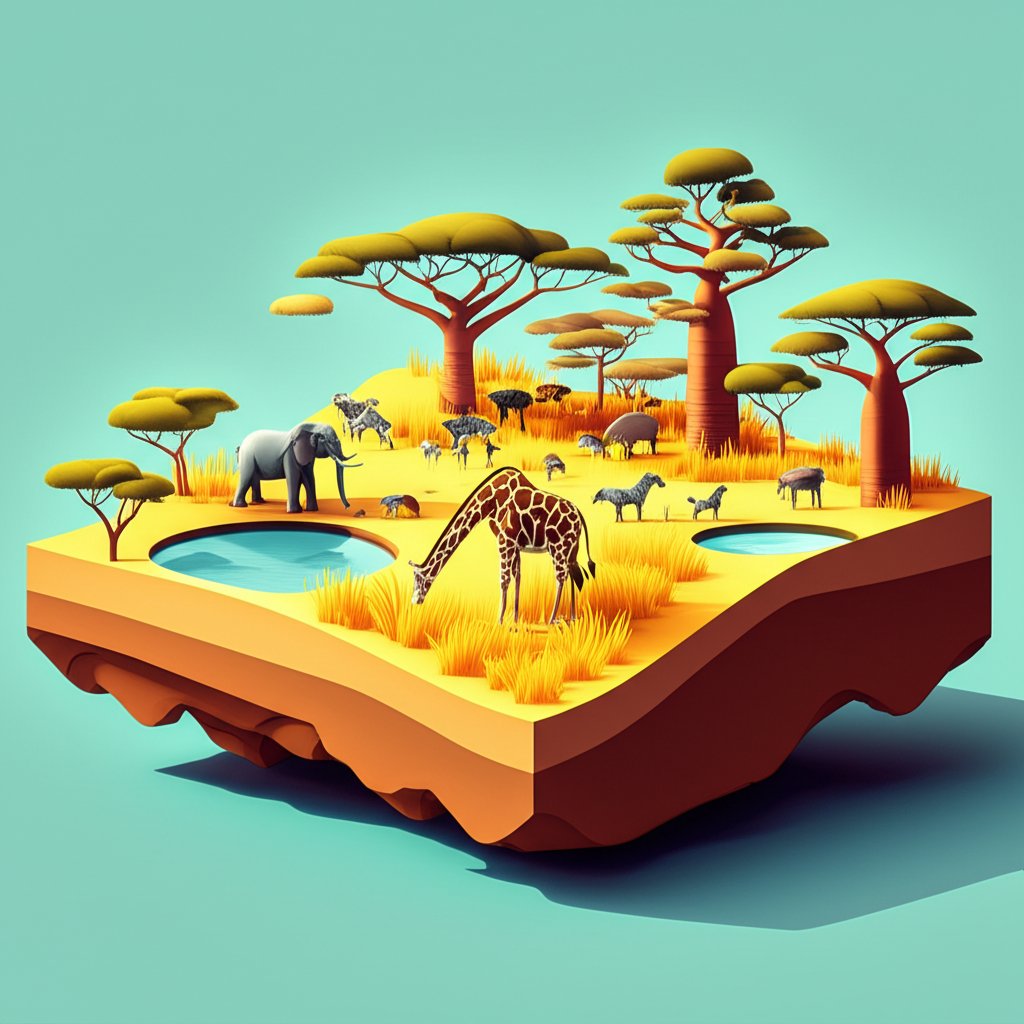
Imagine vast, sun-drenched plains stretching to the horizon, dotted with iconic acacia trees, and teeming with an astonishing array of wildlife. This is the savanna biome, one of Earth’s most dynamic and vital ecosystems. More than just simple grasslands, savannas represent a complex interplay of climate, vegetation, and animal life, shaping landscapes from the legendary African savanna to distant corners of the globe.
Many people picture only the classic African savanna when they hear the word, but this incredible habitat is far more widespread and diverse than commonly understood. It’s a key player among Earth’s major biomes, providing essential ecological services and harboring unparalleled biodiversity. In this ultimate guide, we will journey deep into the heart of these mesmerizing grasslands, unveiling 10 wild facts that reveal the true complexity and captivating nature of the savanna biome. Prepare to discover its secrets, understand its critical role, and learn why its conservation is paramount.
This makes the savanna a fascinating environment, and to discover more about its importance, check out these savanna important facts that highlight its critical role in the global ecosystem.
What Exactly is a Savanna Biome? Defining Earth’s Expansive Grasslands
At its core, a savanna biome is a type of grassland ecosystem characterized by grasses, with scattered individual trees and shrubs. It’s found in regions with warm temperatures and a distinct wet and dry season. This unique combination prevents the growth of dense forests, yet supports more trees than a desert, creating a semi-open landscape that is incredibly rich in life.
Beyond Simple Grasslands: The Woodland-Savanna Continuum
The distinction between true grasslands, savannas, and open woodlands can sometimes feel blurred. Ecologically, savannas are often seen as a continuum, a transitional zone. They share characteristics with woodlands, featuring open-canopied trees where crowns usually don’t interlink, typically forming 25-60% overhead cover. This open structure is crucial, allowing ample sunlight to reach the ground, fostering the growth of the grasses that define the biome. This makes the savanna biome a unique blend, not quite forest, not quite pure grassland, but an ecosystem with its own distinct rules.
The Climate Engine: Wet Seasons, Dry Seasons, and Rainfall
The defining feature of any savanna biome is its highly seasonal climate, marked by a clear distinction between wet and dry periods. This dramatic fluctuation in moisture availability dictates everything from plant growth to animal migration.
These extreme seasonal shifts drive the remarkable adaptations seen in both flora and fauna of the savanna biome, making it a masterclass in survival and resilience.
Global Spread: Where Savannas Thrive Beyond Africa
While the legendary African savanna often dominates our imagination, these vital grasslands are a global phenomenon. They belt the Earth, forming broad bands around the middle part of the planet.
savanna biome regions, including the iconic Serengeti and Maasai Mara.savanna regions like Brazil’s Cerrado and the Llanos of Venezuela and Colombia.grasslands and savannas dominate much of the northern territories.savanna and dry grasslands can be found.savanna landscapes.Understanding this global distribution is key to appreciating the savanna biome’s adaptability and its diverse forms.
10 Wild Facts About the Savanna Biome
The savanna biome is a world of incredible wonders. Here are 10 wild facts that reveal its hidden depths and ecological significance:
Fact 1: A Global Phenomenon, Not Just an African Icon
While the African savanna is undoubtedly the most famous, savanna ecosystems are truly global. You’ll find them spanning continents, including vast areas of Australia, large parts of South America (like the Brazilian Cerrado, known for its unique biodiversity), and even parts of India and the Caribbean. These diverse locations highlight the adaptability of the savanna biome to various warm climates with seasonal rainfall. Its global presence underscores its importance as one of the Earth’s most widespread biomes.
Fact 2: Africa Boasts the Largest and Most Iconic Savanna Expanses
There’s a reason the African savanna captures the world’s imagination. Africa is home to the largest and most breathtaking savanna regions on Earth. The Serengeti-Maasai Mara ecosystem, Kruger National Park, and the vast grasslands stretching across East and Southern Africa are prime examples. These immense expanses support epic wildlife migrations and some of the highest concentrations of large mammals anywhere, making them critical for global biodiversity. This truly is the heartland of the savanna biome.
Fact 3: Nature’s Transitional Zone Around the Equator
Savannas typically form a broad band around the Earth’s middle, situated between tropical rainforests and deserts. This strategic location makes the savanna biome a crucial transitional zone, balancing the extremes of its neighboring biomes. It acts as a buffer, preventing deserts from encroaching too rapidly on rainforests and vice versa. This “middle ground” supports unique species adapted to both wetter and drier conditions, contributing to its rich biodiversity.
Fact 4: The Open Canopy Advantage Shapes Life Below
One of the most defining characteristics of the savanna biome is its open canopy. Unlike dense forests, where tree crowns interlock and block sunlight, savannas feature scattered trees and shrubs, allowing abundant sunlight to reach the ground. This open structure is vital for the growth of the extensive grasslands that define the biome. It creates a mosaic of light and shadow, influencing where plants grow and where animals forage, shaping the entire ecological dynamic.
Fact 5: Home to the Planet’s Greatest Herbivore Spectacle
The savanna biome is renowned for hosting the largest diversity and sheer numbers of large herbivorous animals on Earth. Think of millions of wildebeest, zebras, and gazelles embarking on epic migrations across the African savanna. Towering giraffes, massive elephants, and various antelope species all thrive here, sustained by the abundant grasslands during the wet season. This incredible concentration of plant-eating creatures in turn supports a robust predator population, creating a complex food web unique to this biome.
Fact 6: Diverse Classifications: Tropical, Temperate, and Flooded Savannas
Not all savannas are created equal. Ecologists categorize them into distinct types, each with unique characteristics and inhabitants:
African savanna, Australian savanna).grasslands).grasslands (e.g., South America’s Pantanal, one of the world’s largest wetlands).These categories highlight the savanna biome’s varied expressions across different climatic conditions.
Fact 7: The Lifeblood of Seasons: Wet and Dry Dictate Survival
The alternating wet and dry seasons aren’t just a characteristic; they are the fundamental driving force of the savanna biome. During the wet season, the grasslands flourish, providing abundant food and water. This is a time of growth and reproduction. However, the dry season brings scarcity, forcing animals to adapt through migration (like the wildebeest), seeking alternative food sources, or entering periods of dormancy (for some plants). This seasonal rhythm shapes migration patterns, hunting strategies, and the very survival of all life within the savanna.
Fact 8: The Cradle of Humanity: Where Homo Sapiens First Emerged
Beyond its ecological significance, the savanna biome holds profound historical importance as the birthplace of our species. Anthropological evidence suggests that Homo sapiens first emerged in the African savanna millions of years ago. The challenges and resources of this environment—the open landscape for spotting predators, the availability of large game, and diverse plant foods—played a pivotal role in shaping our ancestors’ evolution, influencing bipedalism, tool use, and social structures. The savanna literally sculpted humanity.
Fact 9: Fire’s Essential Embrace: A Natural Sculptor of the Landscape
Far from being purely destructive, fire is an integral and natural part of the savanna biome. Periodic wildfires, often ignited by lightning, are essential for maintaining the savanna’s unique character. They prevent grasslands from turning into dense forests, recycle nutrients back into the soil, and stimulate the growth of new, tender grass, which is crucial for herbivores. Many savanna plants have evolved adaptations to survive or even thrive after fires, making fire a vital component of this biome’s health.
Fact 10: Masterful Adaptations: Flora and Fauna Built for Extremes
Life in the savanna biome is a testament to natural selection, with species exhibiting incredible adaptations to withstand its extreme conditions.
grasslands. Predators like lions have developed stealth and cooperative hunting. Many species, from elephants to warthogs, dig for water during droughts. These adaptations ensure survival in a world of feast and famine.Life Thrives: Unpacking Savanna Flora and Fauna Adaptations
The savanna biome is a living laboratory of adaptation, where every plant and animal has a unique strategy for flourishing amidst intense seasonal changes, frequent fires, and fierce competition.
Plant Ingenuity: Surviving Drought and Fire
Savanna vegetation, particularly its dominant grasslands and scattered trees, displays remarkable resilience:
savanna trees are deciduous, shedding their leaves during the dry season to conserve precious water, minimizing transpiration.savanna plants, such as acacia, are armed with sharp thorns or produce chemical compounds that make their leaves unpalatable.Animal Resilience: Grazers, Hunters, and Migrators
The animal life in the savanna biome is equally adept at navigating its challenges:
African savanna, is mass migration. Animals follow the rains and fresh grasslands, covering hundreds or thousands of kilometers annually.The Indispensable Role of Fire in Shaping Savanna Landscapes
Fire is not merely an occasional event in the savanna biome; it is a fundamental ecological process that actively shapes its structure, composition, and biodiversity. Without fire, many savannas would rapidly transform into denser woodlands or even forests.
Fire as a Natural Sculptor: Preventing Forest Encroachment
Frequent, low-intensity fires are a natural part of the savanna cycle. They serve several critical functions:
grasslands. This maintains the characteristic open structure of the savanna biome.savanna.Nutrient Cycling and Seed Germination: The Renewal Cycle
Fire also plays a crucial role in the nutrient dynamics of the savanna biome:
savanna plant species have seeds that require the heat or smoke from a fire to trigger germination. This adaptation ensures that new plants emerge in a nutrient-rich, competition-reduced environment.Understanding fire as a creative, rather than purely destructive, force is essential to comprehending the resilience and unique character of the savanna biome.
Human Footprint: Challenges and Conservation in the Savanna Biome
The savanna biome, while vast and resilient, faces significant threats from human activities. From its ancient role as the “cradle of humanity” to modern industrial pressures, our species has always profoundly impacted these grasslands.
From Ancient Roots to Modern Pressures: Overgrazing, Agriculture, and Urbanization
Historically, human interaction with the savanna was largely sustainable, with indigenous communities practicing hunting, gathering, and even controlled burning that mimicked natural fire cycles. However, modern human activities pose unprecedented challenges:
savanna habitats into urban areas or farmland. This reduces the available grasslands for wildlife and disrupts established migratory routes.savanna clearing. Overgrazing by increasingly large herds of livestock depletes native grasses, compacts soil, and can lead to desertification, especially in the African savanna. This loss of vegetation also impacts the savanna biome’s ability to act as a carbon sink.savannas are not dense forests, the scattered trees are vital. Logging for timber, fuelwood, and charcoal production removes this essential woody component, altering the savanna structure and impacting species that rely on trees for shelter or food.Climate Change and the Future of Savanna Grasslands
Perhaps the most insidious threat to the savanna biome is climate change, driven largely by human-induced greenhouse gas emissions:
savanna.savanna species.Safeguarding the Savanna: Global Conservation Efforts
Despite the challenges, numerous conservation efforts are underway to protect the savanna biome and its inhabitants:
African savanna) is crucial for safeguarding critical habitats and allowing wildlife to thrive.savanna species like elephants and rhinos.biomes, including savannas.savanna ecosystems and inform effective conservation strategies, while education raises public awareness about their importance.Protecting the savanna biome is not just about saving charismatic megafauna; it’s about preserving a vital global grasslands ecosystem that plays a critical role in Earth’s climate, biodiversity, and indeed, human heritage.
Conclusion
The savanna biome, far from being a simple expanse of grasslands, is a complex, dynamic, and breathtakingly beautiful ecosystem that spans the globe. From the mesmerizing African savanna to the distinct savannas of South America and Australia, these biomes are defined by their unique blend of grasses and scattered trees, shaped by dramatic wet and dry seasons, and maintained by the crucial role of fire. They are home to unparalleled biodiversity, support the planet’s largest concentrations of herbivores, and even hold the distinction of being the cradle of human civilization.
However, the future of these magnificent landscapes hangs in the balance, threatened by human expansion, unsustainable practices, and the relentless march of climate change. Understanding the intricate savanna biome secrets revealed here is the first step towards appreciating its immense value. It is our collective responsibility to champion conservation efforts, promote sustainable practices, and ensure that these wild, vibrant grasslands continue to thrive for generations to come.
FAQ
Q1: What are the main characteristics of a savanna biome?
A1: A savanna biome is characterized by extensive grasslands with scattered trees and shrubs, warm temperatures year-round, and distinct wet and dry seasons. It features an open canopy, allowing plenty of sunlight to reach the ground.
Q2: Where can savanna biomes be found globally?
A2: Savanna biomes are found in various parts of the world, including vast regions of Africa (like the African savanna), South America (e.g., Brazil’s Cerrado, Llanos), Australia, India, and parts of the Caribbean. They typically belt the middle latitudes of the Earth.
Q3: How do wet and dry seasons impact the savanna biome?
A3: The alternating wet and dry seasons are crucial to the savanna biome. The wet season brings lush grasslands and abundant water, supporting plant growth and animal reproduction. The dry season causes water scarcity and forces plants and animals to adapt through migration, dormancy, or specialized survival strategies.
Q4: Why is the African savanna particularly famous?
A4: The African savanna is famous for being the largest and most ecologically significant savanna biome on Earth. It hosts the planet’s greatest diversity and numbers of large herbivorous animals and their predators, including iconic species like elephants, giraffes, zebras, and lions. It is also considered the birthplace of humanity.
Q5: What is the role of fire in savanna ecosystems?
A5: Fire is a natural and essential part of the savanna biome. Periodic fires prevent grasslands from being overgrown by trees, maintaining the open canopy. They also recycle nutrients back into the soil, stimulate new grass growth, and facilitate the germination of certain plant seeds, thereby sustaining the health and diversity of the ecosystem.
Q6: How do savanna biomes contribute to global ecosystems?
A6: Savanna biomes play a significant role in global ecosystems. They are biodiversity hotspots, providing habitat for countless species. They contribute to global carbon cycles by storing carbon in their soils and vegetation (though less than forests). They also influence regional water cycles and provide essential ecosystem services like nutrient cycling.
Q7: What are the main threats to savanna biomes?
A7: The primary threats to savanna biomes include land-cover change due to human settlements and agriculture, overgrazing by livestock, logging, and deforestation. Additionally, human-induced climate change, leading to altered rainfall patterns and increased temperatures, poses a significant long-term threat to the stability and ecological balance of these grasslands.










