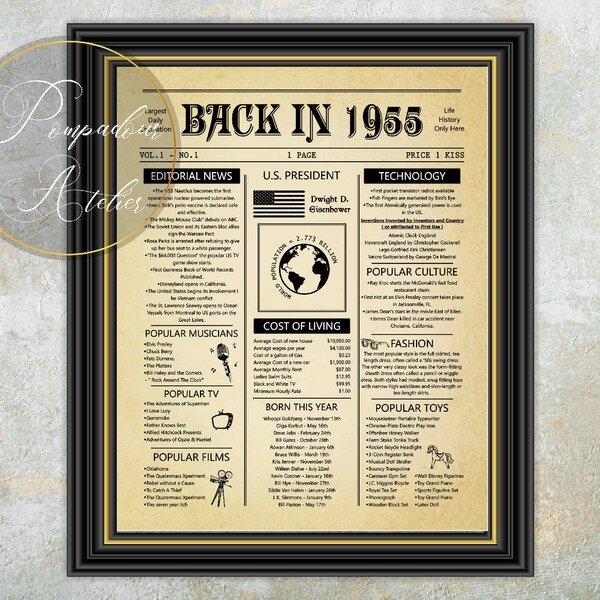
When you look back at what was happening in 1955, you see a year of profound, jarring contradictions. In sterile laboratories and crowded school gymnasiums, Americans celebrated a medical miracle that promised to end a generation of fear. Yet in the sweltering heat of the Mississippi Delta and the segregated halls of power, a brutal murder exposed a national sickness, sparking a movement that would redefine the country’s soul. This wasn’t just a year of headlines; it was a foundational moment where the paths to our modern world were paved in both hope and sorrow.
The air in 1955 was thick with the promise of a scientific, post-war future, but it was also choked with the legacy of racial injustice. Understanding these two parallel, powerful narratives—the conquering of polio and the catalytic birth of the modern Civil Rights Movement—is key to grasping how this single year became an inflection point for the American century.
At a Glance: Key Takeaways from 1955
- The End of Fear: Learn how the April 12 announcement of the Salk polio vaccine’s success instantly lifted a cloud of terror that had haunted American families for decades.
- The Spark of a Movement: Understand how the horrific murder of 14-year-old Emmett Till in August and his mother’s subsequent bravery became a critical catalyst for the Civil Rights Movement.
- A Year of Crucial Firsts: Discover how other key events, from Marian Anderson’s debut at the Met to the Supreme Court’s Brown II ruling, laid crucial groundwork for social change.
- Two Americas, One Year: See how the scientific optimism of the era existed in stark contrast to the brutal realities of segregation, defining the central conflict of the decades to come.
A Shot of Hope: The Salk Vaccine Ends Generations of Fear
Before 1955, one word could strike terror into the heart of any parent: polio. The disease arrived with the warm weather, closing swimming pools, clearing playgrounds, and forcing a quiet panic on summer life. The images of children in iron lungs were a constant, terrifying reminder of its devastating power to paralyze and kill.
This widespread fear was the backdrop for the announcement that changed everything. The fight against polio, funded by millions of small donations to the March of Dimes, was a national crusade.
The Announcement That Changed Everything
On April 12, 1955, at the University of Michigan, Dr. Thomas Francis Jr. stepped up to a podium to deliver the results of the largest medical field trial in history. After evaluating data from over 1.8 million schoolchildren, the verdict was read: Dr. Jonas Salk’s vaccine was “safe, effective, and potent.”
The news spread like wildfire. Church bells rang, factory whistles blew, and parents wept with relief. It was a moment of pure, collective national joy and a stunning triumph of public health. For the first time, a future free from the scourge of polio was not just a dream, but an imminent reality.
From Lab to Millions: An Unprecedented Rollout
The relief was immediately followed by action. Within hours of the announcement, the U.S. government licensed the vaccine for production. A massive, nationwide immunization program began, with children lining up in schools and clinics to receive their “shot of hope.”
This effort represented a monumental logistical and social achievement. It showcased a nation capable of uniting behind a common scientific goal to protect its most vulnerable. While the program wasn’t without its stumbles—most notably the tragic Cutter Laboratories incident where a batch of faulty vaccine caused infections—the overall trajectory was one of overwhelming success. Polio cases plummeted, and by the early 1960s, the disease that had once defined summer terror was well on its way to being eradicated in the United States.
A Cry for Justice: The Spark of the Modern Civil Rights Movement
While much of America celebrated the polio vaccine, another, much uglier story was unfolding. The progress in the laboratory stood in stark contrast to the stagnation of social justice, particularly in the Jim Crow South. In August 1955, that simmering injustice exploded into view with an act of unspeakable brutality.
The Brutal Murder of Emmett Till
Emmett Till was a 14-year-old Black teenager from Chicago, visiting relatives in Money, Mississippi. On August 28, he was abducted from his great-uncle’s home, brutally beaten, shot, and thrown into the Tallahatchie River. His alleged “crime” was offending a white woman, Carolyn Bryant, in her family’s grocery store.
The sheer barbarism of the murder was shocking, but it was what happened next that turned this tragedy into a revolutionary moment.
A Mother’s Courage: The Open-Casket Funeral
When Emmett’s mutilated body was returned to Chicago, his mother, Mamie Till-Mobley, made a decision that would change history. She refused to have a closed casket. “Let the people see what they did to my boy,” she declared.
For five days, tens of thousands of people filed past his open casket. The Black-owned Jet magazine and the Chicago Defender published the graphic, haunting photos of his disfigured face. Those images ripped away the veil of deniability about the violence of Southern racism, forcing Americans who had looked away to confront the horrific reality. The sight of a child so brutalized shook the nation’s conscience to its core.
The subsequent trial was a sham. An all-white, all-male jury acquitted the two killers, Roy Bryant and J.W. Milam, in just over an hour. Months later, protected by double jeopardy, they confessed to the murder in an interview with Look magazine. This blatant miscarriage of justice only amplified the outrage, proving that the legal system itself was an instrument of oppression. Emmett Till’s death and his mother’s bravery became a rallying cry, inspiring a generation of young activists—including Rosa Parks, who later said she had Emmett Till on her mind when she refused to give up her seat.
Connecting the Dots: Other Pivotal Moments in 1955
The stories of the polio vaccine and Emmett Till were the year’s defining bookends of hope and horror. But they didn’t happen in a vacuum. Several other events in 1955 were crucial in setting the stage for the massive social shifts to come. While these two narratives dominate the social history of the year, they were part of a much larger global picture. To Explore 1955’s major events is to see a world grappling with Cold War tensions, technological leaps, and the birth of rock and roll.
“With All Deliberate Speed”: The Supreme Court’s Brown II Ruling
On May 31, 1955, the Supreme Court issued a follow-up to its landmark 1954 Brown v. Board of Education decision. Known as Brown II, this ruling was meant to provide instructions for how to implement desegregation.
Instead of setting a firm deadline, however, the court ordered states to proceed “with all deliberate speed.” This vague language was a massive loophole that segregationists immediately exploited, leading to decades of “massive resistance” and delay tactics across the South. The ruling underscored a hard truth: a legal victory on paper meant little without the political will and social force to make it a reality.
Breaking Barriers on Stage: Marian Anderson at the Met
On January 7, 1955, contralto Marian Anderson took the stage at the Metropolitan Opera in New York City. She was the first African American to sing a lead role with the company. Sixteen years earlier, the Daughters of the American Revolution had barred her from singing at Constitution Hall because of her race.
Her triumphant debut as Ulrica in Verdi’s Un ballo in maschera was a powerful cultural milestone. It was a victory against segregation in the high arts and a symbol of Black excellence in a field that had long excluded it.
The Defiance of Rosa Parks and the Montgomery Bus Boycott
On December 1, 1955, just a few months after Emmett Till’s murderers were acquitted, Rosa Parks, a 42-year-old seamstress and NAACP activist in Montgomery, Alabama, refused to give up her seat to a white man on a segregated city bus. Her quiet act of defiance led to her arrest and sparked the 381-day Montgomery Bus Boycott. Led by a young pastor named Dr. Martin Luther King Jr., the boycott demonstrated the power of mass nonviolent protest and launched the modern Civil Rights Movement into the national consciousness.
How 1955’s Events Shaped the Decades to Come
The reverberations of what was happening in 1955 are still felt today. The year’s events set in motion long-term trends in public health, social justice, and American culture.
| Event of 1955 | Immediate Impact | Long-Term Legacy |
|---|---|---|
| Salk Polio Vaccine Announced | Widespread public relief, end of summer quarantines, mass vaccination programs. | Near-total eradication of polio in the U.S., a model for global public health campaigns, strengthened trust in science. |
| Murder of Emmett Till | National shock and outrage, galvanized Black communities, inspired activists. | A key catalyst for the Civil Rights Movement, demonstrated the power of media to expose injustice. |
| Brown II Supreme Court Ruling | Frustration over vague “all deliberate speed” mandate, rise of “massive resistance.” | Set the stage for years of legal and physical battles over school desegregation, like the Little Rock Nine crisis. |
| Montgomery Bus Boycott Begins | Mobilized Montgomery’s Black community, economic pressure on the city. | Catapulted Dr. Martin Luther King Jr. to national leadership, proved the effectiveness of nonviolent mass action. |
Quick Answers to Key Questions About 1955
What was the most important medical event in 1955?
Without a doubt, it was the announcement on April 12, 1955, that Dr. Jonas Salk’s polio vaccine was “safe and effective.” This news marked the beginning of the end for one of the most feared diseases of the 20th century and stands as a landmark achievement in public health history.
How did Emmett Till’s death change the Civil Rights Movement?
His murder became a turning point because of his mother’s courageous decision to hold an open-casket funeral. The shocking images of his brutalized body, published in magazines like Jet, exposed the raw violence of Jim Crow to a national and international audience, galvanizing a generation of activists and making the fight for civil rights deeply personal and urgent.
Was school segregation ended in 1955?
No. The Supreme Court’s Brown II decision in May 1955 ordered desegregation to proceed “with all deliberate speed.” However, this intentionally vague language was exploited by Southern states, which used it to delay and resist integration for years, often requiring further federal intervention.
1955’s Legacy: A Year of Profound Contradictions
To look at what was happening in 1955 is to see a nation at a crossroads. It was a year that delivered one of the greatest triumphs of modern medicine, a testament to what Americans could achieve when united against a common enemy. At the very same time, it laid bare the country’s deepest, most violent divisions, igniting a struggle for its very soul.
The legacy of 1955 is this duality. It is the year of the clean, sterile vaccine and the blood-stained Tallahatchie River. It gave us both a cure for a crippling disease and an undeniable diagnosis of a sick society. The events of that pivotal year set the stage for the battles and breakthroughs that would define the rest of the century, reminding us that progress is never uniform and that the fight for a healthier, more just world is waged on many fronts at once.










