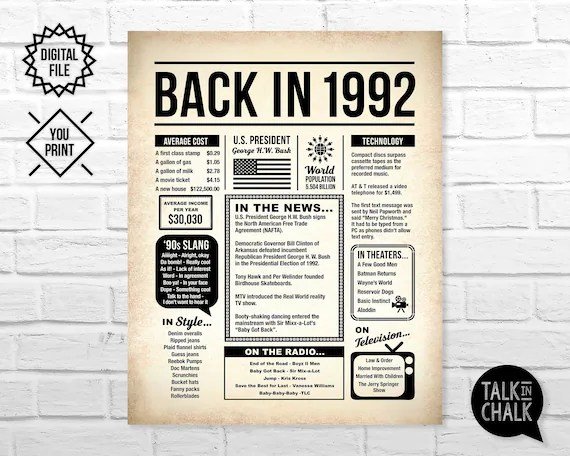
The year 1992 wasn’t just another spin around the sun; it was a genuine pivot point, a moment when the aftershocks of the Cold War met the nascent tremors of the digital revolution. If you’re looking to understand what was going on in 1992 that continues to shape our world, you’re pinpointing a critical juncture. From geopolitical reconfigurations to the quiet hum of an internet about to explode, the forces unleashed three decades ago still resonate today.
At a Glance: Key Shifts from 1992
- Political Realignment: The formal birth of the EU, end of apartheid, and post-Soviet identity forging redefined global power structures.
- Digital Dawn: Early internet breakthroughs, the first text message, and graphical web browsers laid the foundation for our connected lives.
- Cultural Transformations: Reality TV pioneered, grunge music dominated, and digital advancements started reshaping entertainment production.
- Global Interdependence: Major environmental summits, trade agreements like NAFTA, and the Barcelona Olympics highlighted a world increasingly interconnected yet still prone to regional conflicts.
- Social Reckonings: High-profile trials and urban unrest brought issues of justice, race, and public health into sharp focus.
The Geopolitical Earthquake: Reshaping Nations and Alliances
The political landscape of 1992 was a kaleidoscope of dissolving empires and emerging unions, fundamentally redrawing maps and diplomatic norms. It wasn’t just about new leaders; it was about new systems of governance and cooperation.
The European Experiment Solidifies: On February 7th, the Maastricht Treaty was signed, a monumental agreement that didn’t just create the European Union; it set a clear course for deeper economic and political integration, including the eventual adoption of the euro. This was a direct response to a changing continent, aiming for stability and shared prosperity in a post-Cold War world. Think of it as a strategic gamble on collective destiny, pushing nations towards a new model of shared sovereignty that would define European identity for decades.
Post-Soviet Realities: The Soviet Union’s collapse in late 1991 left a vacuum, and 1992 saw its former constituents charting their own paths. The Russian Soviet Federative Socialist Republic formally rebranded as the Russian Federation, seeking to shed its communist past while inheriting the bulk of Soviet power. Elsewhere, Moldova joined the United Nations, and the blueprints were drawn for Czechoslovakia’s peaceful split into the Czech Republic and Slovakia by January 1993. These weren’t just name changes; they were complex, often fraught, processes of nation-building and self-determination that continue to influence regional stability today.
A New Dawn in South Africa: A pivotal referendum in South Africa decisively ended apartheid, signaling a dramatic shift towards a multiracial democracy. This moment was a triumph of international pressure and sustained internal struggle, dismantling a system of institutionalized racial segregation and offering a powerful example of peaceful transition from oppression to potential equality. It inspired liberation movements globally and underscored the power of organized resistance.
The American Political Pendulum Swings: In the United States, Bill Clinton’s victory over incumbent George H.W. Bush and independent candidate Ross Perot marked a generational shift in leadership. Clinton’s campaign, focusing on the economy, captured a mood of change and ushered in a new era for the Democratic Party. This election wasn’t just about policy; it reflected evolving voter priorities and communication strategies that leveraged emerging media landscapes.
Turbulence in the Balkans: While some regions moved towards peace, the Yugoslav Wars tragically highlighted the fragility of post-Cold War transitions. Serbian troops began the brutal siege of Sarajevo, demonstrating how ancient animosities and modern nationalist ideologies could ignite devastating conflicts. This conflict also became an early, stark example of “dual-use technology”—civilian communications repurposed for military coordination—and the burgeoning role of media in shaping public perception of conflict.
To truly grasp the full scope of these intertwined developments and their lasting impact, you might want to Discover 1992’s global shifts.
The Digital Genesis: Wiring the Future
While politicians were redrawing borders, engineers and developers were quietly building the architecture of a different kind of world – one connected by wires, signals, and pixels. 1992 was a foundational year for the digital age, sowing seeds that would blossom into the internet we know today.
The Web Takes Shape: Though Tim Berners-Lee had laid the conceptual groundwork for the World Wide Web in 1989, 1992 saw crucial steps towards its widespread adoption. The launch of the NCSA Mosaic browser was a game-changer. Imagine a world where accessing information online required complex command-line prompts. Mosaic’s graphical interface made the web accessible and intuitive for the average person, popularizing the concept of hypertext and paving the way for millions to explore this new digital frontier. It transformed a niche academic tool into a mainstream possibility.
Mobile Communication Gets Personal: Before smartphones, there was the simple text message. 1992 saw the first-ever SMS sent, a short “Merry Christmas.” This seemingly minor event was a profound leap in mobile communication, enabling asynchronous, direct messaging that would eventually revolutionize how people interacted. It was the precursor to instant messaging and social media, establishing a new paradigm of ‘always-on’ connection.
The Rise of Personal Computing & Digital Media:
- Windows 3.1: Microsoft released Windows 3.1, a significant upgrade that further cemented the operating system’s dominance. It improved stability, performance, and user interface, making personal computers more approachable and functional for a broader audience.
- CDs Outsell Vinyl: For the first time, compact discs outsold vinyl records. This was more than just a format war; it signified a widespread consumer embrace of digital audio, valuing clarity, durability, and convenience. It hinted at a future where physical media would increasingly be digital.
- Early Personal Digital Assistants (PDAs): Apple announced the Newton MessagePad (though released in 1993), pioneering the PDA category. These handheld devices, designed for personal organization and basic communication, were early ancestors of today’s smartphones, showcasing a vision for mobile computing long before widespread internet access.
- Video Telephony: AT&T’s release of a video-telephone, albeit at a steep $1499, demonstrated the early ambition for face-to-face digital communication. While not commercially successful at the time, it underscored a persistent human desire for richer digital interaction, presaging video conferencing and calls.
- Early Cyber Threats: The “Michelangelo” computer virus, which began to take effect in 1992, served as a stark, early warning about the vulnerabilities of interconnected systems. It highlighted the dual nature of technological progress: immense benefit coupled with new risks, a lesson we are still learning today regarding cybersecurity.
Cultural Echoes: Entertainment, Media, and Society
Beyond politics and pixels, 1992 left an indelible mark on culture, introducing new genres, elevating artists, and reflecting societal shifts through the entertainment mirror.
Grunge Goes Global: Nirvana’s album “Nevermind,” released in late 1991, utterly dominated charts throughout 1992. Their hit single “Smells Like Teen Spirit” became an anthem, propelled by MTV’s heavy rotation of its iconic music video. This wasn’t just a band; it was a phenomenon that solidified grunge music’s place in popular culture, offering an alternative, raw sound that resonated with a generation.
The Birth of Reality TV: MTV’s “The Real World” premiered, a show that fundamentally changed television. By putting a group of strangers in a house and documenting their lives, it pioneered the reality TV genre, proving that unscripted, “authentic” human drama could captivate audiences. Its formula would be replicated endlessly, influencing everything from competition shows to docuseries.
Blockbusters and Breakthroughs:
- “Aladdin” and Digital Art: Disney’s animated film “Aladdin” captivated audiences, showcasing the continued evolution of animation techniques, subtly incorporating early digital tools in its production pipeline.
- “Batman Returns” and CGI: Tim Burton’s “Batman Returns” pushed the boundaries of special effects, with nascent computer-generated imagery (CGI) beginning to augment traditional practical effects, hinting at the visual spectacles that would soon dominate cinema.
- Oscar Winners Reflect the Times: “The Silence of the Lambs” sweeping the 64th Academy Awards (Best Picture, Best Actor for Anthony Hopkins, Best Actress for Jodie Foster) demonstrated the appeal of complex, dark psychological thrillers, reflecting a society grappling with its fears and fascinations.
- The Power of a Voice: Whitney Houston’s rendition of “I Will Always Love You” topped charts globally, and her “Bodyguard” soundtrack utilized emerging digital audio workstations (DAWs) for its production. This underscored the growing importance of digital tools in shaping the sound of popular music.
Moments of Remembrance and Transition: A massive concert in memory of Freddie Mercury at Wembley Stadium brought together rock legends and fans, celebrating the life and music of the Queen frontman and raising awareness for AIDS. Meanwhile, Jay Leno became the permanent host of “The Tonight Show,” with Johnny Carson bidding farewell, marking the end of an era for late-night television. These events reflected collective experiences, whether in mourning, celebration, or generational handover.
Global Spectacles and New Frontiers: Sports, Science, and the Environment
1992 also highlighted humanity’s collective aspirations—to compete, to understand, and to protect.
The Barcelona Dream Team: The Summer Olympics in Barcelona, Spain, were unforgettable, particularly for the U.S. Men’s Basketball “Dream Team,” featuring NBA legends like Michael Jordan. These games were a global showcase, not just for athletic prowess but also for broadcasting technology. High-Definition Television (HDTV) made its debut in some broadcasts, and electronic scoring became more sophisticated, bringing viewers closer to the action and enhancing the competitive experience.
Sporting Milestones:
- Michael Jordan led the Chicago Bulls to their first NBA championship, solidifying their dynasty in the making.
- Tennis player Steffi Graf achieved a “Golden Slam,” winning all four Grand Slam titles and an Olympic gold medal in the same year—a rare feat illustrating unparalleled dominance.
- The NHL expanded with the Ottawa Senators and Tampa Bay Lightning, broadening the league’s reach.
- The Washington Redskins won Super Bowl XXVI, defeating the Buffalo Bills 37-24, a game that utilized advanced broadcast technologies like instant replay and slow-motion cameras for a more immersive viewer experience.
- NHL players staged the first strike in the league’s 75-year history, indicating growing player power and labor disputes even in professional sports.
A Planet Under Scrutiny: The United Nations Conference on Environment and Development, popularly known as the “Earth Summit,” was held in Rio de Janeiro. This monumental gathering focused on sustainable development, bringing global leaders together to address climate change, biodiversity loss, and deforestation. It produced critical agreements like Agenda 21, shaping international environmental policy for decades. The devastating Hurricane Andrew also struck the Bahamas, Florida, and Louisiana, serving as a brutal reminder of the planet’s power and the growing urgency of environmental concerns, with its impact being monitored by satellite imagery.
Peering into the Cosmos and Our Genes: - Astronomers discovered the first exoplanets orbiting a pulsar, fundamentally changing our understanding of planetary formation and the potential for life beyond Earth.
- The Hubble Space Telescope sent back its first clear images of space, fulfilling its promise and providing breathtaking views of distant galaxies and nebulae.
- Significant progress was made in Human Genome Sequencing, with the development of automated DNA sequencing and bioinformatics tools. These advances laid crucial groundwork for understanding the blueprint of life and ushering in an era of personalized medicine.
- A strong El Niño event highlighted climate change awareness, with satellite imagery and climate modeling providing new tools for understanding global weather patterns.
Social Fault Lines and Economic Shifts
1992 was also a year of profound social upheaval and economic recalibration, exposing inequalities and setting the stage for future global trade.
Justice and Unrest: The acquittal of police officers in the Rodney King beating case ignited widespread riots in Los Angeles. This event was a raw, visceral demonstration of deep-seated racial tensions and frustrations with the justice system, forcing a national conversation about policing, civil rights, and inequality. High-profile criminal cases like Mike Tyson’s conviction for rape and Jeffrey Dahmer being found sane and guilty of horrific murders also gripped the public, prompting discussions on crime, celebrity, and accountability.
The AIDS Epidemic: World AIDS Day was observed globally, raising critical awareness about the HIV/AIDS epidemic. This period saw increased efforts to educate the public, destigmatize the disease, and push for research and treatment, as the crisis continued to claim lives worldwide.
Globalizing Economies:
- NAFTA Signed: The North American Free Trade Agreement (NAFTA) was signed by the United States, Canada, and Mexico. This landmark agreement aimed to eliminate trade barriers, creating one of the world’s largest free-trade zones. It was a bold move towards regional economic integration, sparking debates about jobs, environmental impact, and sovereignty that continue to echo today.
- Japan’s “Lost Decade”: Japan’s asset price bubble burst, leading to a prolonged period of economic stagnation known as the “Lost Decade.” This event served as a stark warning about the dangers of speculative bubbles and had lasting impacts on global financial markets and economic theory.
- IBM’s Loss: IBM announced a nearly $5 billion loss for the year, a staggering figure that highlighted the profound challenges even established tech giants faced amidst rapid technological shifts and increased competition. It was a wake-up call for corporate agility and adaptation.
- McDonald’s in China: McDonald’s opened its first restaurant in China, a symbolic moment reflecting the country’s gradual economic opening and integration into the global consumer market. It represented a cultural and economic exchange that would dramatically reshape China’s development.
Practical Playbook: Learning from 1992’s Turning Points
Understanding 1992 isn’t just a history lesson; it’s a blueprint for recognizing patterns of disruption and change. Here’s how to apply those insights:
- Identify Tipping Points: 1992 was rife with them – the Maastricht Treaty, Mosaic browser, Rodney King riots. Learn to spot seemingly minor events (like the first SMS) that carry monumental long-term implications. Ask yourself: What “small” innovations or political decisions today could be shaping the next 30 years?
- Analyze Interconnectedness: The political shifts in Europe weren’t isolated from the economic ones, nor were technological leaps separate from cultural adoption. When evaluating current trends, always look for the interplay between seemingly disparate fields. How does an AI breakthrough impact geopolitics? How does climate change influence migration and tech innovation?
- Recognize Dual-Use Technologies: The Yugoslav Wars showed how technology designed for one purpose could be quickly adapted for another. In our current landscape, understand that any innovation, from social media platforms to advanced robotics, carries inherent ethical implications and potential for misuse.
- Embrace Iteration: Windows 3.1, while significant, was a stepping stone. The Newton MessagePad, though not a commercial hit, laid the groundwork for future successes. Recognize that true innovation often comes through continuous refinement and learning from early attempts. Don’t dismiss early versions of groundbreaking tech; they might be the ancestors of tomorrow’s ubiquitous tools.
- Look for Cultural Indicators: Nirvana and “The Real World” weren’t just entertainment; they reflected and shaped societal values. Pay attention to emerging artistic movements, media trends, and popular narratives as indicators of underlying cultural shifts and potential future directions.
Quick Answers: Common Questions About 1992
Q: What was the single most impactful political event of 1992?
A: While Bill Clinton’s election and the end of apartheid were hugely significant, the signing of the Maastricht Treaty stands out for its long-term, systemic impact. It formally created the European Union, laying the foundational legal and political framework for economic and political integration that would culminate in the euro and profoundly shape the continent’s future.
Q: Did people realize how significant the World Wide Web would become in 1992?
A: Most people, no. Even many tech experts recognized the potential of interconnected networks, but the full scope of a globally accessible, graphical web and its societal implications was largely unforeseen. The launch of the NCSA Mosaic browser made it possible to imagine, but the revolution was still in its very early stages. Ray Kurzweil’s book “The Age of Intelligent Machines” did, however, predict the increasing popularity of computers.
Q: How did 1992 contribute to the internet as we know it today?
A: 1992 made the internet approachable. The NCSA Mosaic browser with its graphical interface transformed the web from a text-heavy, specialist tool into something navigable for the average person. Coupled with the development of underlying protocols, it kicked off the widespread public adoption that fueled the dot-com boom and our always-on digital world. The first text message also set a precedent for mobile data communication.
Q: What was the biggest cultural shift observed in 1992?
A: The rise of grunge music into mainstream dominance, epitomized by Nirvana’s “Nevermind,” and the pioneering of reality TV with MTV’s “The Real World” represent two profound cultural shifts. Grunge offered an alternative, raw aesthetic that challenged pop norms, while “The Real World” fundamentally altered how television depicts and consumes human drama, influencing decades of programming.
Charting Your Course from 1992’s Lessons
The year 1992 wasn’t merely a collection of events; it was a complex interplay of forces—political, technological, and cultural—that converged to open a new chapter in global history. From the formal birth of the European Union to the first “Merry Christmas” sent via text, the groundwork for much of our contemporary world was laid. By delving into these specific moments, we gain more than just historical facts; we acquire a deeper understanding of how the seeds of change are planted, how they germinate, and how they eventually reshape our collective future. Reflecting on 1992 offers a powerful lens through which to examine today’s rapid transformations and anticipate tomorrow’s challenges and opportunities.










