
When people ask “what happened to michael jordan,” the answer is far from a simple retirement story. He didn’t just fade away after his final shot with the Washington Wizards; he meticulously built a second empire, transforming his on-court dominance into an unparalleled business and philanthropic legacy. Far from disappearing, Jordan has been actively shaping industries, from sportswear and professional sports ownership to motorsports.
The truth is, Michael Jordan is very much alive and incredibly active. While baseless online rumors occasionally spark concern, the reality of his post-playing career is a masterclass in leveraging fame into lasting influence. For a detailed breakdown of why these hoaxes gain traction, our guide on Debunking Jordan death rumors provides essential context. But here, we’ll focus on what he’s actually been building.
At a Glance: Jordan’s Post-NBA Trajectory
- Billionaire Brand Architect: Learn how Jordan turned his Nike partnership into the multi-billion-dollar Jordan Brand, a cultural icon that transcends sports.
- From Player to Owner: Understand the arc of his majority ownership of the Charlotte Hornets, including the challenges and the historic $3 billion sale.
- Expanding His Competitive Arena: Discover his foray into NASCAR with the 23XI Racing team, proving his drive to win extends far beyond the basketball court.
- A Philanthropic Powerhouse: See the significant, often quiet, impact of his charitable work, including major donations to social justice causes and community health initiatives.
- The Next Public Chapter: Get details on his upcoming return to the public eye as a contributor for NBA on NBC, shaping the narrative for a new generation.
The Blueprint: From Basketball GOAT to Business Titan
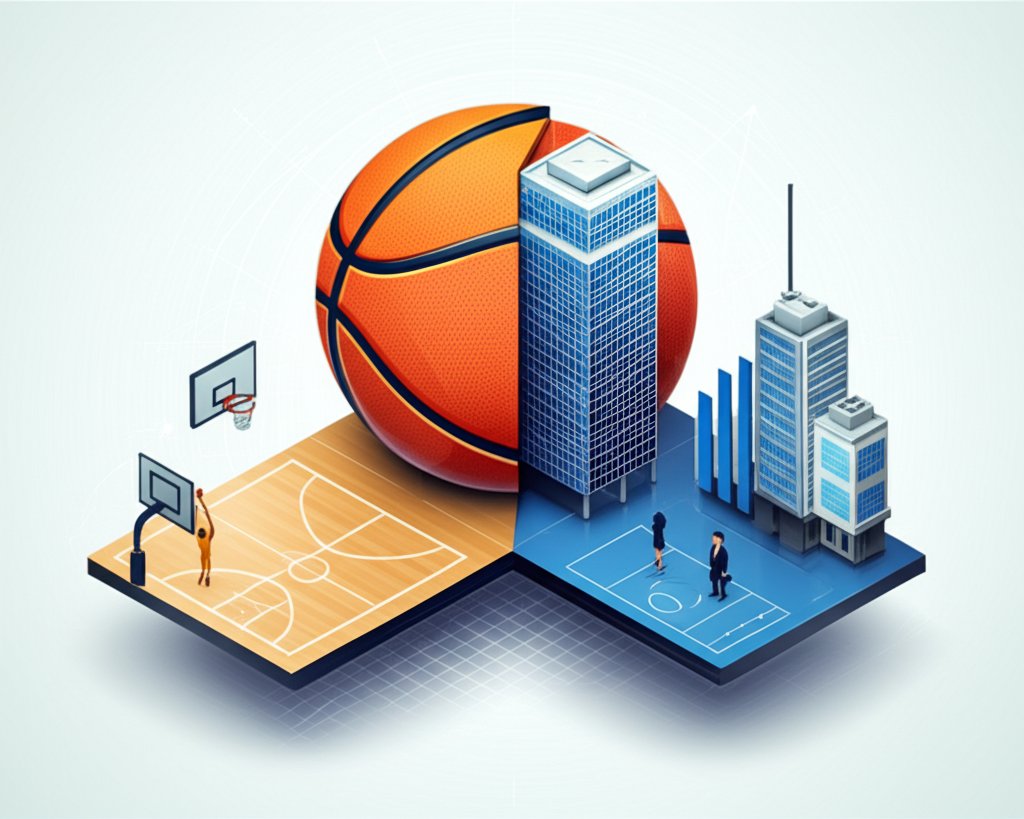
Michael Jordan’s transition from athlete to entrepreneur wasn’t accidental. It was built on the same foundation of relentless drive, strategic thinking, and brand savvy that defined his playing career. He didn’t just endorse products; he built equity and demanded ownership, a move that set him apart from his peers and laid the groundwork for his immense wealth.
His net worth, estimated at $3.8 billion as of 2025, makes him the first billionaire player in NBA history—a status achieved long after he stopped collecting a player’s salary. This fortune wasn’t won; it was engineered through three key pillars: brand ownership, strategic investments, and a keen eye for high-growth opportunities.
Pillar 1: Building a Global Colossus with Jordan Brand
The partnership with Nike, signed in 1984, is arguably the most successful athlete endorsement deal in history. But to call it a simple endorsement is to miss the point entirely.
- From Shoe Deal to Sub-Brand: Initially a signature shoe line, Air Jordan quickly became a cultural phenomenon. Jordan’s direct involvement in design and marketing, combined with his on-court heroics, created unprecedented demand. Nike capitalized on this by spinning Jordan Brand into its own subsidiary, giving it a unique identity.
- The Power of the Jumpman: The Jumpman logo is now as globally recognized as the Nike swoosh itself. The brand operates with a degree of autonomy, signing its own roster of athletes across different sports—like Zion Williamson (NBA), Davante Adams (NFL), and Luka Dončić (NBA)—and dictating its own creative direction.
- A Financial Engine: Jordan Brand generates billions in revenue annually for Nike. Michael Jordan himself earns a significant royalty from every product sold, a perpetual revenue stream that reportedly brings him over $100 million per year. This passive income forms the bedrock of his financial empire.
Think of it this way: most athletes get a check to wear a product. Jordan gets a check every time anyone in the world buys a product with his logo on it. That’s the difference between being a spokesman and being an owner.
Pillar 2: The Owner’s Box—The Charlotte Hornets Era
Jordan’s desire to compete at the highest level never left him. After retiring as a player, he channeled that energy into team ownership, a journey with both notable struggles and a massively profitable conclusion.
In 2010, he became the majority owner of the Charlotte Hornets (then the Bobcats), making him the first former player to own a controlling stake in an NBA team.
His Ownership Journey:
| Phase | Key Events & Decisions | Outcome |
|---|---|---|
| Initial Investment (2010) | Purchased a majority stake for approximately $275 million, taking control of a struggling franchise. | Became the league’s only Black majority owner. Faced immediate challenges with on-court performance. |
| Rebranding & Rebuilding | In 2014, he successfully led the charge to rebrand the team from the Bobcats back to the beloved Charlotte Hornets name. | The move was a massive PR win, re-energizing the fanbase and connecting the team to its 90s glory days. |
| On-Court Performance | The team struggled to find consistent success, making the playoffs only twice during his tenure as majority owner. | This period highlighted the immense difficulty of translating playing genius into front-office success, a common pitfall for many legendary athletes. |
| The Historic Sale (2023) | Jordan sold his majority stake for a valuation of approximately $3 billion to a group led by Gabe Plotkin and Rick Schnall. | This represented a more than 10x return on his initial investment, showcasing his incredible business acumen and the skyrocketing value of NBA franchises. He retained a minority stake. |
| The Hornets era proves a crucial point: even when the on-court results weren’t what he wanted, Jordan’s business instincts were sharp enough to turn the team into an extraordinary financial success. |
Pillar 3: Fueling a New Competitive Fire with 23XI Racing
Never one to rest, Jordan took on a new challenge in 2020: NASCAR. He co-founded the 23XI Racing team with current driver Denny Hamlin, diving headfirst into a sport where he was a passionate outsider.
This move wasn’t just a whim. It was a strategic effort to:
- Increase Diversity in Motorsports: Jordan has been vocal about bringing new fans and more diversity to NASCAR’s ownership, driver, and crew ranks. The team’s star driver, Bubba Wallace, is the only Black driver in the top-tier Cup Series.
- Apply His Winning Mentality: Jordan is not a silent partner. He is actively involved in the team’s strategy, culture, and pursuit of excellence, bringing his legendary competitive intensity to the racetrack.
- Expand His Brand Portfolio: 23XI Racing allows Jordan to tap into a different demographic and a massive, passionate fanbase, further diversifying his business interests beyond basketball.
The Philanthropist: Giving Back with Purpose
Beyond the boardrooms and sports arenas, Michael Jordan has dedicated significant resources to philanthropy. While often private about his giving, his contributions have made a substantial impact.
- Commitment to Social Justice: In 2020, in the wake of George Floyd’s murder, Jordan and Jordan Brand pledged $100 million over 10 years to organizations dedicated to ensuring racial equality, social justice, and greater access to education.
- Investing in Community Health: He has funded the creation of Novant Health Michael Jordan Family Medical Clinics in Charlotte, North Carolina. These clinics provide vital and affordable primary care services to underserved communities, regardless of their ability to pay.
- Disaster Relief and Education: Over the years, he has made multi-million dollar donations to hurricane relief efforts, Make-A-Wish, and various educational initiatives.
His philanthropic strategy mirrors his business approach: targeted, impactful, and aimed at creating lasting structural change rather than just temporary aid.
Quick Answers to Lingering Questions

Is Michael Jordan still involved with the NBA?
Yes. While he sold his majority stake in the Charlotte Hornets in 2023, he remains a minority owner of the team. Furthermore, he is scheduled to join the NBA on NBC broadcast team as a contributor for the 2025-26 season, marking a significant return to the league in a public-facing role.
How did Michael Jordan become a billionaire?
Jordan became a billionaire primarily through the success of his Jordan Brand partnership with Nike, from which he earns massive annual royalties. This foundational income was amplified by his savvy investment in the Charlotte Hornets, which he bought for around $275 million and sold for a valuation of $3 billion.
What does Michael Jordan’s typical day look like now?
While his exact schedule is private, his life revolves around managing his vast business interests, including Jordan Brand strategy, 23XI Racing operations, and his portfolio of other investments. He is also an avid golfer and spends considerable time with his family. As he once noted, he hasn’t “picked up a ball in a couple of years,” as his competitive focus has fully shifted to his off-court ventures.
Why did Michael Jordan retire from basketball three times?
- First Retirement (1993): He retired to pursue a career in Minor League Baseball with the Birmingham Barons, fulfilling a dream he shared with his late father.
- Second Retirement (1999): After winning his sixth championship, he retired from the Chicago Bulls, stating he was mentally exhausted and had achieved all he could.
- Third and Final Retirement (2003): After a two-season comeback with the Washington Wizards, where he was also a part-owner, he retired for good at the age of 40.
The Final Play: A Legacy Redefined
What happened to Michael Jordan after he hung up his sneakers is a story of evolution. He didn’t try to recapture the past; he built a new future. He channeled the same fire that made him the greatest basketball player of all time into becoming one of the most successful athlete-businessmen in history.
His journey provides a powerful playbook: true greatness isn’t just about dominating one field, but about having the vision and discipline to conquer the next one. From the boardroom of Nike to the owner’s box in Charlotte and the pit lane in NASCAR, Michael Jordan is still competing, still building, and still winning. His third act may be his most impressive yet.










