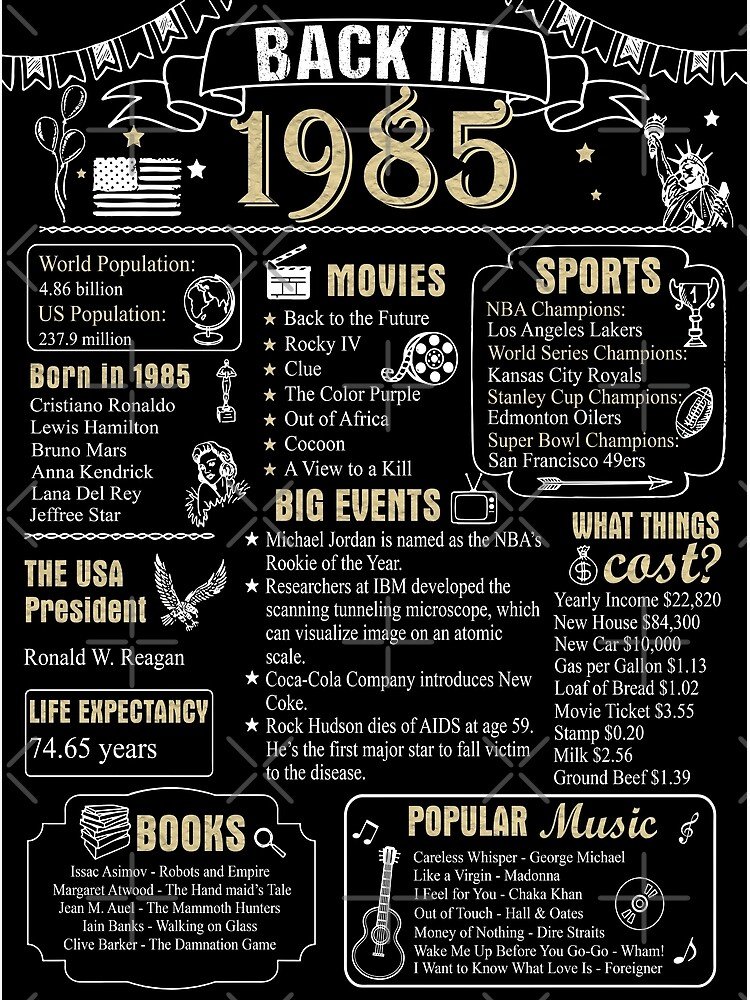
Stepping into 1985 in American history feels like entering a whirlwind, a year where the geopolitical chess board shifted, consumer tastes were famously challenged, and the digital future began to glimmer on computer screens. It was a time of intense contrasts, from presidential meetings that could reshape the Cold War to the quiet horror of a serial killer stalking Los Angeles, all while the rhythm of pop culture continued to accelerate. This wasn’t just another year; it was a pivot point that left lasting imprints on American society, politics, and innovation.
At a Glance: America in 1985
- Political Shifts & Global Posturing: The US grappled with Cold War diplomacy, interventionist policies, and the first Reagan-Gorbachev summit.
- Technological Seeds: Windows 1.0 launched, laying groundwork for personal computing, alongside crucial AIDS research advancements.
- Pop Culture Revolutions: From the infamous “New Coke” debacle to the global phenomenon of Live Aid and the birth of WrestleMania, American culture was vibrant and often tumultuous.
- Domestic Challenges: Natural disasters, urban conflict (the MOVE bombing), and a high-profile spy case underscored internal pressures.
- The Dawn of Digital Rights: The Free Software Foundation emerged, signaling new debates over access and ownership in the burgeoning tech landscape.
Navigating the Cold War & Global Tensions
In 1985, American foreign policy remained squarely focused on the Soviet Union and the intricate dance of the Cold War. A pivotal moment arrived in Geneva when President Ronald Reagan met Soviet leader Mikhail Gorbachev for the first time. This summit marked a significant diplomatic overture, laying the groundwork for future dialogues that would eventually lead to the thawing of relations. The image of the two leaders, ideologically opposed yet seeking common ground, became an iconic representation of the era.
Meanwhile, the US continued its staunch anti-communist stance globally. In Central America, this translated into continued support for the Contras in Nicaragua, a policy driven by the Sandinista Daniel Ortega’s alliance with the Soviet Union and Cuba. This sustained engagement highlighted the broader ideological battle being waged, often through proxy conflicts, that defined US foreign policy during the Reagan years. The reverberations of these decisions would be felt for years, shaping debates over American interventionism and humanitarian concerns.
Further afield, American interests were directly impacted by rising terrorism. TWA Flight 847 was hijacked by Hezbollah, leading to a harrowing 17-day ordeal before 39 American hostages were freed in Beirut. Later in the year, US Navy F-14 fighter jets intercepted an Egyptian plane carrying the hijackers of the Achille Lauro cruise ship, forcing it to land in Sicily. These events underscored a growing challenge for the US on the international stage: how to respond effectively to non-state actors and the nascent rise of modern terrorism.
A Glimpse into the Future: Tech and Medical Breakthroughs
While geopolitical tensions dominated headlines, 1985 was also a year of quiet but profound advancements that would redefine daily life. Perhaps most notably for what happened in 1985 in American history in the tech sphere, Microsoft Windows 1.0 was released. While rudimentary by today’s standards, this graphical user interface represented a monumental shift, making personal computers more accessible and user-friendly. It was a foundational step toward the ubiquity of computing we experience today, challenging the command-line dominance and hinting at a future where software would be king.
The medical community also saw crucial breakthroughs. William J. Schroeder became the first artificial heart recipient to leave the hospital, pushing the boundaries of medical science and offering hope for countless individuals facing heart disease. Even more critically, the Food and Drug Administration (FDA) approved the first blood test for AIDS infection. This was a game-changer, immediately implemented for screening all blood donations in the United States. In the shadow of a burgeoning epidemic, this development was vital for public health, safeguarding the blood supply and providing a critical diagnostic tool.
Beyond commercial software, the ideology of open access began to take root. The Free Software Foundation was founded in Massachusetts, advocating for software that users could freely run, copy, distribute, study, change, and improve. This movement, born in the US, challenged proprietary models and laid the philosophical groundwork for open-source development that would become a cornerstone of the internet age.
See how 1985 reshaped the world. These American innovations weren’t isolated; they contributed to a global wave of change, reshaping not just how we compute and heal, but also how we think about information and collaboration on a worldwide scale.
Pop Culture’s Highs, Lows, and Lasting Legacies
American pop culture in 1985 was a vibrant, often contradictory tapestry. The year kicked off with a massive philanthropic effort: the supergroup USA for Africa recorded “We Are the World,” a hit single dedicated to Ethiopian famine relief. This song and its international release became a powerful symbol of celebrity activism and global consciousness, demonstrating the power of music to unite for a humanitarian cause.
However, not all cultural moments were met with such universal acclaim. Coca-Cola’s decision to release “New Coke” stands as one of the most infamous marketing blunders in American history. The company replaced its original formula, triggering an overwhelmingly negative public response. Consumers clamored for the return of the classic taste, forcing Coca-Cola to reintroduce the original formula in less than three months – a testament to brand loyalty and the emotional connection people had to their favorite products. This episode vividly illustrated the powerful, often irrational, forces at play in consumer culture.
Beyond soda, entertainment hit new heights. “Back to the Future,” a quintessential 80s movie, was released, becoming a cultural touchstone and a box office smash. And in a monumental shift for sports entertainment, the first WrestleMania took place in Madison Square Garden. This event transformed professional wrestling into a mainstream phenomenon, blending athleticism with theatrical storytelling, and launching a global empire.
Yet, alongside the entertainment, a moral panic simmered. Tipper Gore and other political wives formed the Parents Music Resource Center (PMRC), advocating for warning labels on music deemed to have explicit content. This led to highly publicized U.S. Congressional hearings where musicians like Frank Zappa passionately testified against censorship, sparking a national debate about artistic freedom and parental guidance that continues to resonate today.
Domestic Challenges: From Crime Waves to Urban Tragedies
Within America’s borders, 1985 saw its share of darker events that exposed societal fault lines and tested emergency services. The year brought the terror of Richard Ramirez, “the Night Stalker,” who committed the first two murders in his Los Angeles spree, plunging Southern California into fear. This highlighted the chilling reality of serial crime and the intense investigative efforts required to bring perpetrators to justice.
Law enforcement also faced complex domestic situations. The FBI and the Bureau of Alcohol, Tobacco, and Firearms conducted a siege and raid on The Covenant, The Sword, and the Arm of the Lord compound in Arkansas. This was a high-stakes standoff involving an armed extremist group, demonstrating the challenges of dealing with radical elements within the US.
A particularly tragic event unfolded in Philadelphia when police released a bomb on the MOVE headquarters, an incident that remains controversial and deeply unsettling. The bombing resulted in the deaths of 11 MOVE members and destroyed 250 homes in the surrounding neighborhood. It was a stark example of an urban conflict escalating into catastrophic failure, prompting national discussions about police tactics, community relations, and accountability.
Nature also delivered devastating blows. The 1985 United States–Canadian tornado outbreak saw 41 tornadoes rip through Ohio, Pennsylvania, and New York, leaving 76 dead. Additionally, Delta Air Lines Flight 191 crashed at Dallas/Fort Worth International Airport, killing 137 people, reminding the nation of the inherent risks of air travel despite technological advancements. And in a chilling precursor to later incidents, a package from the Unabomber exploded, injuring a research assistant at the University of Michigan, signaling the dark rise of domestic terrorism.
Legal and Infrastructural Shifts
Beyond the immediate headlines, what happened in 1985 in American history also involved significant, if less dramatic, structural and legal changes. A major intelligence breach came to light with the arrest of U.S. Navy intelligence analyst Jonathan Pollard for spying for Israel. Pollard’s case became a complex and controversial chapter in US-Israel relations, leading to his subsequent life sentence and sparking debates about classified information and national loyalty.
On a more symbolic note, U.S. Route 66, the legendary “Mother Road” that connected Chicago to Los Angeles, was officially removed from the United States Highway System. While its cultural legacy endures, its official decommissioning marked the end of an era for American travel and infrastructure, reflecting the evolution of the national highway network.
Even the presidency experienced a brief, albeit significant, moment of transition when Vice President George H. W. Bush briefly became Acting President while President Ronald Reagan underwent surgery. This constitutional procedure, though temporary, underscored the continuity of government and the mechanisms in place for leadership succession.
Understanding the American 1985 Playbook
Looking back at 1985, it’s clear that America was a nation grappling with global responsibilities, internal tensions, and the accelerating pace of technological and cultural change. For anyone seeking to understand the era, consider these points:
- Contextualize Cold War Actions: American policies in places like Nicaragua were direct responses to broader Cold War dynamics. Understanding the US perspective on communism helps frame these interventions.
- Recognize Early Tech’s Impact: Windows 1.0 and the Free Software Foundation weren’t just product releases; they were ideological battles and foundational steps for the digital world. Their beginnings explain much about today’s tech landscape.
- Dissect Cultural Debates: “New Coke” wasn’t just a marketing failure; it showed the deep emotional connection consumers had with brands. The PMRC hearings weren’t just about music; they were about generational divides and moral authority. These moments reveal fundamental aspects of American culture.
- Acknowledge Domestic Fault Lines: The MOVE bombing, the Night Stalker, and the Unabomber revealed ongoing issues of crime, social unrest, and extremism that America continued to confront.
Quick Answers: Common Questions on American History in 1985
Q: What was the significance of the Reagan-Gorbachev summit in 1985?
A: The Geneva summit marked the first meeting between U.S. President Ronald Reagan and Soviet leader Mikhail Gorbachev. While no major treaties were signed, it was a crucial icebreaker that established a personal rapport between the two leaders, laying the groundwork for future arms control talks and a eventual thawing of Cold War relations.
Q: Why was “New Coke” such a big deal in 1985?
A: Coca-Cola’s decision to replace its beloved original formula with “New Coke” was a bold marketing gamble that spectacularly backfired. It sparked a massive public outcry and consumer rebellion, forcing the company to bring back “Coca-Cola Classic” within months. It demonstrated the powerful emotional connection consumers had with iconic brands and became a classic case study in brand loyalty and market miscalculation.
Q: What major technological advancement happened in the US in 1985?
A: One of the most significant was the release of Microsoft Windows 1.0. This graphical user interface began to transform how people interacted with personal computers, moving away from complex command-line prompts towards a more visual and intuitive experience, setting the stage for future computing developments.
Q: What happened with the MOVE organization in Philadelphia in 1985?
A: In a tragic event, Philadelphia police engaged in a standoff with the MOVE organization, a black liberation group. The confrontation escalated when police dropped a bomb on the group’s fortified row house, leading to a massive fire that killed 11 MOVE members, including children, and destroyed 250 homes in the surrounding neighborhood. The incident remains a deeply controversial and painful moment in American urban history.
Q: Were there any major health developments in the US in 1985?
A: Yes, the Food and Drug Administration (FDA) approved the first blood test for AIDS infection. This was a critical step in addressing the burgeoning AIDS crisis, allowing for the screening of all blood donations in the United States, thereby significantly improving blood supply safety and offering an important diagnostic tool for the disease.
The Echoes of 1985
The year 1985 in American history was a period of intense activity and enduring consequence. From the high-stakes diplomacy of the Cold War to the unexpected twists of consumer culture, and from groundbreaking medical and technological leaps to profound domestic tragedies, the United States navigated a complex landscape. Understanding these events isn’t just about recalling facts; it’s about appreciating the interwoven threads that shaped the American experience then, and continue to influence our world today. It was a year that vividly demonstrated America’s global reach, its capacity for innovation, and its ongoing struggle with internal divisions and unforeseen challenges.










