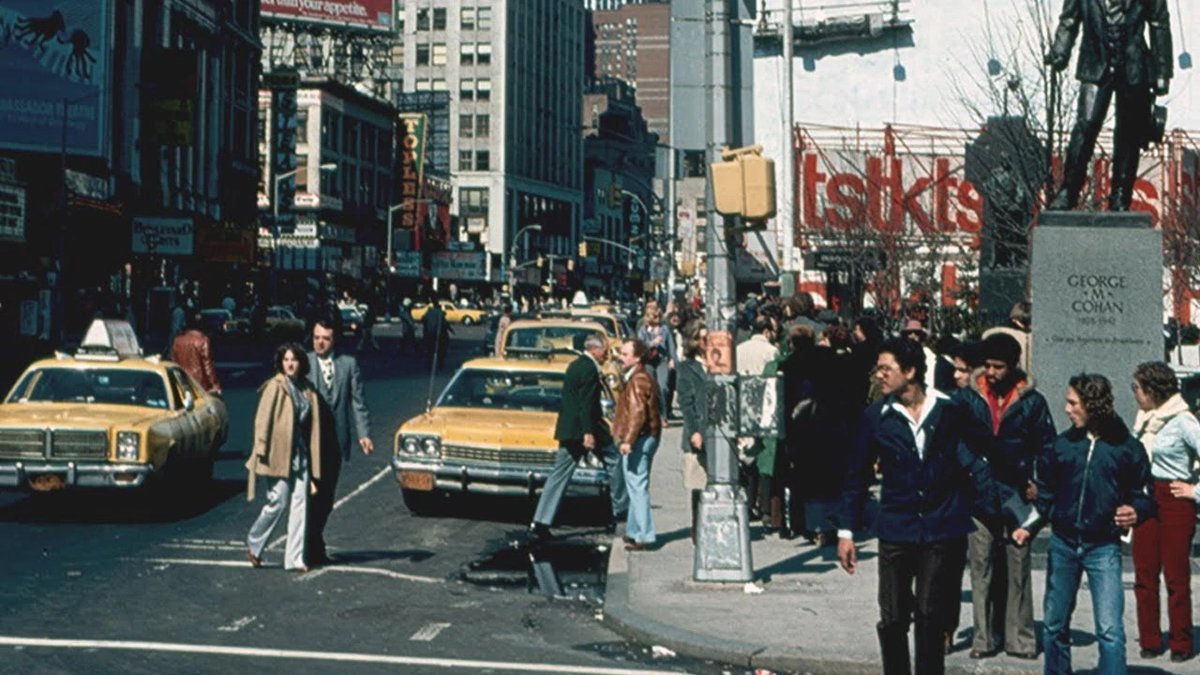
When people think about what happened in 1970s in the united states, they often picture a montage of bell-bottoms, disco balls, and long gas lines. While that’s part of the story, it’s only the surface. The ‘70s was a decade of profound contradiction—a period of cynicism and disillusionment that ran headfirst into an explosion of technological innovation and cultural creativity. It was a time when the nation grappled with the hangover of the 1960s, questioning its leaders, its global role, and its own identity.
This wasn’t just a transitional decade; it was a crucible. The events of these ten years forged the political skepticism, economic anxieties, and technological foundations of the America we live in today. From the fall of a president to the rise of the personal computer, the 1970s was the decade that drew the blueprint for the modern era.
At a Glance: The Decade’s Defining Shifts
- Political Upheaval: The end of the Vietnam War and the Watergate scandal shattered public trust in government, leading to the only presidential resignation in U.S. history.
- Economic Strain: The term “stagflation” entered the American vocabulary as a toxic mix of high inflation and high unemployment, kicked into overdrive by a crippling oil crisis.
- The Digital Dawn: While Washington and Wall Street struggled, quiet innovation in garages and labs gave us the microprocessor, the first personal computers from Apple and Microsoft, and the dawn of digital life.
- Cultural Reckoning: Television grew up with shows like All in the Family and MASH*, while blockbuster movies like Jaws and Star Wars changed Hollywood forever.
- Social Transformation: The voting age was lowered to 18, and American households began to fill with new technologies like color TVs and cable, changing how families lived and consumed information.
To understand the full scope of these changes, our guide on How the 70s reshaped America offers a bird’s-eye view. Here, we’ll dive deep into the specific forces that defined this pivotal decade.
A Crisis of Confidence in Washington
The decade began with the nation deeply divided over the Vietnam War and ended with Americans held hostage in Iran. In between, a political scandal of unprecedented scale toppled a presidency and left an indelible scar on the nation’s trust in its leaders.
The End of Vietnam and a Nation’s Reckoning
The U.S. military’s direct involvement in the Vietnam War officially concluded with the signing of the Paris Peace Accords in 1973. But the conflict’s true end came on April 30, 1975, when Saigon fell to North Vietnamese forces. The televised images of desperate South Vietnamese civilians clinging to American helicopters became a defining symbol of the war’s chaotic and bitter conclusion.
For America, this was more than a military withdrawal; it was a psychological blow. It marked the first definitive military defeat in the nation’s history and forced a painful re-evaluation of its role as a global superpower.
“I Am Not a Crook”: The Watergate Scandal Unpacked
While the Vietnam War was winding down, a domestic crisis was brewing that would prove just as damaging to the national psyche. It started with a seemingly minor break-in at the Democratic National Committee headquarters in the Watergate office complex in 1972. It ended with the resignation of President Richard M. Nixon on August 9, 1974—the only U.S. president ever to do so.
The ensuing investigation uncovered a vast conspiracy of wiretapping, political espionage, and a systematic cover-up that reached the highest levels of the White House. Nixon’s successor, Gerald Ford, made the controversial decision to grant him a full pardon, a move intended to help the nation heal but which many felt denied true accountability. The Watergate scandal permanently altered the relationship between the American public and its government, fostering a deep-seated cynicism that persists to this day.
The Carter Years and New Global Challenges
Emerging from the shadow of Watergate, Georgia governor Jimmy Carter was elected president in 1976. He ran as an outsider, a man of integrity who promised, “I will never lie to you.” His presidency was marked by attempts to restore trust and tackle complex issues, including brokering the Camp David Accords between Israel and Egypt.
However, his term was also defined by new challenges. He signed the SALT II treaty with the Soviet Union in 1979 to limit nuclear arms, but the decade closed on a note of crisis. In November 1979, Iranian students stormed the U.S. Embassy in Tehran, taking 52 American diplomats and citizens hostage. The Iran Hostage Crisis, which would last 444 days, dominated the final year of Carter’s presidency and symbolized a sense of American impotence on the world stage.
Navigating the “Malaise”: Stagflation and the Energy Shock
The political turmoil of the 1970s was mirrored by severe economic instability. The post-war economic boom shuddered to a halt, replaced by a frustrating new reality that baffled economists and squeezed American families.
When the Pumps Ran Dry: The 1973 Oil Embargo
In October 1973, the Organization of Arab Petroleum Exporting Countries (OAPEC) proclaimed an oil embargo against the United States in retaliation for its support of Israel during the Yom Kippur War. The impact was immediate and dramatic.
Gas prices quadrupled, and long lines snaked around gas stations across the country. The crisis exposed a critical vulnerability: America’s growing dependence on foreign oil. The federal government responded with measures like the 55-mph national speed limit, but the economic shockwaves rippled through every sector of the economy, triggering a deep recession.
The Puzzle of Stagflation
The 1970s economy was plagued by a phenomenon known as “stagflation”—a toxic combination of stagnant economic growth (rising unemployment) and high inflation (rising prices). This defied traditional economic wisdom, which held that the two moved in opposite directions.
For the average American family, this meant their paychecks bought less and less each year. While the median family income rose from $9,867 in 1970 to $19,684 by 1979, the real increase after accounting for rampant inflation was a mere 7% over the entire decade. This economic anxiety, which President Carter later termed a “crisis of confidence,” was a constant, grinding pressure on daily life.
A Look at the American Household
Despite the economic gloom, consumerism continued its advance. The 1970s saw a significant increase in the ownership of household goods:
- Color Television: In 1970, only 20% of households had a color TV. By 1979, that number had tripled to 60%.
- Cable Television: Subscriptions grew from 4.5 million to 14 million, heralding the beginning of the 24/7 news cycle and niche entertainment.
- Automobiles: The number of registered cars jumped from 90 million to 120 million, cementing the nation’s car culture even amidst the fuel crisis.
This created a strange paradox: while the national mood was pessimistic, the home was becoming more technologically advanced and comfortable than ever before.
From Pocket Calculators to Personal Computers
Away from the turmoil of politics and economics, a quiet revolution was taking place. The 1970s laid the technological groundwork for the digital world, driven by a handful of innovators who saw a future others couldn’t yet imagine.
The Microprocessor Changes Everything
The single most important technological breakthrough of the decade occurred in 1971 when Intel introduced the first commercially available microprocessor, the Intel 4004. This “computer on a chip” was the critical invention that made personal computers possible. It replaced bulky, room-sized mainframes with a tiny piece of silicon, democratizing computing power.
The decade saw this new technology quickly integrated into everyday items. The first pocket calculator went on sale in 1970, and the first digital wristwatch appeared in 1972, giving consumers their first taste of personal digital technology.
Garage Startups and a New Frontier
Two fledgling companies, both founded in the mid-70s, would go on to define the coming digital age:
- Microsoft (1975): Founded by Bill Gates and Paul Allen, their initial focus was on creating software for the new hobbyist microcomputers.
- Apple Computer Company (1976): Steve Jobs and Steve Wozniak started in a garage and, in 1977, released the Apple II. It was one of the first mass-produced, user-friendly personal computers, complete with a keyboard and color graphics, and it became a massive success in homes and schools.
These companies weren’t just building machines; they were building an industry from scratch, one that would fundamentally reshape society in the decades to follow.
Beyond Earth: America’s Final Steps on the Moon
The 1970s also marked a turning point in space exploration. The Apollo 17 mission in 1972 was the last time humans walked on the Moon, bringing the celebrated era of lunar exploration to a close.
The focus of NASA shifted toward robotic exploration of the solar system. This new chapter yielded stunning successes:
- Viking 1 (1976): Became the first spacecraft to successfully land on Mars and conduct its mission.
- Pioneer 11 (1979): Flew past Saturn, providing the first close-up images of the ringed planet.
A Decade in Review: Key Milestones by Year
This table provides a snapshot of the decade’s pivotal moments across different spheres of American life.
| Year | Political & Social | Economic & Technological | Culture & Sports |
|---|---|---|---|
| 1970 | Kent State shootings protest Vietnam War | First pocket calculators go on sale | Love Story is the top film; Simon & Garfunkel release Bridge Over Troubled Water |
| 1971 | 26th Amendment lowers voting age to 18 | Intel releases the first microprocessor (Intel 4004) | All in the Family premieres, becoming TV’s #1 show |
| 1972 | Watergate break-in; Nixon re-elected in a landslide | First digital watches are sold; SALT I treaty signed | The Godfather is released; Oakland A’s win first of three straight World Series |
| 1973 | Paris Peace Accords ends U.S. involvement in Vietnam | OAPEC oil embargo causes massive energy crisis | Miami Dolphins complete a perfect NFL season |
| 1974 | President Nixon resigns; Gerald Ford takes office | U.S. economy enters a deep recession | “The Rumble in the Jungle”: Ali defeats Foreman |
| 1975 | Fall of Saigon officially ends the Vietnam War | Microsoft is founded by Bill Gates and Paul Allen | Jaws becomes the first summer blockbuster |
| 1976 | Jimmy Carter elected President | Apple Computer Company is founded; Viking 1 lands on Mars | Cincinnati Reds win second consecutive World Series |
| 1977 | U.S. returns control of the Panama Canal to Panama | The Apple II computer goes on sale | Star Wars revolutionizes filmmaking |
| 1978 | Camp David Accords signed between Israel and Egypt | Volkswagen opens first U.S. auto plant in Pennsylvania | The Bee Gees’ “Night Fever” and the Saturday Night Fever soundtrack dominate the charts |
| 1979 | Iran Hostage Crisis begins in Tehran | SALT II treaty signed; Pioneer 11 flies by Saturn | Kramer vs. Kramer wins the Oscar for Best Picture |
Burning Questions About the 1970s Answered
Why is the 1970s often called a “decade of malaise”?
The term was popularized by President Carter in a 1979 speech (though he never used the word “malaise” itself). It captured a widespread national feeling of pessimism fueled by the Vietnam defeat, the Watergate scandal, stagflation, and the energy crisis. It felt like a period where American power and optimism had reached their limits.
Was the 1970s economy really that bad?
For many, yes. Stagflation was a real and painful problem that eroded savings and made it hard for families to get ahead. However, it’s also true that homeownership and the acquisition of consumer goods like color TVs and second cars continued to rise. The frustration came from the fact that, for the first time since World War II, it no longer felt like the next generation would automatically be better off.
Did anything good come out of the Watergate scandal?
Absolutely. While it deeply damaged public trust, it also powerfully reaffirmed the principle that no one is above the law, not even the President of the United States. It led to significant campaign finance reforms (though many have since been dismantled) and inspired a generation of investigative journalists.
What was the most enduring fashion trend of the 1970s?
While platform shoes and polyester suits are iconic, the most lasting trend was the normalization of casual wear. Denim jeans, t-shirts, and athletic sneakers moved from being niche or workwear items to mainstream, everyday fashion for men and women—a trend that has only grown since.
The Lingering Echoes of the 1970s
The 1970s was far more than a collection of fads and crises. It was a decade of transition that forced America to confront its limitations while simultaneously planting the seeds of its digital future. The cynicism born from Watergate and Vietnam reshaped American politics. The economic shocks of the oil crisis permanently altered our relationship with global energy markets.
And in the garages of California, the innovations that would define the next 50 years were quietly taking shape. The decade that began with a nation looking back in anger and confusion ended on the cusp of a technological revolution. The 1970s didn’t just happen; they set the stage for the world we inhabit today.










