
Many films glamorize the battlefield, but the most powerful war docos strip away the fiction. They don’t entertain; they confront. They trade special effects for the unvarnished testimony of a survivor, the shaky footage of a citizen journalist, or the chilling silence of a location where atrocities occurred. These documentaries aren’t just about history; they’re about the indelible marks conflict leaves on the human soul.
This guide moves beyond a simple list of titles. We’ll explore how specific films reveal different facets of war’s human cost—from the psychological burden on soldiers to the systemic cruelty inflicted upon civilians and the moral corrosion of command.
At a Glance: What You’ll Discover
- The Soldier’s Experience: How documentaries use personal archives and testimony to show the psychological toll of combat.
- The Civilian Catastrophe: A look at films that bear witness to the suffering of non-combatants and the mechanics of genocide.
- The Burden of Command: Understanding the complex, often devastating decisions made far from the front lines.
- Unseen Battlefields: Exploring the hidden costs of war, from cultural destruction to the fight for dignity within the ranks.
- A Framework for Watching: A clear guide to help you choose a documentary based on the aspect of war you want to understand.
Beyond the Battlefield: Documenting the Soldier’s Psyche
Strategy and troop movements are one thing; the interior world of a soldier is another entirely. The most intimate war docos use personal accounts—letters, diaries, and direct-to-camera interviews—to close the distance between the viewer and the subject. They focus on the individual, making the immense scale of war deeply personal.
The Power of the Personal Letter
Dear America: Letters Home from Vietnam (1987) is a masterclass in this approach. By having actors like Robert De Niro and Willem Dafoe read real letters from American soldiers, the film bypasses a narrator’s detached analysis. You hear the hope, fear, boredom, and disillusionment in the soldiers’ own words. The archival footage isn’t just wallpaper; it’s the visual context for the raw emotions being shared. It’s a gut punch, reminding us that every soldier was someone’s son, brother, or husband, writing home with a desperate need to connect.
The Survivor’s Harrowing Journey
Some stories are so singular they encapsulate the entire absurdity and brutality of a conflict. Werner Herzog’s Little Dieter Needs to Fly (1997) tells the story of Dieter Dengler, a U.S. Navy pilot shot down over Laos during the Vietnam War. Herzog doesn’t just interview Dengler in a comfortable chair; he takes him back to the very places he was imprisoned and tortured.
This technique is confrontational and brilliant. As Dengler re-enacts his capture and eventual escape, the past and present merge. His nervous energy and detailed recollections make the experience terrifyingly immediate. It’s not a story about military victory but about the sheer force of a human spirit refusing to be broken.
These documentaries are essential viewing, but they represent just one lens through which to view conflict. For a broader look at films covering various wars and perspectives, you can Understand War’s True Cost with our comprehensive pillar guide.
Reanimating the Past
Peter Jackson’s They Shall Not Grow Old (2018) did something revolutionary for World War I footage. Using state-of-the-art restoration, colorization, and sound design, Jackson transformed grainy, silent clips into something visceral and contemporary. The voices you hear are not actors but actual British veterans from archive interviews.
The film’s genius is in its humanization. We see the soldiers’ boyish faces, their rotten teeth, their exhausted smiles. When they speak of the mundane details—the lice, the mud, the food—the “Great War” becomes a tangible, miserable, and profoundly human experience. It proves that the cost of war is paid not just in grand battles but in moments of quiet suffering.
Witness to Atrocity: The Civilian Experience

War is not just fought between soldiers. Its cruelest impacts are often felt by civilians caught in the crossfire or targeted by systematic violence. The documentaries that tackle this subject carry a heavy burden: to bear witness without exploiting the victims’ suffering.
Two Approaches to the Holocaust
No event has been documented with more moral urgency than the Holocaust. Two films, Night and Fog (1956) and Shoah (1985), stand as monumental achievements, yet they employ radically different methods.
- Alain Resnais’ Night and Fog is a haunting 30-minute meditation. It juxtaposes color footage of the overgrown, abandoned concentration camps in the 1950s with black-and-white archival footage of the horrors that occurred there. The quiet, poetic narration creates a chilling disconnect between the serene present and the ghastly past, asking a terrifying question: How could this happen, and how easily could it happen again?
- Claude Lanzmann’s Shoah is an epic nine-hour oral history that famously uses no archival footage. Lanzmann believed that images of the time could not possibly convey the reality. Instead, he relies exclusively on the testimony of survivors, perpetrators, and bystanders, filmed decades later. By forcing us to listen intently and visualize the events through their words, Shoah makes the viewer an active participant in remembering. It is a demanding, devastating, and unforgettable piece of filmmaking.
Modern Conflicts, Modern Witnessing
The need to document civilian suffering hasn’t faded. City of Ghosts (2017) follows the citizen journalists of “Raqqa Is Being Slaughtered Silently” (RBSS), a group of ordinary people who risked their lives to document the atrocities of ISIS in their home city.
This film reveals a new kind of human cost: the burden of being a witness in the digital age. The members of RBSS are not trained war correspondents. They are activists fighting a war of information, smuggling out footage of beheadings and crucifixions while being hunted by one of the world’s most dangerous terrorist groups. The film is a powerful testament to their courage and the psychological trauma they endure to ensure the world cannot claim it didn’t know.
The Moral Labyrinth of Command
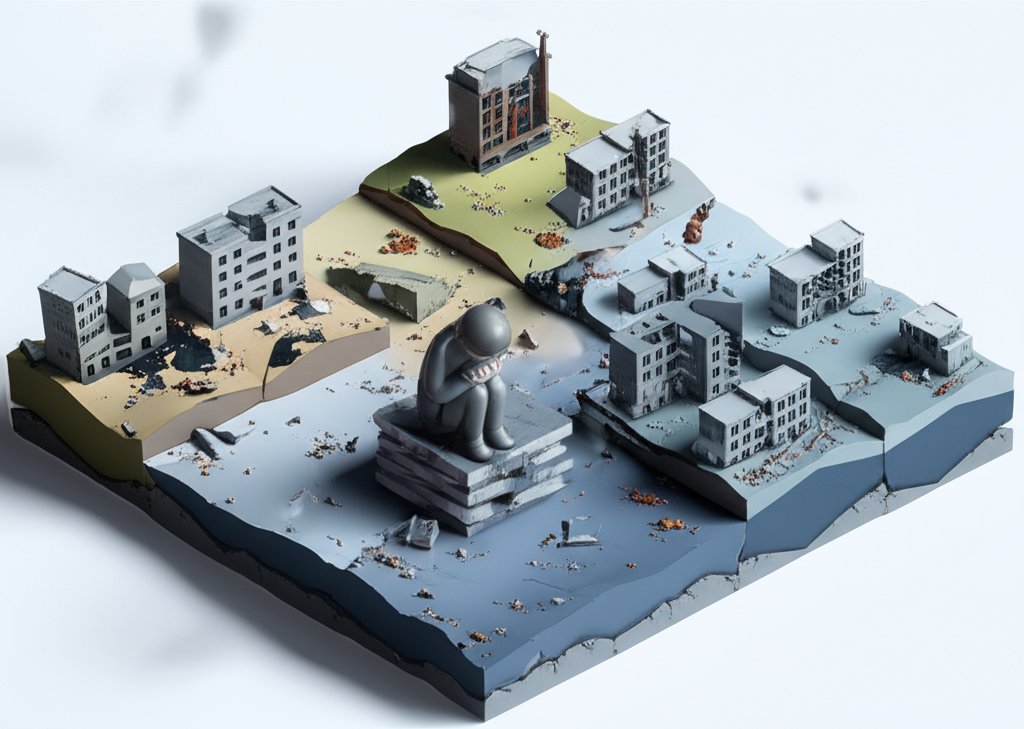
Some of the most profound war docos focus on the architects of conflict—the politicians, secretaries, and strategists who make decisions that cost thousands of lives. These films explore the complex calculus of power, the fog of uncertainty, and the heavy weight of hindsight.
Errol Morris’s The Fog of War (2003) is the definitive film in this category. Through a series of interviews with former U.S. Secretary of Defense Robert McNamara, the film examines his role in events like the Cuban Missile Crisis and, most centrally, the Vietnam War.
McNamara is a fascinating, complex figure—brilliant, arrogant, and, in his old age, seemingly haunted. Morris doesn’t let him off the hook, but he also doesn’t paint him as a one-dimensional villain. Instead, the film presents “11 lessons” from McNamara’s life, exploring the rationalizations and miscalculations that led to catastrophic outcomes. It’s a chilling look at how intelligent, powerful people can lead a nation into disaster, revealing that one of war’s greatest costs is moral certainty.
Similarly, Taxi to the Dark Side (2007) investigates how high-level policy decisions about “enhanced interrogation” directly led to the torture and death of an innocent Afghan taxi driver. The film meticulously connects the dots from the Pentagon to the brutal realities of a Bagram prison, showing that the cost of moral compromise at the top is paid in blood at the bottom.
Your Guide to Choosing the Right War Doco
With so many powerful films, choosing one can be daunting. Use this framework to find the documentary that aligns with what you want to explore.
| If you want to understand… | Then your starting point should be… | Because it excels at… |
|---|---|---|
| The soldier’s intimate reality | Dear America: Letters Home from Vietnam | Using personal letters to convey raw, unfiltered emotion from the front lines. |
| An individual’s will to survive | Little Dieter Needs to Fly | Focusing on one man’s incredible story of capture, torture, and escape. |
| The mechanics of genocide | Shoah or Night and Fog | Presenting unflinching, though stylistically different, accounts of the Holocaust. |
| The moral choices of leaders | The Fog of War | Offering a complex, first-person psychological portrait of a wartime architect. |
| Modern citizen journalism | City of Ghosts | Showing the courage and trauma of ordinary people documenting atrocities in real-time. |
| The total scope of a global war | The World at War (series) | Providing a comprehensive, multi-perspective overview of WWII with key interviews. |
Quick Answers to Common Questions
Q: Are colorized war docos like ‘They Shall Not Grow Old’ less authentic?
Not necessarily. While purists may argue that colorization alters the original record, proponents believe it removes a psychological barrier for modern audiences. By making the footage look less like a distant, abstract past, colorization can foster a more immediate and empathetic connection with the subjects, thereby enhancing the emotional truth of the experience.
Q: What’s the difference between a documentary and propaganda?
The line can sometimes be blurry, but it comes down to intent. A documentary, at its best, seeks to investigate, understand, and present a truth, even if it’s complex or uncomfortable. Propaganda aims to persuade an audience of a specific viewpoint, often by simplifying issues, appealing to emotion, and omitting inconvenient facts. A film like Why We Fight: The Battle of Russia (1943), created by the U.S. government during WWII, is a historical artifact of propaganda. It was designed to build support for an ally, not to provide a nuanced historical analysis.
Q: Why are some of the most famous war docos, like ‘Shoah’, so long?
The length is often a deliberate artistic and ethical choice. For a subject as monumental and horrific as the Holocaust, director Claude Lanzmann felt that a conventional film length would be an injustice. The nine-hour runtime of Shoah forces the viewer to slow down, to listen, and to truly absorb the weight of the testimony. It denies us an easy emotional exit, arguing that some truths require a significant investment of our time and attention to even begin to comprehend.
Watching these films is not easy. They demand your attention and your empathy. But they are essential. The best war docos serve as a collective memory, a warning from the past, and a powerful testament to the resilience of the human spirit. They don’t just show us what war is; they compel us to confront why it costs so much and to question the reasons we continue to wage it.










