
Prepare for an immersive journey into the extraordinary life and dramatic downfall of Hui Ka Yan, the visionary yet ultimately flawed entrepreneur behind the colossal China Evergrande Group. From the depths of rural poverty, he ascended to become one of the nation’s wealthiest Real Estate Tycoons, building an empire that reshaped skylines across Real Estate China. Yet, his story is a breathtaking saga not just of ambition and unprecedented growth, but also of the systemic forces and audacious risks that led to a spectacular collapse, sending tremors through the entire China property market and beyond. This article will meticulously detail Hui’s strategic genius, the intricate world of Chinese real estate, the regulatory shifts that sealed his fate, and the profound implications of his empire’s unraveling. Get ready to uncover the captivating and complex narrative of a man who personified the boom and bust cycles of modern China.
While Hui Ka Yan’s story is unique, it also reflects broader trends within the Chinese real estate sector, which has seen dramatic growth and significant challenges, highlighting the need to understand key facts about real estate before investing.
The Formative Years: From Poverty to Promise
Before he commanded one of the largest property empires the world has ever seen, Hui Ka Yan’s life began in circumstances far removed from the glittering skyscrapers of his future. His origins are a powerful testament to the transformative, albeit often brutal, power of China’s economic reforms, illustrating a classic rags-to-riches tale that once seemed like an unstoppable force.
A Childhood Forged in Rural Henan
Born in 1958 in a rural village in Taikang County, Henan province, Hui Ka Yan experienced a childhood marked by struggle and scarcity. His mother died when he was young, leaving him to be raised primarily by his grandmother. Access to education was a luxury, but Hui displayed an early determination, persevering through local primary and middle schools. A pivotal moment arrived in 1978 when he successfully passed the Gaokao, China’s national college entrance examination, which had just resumed after the Cultural Revolution. This achievement, a rare ladder to social mobility, earned him a place at the Wuhan Institute of Iron and Steel (now Wuhan University of Science and Technology). His engineering education provided him with a foundational understanding of large-scale industrial projects, a skill that would prove profoundly invaluable in his later career.
Steel Industry Stepping Stone: Building Foundational Skills
Upon graduating in 1982, Hui was assigned to work at a state-owned steel company in Wuyang, Henan. He dedicated a decade to this role, diligently rising through the ranks and gaining crucial experience in management, production, and dealing with large-scale industrial operations. This period, while seemingly far removed from property development, instilled in him a deep understanding of logistics, supply chains, and the practicalities of construction that would later become defining characteristics of China Evergrande. Crucially, it also exposed him to the bureaucratic intricacies of state-owned enterprises, teaching him the importance of cultivating relationships and strategically navigating within China’s unique economic and political landscape. These early experiences laid the groundwork for the Real Estate Tycoon he would become.
The Genesis of an Empire: China Evergrande’s Meteoric Rise

The 1990s marked a new era for China, characterized by rapid urbanization and the burgeoning private property market. Hui Ka Yan was perfectly positioned to seize this moment, founding the China Evergrande Group in 1996 in Guangzhou, a city at the forefront of China’s economic boom.
Founding Vision: Affordable Housing for a Nation
Hui’s early vision was audacious yet keenly focused: to build mass-market, high-quality, and affordable homes for China’s rapidly expanding middle class. Unlike many competitors who concentrated solely on high-end luxury developments in first-tier cities, Evergrande strategically targeted second and third-tier cities. These urban centers were experiencing explosive population growth but were largely underserved by existing developers. This shrewd strategy allowed Evergrande to acquire vast tracts of land at comparatively lower prices, serving a massive, hungry market. His ambition wasn’t just to build, but to build everywhere, and for everyone.
The “High-Leverage, High-Turnover” Model
The company’s rapid growth was not merely fueled by market demand; it was propelled by an innovative, albeit inherently risky, business model often dubbed “high-leverage, high-turnover.” China Evergrande would acquire immense land parcels, frequently using substantial debt. They would then quickly sell units off-plan, sometimes even before construction began, using the proceeds to fund ongoing construction, service existing debt, and acquire even more land. This aggressive cycle of borrowing, building, and selling allowed for exponential expansion. Hui Ka Yan was a master at leveraging financing from traditional banks, the less regulated shadow banking sector, and by issuing high-yield bonds to eager international investors. His remarkable ability to cultivate strong relationships with local governments also proved critical, enabling Evergrande to secure prime land parcels and navigate complex regulatory hurdles with surprising ease within Real Estate China. This speculative model, while incredibly effective during a boom, laid the foundation for future instability.
Unprecedented Expansion: Reshaping Real Estate China
From its base in Guangzhou, Evergrande’s expansion was nothing short of breathtaking. It quickly spread across the country, embarking on a dizzying array of over 1,300 projects in 280 cities at its peak. This relentless geographical spread and project volume transformed China Evergrande into the nation’s second-largest property developer by sales, its iconic red logo becoming synonymous with modern Chinese urban development. Hui Ka Yan, the Real Estate Tycoon, was not just building buildings; he was building entire communities, often with supporting infrastructure like schools and hospitals, illustrating the immense scale of his ambition and the pervasive influence of his company on the China property market.
Beyond Bricks and Mortar: A Real Estate Tycoon’s Grand Diversification
Hui Ka Yan’s ambitions extended far beyond concrete and steel. He envisioned China Evergrande not just as a property developer, but as a sprawling, diversified conglomerate touching every facet of modern Chinese life. This aggressive diversification was a hallmark of his risk-taking nature.
The Electric Vehicle Gamble: Evergrande Auto’s Ambitions
In one of his boldest and most bewildering moves, Hui poured billions of dollars into Evergrande New Energy Vehicle Group, declaring an aim to become the world’s largest EV maker within three to five years. This enormous investment, initiated despite the company’s already mounting debt and complete lack of automotive experience, was seen by some as visionary, by others as a speculative gamble of epic proportions. Prototypes were unveiled, vast factories were planned, but actual production remained elusive, becoming a significant drain on Evergrande’s resources.
Sporting Glory and Brand Building: Guangzhou FC
Evergrande also made a splash in the world of sports. The company acquired the Guangzhou Football Club (now Guangzhou FC) in 2010, pouring massive funds into it. This investment transformed the club into a powerhouse, winning multiple Chinese Super League titles and two AFC Champions League titles. The success brought immense national recognition and invaluable brand prestige to China Evergrande, boosting its public profile and indirectly aiding its Real Estate China operations.
Forays into Health, Wealth, and More
The company’s diversification didn’t stop there. Evergrande ventured into health and wellness with Evergrande Health Land, focusing on elder care facilities and healthcare services, and even launched its own line of bottled water. Crucially, Evergrande also established its own wealth management products, attracting retail investors with promises of high returns. These products, often used to bridge short-term cash flow gaps within the property business, further deepened Evergrande’s intertwining with the broader financial system and the savings of ordinary Chinese citizens – a factor that would become critical during its collapse. Hui Ka Yan, the ultimate Real Estate Tycoon, seemed intent on building an all-encompassing empire, a reflection of his unshakeable belief in rapid, multifaceted growth.
The Unseen Threads: Influence, Philanthropy, and Personal Enigma
Hui Ka Yan’s journey is punctuated by fascinating details and contradictions that paint a more complete picture of the man behind the empire and the unique environment of Real Estate China.
Master of Political Capital: Strategic Connections
One of the most defining aspects of Hui Ka Yan’s meteoric success was his unparalleled mastery of political navigation. He cultivated deep relationships with high-ranking officials and held a prominent position as a member of China’s top political advisory body, the Chinese People’s Political Consultative Conference (CPPCC). Such connections provided China Evergrande with a significant advantage, from securing favorable land deals in competitive tenders to ensuring smoother project approvals and navigating regulatory hurdles with relative ease. In the complex world of Real Estate China, the intertwining of business and government is a critical, often opaque, factor, and Hui was a prime example of someone who excelled in this intricate environment. His political savvy was arguably as important to his rise as his business acumen.
Bountiful Benefactor: Philanthropy and Public Image
Despite his reputation for aggressive business tactics and immense wealth accumulation, Hui Ka Yan was also known for his significant philanthropic endeavors. He regularly featured on China’s top donor lists, with China Evergrande reportedly contributing billions of dollars to poverty alleviation initiatives, education, healthcare, and disaster relief efforts. For instance, Evergrande reportedly invested billions in rejuvenating Duyang County, Guizhou, a poverty-stricken region. While some viewed this as genuine altruism, others recognized the strategic value of such large-scale charitable acts, which often build crucial political capital and demonstrate alignment with government priorities in China.
The Reserved Billionaire: Hui Ka Yan’s Private World
Despite his immense wealth—at his peak, he was briefly Asia’s richest man in 2017 with a net worth exceeding $40 billion—Hui Ka Yan maintained a surprisingly private life. He rarely gave interviews or actively courted the media spotlight, preferring to let Evergrande’s towering projects and aggressive marketing speak for themselves. This enigmatic persona added to his mystique, contrasting sharply with the often-flashy displays of wealth seen with other global billionaires. This privacy was perhaps a calculated move in a country where high-profile figures can quickly attract unwanted governmental scrutiny, particularly as the China property market became a focus of regulatory attention.
The Cracks Emerge: Unraveling of the China Evergrande Empire
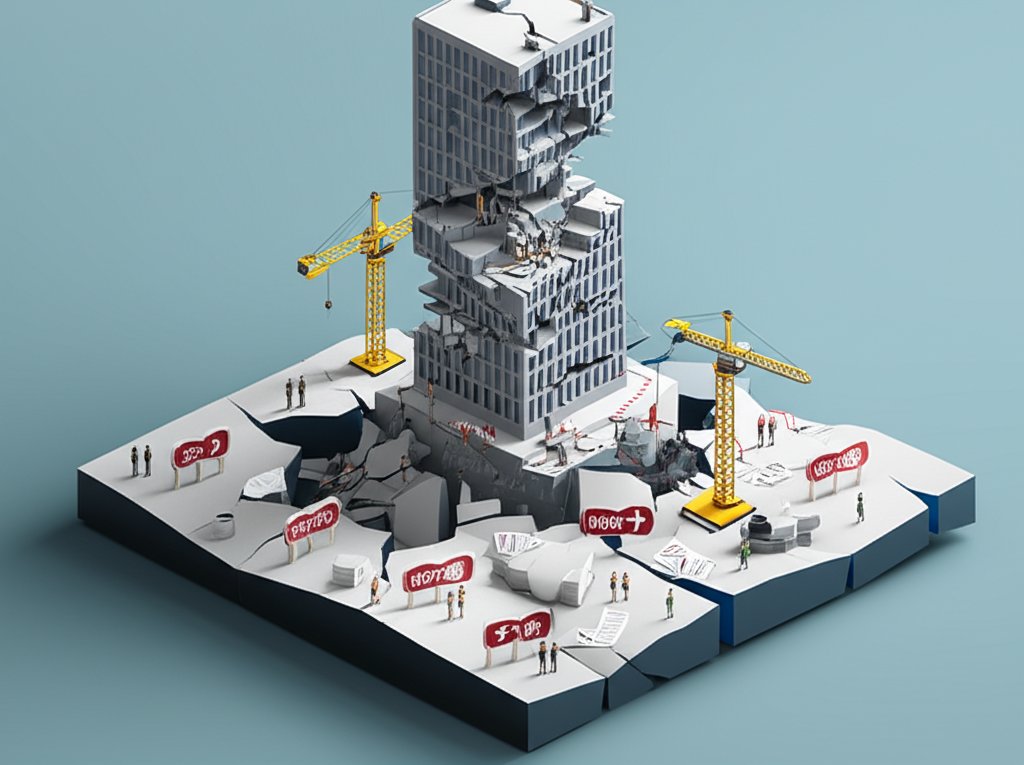
The dizzying ascent of China Evergrande was not sustainable indefinitely. The seeds of its eventual collapse were sown deep within its aggressive growth model, compounded by a decisive shift in government policy that fundamentally altered the landscape of the China property market.
Beijing’s Red Line: A Policy Shift for the China Property Market
The undeniable turning point came in August 2020 when the Chinese government introduced the “Three Red Lines” policy. This set of strict new regulations was specifically designed to curb developer debt, reduce systemic risk, and rein in what was seen as uncontrolled leverage within Real Estate China. The rules targeted three key financial metrics:
- Liability-to-asset ratio excluding pre-sales: Must be less than 70%.
- Net debt-to-equity ratio: Must be less than 100%.
- Cash-to-short-term debt ratio: Must be more than 1x.
China Evergrande spectacularly failed all three metrics, often by a significant margin. This policy effectively choked off the oxygen supply to Evergrande’s debt-fueled growth engine, drastically limiting its ability to borrow new funds and forcing a dramatic deleveraging that the company was profoundly ill-equipped to handle due to its historical reliance on constant credit.
The Debt Avalanche: Missed Payments and Default
With new borrowing curtailed, Evergrande’s vast network of ongoing projects, suppliers, and contractors across Real Estate China began to feel the pinch. The company’s staggering liabilities, estimated at over $300 billion, became impossible to service. By late 2021, the inevitable occurred: China Evergrande began missing payments on its offshore bonds, triggering a formal default and sending shockwaves through global financial markets. This period was marked by escalating social unrest, as homebuyers across China, who had purchased units off-plan, staged protests demanding the delivery of their unfinished apartments. Suppliers too, facing financial ruin, called for immediate payment. These dramatic events laid bare the severe liquidity crisis gripping the once-invincible Real Estate Tycoon’s empire.
Contagion Across Real Estate China: Broader Market Impact
The crisis at China Evergrande was not an isolated incident; its tremors quickly reverberated throughout Real Estate China. Other highly leveraged developers faced similar deleveraging pressures, leading to a broader slowdown and a significant loss of confidence in the entire China property market. Consumer sentiment plummeted, impacting sales and exacerbating the financial woes of numerous firms, including major players like Country Garden and Sunac China. The crisis starkly highlighted the systemic risks of China’s property sector, which accounts for a significant portion of the country’s GDP and household wealth. The government was left with the immense challenge of managing a “controlled demolition” of overleveraged developers without triggering a wider economic or social collapse, while homebuyers launched widespread “mortgage boycotts” on unfinished properties.
The Shocking Fall: Detention, Liquidation, and Lasting Repercussions
The dramatic fall culminated in the detention of Hui Ka Yan and the ultimate liquidation of China Evergrande, marking the official end of an era for one of Real Estate China’s most iconic figures and a profound shift in the China property market.
Hui Ka Yan Under Scrutiny: “Illegal Crimes” and Detention
In September 2023, news broke that Hui Ka Yan had been placed under “residential surveillance” by Chinese authorities, a euphemism for detention, on suspicion of “illegal crimes.” While specific charges remain officially undisclosed, it is widely believed that the investigation relates to Evergrande’s financial mismanagement, potential misuse of funds, and perhaps illegal transfer of assets. This marked a stunning and humiliating reversal of fortune for the once-powerful Real Estate Tycoon. His detention sent a clear, unambiguous signal that even the most connected billionaires are not immune from the Communist Party’s crackdown on perceived financial malfeasance and risks to financial stability, particularly in the sensitive China property market. In a related development, the China Securities Regulatory Commission later issued a fine of 4.2 billion yuan (approximately £431 million) against Evergrande’s subsidiary, Hengda Real Estate Group Company, for violations including falsifying financial records. Hui Ka Yan himself was fined 47 million yuan (£4.8 million) and barred from China’s securities markets for life, with other executives also penalized.
The Final Nail: Evergrande’s Liquidation and Delisting
After defaulting on its debts and a protracted attempt at restructuring, China Evergrande reached its unavoidable conclusion. In January 2024, a Hong Kong court ordered the liquidation of Evergrande, deeming its proposed restructuring plan unfeasible and its efforts insufficient. This decision marked the official end of the company as a publicly listed entity and initiated a complex process to seize and sell off its remaining assets to repay creditors. The company was subsequently delisted from the Hong Kong Stock Exchange in August 2024, after trading of its shares had been halted for 19 months. Liquidators are now tasked with the monumental challenge of unwinding an empire with vast assets and even vaster liabilities, a process that experts predict could take a decade, with an expected very low recovery rate for creditors. This final act solidifies the shocking end to the spectacular career of Hui Ka Yan.
Aftershocks for the China Property Market and Global Economy
The collapse of China Evergrande and the detention of its founder have far-reaching implications, not just for Real Estate China but for the broader global economy. It exposed fundamental weaknesses in China’s growth model, particularly its reliance on debt-fueled property development, which once accounted for a quarter of its GDP. The crisis has led to:
- Financial Contagion Fears: Initial anxieties about Evergrande’s collapse triggering a domino effect across China’s financial system and even spilling over into global markets. While a full-blown global financial crisis has been avoided, underlying risks remain.
- Economic Slowdown: The prolonged property sector slowdown has been a significant drag on China’s overall economic growth, impacting investment, consumption, and related industries like construction and manufacturing.
- Social Unrest: The widespread issue of unfinished properties has led to persistent discontent among homebuyers, posing an ongoing social stability challenge for the government, despite policy measures aimed at restoring confidence.
- Investor Caution: International investors have become significantly warier of investing in Chinese companies, particularly those in the property sector, leading to capital outflows and increased scrutiny. The accounting firm PwC was also banned for six months in China and fined over its audit involvement with Evergrande.
- Global Supply Chain Impact: Reduced demand within the China property market impacts global raw material suppliers (e.g., iron ore, copper, cement).
Hui Ka Yan’s story serves as a profound cautionary tale of unchecked ambition, the perilous consequences of excessive leverage, and the ultimate power of state intervention in a centrally planned economy.
Conclusion: The Unfinished Legacy of a Real Estate Tycoon
The story of Hui Ka Yan is a compelling narrative that encapsulates the dramatic economic transformation of modern China, from its boundless opportunities to its inherent risks. From his humble beginnings, he rose to become an undisputed Real Estate Tycoon, building China Evergrande into an empire that literally reshaped skylines across Real Estate China. His strategic vision, relentless ambition, and mastery of political networking propelled him to unimaginable heights, creating billions in wealth and employing hundreds of thousands.
However, the very strategies that fueled his meteoric rise—aggressive debt accumulation, rapid expansion, and bold diversification into ventures like electric vehicles—ultimately became the instruments of his spectacular downfall. The government’s decisive intervention with the “Three Red Lines” policy proved to be the Achilles’ heel for an empire built on leverage, leading to a crisis that exposed the fragility of the entire China property market. Hui Ka Yan’s journey highlights the delicate balance between ambition and sustainability, innovation and reckless risk. His current predicament, under investigation and with his company in liquidation, stands as a stark reminder that in the volatile landscape of Real Estate China, even the most powerful figures are ultimately subject to the unforgiving forces of market cycles and the absolute control of the state. His legacy remains a complex, indelible, and cautionary chapter in China’s economic history, a testament to what can be built, and what can be lost, in the pursuit of an empire.
FAQ Section
What did Hui Ka Yan do?
Hui Ka Yan founded and served as the chairman of China Evergrande Group, which grew to become one of the largest property developers in Real Estate China. He oversaw its aggressive expansion into real estate, electric vehicles, sports, and other sectors, leveraging massive amounts of debt to fuel rapid growth. He was also known for his significant philanthropic contributions and close political connections, which aided his company’s expansion.
Where is Hui Ka Yan now?
As of September 2023, Hui Ka Yan was placed under “residential surveillance” by Chinese authorities on suspicion of “illegal crimes.” The exact charges and his precise location have not been publicly disclosed, but he is currently under investigation following the collapse of his China Evergrande empire. He has also been fined 47 million yuan and barred from China’s securities markets for life by the China Securities Regulatory Commission.
What is China Evergrande Group?
China Evergrande Group was a massive Chinese conglomerate primarily focused on property development, founded by Hui Ka Yan in 1996. At its peak, it was one of the largest real estate companies in the world, with projects in hundreds of cities across Real Estate China. It also diversified into electric vehicles, healthcare, sports, and finance before its financial crisis. The company was ordered to liquidate by a Hong Kong court in January 2024 and subsequently delisted from the Hong Kong Stock Exchange in August 2024.
How did China Evergrande get into debt?
China Evergrande accumulated massive debt primarily through an aggressive “high-leverage, high-turnover” business model. They borrowed heavily to acquire land, quickly started selling properties off-plan, and used those proceeds to fund construction and acquire more land. This cycle was sustained by constant access to credit from banks, bond markets, and shadow banking, alongside attracting retail investors with high-return wealth management products. Regulatory changes by the Chinese government in 2020, particularly the “Three Red Lines” policy, drastically curtailed their ability to borrow, leading to a severe liquidity crisis and default.
What impact does Evergrande’s crisis have on global markets?
The China Evergrande crisis caused significant concerns about potential contagion in global financial markets. While a full-blown global financial crisis has been avoided, its impact has included:
What was the “Three Red Lines” policy?
The “Three Red Lines” policy, introduced by the Chinese government in August 2020, was a set of strict regulations designed to curb developer debt and reduce systemic risk in Real Estate China. These rules targeted:
China Evergrande failed all three metrics, critically limiting its ability to borrow and ultimately triggering its downfall.
What is the current status of China Evergrande’s projects?
Following the liquidation order in January 2024, Evergrande’s liquidators are tasked with seizing and selling off its assets, which include a vast number of unfinished properties across Real Estate China. Many homebuyers who bought these properties off-plan are still awaiting completion and delivery, leading to ongoing social unrest and a significant challenge for the government to ensure housing delivery and maintain social stability. The process of unwinding these projects is expected to take many years.
Were other Chinese real estate tycoons affected by this crackdown?
Yes, the regulatory crackdown, particularly the “Three Red Lines” policy, impacted many Real Estate Tycoons and developers across Real Estate China. Companies like Country Garden, Sunac China, and Fantasia Holdings also faced immense financial pressure and defaults, illustrating a systemic crisis within the China property market that extends beyond just Hui Ka Yan and Evergrande.
What are the core lessons from Hui Ka Yan’s story?
Hui Ka Yan’s story offers several critical lessons:











1 thought on “Hui Ka Yan: Evergrande Tycoon’s Epic Rise & Shocking Fall”
Comments are closed.