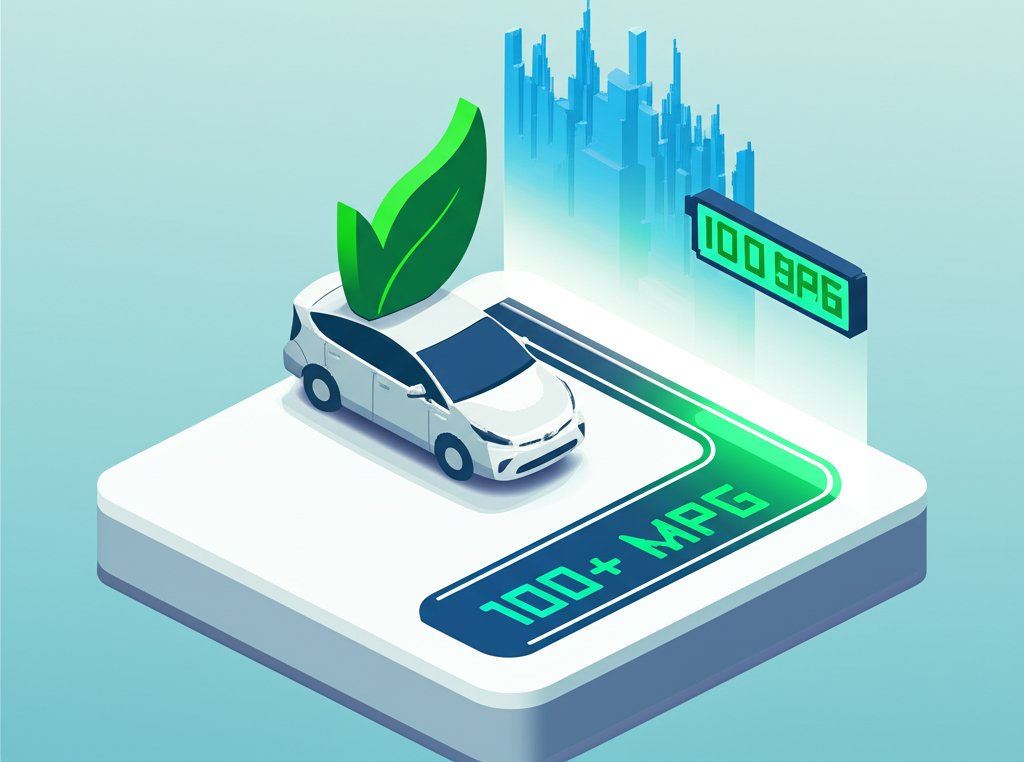
The automotive landscape has witnessed few revolutions as profound and lasting as the advent of the Toyota Prius. More than just a car, it stands as a testament to innovation, a symbol of environmental consciousness, and a blueprint for the future of personal transportation. Since its pioneering debut, the Prius has continuously redefined what a hybrid vehicle can be, solidifying its status as an icon among eco-friendly cars and setting new benchmarks for fuel efficiency.
This comprehensive guide is meticulously crafted to unravel the intricate layers of the Toyota Prius, from its visionary origins to its cutting-edge modern iterations. We’ll delve into compelling Prius facts, dissect its engineering marvels, trace its generational advancements, and provide actionable insights to help you maximize its renowned fuel efficiency. Prepare to journey through the fascinating evolution of a car that genuinely went “before all others,” shaping the world’s perception of sustainable driving.
The Prius’s impact extends beyond just fuel economy; you can find even more interesting facts about Toyota cars, showcasing the breadth of their innovation and commitment to automotive excellence.
The Toyota Prius Legacy: A Pioneer in Hybrid Innovation
To truly appreciate the Toyota Prius, one must understand its foundational role. It didn’t just introduce a new model; it introduced an entirely new category, paving the way for every hybrid vehicle that followed.
“Prius” Defined: “To Go Before”
The name “Prius” is no arbitrary choice; it’s a statement of intent, derived from Latin meaning “to go before.” This prophetic moniker was perfectly chosen, as the Toyota Prius unquestionably went before, pioneering a technological and philosophical shift that would profoundly reshape the global automotive industry. It signaled a departure from conventional thinking and a bold leap into an electrified future.
The Birth of the Mass-Produced Hybrid Vehicle
The journey began in 1995 when Toyota unveiled a hybrid concept car at the Tokyo Motor Show. This audacious vision rapidly transitioned into reality, leading to the launch of the first-generation Toyota Prius in Japan in December 1997. It holds the undisputed title of the world’s first mass-produced gasoline-electric hybrid vehicle. While competitors were still conceptualizing alternative power sources, Toyota delivered a practical, production-ready solution that put unprecedented fuel efficiency and lower emissions directly into consumers’ hands. Its initial compact sedan form, while unassuming, housed a powertrain that promised to change the world. By 2000, the Prius arrived in North American and European markets, planting the seeds for its global phenomenon.
Global Impact: Shaping the Future of Eco-Friendly Cars
The foresight embedded in the Prius’s name goes beyond chronological release. It embodies a philosophical shift towards sustainable transportation. Toyota didn’t merely build a new kind of car; it fundamentally challenged the combustion engine’s sole dominance and paved the way for a generation of eco-friendly cars. This early lead provided Toyota an invaluable head start in developing and refining hybrid technology, cementing the Prius’s status as a true trailblazer. Its success proved that environmental responsibility could seamlessly merge with practicality and reliability, inspiring countless other manufacturers to invest heavily in hybrid and electric technologies.
Unpacking the Hybrid Heart: How the Prius Achieves Unrivaled Fuel Efficiency
At the core of the Toyota Prius’s legendary status lies its ingenious hybrid system, a masterpiece of engineering that orchestrates a seamless blend of gasoline and electric power. Understanding this technology is paramount to grasping why the Prius remains a benchmark among hybrid vehicles.
Toyota’s Hybrid Synergy Drive Explained
The brain of every Prius is the Toyota Hybrid System (THS), widely known as “Hybrid Synergy Drive.” This sophisticated full-hybrid (or “strong hybrid”) system distinguishes itself from mild hybrids by its capability to propel the vehicle solely on electric power, solely on gasoline power, or using a precise combination of both.
Here’s a breakdown of its core components and how they synergize:
- Electric Motor-Generators (MG1 & MG2): The Prius typically employs two motor-generators. MG1 primarily acts as a generator to charge the battery and start the gasoline engine. MG2 is the main propulsion motor, providing power at low speeds, boosting the gasoline engine during acceleration, and performing regenerative braking.
- Gasoline Engine: A highly efficient Atkinson-cycle engine is specifically chosen for its superior thermal efficiency at cruising speeds. Unlike conventional engines, the Atkinson cycle delays the closing of the intake valve, improving fuel economy at the cost of slightly lower low-end torque, which the electric motor easily compensates for.
- Power Split Device: This mechanical marvel, a planetary gear set, is the heart of the THS. It ingeniously links the gasoline engine, both electric motor-generators, and the drive wheels. This allows for continuous, variable power distribution, enabling the system to operate the engine and motors independently or in tandem, achieving optimal efficiency across all driving conditions.
- Hybrid Battery: Located discreetly within the vehicle, these batteries (historically Nickel-Metal Hydride, transitioning to lighter, more energy-dense Lithium-Ion in newer generations) store electrical energy. They are continuously charged and discharged, acting as a buffer for the electric motors.
This intricate system constantly monitors driving conditions – from acceleration and cruising to deceleration and idling – and intelligently switches between power sources or uses them in tandem. The goal is always to deliver optimal fuel efficiency without sacrificing performance, making the driving experience remarkably smooth and economical.
The Magic of Regenerative Braking and Battery Management
A cornerstone innovation in the Prius and a defining characteristic of advanced hybrid vehicles is regenerative braking. Unlike traditional brakes that convert kinetic energy into wasted heat, the Prius’s electric motor actively transforms this kinetic energy back into electricity during deceleration and braking. This reclaimed energy is then stored in the hybrid battery, ready to be used for acceleration, significantly improving fuel efficiency, especially in stop-and-go city traffic. This also reduces wear and tear on conventional brake pads, often leading to longer brake life.
The sophisticated battery management system ensures the hybrid battery operates within optimal temperature and charge ranges, maximizing its lifespan and efficiency. By allowing the gasoline engine to shut off entirely when idling, coasting, or at low speeds, and to operate within its most efficient RPM range, the Prius drastically reduces fuel consumption and emissions.
Aerodynamics and Lightweight Design: Beyond the Powertrain for Fuel Efficiency
The Toyota Prius’s exceptional fuel efficiency isn’t solely attributed to its powertrain; it’s the result of a holistic design philosophy. From its earliest iterations, the Prius has featured a distinctive, aerodynamic silhouette. The iconic teardrop profile, a low drag coefficient (Cd value often as low as 0.24-0.27, depending on the generation), and meticulously engineered underbody panels are all designed to minimize wind resistance. Less aerodynamic drag directly translates to less energy required to move the vehicle, making a significant contribution to its phenomenal fuel economy.
Furthermore, Toyota has consistently pursued weight reduction through the strategic use of high-strength steel and other lightweight materials. This commitment to every detail, from the shape of the mirrors to the composition of its chassis, underscores why the Prius has consistently remained a leader among eco-friendly cars.
Understanding Different Hybrid Types: From Standard to Prime
While the Toyota Prius is synonymous with “hybrid,” it’s important to differentiate between its core offerings:
- Standard Hybrid (HEV – Hybrid Electric Vehicle): This is the classic Prius model. It combines a gasoline engine and an electric motor, with the battery recharged solely by the engine and regenerative braking. It cannot be plugged in and has a limited all-electric range (usually a few miles at low speeds).
- Plug-in Hybrid (PHEV – Plug-in Hybrid Electric Vehicle): Exemplified by the Prius Prime, this hybrid vehicle takes the concept further. It features a larger battery that can be charged externally by plugging into an electrical outlet. This allows for a significant all-electric driving range (often 25-45 miles or more, depending on the generation) before the gasoline engine even needs to kick in. Once the electric range is depleted, it functions like a standard hybrid, offering the best of both worlds: zero-emission daily commutes and the peace of mind of a gasoline engine for longer journeys. This versatility makes the Prius Prime an even more potent eco-friendly car solution.
Generations of the Prius: A Timeline of Evolution and Key Prius Facts
The Toyota Prius has never rested on its laurels, consistently evolving across five distinct generations. Each iteration has brought new technologies, design refinements, and enhanced capabilities, all while steadfastly upholding its core identity as a leading hybrid vehicle. Exploring these generations reveals a fascinating journey of continuous improvement and compelling Prius facts.
First Generation (XW10): The Quiet Revolution (1997-2003)
The original Prius was a compact sedan, quietly revolutionary. While its design might appear modest by today’s standards, its significance was immense. It introduced the world to the concept of a production hybrid powertrain, featuring a 1.5-liter gasoline engine paired with an electric motor. Delivering what was then astonishing fuel efficiency (around 41 MPG combined), it laid the crucial foundation for all future generations and solidified the term hybrid vehicle in the public lexicon.
Second Generation (XW20): The Iconic Liftback and Mainstream Adoption (2003-2009)
This generation truly cemented the Prius’s iconic status. Toyota transformed the sedan into a mid-size liftback, giving it the now-recognizable “Kammback” aerodynamic profile (often with a drag coefficient as low as 0.26 Cd). This redesign also brought significant improvements in fuel efficiency (up to 46 MPG combined), increased power, and greatly enhanced interior space and practicality. It introduced advanced features like an electronic shifter and a touch-screen display, making it a favorite for tech-savvy and environmentally conscious drivers. This is when the Prius went mainstream, becoming a global symbol of eco-friendly cars.
Third Generation (XW30): Power, Refinement, and Early Plug-in (2009-2015)
Building on its predecessor’s success, the third-generation Prius grew slightly larger and featured a more powerful 1.8-liter engine, improving both acceleration and highway fuel efficiency (around 50 MPG combined). This generation also saw the introduction of a larger, lighter lithium-ion battery in some trims (while NiMH remained standard) and further refined aerodynamics. The driving experience became more polished, and in 2012, this generation saw the introduction of the Prius Plug-in Hybrid (PHEV), an early precursor to the Prius Prime, allowing for limited all-electric driving. This further pushed the boundaries of what a hybrid vehicle could offer.
Fourth Generation (XW50): TNGA Platform and Bold Design (2015-2022)
The fourth-generation Prius showcased a bolder, more polarizing design, aiming for a sportier and more aggressive aesthetic. Beneath the striking exterior, it was built on Toyota’s New Global Architecture (TNGA) platform, which dramatically improved handling, ride comfort, and safety. This generation also introduced the comprehensive Toyota Safety Sense suite of active safety features and continued to push fuel efficiency boundaries, achieving up to 58 MPG in some Eco trims, making it one of the most efficient non-plug-in vehicles. This was a significant step in making eco-friendly cars safer and more dynamic.
Fifth Generation (XW60): Performance, Style, and AWD-e (2023-Present)
The latest incarnation of the Toyota Prius represents a dramatic design departure, showcasing a sleek, futuristic, and genuinely attractive aesthetic that has captivated critics and consumers alike. This generation redefines the Prius as a desirable performance hybrid vehicle, offering significantly more horsepower (up to 196 hp with AWD, a substantial leap from previous generations) while maintaining exceptional fuel efficiency (up to 57 MPG combined). Key upgrades include a more powerful 2.0-liter engine, larger lithium-ion batteries across the board, and the introduction of an advanced Electronic On-Demand All-Wheel Drive system (AWD-e) for enhanced traction and stability. These Prius facts highlight its transformation into a truly compelling choice at the forefront of modern eco-friendly cars.
The Prius Prime: Plug-in Hybrid Capabilities
As mentioned, the Prius Prime complements the standard Prius lineup by offering advanced plug-in hybrid technology. Introduced in its first iteration as the Prius Plug-in Hybrid in 2012, and later rebranded as Prius Prime from 2017, it features a notably larger battery that can be charged externally. This provides a substantial all-electric range (up to 44 miles on the latest generation) before the gasoline engine activates. This dual-mode capability offers the best of both worlds: zero-emission driving for most daily commutes and the extended range and flexibility of a hybrid for longer trips, making it an even more versatile and potent eco-friendly car and a testament to the continuous evolution of the Toyota Prius.
Maximizing Your Prius Experience: Driving for Ultimate Fuel Efficiency & Eco-Friendliness

Owning a Toyota Prius is already a step towards maximizing fuel efficiency and embracing eco-friendly cars. However, conscious driving habits and diligent maintenance can further amplify these benefits, helping you unlock the full potential of your hybrid vehicle.
Driving Habits for Optimal MPG
Your driving style significantly impacts the fuel efficiency of your Prius. Here are actionable tips to get the most miles per gallon:
- Smooth Acceleration and Braking: Avoid jackrabbit starts and sudden stops. Gentle acceleration allows the electric motor to do more work, and gradual deceleration maximizes regenerative braking, recharging your battery instead of wasting energy as heat.
- Anticipate Traffic: Look ahead to predict traffic flow, red lights, and slowdowns. This allows you to coast more often and use regenerative braking efficiently, rather than having to brake hard unexpectedly.
- Utilize EV Mode (where applicable): If your Prius has an “EV Mode” button, use it for short distances at low speeds (e.g., in parking lots or slow residential areas) to operate solely on electric power. For Prius Prime models, utilize the full electric range whenever possible by charging regularly.
- Maintain Steady Speeds: On highways, avoid excessive speeding and use cruise control to maintain a consistent speed. Higher speeds dramatically increase aerodynamic drag and reduce fuel efficiency.
- Limit Idling: The Prius automatically turns off its gasoline engine when stopped, but avoid unnecessary prolonged idling (e.g., waiting in a parked car with the AC on full blast) as it still consumes power.
Maintenance Matters: Keeping Your Hybrid Vehicle Running Green
Regular and proper maintenance is crucial for sustaining the long-term fuel efficiency and reliability of your Toyota Prius.
- Tire Pressure: Ensure your tires are inflated to the manufacturer’s recommended pressure. Under-inflated tires increase rolling resistance, significantly reducing fuel efficiency. Check them monthly.
- Regular Servicing: Follow Toyota’s recommended maintenance schedule. This ensures the gasoline engine, electric components, and other systems are operating optimally. Hybrid-specific checks often include inspecting the hybrid battery cooling system.
- Engine Air Filter: A clogged air filter can restrict airflow to the engine, reducing performance and fuel efficiency. Replace it as recommended.
- Wheel Alignment: Proper wheel alignment reduces tire wear and ensures the vehicle rolls efficiently, contributing to better fuel efficiency.
Understanding Your Prius Display: Real-time Eco-Feedback
The Toyota Prius is equipped with a sophisticated multi-information display that provides real-time feedback on its energy flow and fuel efficiency. Learning to interpret these displays can empower you to become a more economical driver:
- Energy Monitor: This graphic display shows whether power is coming from the engine, the battery, or both, and when energy is being regenerated. Use it to understand how your driving actions affect energy usage.
- Fuel Economy History: Reviewing your average MPG over time can help you identify trends and adjust your driving habits for better results.
- Eco Score/Coach: Many Prius models offer an “Eco Score” or “Eco Coach” feature that rates your acceleration, braking, and cruising efficiency, providing gamified feedback to encourage greener driving.
The Toyota Prius as a Sustainable Investment: Durability and Resale Value
Beyond its immediate fuel efficiency and eco-friendly cars credentials, the Toyota Prius has consistently earned top marks for its reliability, durability, and longevity. It’s not uncommon for owners to report high mileage (well over 200,000 miles) without major powertrain issues, a testament to Toyota’s renowned engineering and build quality. This robust construction, combined with its enduring relevance and demand for hybrid vehicles, has given the Prius an enviable reputation for excellent resale value, making it a smart long-term investment that is as practical as it is green.
Beyond the Hype: Debunking Myths and Revealing Surprising Prius Facts
While celebrated for its efficiency, the Toyota Prius has also been subject to misconceptions. Uncovering these Prius facts helps paint a more complete picture of this groundbreaking hybrid vehicle.
Hybrid Battery Life: A Common Misconception
One of the most persistent myths about hybrid vehicles concerns the lifespan and cost of replacing their batteries. Many initially feared expensive, frequent replacements. However, real-world Prius facts tell a different story. Toyota hybrid batteries are engineered for the life of the vehicle and are covered by extensive warranties (often 8 years/100,000 miles or 10 years/150,000 miles in some states). Numerous Prius owners report their original batteries lasting well over 150,000 to 200,000 miles with proper maintenance. Furthermore, as hybrid technology has matured, aftermarket and refurbished battery options have become more readily available and affordable, making replacements much less daunting than once imagined.
Unexpected Performance: The Modern Toyota Prius
For years, the Prius was perhaps unfairly characterized as purely utilitarian, focusing solely on fuel efficiency at the expense of driving dynamics. However, newer generations, particularly the fifth generation (2023+), have shattered this stereotype. The latest Toyota Prius models, especially those equipped with the available AWD-e (Electronic On-Demand All-Wheel Drive), offer a surprisingly engaging and capable drive. With significantly increased horsepower, a lower center of gravity thanks to the TNGA platform, and more responsive acceleration, the modern Prius proves that an eco-friendly car can also be genuinely enjoyable and even spirited to drive. The AWD-e system further enhances its versatility, providing additional traction in slippery conditions by engaging an independent electric motor to power the rear wheels.
Eco-Friendly Beyond the Tailpipe: Manufacturing and Recycling
The Toyota Prius’s commitment to being an eco-friendly car extends far beyond its tailpipe emissions. Toyota has made substantial investments in sustainable manufacturing practices, aiming to reduce energy consumption, water usage, and waste across its global production facilities. Furthermore, Toyota has established comprehensive programs for recycling hybrid batteries, ensuring that valuable materials (like nickel, lithium, and rare earth metals) are recovered and reused rather than ending up in landfills. This life-cycle approach to environmental responsibility underscores the Prius’s standing as a truly holistic eco-friendly car solution.
Cultural Icon: How the Prius Became a Statement for Eco-Friendly Cars
The Prius quickly transcended its role as just a mode of transport; it became a cultural icon. In the early 2000s, it was famously adopted by Hollywood celebrities, environmentally conscious public figures, and tech moguls, who drove the car not just for its efficiency but as a visible statement of their commitment to sustainability. This “halo effect” significantly boosted its image and helped mainstream the idea of eco-friendly cars. The Prius has also made numerous appearances in films, TV shows, and even video games, often symbolizing a character’s environmental awareness or a futuristic, mindful approach to technology. These Prius facts illustrate its profound cultural impact.
Driving the Future: The Enduring Appeal of the Toyota Prius
The Toyota Prius continues its journey as a beacon of innovation and sustainability, proving that environmental responsibility and driving pleasure can coexist. Its remarkable transition from a niche offering to a global phenomenon underscores its profound impact on the automotive world and our collective approach to personal transportation.
From its visionary inception as the world’s first mass-produced hybrid vehicle to its current iteration as a stylish, dynamic, and powerful eco-friendly car, the Prius has continuously adapted and excelled. It has not only offered compelling fuel efficiency and significantly reduced emissions but has also served as a catalyst, propelling the entire industry towards a greener future. The numerous Prius facts and deep-seated engineering within every generation speak volumes about Toyota’s unwavering dedication to pushing boundaries and redefining what’s possible.
As the automotive landscape continues its accelerating evolution with the rise of fully electric vehicles, the Toyota Prius stands as a powerful testament to the enduring relevance, continuous improvement, and sophisticated capabilities of hybrid technology. Its legacy is not just about miles per gallon, but about pioneering a conscious approach to driving that will resonate for generations to come, reminding us that the path to a sustainable future is paved with innovation and foresight.
Frequently Asked Questions (FAQ)
Q: What is a hybrid vehicle, specifically the Toyota Prius?
A: A hybrid vehicle like the Toyota Prius combines at least two different power sources to move the car. The Prius specifically uses a gasoline internal combustion engine and an electric motor, working seamlessly together or independently, to maximize fuel efficiency and reduce emissions compared to conventional gasoline-only cars.
Q: How long do Toyota Prius batteries typically last?
A: Toyota hybrid batteries are renowned for their durability and are designed for the life of the vehicle. They are covered by extensive warranties (e.g., 8 years/100,000 miles or 10 years/150,000 miles in certain regions). Many Prius owners report their original batteries lasting well over 150,000 to 200,000 miles, with replacements becoming increasingly affordable over time. These are strong Prius facts reflecting Toyota’s reliability.
Q: Is the Toyota Prius truly an eco-friendly car?
A: Yes, the Toyota Prius is widely considered an eco-friendly car. It significantly reduces fuel consumption and tailpipe emissions (like CO2 and other harmful pollutants) compared to conventional gasoline cars. Beyond this, Toyota also implements sustainable manufacturing processes and has established comprehensive battery recycling programs, contributing to its overall environmental friendliness throughout its lifecycle.
Q: What’s the best way to improve my Toyota Prius’s fuel efficiency?
A: To maximize your Prius’s fuel efficiency, adopt smooth driving habits (gentle acceleration, gradual braking, anticipating traffic), maintain proper tire pressure, adhere to Toyota’s regular service schedule, and use the car’s energy monitor display to understand and optimize your driving style. Fully utilizing the EV mode and regularly charging a Prius Prime will also yield significant savings.
Q: What are the key differences between a standard Toyota Prius and a Prius Prime?
A: The main difference lies in their battery size and charging capability. A standard Toyota Prius is a “full hybrid” that recharges its battery via regenerative braking and the gasoline engine. The Prius Prime is a “plug-in hybrid vehicle” (PHEV) with a larger battery that can be charged externally like an electric car, offering a substantial all-electric driving range (e.g., 25-44 miles depending on the generation) before seamlessly switching to efficient hybrid mode.
Q: How has the Toyota Prius contributed to the growing market for eco-friendly cars?
A: The Toyota Prius was the world’s first mass-produced hybrid vehicle, proving that eco-friendly cars could be practical, reliable, and desirable. Its widespread success spurred other manufacturers to develop their own hybrid and electric offerings, accelerating the entire automotive industry’s shift towards sustainable transportation solutions and making advanced technologies like regenerative braking mainstream. These foundational Prius facts underscore its impact.
Q: What makes the latest (fifth generation) Toyota Prius stand out compared to its predecessors?
A: The latest Toyota Prius (2023-Present) stands out with its dramatically sleek and attractive design, significantly increased horsepower (up to 196 hp with AWD), and standard larger lithium-ion batteries, offering a more engaging and powerful driving experience without sacrificing its hallmark fuel efficiency. The introduction of available AWD-e also enhances its versatility and appeal, making it a compelling modern hybrid vehicle.










