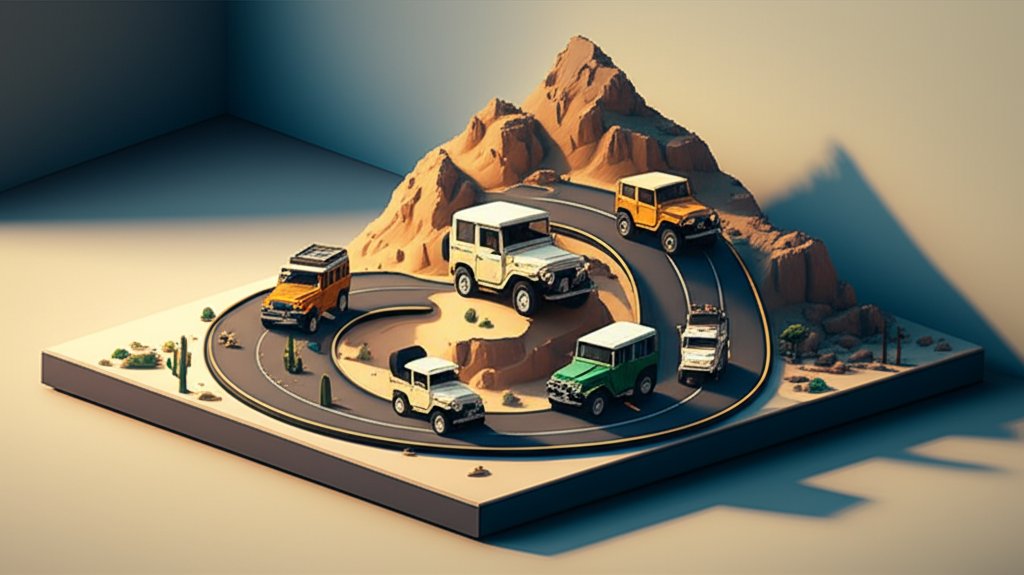
The name “Toyota Land Cruiser” transcends mere automotive branding; it embodies a saga of resilience, unparalleled capability, and a relentless spirit of adventure that has spanned over seven decades. This formidable SUV isn’t just a vehicle; it’s a global icon, a silent workhorse that has navigated the planet’s most unforgiving landscapes, supported critical humanitarian missions, and ferried generations across continents, deeply etching its mark in Land Cruiser History. While its rugged exterior and legendary reliability are widely known, beneath the surface lies a treasure trove of Toyota Land Cruiser Facts, startling revelations, and captivating Land Cruiser Trivia that even the most devoted enthusiasts often overlook.
If you’re an automotive aficionado seeking compelling insights, a history buff intrigued by enduring machines, or simply curious about the astonishing backstory of one of Earth’s most revered vehicles, prepare to be amazed. We’re embarking on an exhilarating journey to unearth shocking truths and reveal the astonishing evolution of this enduring automotive monarch. Buckle up, because the true story of the Toyota Land Cruiser is far more captivating, and frankly, more unbelievable, than you ever imagined!
Delving into the Land Cruiser’s history reveals interesting tidbits, much like exploring other facets of the brand as highlighted in these fascinating Toyota car facts.
The Unseen Genesis: Birth Under Pressure & The Name That Conquered Worlds

The legendary journey of the Toyota Land Cruiser didn’t begin with a grand vision of global domination, but rather as a utilitarian vehicle forged from urgent necessity. Its origins are deeply rooted in the industrial revival of post-World War II Japan and the immediate practical demands of a changing world, laying the groundwork for its unparalleled reputation. These are the foundational Toyota Land Cruiser Facts that shaped a legend.
The “Toyota Jeep BJ”: A Mountain-Conquering Prototype
In the early 1950s, the Korean War surged, creating an immediate and critical demand for a light utility vehicle for the U.S. military forces stationed in Japan. Toyota, a burgeoning automotive powerhouse, seized the opportunity. In 1951, they were tasked with developing a prototype that could compete with—and ideally surpass—the American Willys Jeep. This challenge led to the birth of the “Toyota Jeep BJ.”
Powered by a robust 3.4-liter B-type six-cylinder engine, the BJ was designed for raw power and extreme reliability. However, what truly cemented its early legend was a shocking display of capability in August 1951. An engineering team, led by Toyota test driver Ichiro Taira, successfully drove the BJ prototype to the sixth station of Mount Fuji. This was not merely a test drive; it was a feat previously deemed impossible for any motorized vehicle. The BJ’s triumphant ascent, navigating treacherous terrain and steep inclines, demonstrated its superior power and traction right from the outset, proving its mettle in the most extreme conditions imaginable. This single event was a declaration of intent, a powerful Toyota Land Cruiser Fact that signaled the arrival of a new era in off-road capability.
From BJ to Land Cruiser: A Strategic Masterstroke
The pivotal shift from the temporary designation “Toyota Jeep BJ” to the now-iconic “Land Cruiser” in 1954 was far from arbitrary; it was a calculated and strategic move. Hanji Umehara, Toyota’s technical director at the time, recognized the necessity of a unique identity. The “Jeep” moniker, while descriptive, carried the risk of trademark disputes with Willys-Overland, the original manufacturer of the American Jeep.
Umehara sought a name that would not only avoid legal entanglements but also powerfully convey the vehicle’s inherent attributes: robust power, reliability, and an unparalleled ability to traverse any terrain. He drew inspiration from the British Land Rover, which had already established itself as a capable off-road vehicle. The name “Land Cruiser” perfectly encapsulated Toyota’s burgeoning ambition for a vehicle capable of conquering landscapes globally, from deserts to mountains, forests to urban jungles. This rebranding marked a transformational moment, shaping the vehicle’s identity for generations to come and solidifying its trajectory towards becoming a global icon of the SUV segment. The careful selection of the name itself is a fascinating piece of Land Cruiser History.
Evolution’s Iron Throne: Tracing the Land Cruiser History Through its Iconic Series
The Land Cruiser History is a rich tapestry woven with numerous model series, each building upon the last, adapting to new challenges, and relentlessly pushing the boundaries of off-road capability, durability, and comfort. These successive generations illustrate the continuous evolution and enduring appeal that make the Toyota Land Cruiser a true automotive legend.
The Indestructible 40 Series: Global Workhorse & Cultural Icon
Perhaps the most recognizable and universally beloved Toyota Land Cruiser, the 40 Series (encompassing models like the FJ40, BJ40, etc.) debuted in 1960. What makes this series a cornerstone of Toyota Land Cruiser Facts is its astonishing longevity and global impact. It remained in production for an incredible 24 years in most markets, and even longer in others – notably, Brazil’s Bandeirante variant continued to be produced until 2001!
This series cemented the Land Cruiser’s reputation for indestructibility. Its simple yet incredibly robust body-on-frame construction, powerful and durable engines, and no-nonsense, go-anywhere attitude made it the favored workhorse among farmers, intrepid explorers, mining companies, humanitarian organizations, and militaries worldwide. One of the most enduring pieces of Land Cruiser Trivia is the sheer number of these 40 Series vehicles that, despite their age, are still actively used today in some of the world’s most remote and challenging regions. Their continued service is a profound testament to Toyota’s over-engineered reliability and timeless design, truly defining it as a quintessential SUV.
Paving the Way for Comfort: The 50 & 60 Series
As the global automotive market matured and consumer demands shifted, so too did the Toyota Land Cruiser. The 55 Series (produced from 1967-1980) represented a significant departure from its utilitarian predecessors. Often affectionately nicknamed the “Iron Pig” due to its distinctive, somewhat boxy styling, it marked Toyota’s first foray into a fully enclosed “station wagon” body. The primary aim was to offer greater passenger comfort and improved practicality without compromising the renowned off-road capability. This model was a crucial step in blending ruggedness with newfound civility.
This evolution paved the way for the hugely successful 60 Series (1980-1990). This generation introduced even more creature comforts, such as power windows, air conditioning, and more refined interiors, making it a viable family vehicle in addition to a capable off-roader. The 60 Series truly began the shift from a purely utility-focused vehicle to a more versatile, dual-purpose SUV, expanding the Toyota Land Cruiser’s appeal beyond just hardcore off-road enthusiasts and into the mainstream market. This was a critical chapter in Land Cruiser History, diversifying its role.
The Ascent to Opulence: 80, 100, 200, and 300 Series
The 80 Series (1990-1997) was a groundbreaking model that firmly pushed the Toyota Land Cruiser into the burgeoning luxury SUV segment while steadfastly retaining its legendary off-road prowess. A key engineering change was the adoption of coil springs (replacing leaf springs) for improved ride quality and articulation, alongside more sophisticated powerplants. This era truly showed that ruggedness and refinement could coexist.
This trend of combining luxury with capability continued with the 100 Series (1998-2007), which introduced independent front suspension on some models. This bold move was aimed at enhancing on-road handling and comfort, a clear signal of the Land Cruiser’s evolving market position, while solid rear axles maintained its off-road bona fides where it mattered most. The 200 Series (2007-2021) further refined this blend, offering opulent interiors, advanced technology like Multi-Terrain Select and Crawl Control, and immense capability, propelling it into the ultra-premium SUV category.
The latest iteration, the 300 Series, launched globally in 2021, continues this legacy of refinement and capability. Built on a new, lighter, yet more rigid platform (TNGA-F) and powered by efficient V6 engines (including twin-turbo options), it solidifies its position as a premium global workhorse. These continuous advancements highlight the relentless innovation behind the Toyota Land Cruiser Facts, ensuring its continued relevance and dominance in the high-performance SUV market for decades to come. Each series contributes a vital chapter to the enduring Land Cruiser History.
Beyond Borders: Shocking Impact and Undisputed Durability of the Toyota Land Cruiser
The Toyota Land Cruiser is more than just an SUV; it’s a global phenomenon, an indispensable tool for aid organizations, a symbol of resilience, and a cultural icon whose impact extends far beyond the automotive industry. Its unique blend of robust engineering and unwavering reliability has positioned it as a vehicle of choice where failure is not an option.
The “Bulletproof” Myth: Real-World Toyota Land Cruiser Facts & Engineering Prowess
The Land Cruiser has earned an almost mythical reputation for being “unbreakable,” “indestructible,” or even “bulletproof.” This isn’t marketing hyperbole; it’s a testament rooted in countless real-world anecdotes and verifiable Toyota Land Cruiser Facts. There are numerous instances of these vehicles clocking hundreds of thousands, or even over a million miles, still running strong in the most demanding conditions.
The secret to this legendary durability lies in Toyota’s engineering philosophy:
These factors combine to create a vehicle that can shrug off extreme conditions and operate with minimal maintenance in adverse environments, making its “bulletproof” reputation a well-earned Toyota Land Cruiser Fact.
Lifeline to Humanity: The UN’s Go-To SUV
One of the most profound and impactful Toyota Land Cruiser Facts is its widespread adoption as the vehicle of choice by leading humanitarian organizations such as the United Nations, Doctors Without Borders, the Red Cross, and countless NGOs. In conflict zones, remote deserts, impenetrable jungles, and post-disaster areas, the Land Cruiser is often the only vehicle durable and reliable enough to transport essential personnel, medical supplies, and aid where they are critically needed.
Its ability to consistently perform in the harshest environments, with limited access to fuel or maintenance, has made it an indispensable tool. It has facilitated crucial humanitarian efforts worldwide, saved countless lives, and become a symbol of hope and dependability in desperate circumstances. This critical role has cemented the Toyota Land Cruiser’s status not just as an SUV, but as a vital part of global relief infrastructure, a testament to its design and reliability.
A Decade of Dominance: 10 Million Units and Counting
The sheer scale of the Land Cruiser’s global success is a testament to its enduring appeal and utility. In 2019, the cumulative global sales of the Toyota Land Cruiser surpassed an astounding 10 million units. This incredible milestone, achieved after 68 years of continuous production, underscores its immense popularity and critical utility across every continent.
From its humble beginnings as a utilitarian “Jeep” to its status as a luxurious expedition vehicle, the Land Cruiser has consistently found homes in every corner of the world. It navigates the icy tundras of the Arctic, the scorching deserts of the Middle East, the dense jungles of South America, and the rugged outback of Australia. This sales powerhouse status is a defining Land Cruiser History fact, showcasing its universal trust and adaptability, reinforcing its position as the preeminent global SUV.
Unearthing Land Cruiser Trivia: The Quirks, Secrets & Enduring Legacy
Beyond its robust reputation and global impact, the Toyota Land Cruiser holds many intriguing secrets, fascinating lesser-known tales, and unique quirks that add depth to its character. These pieces of Land Cruiser Trivia offer a glimpse into the vehicle’s unique spirit and rich heritage, revealing aspects that even long-time admirers might find surprising.
The “Band-Aid” Emblem: A Wartime Symbol?
One particularly charming piece of Toyota Land Cruiser Trivia involves an early emblem used on some models, particularly in the 1950s. While often seen as a simple design, some automotive historians and enthusiasts suggest that the original “Toyota” emblem, often featuring a red circle or background on early models like the BJ, was playfully referred to as the “Band-Aid” emblem.
This wasn’t an accidental resemblance or a design flaw; it reputedly carried a deeper, symbolic meaning. In post-war Japan, with its infrastructure in need of rebuilding and its economy recovering, the robust utility vehicles like the Toyota Land Cruiser served a vital role in national reconstruction. The “Band-Aid” perhaps symbolized the vehicle’s purpose: to “bandage together” the nation’s needs for reliable, tough transportation, facilitating recovery and progress. This hidden meaning adds a layer of poignant Land Cruiser History to a seemingly innocuous design choice.
The Unkillable 70 Series: Still Dominating Deserts
For many enthusiasts in Western markets, the Land Cruiser conjures images of luxurious 200 or 300 Series models. However, one of the most surprising and enduring Toyota Land Cruiser Facts is that the incredibly rugged 70 Series, first introduced in 1984, is still in production today for various global markets. This makes it one of the longest-running automotive production series ever.
Primarily sold in Australia, Africa, the Middle East, and parts of Asia and South America, the 70 Series has been continually updated with modern engines (including V8 turbodiesels), enhanced safety features (e.g., airbags, ABS), and improved interiors – but its fundamental body-on-frame design, solid axles, and utilitarian focus remain virtually unchanged. It is the undisputed go-to choice for mining companies, utilities, government agencies, farmers, and serious overland adventurers who prioritize absolute capability, reliability, and ease of repair over contemporary comfort. This model truly embodies the original Land Cruiser spirit, proving that timeless engineering triumphs over fleeting trends, making it an irreplaceable SUV for specific, demanding roles.
A Brief Hiatus in the US (and a Triumphant Return)
For many Toyota Land Cruiser enthusiasts in the United States, a truly “shocking fact” was the vehicle’s departure from the US market after the 2021 model year. Despite a fiercely loyal cult following, sales figures in the US had dwindled as its price point climbed into the upper echelies of luxury, competing with premium brands that offered more perceived prestige for similar money. This decision left a void for many who cherished its unique blend of luxury and unbreakable capability.
However, in a move that delighted fans and sent ripples of excitement through the automotive world, Toyota announced the Toyota Land Cruiser would make a triumphant return to the US for the 2024 model year. This reintroduction came with a new focus: a more accessible price point, a smaller, more maneuverable package, and a standard hybrid powertrain, directly addressing past market concerns while re-emphasizing its off-road roots. This strategic return marks a significant turning point in its recent Land Cruiser History.
The “Land Cruiser” Name’s Naval Connection
While Hanji Umehara intentionally named the vehicle to evoke land-conquering capability, the term “Cruiser” itself has a fascinating historical association with naval vessels. In maritime terminology, “Cruiser” ships are designed for long-range voyages, independent operation, and versatility across various seas and conditions. They are built for endurance and broad operational scope.
This subtle connection mirrors the Toyota Land Cruiser’s intended function: to traverse vast distances, tackle diverse and challenging terrains, and operate reliably far from civilization. The name suggests an ability to “cruise” over land with the same confidence and self-sufficiency that a naval cruiser navigates the open ocean. This intriguing etymology adds another layer to the powerful imagery and identity of the Toyota Land Cruiser.
The Forgotten Models: Exploring Rare & Niche Toyota Land Cruiser Variants
Beyond the well-known series, Land Cruiser History is peppered with unique and often overlooked variants, particularly those designed for specific markets or specialized applications, which offer rich Land Cruiser Trivia:
- Mega Cruiser: Often dubbed “Toyota’s Hummer,” the Mega Cruiser (1995-2002) was a massive, military-derived SUV primarily sold in Japan. It featured portal axles, four-wheel steering, and a huge footprint, making it an extreme off-roader designed for rough terrain, not urban commutes. It’s a rare beast, highlighting Toyota’s engineering prowess even in niche segments.
- Bundera (70 Series SWB): In some markets, a short-wheelbase (SWB) version of the 70 Series, often called the Bundera, was offered. It was more compact and agile, perfect for tighter trails and urban environments where the full-size Land Cruiser might be too large.
- Troop Carrier (Troopy): The “Troopy” is a legendary, long-wheelbase, three-door variant of the 70 Series, known for its immense cargo capacity and ability to carry many passengers. It’s an icon in Australia and Africa for overland expeditions, aid work, and rugged utility, embodying the original spirit of the workhorse SUV.
- Prado (Light Duty Land Cruiser): While often considered a separate model, the Prado series started as a “light duty” variant of the Land Cruiser (70 Series Light, then 90, 120, 150 Series). It offered a more car-like ride and smaller engines while retaining significant off-road capability, making it a popular choice for families and urban adventurers seeking a tough SUV without the extreme bulk or cost of the full-size models. This diversification shows Toyota’s strategy to capture different segments of the SUV market.
These rare and specialized models underscore the depth and breadth of the Toyota Land Cruiser legacy, showcasing its adaptability and engineering versatility across diverse global needs.
The Future Forged: The 2024/2025 Toyota Land Cruiser & What’s Next for the Legendary SUV
The recent reintroduction of the Toyota Land Cruiser in several key markets, particularly the US, marks a significant and exciting chapter in its ongoing story, masterfully blending its storied past with a forward-looking vision. The future for this legendary SUV is shaped by innovation, sustainability, and accessibility.
Hybrid Revolution: Power, Efficiency, and the i-FORCE MAX
The 2024 Toyota Land Cruiser represents a strategic and bold pivot in its evolution. While resolutely retaining its legendary off-road prowess, it fully embraces a powerful hybrid powertrain as standard across its lineup. This move underscores Toyota’s unwavering commitment to sustainability, efficiency, and advanced technology without compromising performance.
The new i-FORCE MAX hybrid system is a marvel of engineering, combining a potent 2.4-liter turbocharged engine with an electric motor. This synergy delivers an impressive 326 horsepower and a robust 465 lb-ft of torque, ensuring formidable performance both on and off the pavement. The immediate torque delivery from the electric motor is particularly beneficial for low-speed off-road maneuvers, enhancing its capability on challenging trails. This hybrid-first approach makes it arguably the “best hybrid off-roader” in its class, setting a new benchmark for combining eco-consciousness with extreme utility. These are essential Toyota Land Cruiser Facts for understanding its future direction and its competitive edge in the SUV market.
Design Echoes: A Nod to Heritage, A Leap to Modernity
The 2024 model’s design is a thoughtful and deliberate homage to the iconic 40 Series, a move that resonated deeply with enthusiasts eager for a return to the Land Cruiser’s rugged roots. It features strong horizontal lines, a more upright stance, and a distinctly boxier, more utilitarian aesthetic that evokes the timeless appeal of its ancestors.
However, this retro charm is seamlessly integrated with contemporary appeal through modern LED lighting signatures, distinctive grille options (including a throwback ‘TOYOTA’ script on some trims), and advanced aerodynamic considerations. Its dimensions – approximately 4,920mm long, 1,980mm wide, and 1,870mm tall – grant it a commanding presence, yet a narrower body than previous generations makes it surprisingly more agile on tight trails and in urban environments. This design philosophy perfectly balances Land Cruiser History with future aspirations, creating an SUV that is both nostalgic and distinctly modern.
Adventure Democratized: The New Accessibility and Market Shift
Perhaps one of the most exciting Toyota Land Cruiser Facts for prospective buyers in markets like the US is Toyota’s targeted starting price in the mid-$50,000 range for the 2024 model. This strategic pricing makes the new Land Cruiser significantly more affordable than its immediate predecessor, which had climbed into the high $80,000s and beyond.
This move marks a deliberate effort to open the door to a wider audience of adventurers, families, and off-road enthusiasts who desire the legendary capability and reliability of a Toyota Land Cruiser without the prohibitive luxury price tag. This strategic pricing aims to democratize the adventure that the Land Cruiser has long promised, positioning it as a compelling value proposition in the competitive SUV market. It’s a clear signal that Toyota wants to bring the Land Cruiser back to its roots as a robust, attainable, and highly capable vehicle for the masses, not just the elite.
Beyond 2024: Electric Visions and Sustained Dominance
As the automotive world accelerates towards electrification, the Toyota Land Cruiser’s future is not just hybrid but potentially fully electric. Toyota has already showcased concepts and made statements about bringing EV Land Cruisers to market, promising to blend zero-emission powertrains with the vehicle’s legendary capability. This will likely involve advanced battery technology, electric motors providing instant torque for off-roading, and innovative chassis designs that maintain durability while accommodating electric components.
Furthermore, future iterations of the Toyota Land Cruiser are expected to integrate even more advanced driver-assist technologies, enhanced connectivity, and increasingly luxurious yet functional interiors. The focus will remain on making it even more capable off-road with new terrain management systems and sophisticated electronic aids, while simultaneously improving on-road comfort and safety. The Land Cruiser isn’t just adapting to the future; it’s driving towards it, ensuring its legacy as the ultimate adventuring SUV continues to dominate for generations to come.
Conclusion: The Enduring Legacy of an Automotive Icon

From its humble, post-war beginnings as a military utility vehicle known as the “Toyota Jeep BJ,” bravely conquering Mount Fuji, to its current status as a sophisticated yet incredibly capable hybrid off-roader, the Toyota Land Cruiser has forged a legacy few vehicles can match. Its Land Cruiser History is a powerful testament to relentless innovation, unparalleled durability, and an unwavering commitment to conquering the most challenging landscapes on Earth.
The Toyota Land Cruiser Facts and hidden Land Cruiser Trivia we’ve uncovered reveal not just a vehicle, but a global phenomenon. It has impacted cultures across continents, aided critical humanitarian missions, and inspired generations of adventurers to push boundaries. As this legendary SUV continues to evolve, masterfully blending tradition with cutting-edge technology, one thing remains absolutely certain: the indomitable spirit of the Toyota Land Cruiser endures, perfectly poised to tackle whatever lies ahead, be it a treacherous mountain pass or the shifting demands of a modern world.
So, whether you’re a seasoned Land Cruiser veteran, a newfound admirer, or simply someone who appreciates engineering excellence, we hope this deep dive into its shocking facts and secret history has left you with a profound appreciation for this automotive legend. The next time you spot one, remember the incredible journey it represents – a true monarch of the road, and off it, an SUV that has genuinely earned its crown.
FAQ Section
Q1: What was the original name of the Toyota Land Cruiser?
A1: The original name of the Toyota Land Cruiser was the “Toyota Jeep BJ,” developed in 1951. It was renamed “Land Cruiser” in 1954 to avoid potential trademark issues with Willys-Overland, the manufacturer of the original Jeep. This name change is a fascinating piece of Land Cruiser History.
Q2: What makes the Toyota Land Cruiser so legendary for its durability?
A2: The Toyota Land Cruiser’s legendary durability stems from its robust body-on-frame construction, over-engineered components, and stringent testing in the world’s harshest environments. These Toyota Land Cruiser Facts result in countless examples running strong for hundreds of thousands, even millions, of miles in extreme conditions.
Q3: When did the Land Cruiser first introduce more luxury features?
A3: The Toyota Land Cruiser began its shift towards offering more comfort and luxury with the 55 Series (dubbed the “Iron Pig”) starting in 1










