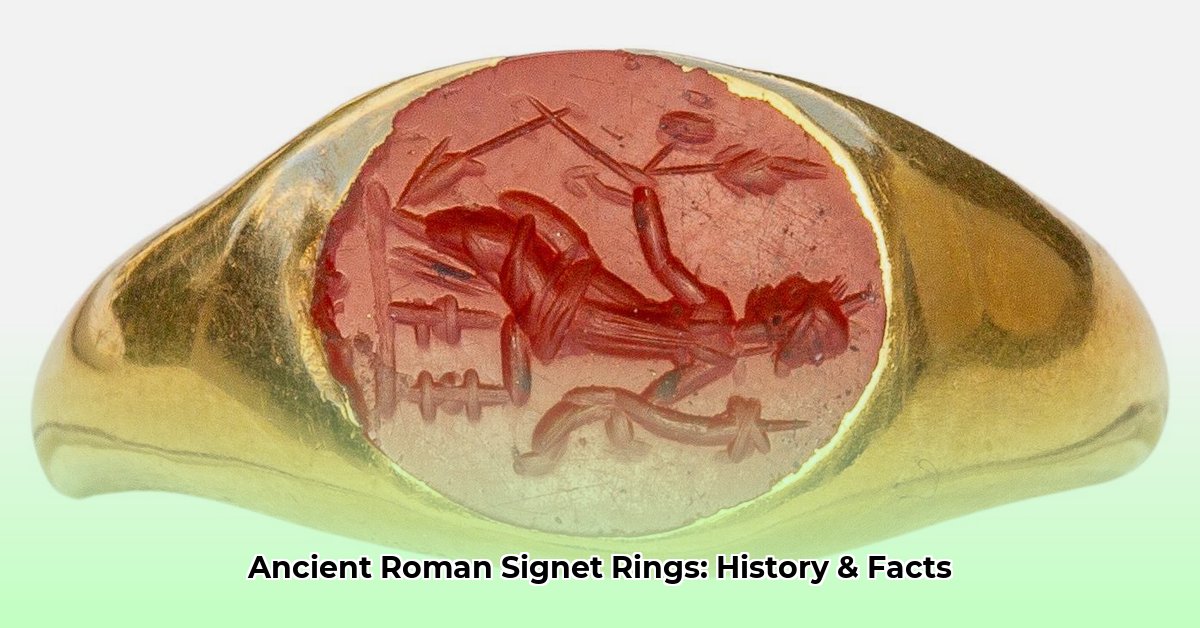
Signet rings, seemingly humble yet profoundly significant, have graced fingers for millennia, whispering tales of power, identity, and legacy. More than mere adornments, these personal stamps authenticated documents and proclaimed social standing. Imagine ancient Rome, a vibrant hub of political intrigue and grand gestures. A distinguished senator, draped in a flowing toga, would use a special ring—his personal signet—to press an impression of his family’s unique symbol into soft wax, sealing official letters. This ring was not merely jewelry; it was a potent symbol, an official identifier, and a testament to his authority and lineage. These objects were akin to wearable declarations of identity and power in a society that valued hierarchy and order. Let us delve into the captivating history of these rings, with a dedicated focus on their unparalleled role in the Roman Empire. You can explore what a modern Roman signet looks like today.
From Ancient Origins to Roman Dominance
The concept of the signet ring predates the Roman Empire by millennia. Around 3500 BCE, Mesopotamian civilizations pioneered cylindrical seals, which were rolled across clay tablets to validate their contents. This ingenious method quickly spread to ancient Egypt, where rings evolved into powerful markers of societal status and religious belief. Early Egyptian signet rings, dating back approximately 4,000 years, often featured intricate hieroglyphs carved deeply into metal or stone, signifying the wearer’s name, rank, or religious role. Some even boasted swiveling, oblong bezels, decorated on both sides, allowing for versatile sealing.
By the 6th century BCE, the Ancient Greeks adopted and refined the signet ring design. While they appreciated its functional aspects, the Greeks increasingly emphasized its aesthetic qualities, incorporating elaborate natural motifs into their intaglio carvings. Made from precious metals like gold, silver, or bronze, these rings often reflected the culture’s fascination with the natural world and served as pure adornment as much as identifiers.
However, it was the Romans, with their pragmatic approach and structured society, who truly elevated the signet ring to an indispensable instrument of daily life and governance. They swiftly recognized its potential beyond simple decoration, transforming it into a crucial indicator of social class and authority. Early in their history, Roman senators were mandated to wear gold rings, a clear sign of their elevated position, while citizens of lesser social status wore rings made of humble iron. This practice underscored the ring’s immediate visual communication of power and societal rank.
The Roman Signet: Seal of Authority and Daily Life
The Romans regarded their signet rings with immense gravity. These weren’t just fashionable accessories; they were integral to civil administration, legal affairs, and personal communication, used to seal vital documents and unequivocally signify the wearer’s authority. Their possession was largely exclusive, belonging primarily to individuals of high status, including emperors, senators, and elite officials.
Over time, Roman signet rings began to feature gemstones, often replacing the plain metal bezel. Skilled artisans intricately etched intricate designs into these stones, transforming them into unique, unforgeable seals. Popular gemstone choices included:
* Carnelians and Agates: Favored for their durability and ease of carving, making them ideal for repeated impressions into wax.
* Amethysts and Garnets: Prized for their deep hues and symbolic associations, adding a layer of aesthetic and spiritual value.
* Sardonyx and Jasper: Used for their distinct layering and rich colors, allowing for remarkable cameo and intaglio carvings, often depicting mythological scenes or portraits.
These intaglio designs frequently depicted family crests, portraits of emperors or mythological figures, personal symbols, or even specific animals and deities. Each carving served as a kind of signature, ensuring the authenticity of letters, contracts, wills, and official decrees. The process of sealing a document with one’s signet ring was a legally binding act, a tangible mark of the owner’s approval and authority, preventing forgery and ensuring trust. The signet ring, therefore, evolved from a simple stamp into a miniature work of art and a powerful legal tool.
A particularly chilling historical anecdote underscores the profound importance of these rings in Roman culture. According to legend, during the Second Punic War, the Carthaginian general Hannibal famously collected signet rings from the Roman soldiers slain in battle. This macabre collection was not merely a trophy of wealth but a stark, undeniable testament to his crushing victories, symbolizing the decimation of Roman identity and power on the battlefield. The dread such a collection would have inspired among the Romans highlights the deep value they placed on these rings as emblems of individual and collective identity. Romans commonly wore their signet rings on the little finger of their left hand, a practice believed to signify sincerity and honor.
Beyond their functional and symbolic roles, Roman rings, including signets, also conveyed deeper meanings through their motifs:
* Eagle: Represented power, authority, and the dominance and strength of the Roman Empire.
* Dolphin: Symbolized love, fidelity, and good fortune, often associated with Neptune, the god of the sea.
* Venus: Adorned on rings to signify love, passion, and femininity, reflecting admiration for the goddess of love and beauty.
* Laurel Wreath: A powerful symbol of victory and achievement, worn by emperors, military heroes, and athletes.
* Serpent: Represented transformation, renewal, protection, wisdom, and eternal life, symbolizing rebirth through the shedding of skin.
The meticulous craftsmanship of Roman jewelers, transforming precious materials into these highly personalized and symbolic objects, was a testament to their artistic skill and the importance of jewelry in Roman society.
Legacy Through the Ages and Notable Examples
The influence and evolution of signet rings continued long after the fall of Rome. During the Middle Ages, signet rings were crafted from various materials like gold, silver, and bronze. Heraldry became a dominant feature, allowing aristocratic families to proudly display their lineage and status. For those without noble lineage, geometric signs known as merchant marks served as early forms of corporate branding. The Renaissance ushered in a new era of opulent designs, with colored foil often placed behind engraved hardstone bezels, creating striking visual effects. Gemstones such as bloodstone, with its deep green and red flecks, gained popularity due to its association with Christian symbolism, adding a layer of religious significance to the rings.
Throughout history, notable signet rings have been passed down through generations, embodying inherited titles and professions.
* The Theseus Ring: Currently housed in the National Archaeological Museum of Athens, this Mycenaean gold signet ring dates back to the 15th century BCE. Its intaglio image of a bull alludes to the legendary King Theseus and his defeat of the Minotaur, demonstrating the deep connection between mythology and personal adornment.
* The Ring of the Fisherman (Piscatory Ring): Worn by Popes for centuries, this ceremonial signet ring seals official papal documents and symbolizes papal authority. Each newly elected Pope receives a unique ring inscribed with his Latin name, while the former Pope’s ring is ceremonially defaced to prevent further use, highlighting the transfer of power and the ring’s enduring symbolic function.
* The Prince of Wales Ring: Forged from Welsh gold and bearing the crest of the Prince of Wales, this almost two-hundred-year-old ring symbolizes royal status and lineage. Its transition to Prince William upon his becoming the new Prince of Wales further underscores the tradition of inherited titles and the enduring power of these artifacts.
These celebrated examples highlight how signet rings have consistently served as powerful symbols of authority, lineage, and personal significance across diverse cultures and eras.
Enduring Appeal in the Modern Era
Today, despite technological advancements making their functional role in sealing documents largely obsolete, signet rings persist in their appeal. Why do they endure? They remain cherished for their aesthetic allure and profound symbolic weight, connecting wearers to a rich tapestry of history and personal narrative. These rings are no longer just tools of authentication; they are personalized statements of identity, heritage, and unique style.
Modern variations often incorporate custom engravings, personal monograms, family crests, or meaningful symbols, crafted from diverse materials such as gold, platinum, or sterling silver. Contemporary jewelers and trend influencers have embraced the signet ring, solidifying its standing as a versatile and timeless accessory. Its enduring appeal lies in its ability to synthesize history, tradition, and self-expression, encapsulating the wearer’s essence in a distinctive and meaningful manner. From ancient tools of authority to profound statements of personal identity, signet rings have journeyed through time, connecting us to heritage, tradition, and self. Their timeless presence in the modern jewelry landscape ensures that this captivating legacy continues.
Frequently Asked Questions About Roman Signet Rings
What exactly is a Roman signet ring?
A Roman signet ring is a type of ring, typically crafted from precious metals like gold, silver, or bronze, often featuring an engraved gemstone (an intaglio) or a carved metal bezel. It served as a personal seal for authentication and identification in Ancient Rome.
How were Roman signet rings used in daily life?
Roman signet rings were primarily used to seal official documents, letters, and contracts with a unique impression, serving as a legally binding signature. They also functioned as powerful symbols of social status, authority, and personal identity.
What materials were commonly used for Roman signet rings?
Early Roman signet rings were often made of iron, but as the empire flourished, gold and silver became prevalent. Gemstones like carnelian, agate, amethyst, jasper, and sardonyx were frequently used for the intaglio carvings, chosen for their durability and visual appeal.
What kinds of designs or symbols were found on Roman signet rings?
Designs varied widely but often included family crests, portraits of emperors or mythological figures (such as Minerva or Hercules), personal symbols, and depictions of deities, animals (like eagles, dolphins, or serpents), or scenes from daily life.
Did all Romans wear signet rings?
No, signet rings were initially reserved for high-ranking officials, senators, and the affluent elite as symbols of their authority and status. Over time, their use expanded, with specific materials and designs often denoting different social classes, though they never became universal property.
How did the Romans treat signet rings of fallen soldiers?
A famous historical account describes Hannibal collecting signet rings from slain Roman soldiers after battles. This act was highly symbolic, serving as tangible proof of his victories and the significant loss incurred by the enemy, underscoring the rings’ profound connection to Roman identity.
Do modern signet rings have the same function?
While modern signet rings are rarely used for sealing documents, they continue to be popular as personal statements of style, heritage, and identity. They often feature initials, family crests, or custom designs, maintaining a connection to their historical significance.
What other types of rings did Romans wear?
Besides signet rings, Romans wore various other types of rings, including wedding rings (symbolizing love and loyalty), commemorative rings, and rings worn purely for adornment or as talismans with symbolic inscriptions, reflecting a rich and diverse jewelry culture.










