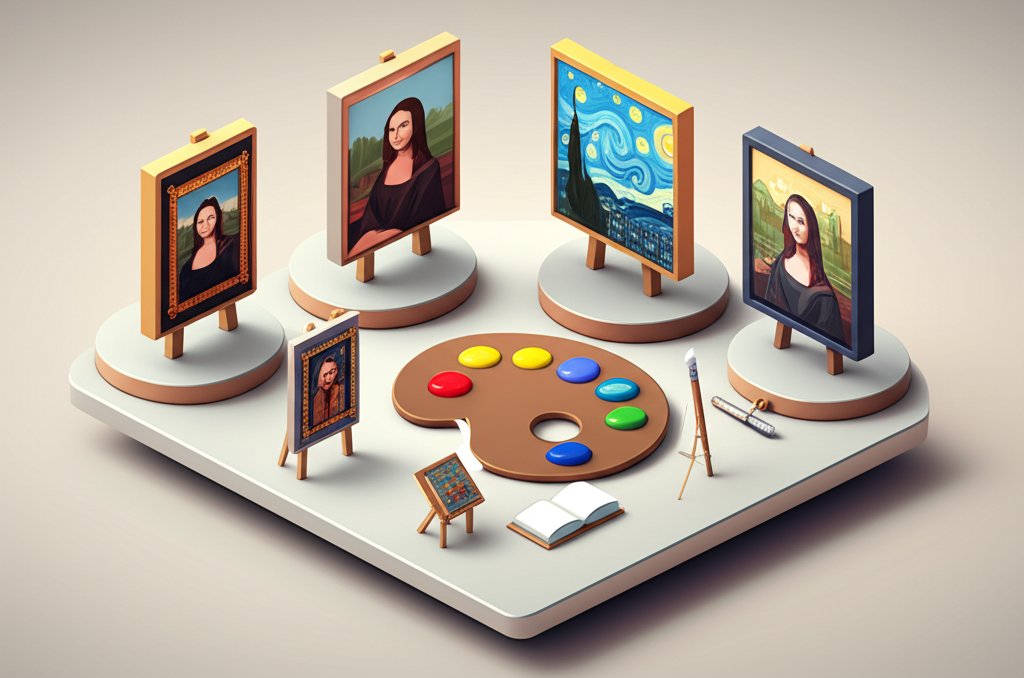
Some works of art are more than just paint on canvas; they are cultural landmarks. The most popular oil paintings are recognized instantly, appearing on everything from coffee mugs to movie posters, yet they never lose their power to awe and inspire. These masterpieces became icons not just for their beauty, but because they broke rules, captured a moment in time, or expressed a universal human emotion so perfectly that they continue to speak to us centuries later.
Understanding what elevates a painting to this status is key to appreciating the story of art itself. It’s a mix of revolutionary technique, historical significance, and a little bit of mystery.
At a Glance: What You’ll Discover
- The DNA of Fame: Uncover the key ingredients—from technical mastery to historical scandal—that make an oil painting popular.
- A Journey Through Masterpieces: We’ll explore iconic works from the Renaissance to Modernism, looking at what makes each one a cultural touchstone.
- Decoding Artistic Language: Learn to identify and understand crucial techniques like sfumato, chiaroscuro, and impasto and see how artists used them to create their effects.
- A Practical Viewer’s Guide: Get a simple, three-step framework for analyzing any painting you encounter, turning passive viewing into an active discovery.
- Answers to Key Questions: We’ll tackle common questions about the value, history, and meaning behind these celebrated works.
What Really Makes an Oil Painting ‘Popular’?
A painting’s journey to global fame is rarely simple. While a casual viewer might see a beautiful image, an art specialist sees a confluence of factors that created a legend. Popularity is built on more than just aesthetics; it’s a blend of innovation, storytelling, and cultural impact.
Here are the primary drivers:
- Technical Revolution: Did the artist invent or perfect a new technique? Jan van Eyck’s mastery of oil glazing in the 15th century, for example, allowed for a depth of color and realism previously unimaginable, setting a new standard.
- Historical Significance: Does the painting capture a pivotal moment or define an era? Picasso’s Guernica is not just a cubist masterpiece; it’s one of the most powerful anti-war statements ever made, forever tied to the horrors of the Spanish Civil War.
- The Artist’s Legend: The painter’s own story often becomes intertwined with their work. Van Gogh’s tragic life and passionate letters add a layer of poignant depth to the swirling, emotional energy of The Starry Night.
- Cultural Resonance: The work taps into a universal theme—love, death, anxiety, or wonder—that transcends time and culture. Edvard Munch’s The Scream gives a face to modern existential dread, a feeling as relevant today as it was in 1893.
Understanding these foundational elements is crucial when evaluating any work of art. For a comprehensive overview of how these individual pieces fit into the larger narrative of art history, you can Explore Famous Oil Paintings and trace the evolution of the medium across different eras.
Renaissance Masters: Where Oil Painting Found Its Voice
The Renaissance was a period of explosive creativity, and oil paint was the medium that enabled its greatest visionaries. Artists moved away from egg tempera to oils, which allowed for richer colors, smoother transitions, and a new level of realism.
- Mona Lisa (c. 1503-1506) by Leonardo da Vinci: Perhaps the most famous portrait in the world, the Mona Lisa‘s popularity rests on its enigmatic quality. Leonardo perfected the sfumato technique—meaning “to evaporate like smoke”—to create soft, hazy transitions between colors, most notably around the corners of the model’s eyes and mouth. This is what gives her smile its famously ambiguous and lifelike quality. It’s not just a portrait; it’s a psychological study.
- The Birth of Venus (c. 1485-1486) by Sandro Botticelli: While technically a tempera painting, its influence on the use of mythological subjects and linear grace is foundational. It represents a bold step in the Early Renaissance, depicting a classical, pagan goddess on a massive scale—a subject previously reserved for religious figures. Its style, with its elegant lines and decorative feel, defined the Florentine aesthetic.
- The Last Supper (1495-1498) by Leonardo da Vinci: This isn’t a traditional oil painting but an experimental fusion of oil and tempera on a dry plaster wall. This innovative approach ultimately failed, causing the mural to deteriorate rapidly. Yet, its genius lies in its composition and emotional depth. Leonardo captures the precise moment Christ announces a betrayal, and the unique, dramatic reactions of each apostle ripple across the scene.
The Dutch Golden Age: Capturing Light, Shadow, and Everyday Life
In the 17th century, Dutch artists turned their attention to the world around them. They used oil paint to elevate genre scenes, portraits, and still lifes with an incredible command of light and texture.
- Girl with a Pearl Earring (c. 1665) by Johannes Vermeer: Often called the “Mona Lisa of the North,” this painting’s power lies in its intimacy and mystery. We know nothing about the girl. Vermeer uses chiaroscuro—the strong contrast between light and dark—to model her face, drawing the viewer’s eye to her luminous expression and the glistening pearl. The dark background pushes her forward, creating a direct and personal connection with the viewer.
- The Night Watch (1642) by Rembrandt van Rijn: This painting revolutionized the group portrait. Instead of a static, formal lineup, Rembrandt captures a militia company in dynamic motion, as if they are marching out of the canvas. He uses tenebrism—an extreme form of chiaroscuro—to create dramatic spotlights, highlighting key figures and creating a palpable sense of energy and chaos. Its sheer scale and ambition cemented Rembrandt’s reputation as a master storyteller.
Breaking the Mold: How Modern Artists Reinvented the Canvas
From the mid-19th century onward, artists began to challenge the traditional rules of painting. They used oil paint not just to represent the world, but to express their inner vision, emotions, and ideas.
Impressionism & Post-Impressionism: Capturing a Fleeting Moment
- Impression, Sunrise (1872) by Claude Monet: This is the painting that gave Impressionism its name. A critic mockingly used the title to dismiss the style as mere “impressions” rather than finished works. Monet used visible, rapid brushstrokes to capture the fleeting effect of sunlight on the water at the port of Le Havre. The goal was no longer realism, but capturing a momentary perception of light and atmosphere.
- The Starry Night (1889) by Vincent van Gogh: Painted from his room in a sanatorium, this work is a direct expression of Van Gogh’s turbulent inner world. He applied paint directly to the canvas in thick, swirling strokes—a technique called impasto—creating a textured, vibrant surface. The electrifying sky and cypress tree are not a literal depiction but a powerful, emotional vision of hope and cosmic energy.
Symbolism, Expressionism, and Surrealism: The Inner World Made Visible
- The Kiss (1907-1908) by Gustav Klimt: A masterpiece of the Art Nouveau movement, The Kiss is opulent and intimate. Klimt, in his “Golden Period,” used actual gold leaf in his oil paintings, blending decorative patterns with figurative art. The embracing couple seems to dissolve into a shimmering, divine aura, symbolizing the transcendent power of love.
- The Scream (1893) by Edvard Munch: This iconic image of Expressionism visualizes pure, raw emotion. Munch sought to paint “the study of the soul.” The distorted figure, swirling blood-red sky, and stark composition convey a universal feeling of existential anxiety and despair, making it one of the most recognizable images in art history.
- The Persistence of Memory (1931) by Salvador Dalí: This is the defining work of Surrealism. The melting clocks symbolize the fluidity and relativity of time, a concept influenced by Einstein’s theories. Dalí described his paintings as “hand-painted dream photographs,” and this dreamscape, with its bizarre juxtapositions and meticulous detail, invites viewers into the strange logic of the subconscious mind.
How to ‘Read’ a Popular Oil Painting: A 3-Step Guide
You don’t need a degree in art history to appreciate these masterpieces on a deeper level. The next time you’re in front of a painting, use this simple framework to guide your looking.
Step 1: The First Impression (The Gut Reaction)
Before you read the label, just look. What’s the first thing you feel—calm, anxious, joyful? What part of the painting pulls your eye in first? Is it a color, a face, or a specific object? Trust your initial instinct; it’s the emotional core of the work.
Step 2: The Technical Details (The Artist’s Craft)
Now, look closer. How is the paint applied? Is it smooth and invisible, or thick and textured? Observe how the artist uses light. This is where knowing a few key terms can unlock a new layer of understanding.
| Technique | Description | Prime Example |
|---|---|---|
| Sfumato | Soft, smoky transitions between colors, without harsh outlines. | Mona Lisa |
| Chiaroscuro | Strong contrast between light and dark to create depth and drama. | Girl with a Pearl Earring |
| Tenebrism | An extreme, dramatic form of chiaroscuro where darkness dominates the image. | The Night Watch |
| Impasto | Thickly applied paint that stands out from the surface, showing brushstrokes. | The Starry Night |
| Step 3: The Context (The Story Behind the Canvas) | ||
| Finally, read the museum label or do a quick search. Who was the artist? When and where did they live? What was happening in the world? Learning that Picasso painted Guernica as a direct response to a horrific bombing during the Spanish Civil War completely transforms your understanding of its chaotic, monochromatic anguish. |
Quick Answers to Common Questions
Why are these popular oil paintings so valuable?
Their value comes from a combination of factors: the artist’s immense reputation, their historical importance in defining an art movement, their rarity, and their profound emotional impact on culture. They are, in essence, irreplaceable artifacts of human creativity.
What is the difference between ‘popular’ and ‘famous’ oil paintings?
The terms are often used interchangeably, but there’s a subtle difference. ‘Famous’ can refer to works that are well-known within art history circles for their technical or academic importance. ‘Popular’ implies a broader cultural recognition, where the image has transcended the art world to become a part of public consciousness, like the Mona Lisa or The Scream.
What are the oldest known oil paintings?
While oil painting was perfected in Renaissance Europe, the earliest known examples date back to the 7th century AD. They were discovered in caves in Bamiyan, Afghanistan, where artists used oils from walnuts and poppies to paint murals of buddhas.
Is it possible to see all these paintings in one place?
No, and that is part of their appeal. These masterpieces are crown jewels in the collections of different museums around the world, from the Louvre in Paris (Mona Lisa) to the Museum of Modern Art in New York (The Starry Night) and the Prado Museum in Madrid (Las Meninas). Seeing them requires a pilgrimage, adding to the experience.
More Than Just Masterpieces
The most popular oil paintings are not static relics. They are dynamic conversations that began centuries ago and continue today. They challenge us, comfort us, and remind us of the enduring power of a single image to capture the human experience. The next time you see one, whether in a museum or on a postcard, take a moment to look closer. You’re not just looking at a painting; you’re looking at a piece of history that helped shape the very way we see the world.










