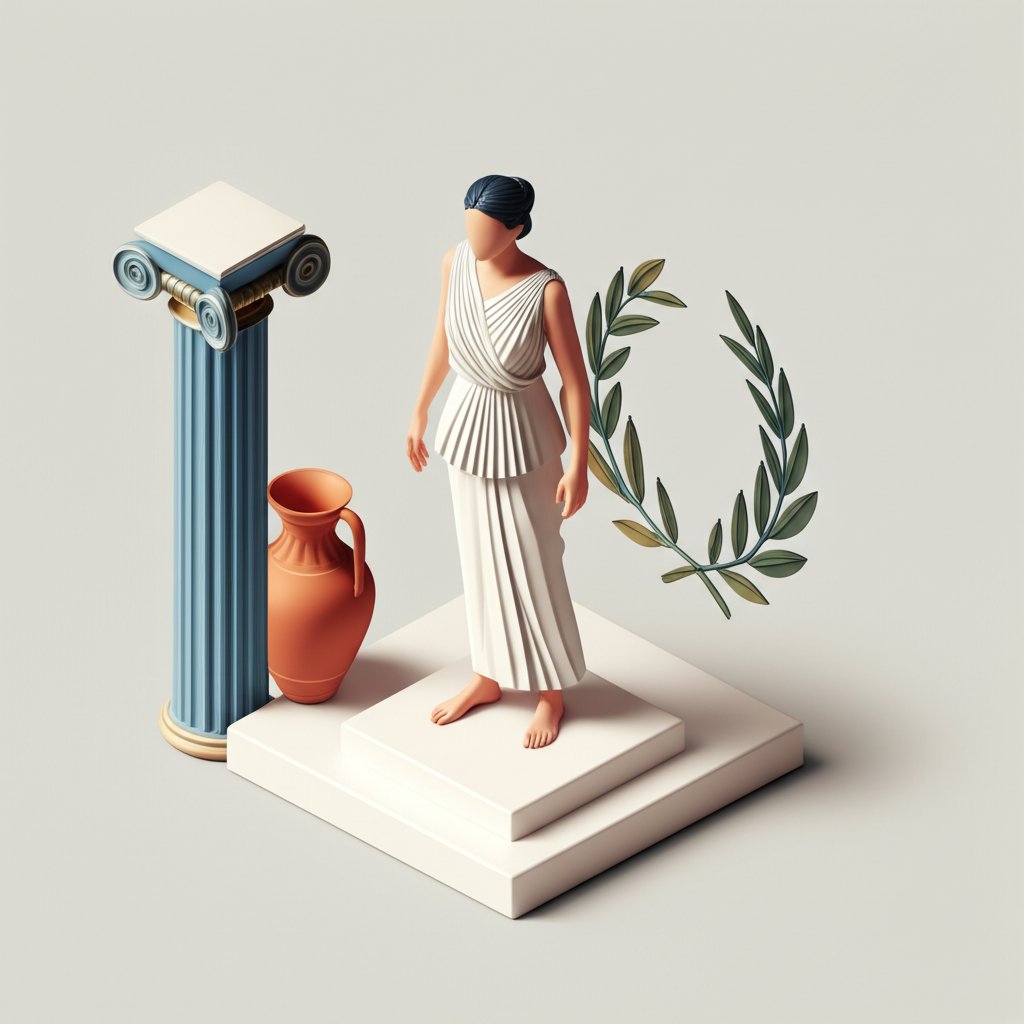
Step back into the classical world, where fabric wasn’t just clothing, but a finely woven tapestry of identity, status, and silent power. Among the many garments that graced the women of ancient Greece, none stand as iconic and enigmatic as the Doric peplos. Far more than a simple dress, the peplos was a statement – a carefully draped, often woollen garment that whispered tales of social standing, religious devotion, and the prevailing aesthetics of its time.
This article will pull back the folds of history to reveal the secrets of the Doric peplos, exploring its evolution, construction, symbolism, and its profound role in defining ancient Greek women’s fashion. Prepare to uncover how this seemingly straightforward piece of ancient Greek clothing became a powerful emblem, reflecting the very essence of feminine life and influence in one of history’s most celebrated civilizations.
Doric Peplos: The Quintessential Ancient Greek Dress for Women
The Doric peplos was a distinctive and primary form of ancient Greek dress for women from the archaic period through much of the classical era (roughly 700 BC to 300 BC). Originating from the Doric-speaking regions, it was characterized by its simplicity, robust material, and unique draping. Unlike later, more flowing styles, the Doric peplos embodied a sense of dignified modesty and strength, defining the prevailing ancient Greek women’s fashion for centuries.
Defining the Peplos: Simplicity in Design
At its core, a peplos was a large, rectangular piece of fabric, typically wool, which was folded and draped around the body. The width of the fabric matched the wearer’s arm-span, and its length was twice the height of the woman, from shoulder to ankle. This simple geometric design allowed for surprising versatility and symbolic depth. The term “Doric” differentiates it from the later “Ionic chiton,” emphasizing its more severe, structured lines and heavier material, often reflecting the stoic ideals of the Doric peoples.
Historical Roots and Evolution
The peplos emerged as a dominant garment after the Mycenaean period, evolving from earlier draped styles. Its rise around the 6th century BC coincides with major developments in Greek art, philosophy, and societal structure. Initially, it might have been a more practical, everyday garment, but over time, it acquired layers of cultural and religious significance. Its enduring presence in art, from vase paintings to monumental sculpture, attests to its central role in ancient Greek life.
Understanding the construction of the Doric peplos offers valuable insight into early garment creation, and further exploration of the history of dressmaking reveals the evolution of techniques over time.
Unfolding the Fabric of Power: Construction and Style of the Doric Peplos
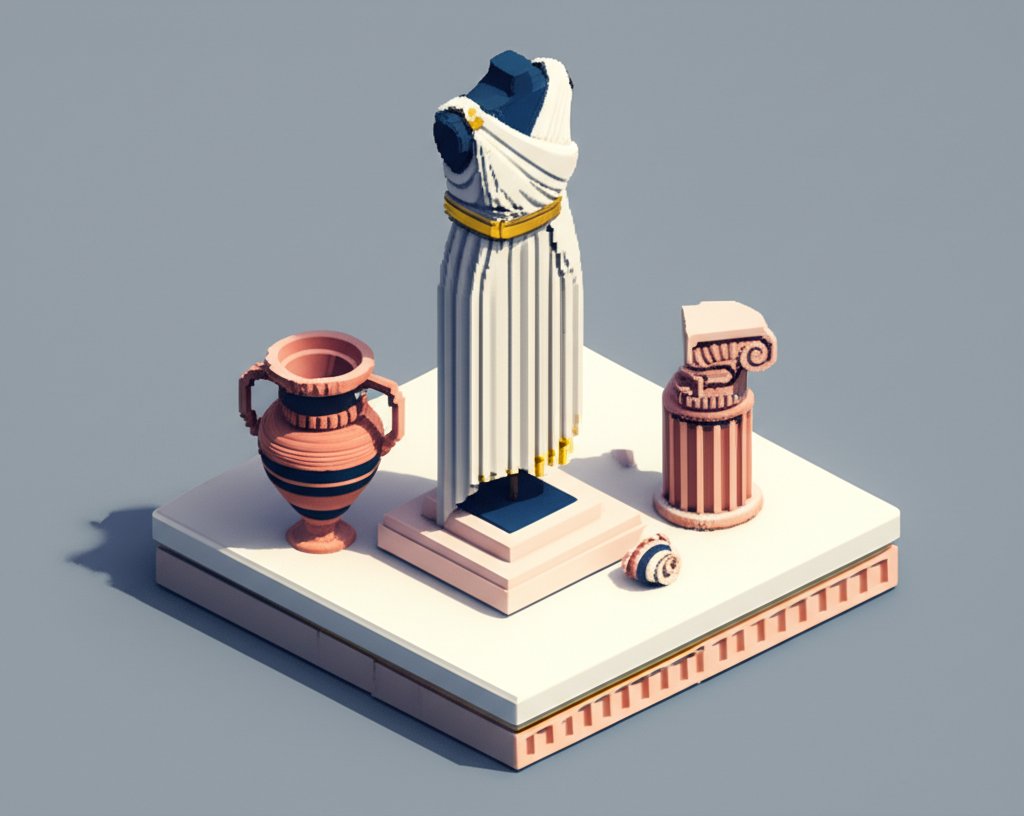
The method of wearing the Doric peplos was an art in itself, transforming a simple rectangle of cloth into an elegant and expressive garment. This section delves into the practicalities of its making and presentation, revealing how meticulous details underscored its power as a form of ancient Greek women’s fashion.
The Art of the Drape: How the Peplos Was Worn
Dressing in a peplos involved several key steps:
- Folding: The woollen rectangle was folded over at the top edge, creating an “overfold” or apoptygma, which fell down over the bodice. This overfold was a defining feature of the Doric style, often reaching the waist or hips.
- Draping: The fabric, with its overfold, was then wrapped around the wearer’s body, typically starting from the back, bringing the two ends to meet at the front or either side.
- Fastening: The garment was secured at the shoulders, usually with large pins or fibulae (brooches). These pins were crucial, not just for function but also for decoration, often crafted from bronze, silver, or even gold.
- Belt: A belt was often worn around the waist, either over or under the apoptygma, creating a bloused effect known as the kolpos and providing shaping to the silhouette.
This construction allowed for free movement and a majestic, statuesque appearance, often depicted in classical sculpture.
The Apoptygma Explained: A Signature Feature
The apoptygma (ἀπόπτυγμα) was not merely a decorative element; it was integral to the structure and aesthetic of the Doric peplos. This double-layered effect provided warmth, added volume and grace to the upper body, and could also be used to create pockets or hold small items. The length and fullness of the apoptygma could vary, influencing the overall look and formality of the ancient Greek dress. Shorter apoptygmata created a more severe, utilitarian look, while longer ones added elegance and a sense of abundance.
Materials and Hues: Weaving Status and Identity
The choice of materials and colors in ancient Greek clothing was never arbitrary; it communicated volumes about the wearer.
- Wool: The Doric peplos was predominantly made of wool. Wool was durable, readily available, and provided good insulation, making it suitable for the Mediterranean climate. The texture of the wool could vary from coarse, undyed varieties for everyday wear to finely spun, soft wool for wealthier individuals.
- Colors: While natural, undyed wool offered earthy tones, the Greeks were adept at dyeing. Colors ranged from simple whites and creams to vibrant blues, reds, purples, and yellows. Expensive dyes, particularly Tyrian purple, signified immense wealth and status. Patterns, either woven into the fabric or embroidered, further enhanced the garment’s visual appeal and the wearer’s prestige.
Beyond the Drape: Social Status, Identity, and the Peplos
The Doric peplos was a powerful social signifier, a silent language understood across the city-states of ancient Greece. It reflected not just personal taste but also regional identity, marital status, and social class, making it a pivotal element of ancient Greek women’s fashion.
Regional Variations: Spartan Stoutness vs. Athenian Modesty
The design of the peplos could subtly, yet significantly, vary across different regions, reflecting distinct cultural values:
- Spartan Peplos: Renowned for its practicality and the emphasis on physical prowess, the Spartan peplos (sometimes called a monochiton) was notoriously less restrictive. It often featured an open side, leaving the wearer’s leg exposed, which earned Spartan women the moniker “thigh-showers” from other Greeks. This design facilitated movement for athletic activities and military training that Spartan women were encouraged to participate in.
- Athenian Peplos: In contrast, the Athenian peplos was typically sewn or fastened along both sides, ensuring greater coverage and adhering to Athenian societal norms of modesty and decorum. This difference highlights the diverse approaches to ancient Greek dress even within unified cultural spheres.
Adornments and Accessories: Personalizing the Power
The apparent simplicity of the Doric peplos was often offset by elaborate accessories that amplified its statement:
- Jewelry: Pins (fibulae) securing the shoulders could be crafted into intricate works of art. Necklaces, earrings, and bracelets, often made from gold, silver, or precious stones, provided dazzling counterpoints to the fabric.
- Headwear: Women might wear simple headbands, scarves, or more elaborate coiffures.
- Footwear: Sandals were common, varying from simple leather straps to more ornate designs.
- Himation: For added warmth, modesty, or display, a himation (a large rectangular cloak) could be draped over the peplos. Worn in various sophisticated ways, the himation added another layer of elegance and status to the overall ancient Greek clothing ensemble.
These adornments allowed women to express individuality and wealth within the established framework of the peplos.
The Peplos Kore: A Glimpse into Ancient Grace
The “Peplos Kore” (c. 530 BC), a famous archaic statue found on the Acropolis of Athens, provides an invaluable visual record of the Doric peplos. Though now painted white, the statue was originally vibrantly colored, depicting a young woman wearing a peplos with an apoptygma. Scholars continue to debate whether she is a goddess or a mortal, but her beautifully preserved form offers direct insight into the garment’s construction, draping, and the aesthetic ideals of ancient Greek women’s fashion during that era. Her subtle smile and dignified posture embody the grace and understated power associated with the peplos.
The Peplos in Sacred Rites: A Divine Connection
Beyond its role in everyday life and social signaling, the peplos held profound religious significance, connecting mortals to the divine and embodying civic identity. This sacred dimension reveals another layer of its “power secrets.”
The Panathenaic Peplos: A Sacred Offering
One of the most powerful examples of the peplos’s religious importance is the Panathenaic Peplos. This magnificent garment was not clothing for a human, but a colossal, intricately woven peplos dedicated to Athena Polias, the patron goddess of Athens.
- Ritual Weaving: Every four years, young Athenian noblewomen (the ergastinai) spent months, sometimes even years, weaving this sacred garment. It was a painstaking task, often depicting scenes from the Gigantomachy (the battle between gods and giants), symbolizing Athena’s triumph and Athens’ divine favor.
- Grand Procession: The culmination of this effort was the Great Panathenaea festival, where the new Panathenaic Peplos was carried in a grand procession through Athens to the Parthenon. The procession, possibly depicted on the Parthenon frieze, was a central civic and religious event, highlighting the unity and piety of the Athenian people.
- Symbolic Power: The act of weaving and presenting the peplos was a powerful expression of communal devotion, skill, and civic pride. It underscored the role of women in religious life and reinforced the city’s relationship with its protector goddess, demonstrating how the peplos transcended mere fabric to become a conduit for divine power and civic identity.
Peplos vs. Chiton: Differentiating Ancient Greek Women’s Fashion
While the peplos is a cornerstone of ancient Greek women’s fashion, it was not the only garment. Understanding its relationship to the chiton is crucial for a complete picture of ancient Greek dress.
The Key Distinctions
| Feature | Doric Peplos | Ionic Chiton |
|---|---|---|
| Material | Predominantly heavy wool | Typically lighter linen or finer wool |
| Construction | Single rectangular piece, folded over (apoptygma), fastened at shoulders with pins. | Wider rectangle, sewn or joined along the arms with multiple pins/buttons, creating sleeves. No distinct apoptygma. |
| Drape/Style | More structured, columnar, fewer pleats, often with distinct apoptygma. | More flowing, voluminous, numerous fine pleats, often belted high. |
| Origin/Period | Associated with Doric regions, dominant in Archaic and Early Classical periods. | Associated with Ionian regions, prevalent from Late Archaic through Classical periods. |
| Aesthetic | Dignified, sturdy, modest (Athenian), sometimes more open (Spartan). | Elegant, graceful, luxurious, often revealing more of the body’s curves. |
Historically, the peplos predates the widespread adoption of the Ionic chiton, especially in Athens. The transition from the more rustic, heavier Doric peplos to the lighter, more elaborate Ionic chiton around the late 6th century BC might reflect a shift in cultural aesthetics and increased trade leading to access to finer materials like linen. However, the peplos never entirely disappeared, maintaining its presence, especially in religious contexts and for certain social classes, demonstrating the rich diversity within ancient Greek clothing.
The Himation: The Universal Outer Garment
Both the peplos and the chiton were often worn with a himation (ἱμάτιον), a versatile outer cloak. This large rectangular piece of fabric could be draped in numerous ways—over one shoulder, wrapped around the entire body, or pulled over the head for modesty or protection. The himation allowed for additional warmth, conveyed dignity, and offered another canvas for displaying wealth through its material, color, and draping style. It was a unisex garment, worn by both men and women, often over a chiton or peplos.
Legacy of the Peplos: Enduring Influence on Fashion and Art
The Doric peplos, as a quintessential piece of ancient Greek dress, has left an indelible mark on Western culture, influencing art, architecture, and fashion throughout the centuries. Its elegant simplicity and profound symbolism resonate even today.
Classical Ideals and Modern Interpretations
The classical ideal of beauty, characterized by harmony, proportion, and serene dignity, is perfectly embodied by the peplos. Its clean lines and flowing drapery have been revered and replicated:
- Neoclassical Revival: During the Neoclassical period (18th-19th centuries), artists and fashion designers looked back to ancient Greece for inspiration. The elegance of the peplos and chiton heavily influenced empire-waist dresses and the “Grecian look,” which emphasized natural forms and graceful draping.
- High Fashion: Even in contemporary high fashion, designers continue to draw from the timeless appeal of ancient Greek clothing, reinterpreting the folds and silhouettes of the peplos for modern aesthetics. The idea of clothing as sculpture, emphasizing the human form without constriction, remains a powerful concept.
- Art and Sculpture: The enduring presence of the peplos in countless classical statues means it continues to be studied and admired as a key element of artistic representation, symbolizing grace, virtue, and divinity.
The Doric peplos is more than just an antiquated garment; it is a testament to the sophistication of ancient Greek women’s fashion and a powerful symbol whose influence continues to ripple through time, forever entwined with our understanding of classical beauty and power.
Conclusion: The Unveiled Power of the Doric Peplos
The Doric peplos stands as a magnificent testament to the rich tapestry of ancient Greek women’s fashion. From its simple, rectangular construct to its intricate social and religious symbolism, it was a garment that did more than merely cover the body; it articulated identity, signaled status, and even facilitated sacred connection.
We’ve journeyed through its precise construction, the powerful statement of its apoptygma, and the subtle but significant variations that spoke of regional pride and differing societal values. We’ve seen how color and accessory transformed simplicity into grandeur, and how the sacred Panathenaic Peplos elevated the garment to a divine offering. By understanding the Doric peplos, we gain profound insight into the women who wore it – their daily lives, their societal roles, and the quiet power they wielded through their carefully chosen attire. The peplos remains a timeless icon, a whisper from antiquity that continues to shape our perception of ancient Greek dress and its enduring legacy of dignified elegance.
FAQ: Unraveling More Secrets of the Ancient Greek Peplos
What is a Greek Peplos?
A Greek peplos is a traditional outer garment worn by women in ancient Greece, especially during the Archaic and Classical periods. It was a large, rectangular piece of heavy woollen fabric, folded over at the top (creating an apoptygma), draped around the body, and fastened at the shoulders with pins or brooches, often belted at the waist.
What is the difference between a Peplos and a Chiton?
The main differences lie in material, construction, and style. A peplos was typically made of heavy wool, folded and pinned at the shoulders, often with a prominent overfold (apoptygma). A chiton, conversely, was usually made of lighter linen (or finer wool), was wider, and often sewn or joined along the arms with multiple pins, creating more of a sleeve-like effect and a more flowing drape without a distinct apoptygma.
How was the Doric Peplos worn?
The Doric peplos was worn by first folding the top edge of a rectangular woollen cloth down to create an apoptygma. This folded fabric was then wrapped around the body, bringing the edges together at the side or front, and secured at the shoulders with large pins (fibulae). A belt was often used around the waist to create shaping and a bloused effect (kolpos).
What does “Doric” mean in Doric Peplos?
“Doric” refers to the architectural and cultural style associated with the Doric-speaking Greek regions (e.g., Sparta). In the context of the peplos, it signifies a simpler, heavier, and more structured garment, typically made of wool, in contrast to the lighter, more flowing Ionic chiton.
Did all ancient Greek women wear the peplos?
While the peplos was a very common garment for women in Archaic and early Classical Greece, especially in Doric regions, it wasn’t the only garment. Over time, the Ionic chiton also became popular. The choice of garment could depend on region, social status, period, and occasion.
What materials were used for the peplos?
The peplos was primarily made from wool. The quality of the wool varied, from coarse for everyday wear to finely woven for wealthier individuals. Colors could range from natural undyed tones to vibrant dyed hues, with expensive dyes like Tyrian purple signifying high status.
What is an apoptygma?
The apoptygma is the distinctive overfold of fabric at the top of the peplos. It was created by folding the upper edge of the rectangular cloth downwards before draping, resulting in a double layer of fabric that fell over the wearer’s chest and back, often reaching the waist or hips.
What was the significance of the Panathenaic Peplos?
The Panathenaic Peplos was a sacred, richly woven peplos dedicated to the goddess Athena every four years during the Great Panathenaea festival in Athens. It was a symbol of civic piety, artistic skill, and the special relationship between the Athenians and their patron goddess. Young Athenian noblewomen (the ergastinai) were tasked with weaving this important religious offering.
Did Roman women wear the peplos?
Generally, no. While Roman fashion was influenced by Greek styles, Roman women typically wore their own distinct garments such as the stola (a long, pleated tunic) and the palla (a rectangular shawl), rather than the Greek peplos.
How did the Doric peplos signify power or status?
The Doric peplos signified power and status through several elements: the quality and fineness of the wool, the richness and rarity of its dyes (e.g., purple), the elaborateness of its woven or embroidered patterns, and the preciousness of the pins (fibulae) used to fasten it. Furthermore, garments like the Panathenaic Peplos held immense civic and religious power, elevating the women involved in its creation and the city it represented.











1 thought on “Doric Peplos: Ancient Greek Women’s Fashion & Power Secrets”
Comments are closed.