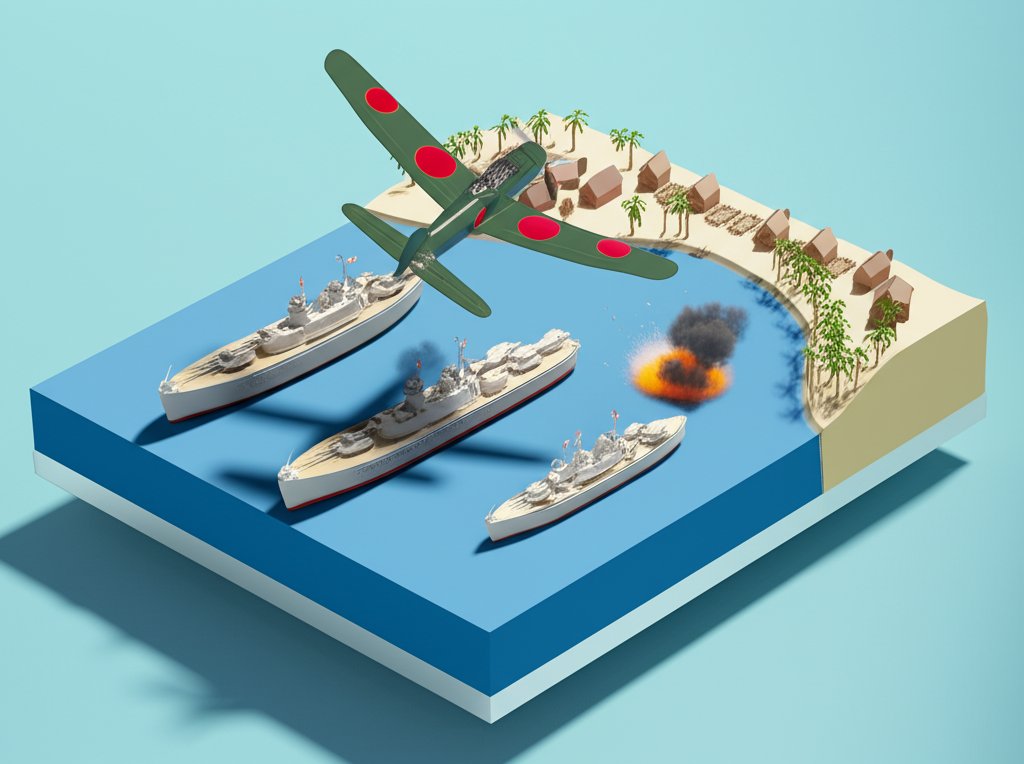
The most arresting Pearl Harbor photos aren’t just images of twisted metal and billowing smoke; they are windows into the final moments of peace and the chaotic birth of a new American reality. In grainy black and white, they capture a precise demarcation line in history: the world before 7:55 a.m. on Sunday, December 7, 1941, and the world after. These photographs document the shock, the destruction, and the human cost of the surprise attack that plunged the United States into World War II.
More than a historical record, these images are a visual testimony. They show us the placid waters of a Hawaiian morning, ruptured by torpedoes. They reveal the faces of young sailors, caught between disbelief and duty. They preserve the fury of a nation waking to a fight it could no longer avoid.
At a Glance: The Story in the Pictures
For those seeking a quick understanding of the events frozen in time, here’s what the photographic record of Pearl Harbor tells us:
- The Target: The U.S. Pacific Fleet, anchored at the naval base on the island of Oahu, Hawaii.
- The Attack: A surprise military strike by the Imperial Japanese Navy Air Service, conducted in two waves just before 8:00 a.m.
- The Scale: Approximately 350 Japanese aircraft launched from six aircraft carriers, striking ships, and airfields across the island.
- The Human Cost: A total of 2,403 American service members and civilians were killed. Another 1,178 were wounded.
- The Material Damage: Eight U.S. Navy battleships were damaged, with four sunk. Numerous other ships and over 180 aircraft were destroyed.
- The Immediate Consequence: The following day, President Franklin D. Roosevelt asked Congress to declare war on Japan, famously calling December 7th “a date which will live in infamy.”
The Calm Before the Fire
To truly grasp the shock of the attack, you have to understand the scene just moments before. Photos taken in the days leading up to December 7th depict a naval base at ease. Sailors stand on the decks of mighty battleships lined up in the harbor—an arrangement that made them a convenient, concentrated target. The mood in Hawaii was one of tropical tranquility, far removed from the war raging in Europe.
This sense of security was built on a critical miscalculation. While diplomatic tensions between the United States and Japan had reached a fever pitch, few in the American military genuinely believed an attack on Hawaii was imminent. In the summer of 1941, the U.S. had cut off oil exports to Japan—a crippling blow, as Japan relied on America for 80% of its oil. The Japanese government saw this as an act of aggression, one that threatened its imperial ambitions to create a “Greater East Asia Co-Prosperity Sphere.”
Their solution was a bold, high-risk gamble: a knockout blow against the U.S. Pacific Fleet. They hoped to neutralize American naval power in the Pacific, giving them a free hand to expand across Southeast Asia. The plan, conceived by Admiral Isoroku Yamamoto, was audacious and meticulously planned. While peace negotiations were still technically underway, the strike force was already sailing across the Pacific in complete radio silence.
A Visual Timeline of the Attack
The story of December 7, 1941, is best told chronologically, following the visual evidence left behind by photographers on the ground and, in some cases, in the attacking planes.
The First Wave: Shattering the Sunday Morning
Just before 8:00 a.m., the first wave of 183 Japanese planes appeared in the skies over Oahu. The initial targets were the airfields—Hickam, Wheeler, and Ford Island—to prevent American fighter planes from getting airborne and mounting a defense.
Photos from this phase show:
- Planes on the Ground: U.S. aircraft, parked wingtip to wingtip as a precaution against sabotage, became easy targets. Images show neat rows of planes suddenly engulfed in flames and smoke.
- The First Explosions: Some of the earliest photos capture the geysers of water and plumes of smoke as the first torpedoes and bombs struck “Battleship Row,” the line of vessels moored along Ford Island.
The surprise was absolute. Many sailors were asleep, at breakfast, or preparing for morning colors. Eyewitness accounts and the frantic energy in the photographs convey a sense of bewilderment turning to horror.
Battleship Row Becomes an Inferno
The centerpiece of the Japanese attack was the cluster of eight American battleships. The most visceral Pearl Harbor attack pictures often focus on the destruction of these naval giants, which were seen as the heart of the fleet.
- The USS Arizona: The most catastrophic loss of the day is immortalized in photos of its demise. At approximately 8:10 a.m., a 1,760-pound armor-piercing bomb struck the Arizona‘s forward magazine. The resulting explosion was immense, a cataclysmic blast that tore the ship in two and killed 1,177 of its crewmen—nearly half the total casualties of the day. The few photos that capture this moment show a horrifying column of fire and smoke, a funeral pyre for the men trapped inside.
- The USS Oklahoma: Struck by multiple torpedoes, the Oklahoma quickly capsized, trapping hundreds of men below deck. Stark images show its massive red hull overturned in the harbor. For days after, rescuers would hear tapping from inside as they desperately cut through the steel to save the 32 men they could reach.
- The USS West Virginia and USS California: Both ships were hit by bombs and torpedoes and sank at their moorings. Photos show the West Virginia burning fiercely, its crew scrambling to escape.
The Second Wave and a Harbor in Chaos
Less than an hour after the first, a second wave of 171 Japanese planes arrived to press the attack. They targeted the remaining ships and continued to strafe the airfields.
It was during this phase that one of the most famous photos of the attack was taken: the explosion of the destroyer USS Shaw. Tucked away in a floating dry dock, the Shaw was hit by three bombs. The resulting blast sent a spectacular fireball mushrooming into the sky, an image so perfectly framed it almost looks staged. It’s a chilling reminder of the destructive power unleashed that day.
By 10:00 a.m., the Japanese planes were gone, leaving behind a scene of utter devastation.
The Aftermath in Black and White
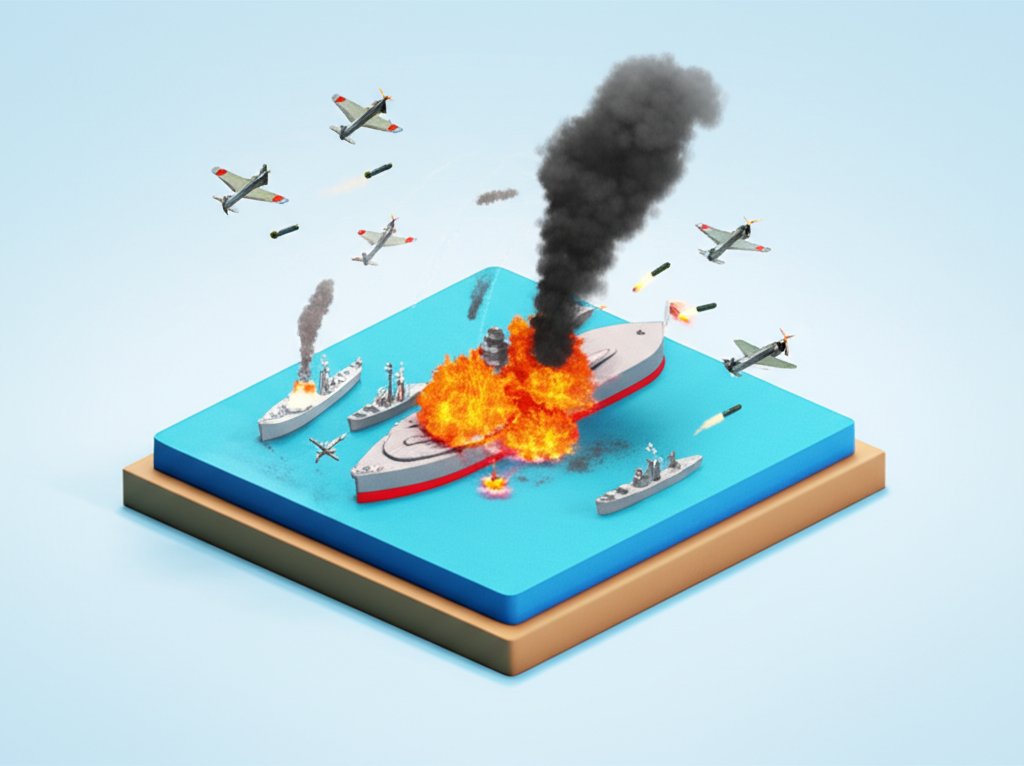
The hours and days that followed the attack were a grim tableau of rescue and recovery. The photos from this period shift from the chaos of battle to the solemn, heartbreaking work of dealing with its consequences.
- Rescue Efforts: You can see images of small motorboats zipping across the oil-slicked water, pulling burned and wounded sailors from the harbor. Men covered in thick, black oil are shown being helped ashore, their faces etched with shock.
- Smoldering Wreckage: The most enduring images are of the harbor itself. The once-proud battleships are reduced to listing, smoking hulks. The USS Arizona is a twisted, skeletal wreck, its superstructure barely visible above the water. These photos conveyed the sheer scale of the U.S. Navy’s defeat to the American public.
- The Human Toll: Beyond the ships, photographers captured the human cost. Images show makeshift aid stations, overwhelmed medical staff tending to the wounded, and the quiet dignity of crews recovering the dead.
In all, the Japanese lost only 29 aircraft and a few mini-submarines. It was a stunningly successful military operation that achieved its primary objective: crippling the U.S. battle fleet.
Beyond the Smoke: The Attack’s Unseen Legacy
While the photos of burning ships defined the attack for generations, the true impact of Pearl Harbor extended far beyond the harbor. The images tell a story of destruction, but the consequences of that day created a new world.
A Nation Awoken
President Roosevelt’s address to Congress on December 8th galvanized the nation. The isolationist sentiment that had kept America out of the war evaporated overnight. Photos from around the country show crowds gathered around radios, listening to his speech. Soon after, new images appeared: long lines of young men at military recruitment offices, eager to enlist and fight back. The “sleeping giant,” as Admiral Yamamoto reportedly feared, was “filled with a terrible resolve.”
A Dark Stain on the American Record
The attack also unleashed a wave of fear and prejudice that led to one of America’s most shameful chapters. Citing national security concerns, President Roosevelt invoked the Alien Enemies Act, authorizing the forced removal and incarceration of over 120,000 Japanese Americans, two-thirds of whom were U.S. citizens.
Families were forced from their homes and sent to desolate concentration camps for the duration of the war, their only crime being their ancestry. This immense civil liberties failure is a crucial, though often overlooked, part of the Pearl Harbor story—a consequence rarely seen in the collections of battlefield photos.
A Strategic Miscalculation
In a twist of fate, the “successful” attack on Pearl Harbor contained the seeds of Japan’s ultimate defeat. A major flaw in Japanese strategic thinking was the belief that battleships would decide the war at sea. As a result, they hoarded their own battleships for a “decisive battle” that never came.
Crucially, America’s three Pacific Fleet aircraft carriers were not in port on December 7th. They were at sea on maneuvers. In eliminating the U.S. battleships, Japan inadvertently forced the U.S. Navy to rely on its aircraft carriers and submarines—the very weapons that would dominate the Pacific War and eventually lead to victory.
Answering Your Questions About Pearl Harbor Photos
The images from December 7, 1941, are so powerful that they often spark questions. Here are clear answers to some of the most common ones.
Were any photos of the attack taken by the Japanese?
Yes. Some of the most famous aerial photographs showing the bombs striking Battleship Row were taken from Japanese aircraft. These were used for both military assessment and propaganda purposes back home.
How accurate are the Pearl Harbor photos we see?
The vast majority of authenticated photos from the attack are genuine documentary evidence taken by U.S. Navy photographers and other service members. They provide a raw, unfiltered look at the event as it happened.
Why are most Pearl Harbor photos in black and white?
Color photography was still a rare and expensive technology in 1941, especially for combat and news reporting. Black and white film was the standard, which is why it dominates the visual record of the era. A few genuine color photos exist, but they are far less common.
Is the USS Arizona still at Pearl Harbor?
Yes. The wreckage of the USS Arizona was deemed too damaged to be salvaged and too sacred to be removed. It lies where it sank and serves as the final resting place for over 900 of its crew. The USS Arizona Memorial, a white structure built over the submerged hull, is one of the most visited memorials in the United States.
How to Explore the Full Story Today
The photographs of Pearl Harbor offer a gateway to a deeper understanding of World War II and its impact on the world. They are not just relics; they are an invitation to learn more.
If you want to continue your journey, here are some of the best next steps:
- Visit the National Archives: The U.S. National Archives holds a massive collection of official photographs and documents related to the attack. Many of these are digitized and available online for public viewing.
- Explore the Pearl Harbor National Memorial Archives: The National Park Service (NPS) maintains an incredible public resource. Their website features photo galleries, videos, and oral histories from survivors who share what they saw and experienced on that day.
- Read Survivor Testimonies: The most powerful context for any photo is the human story behind it. Seek out books, documentaries, and online archives that feature first-person accounts from both American service members and Japanese pilots.
The photos of Pearl Harbor demand our attention. They ask us to look past the smoke and fire to see the individuals—the heroes, the victims, and the survivors—and to remember the day that, in a flash of violence, changed the course of history forever.










