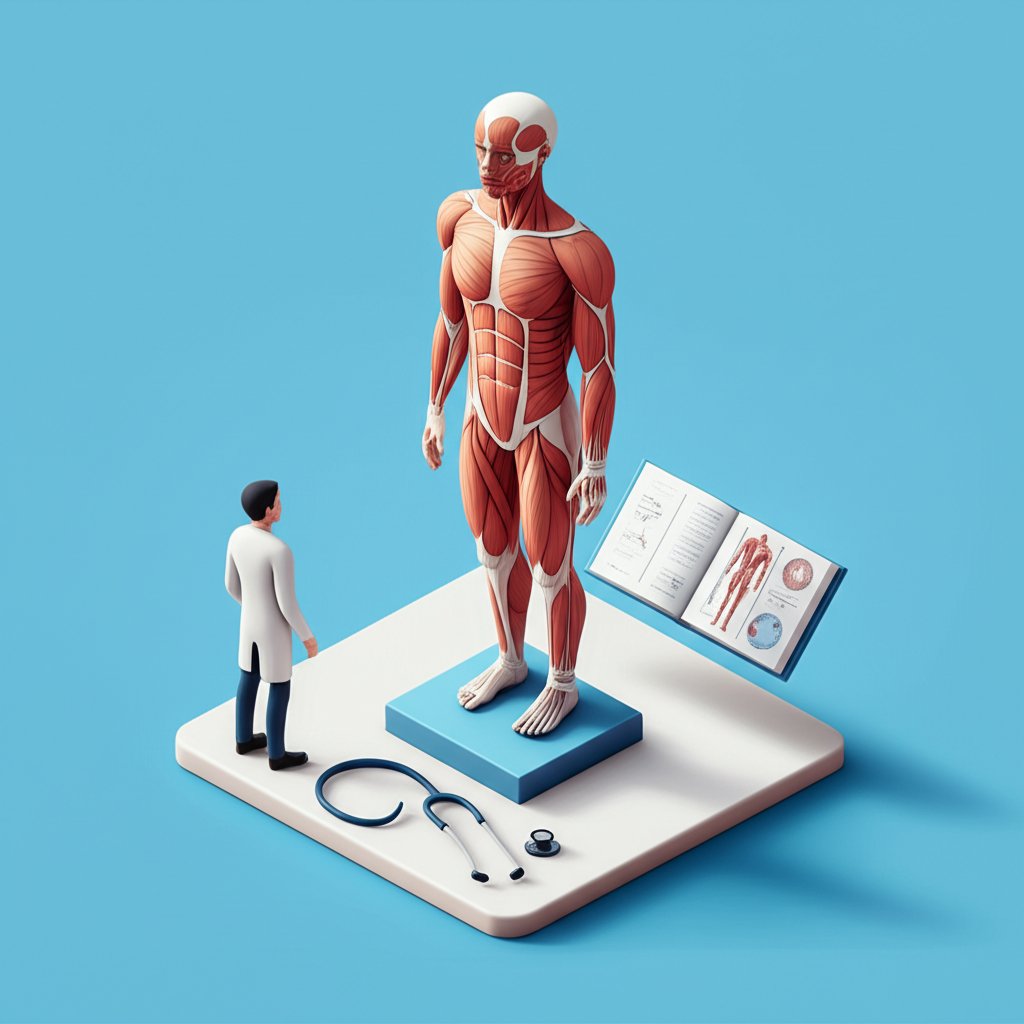
The human body, an intricate tapestry of systems working in concert, has long presented a challenge for complete understanding, even for seasoned medical professionals. Traditional anatomical charts and textbooks, while foundational, often fall short in conveying the dynamic, three-dimensional complexity of our internal mechanics. Enter Muscle Models – powerful, interactive representations of the human musculoskeletal system that are fundamentally changing how we approach diagnosis, treatment, and patient education in healthcare.
These advanced models transcend static imagery, offering dynamic, detailed insights into muscle function, interaction, and biomechanics. From a patient grasping their upcoming rotator cuff surgery to a surgeon meticulously planning a complex procedure, muscle models are empowering a new era of precision, clarity, and informed decision-making across all healthcare applications.
Muscle Models: Visualizing the Intricacies of the Musculoskeletal System

At its core, a muscle model is a detailed, often three-dimensional, representation of the body’s muscular structures and their relationship with bones, tendons, ligaments, and joints – collectively known as the musculoskeletal system. Unlike simple diagrams, these models offer depth, perspective, and often interactivity, allowing users to explore anatomical structures from every angle.
While basic physical models have existed for decades, the true revolution lies in sophisticated digital muscle models. These are typically created through:
- Advanced Imaging Data: High-resolution CT, MRI, and ultrasound scans provide the foundational anatomical data.
- 3D Reconstruction Software: Specialized software processes this data to create accurate digital representations.
- Biomechanics & Physiology Integration: Engineers and medical experts incorporate data on muscle fiber orientation, contraction mechanics, and physiological responses to ensure realistic behavior.
The resulting models can be viewed on screens, in virtual reality (VR) environments, or even projected onto real-world objects using augmented reality (AR). They offer unprecedented access to the inner workings of muscles, making complex anatomical relationships understandable and actionable.
Transforming Patient Education with Muscle Models

One of the most profound muscle model benefits is their capacity to revolutionize patient education. Medical terminology can be daunting, and abstract explanations often leave patients feeling confused or disengaged. Muscle models bridge this communication gap by providing a tangible, visual narrative.
Understanding the intricacies of these muscle models can also inspire you to learn more about physical fitness and potentially even earn a personal fitness merit badge, furthering your knowledge of the human body.
Empowering Patients Through Visual Understanding
When a patient can see the affected area and the proposed intervention, understanding dramatically improves. Imagine a patient diagnosed with a herniated disc, causing sciatica. Instead of just hearing a description, a muscle model can visually demonstrate the spinal anatomy, pinpoint the herniated disc, show its impingement on the nerve root, and illustrate how a proposed therapy or surgery would alleviate pressure. This level of visual clarity:
- Reduces Anxiety: Demystifying a procedure or condition, allowing patients to feel more in control and less overwhelmed. Visualizing a surgical repair, for instance, can significantly ease pre-operative jitters.
- Enhances Informed Consent: Patients can ask more targeted questions and make truly informed decisions about their care, actively participating in their treatment journey.
- Improves Adherence to Treatment: When patients understand the “why” behind rehabilitation exercises or medication protocols, their compliance and motivation to follow through dramatically increase, leading to better outcomes. For instance, seeing how specific exercises strengthen supporting muscles for knee stability can motivate consistent effort.
Clinicians can use interactive muscle models to “walk through” surgical procedures, demonstrate the impact of injuries on specific muscles, or explain the progression of a condition, making patient education a truly collaborative and effective process.
Advanced Healthcare Applications: Beyond the Textbook
The utility of muscle models extends far beyond patient education, offering critical healthcare applications across diagnostics, treatment planning, medical training, and rehabilitation.
Precision Diagnostics for Musculoskeletal Conditions
Muscle models provide healthcare professionals with an incredibly detailed “blueprint” of a patient’s musculoskeletal system. This precision is invaluable for diagnostics:
- Pinpointing Root Causes: For conditions like chronic back pain, a physical therapist can use a model to precisely identify which specific muscles are dysfunctional, weak, or tight, guiding a more targeted assessment and treatment plan. This helps in distinguishing between referred pain and primary muscle involvement.
- Analyzing Movement Dysfunction: By coupling models with motion capture data, clinicians can visualize altered biomechanics, identifying subtle compensations or inefficiencies in movement that might contribute to injury or pain. For example, identifying limited ankle dorsiflexion contributing to gait abnormalities.
- Earlier and More Accurate Diagnosis: The enhanced visualization and analytical capabilities streamline the diagnostic process, reducing the likelihood of misdiagnosis and accelerating the path to recovery.
Optimized Surgical Planning and Simulation
Surgeons are increasingly leveraging muscle models for meticulous pre-operative planning, a leading healthcare application. These models allow surgeons to:
- Visualize Complex Anatomy: Explore the exact location, extent, and relationships of injuries, tumors, or anatomical variations within the
musculoskeletal systemin a dynamic 3D environment. - Simulate Procedures: Surgeons can virtually “practice” different surgical approaches, test implant placements (e.g., in joint replacement surgery), and anticipate potential challenges before stepping into the operating room. This minimizes surgical risks, enhances precision, and can lead to reduced recovery times and improved long-term outcomes. Studies indicate that pre-operative planning with 3D models can significantly decrease post-surgical complications.
- Tailor Interventions: Personalized models, derived from individual patient scans, enable surgeons to design highly customized interventions that account for each patient’s unique anatomy.
Revolutionizing Medical Training and Anatomy Studies
For medical students and residents, muscle models offer an unparalleled learning experience, elevating the study of the musculoskeletal system:
- Immersive Learning: Beyond cadavers or static images, interactive 3D models allow students to virtually dissect, rotate, and isolate muscles, understanding their origins, insertions, and actions in a dynamic way. This helps solidify complex concepts like the sliding filament theory of muscle contraction.
- Accessibility and Repeatability: Students can access these models anytime, anywhere, allowing for self-paced learning and repeated exploration of anatomical structures, reinforcing comprehension.
- Understanding Anatomical Variations: Advanced models can incorporate common anatomical variations, preparing students for the diversity of
musculoskeletal systempresentations they will encounter in clinical practice. - Surgical Training: Residents can practice simulated surgical procedures on virtual models, honing their skills in a risk-free environment.
Personalized Rehabilitation and Physical Therapy
The integration of muscle models into physical therapy and rehabilitation represents a significant leap towards personalized care. By utilizing the “four-element movement system model” (motion, force, energy, and control), therapists can employ these models to:
- Objective Assessment: Comprehensive data acquisition (motion capture, strength assessments, advanced imaging) creates a patient-specific digital twin of their
musculoskeletal system. This allows for precise evaluation of individual deficits in motion, force, energy, and control. - Personalized Goal Setting: Based on the model’s insights, highly specific and measurable treatment goals are established, targeting identified deficits. For example, if a model highlights weakness in specific hip abductors, the goal will directly address strengthening these muscles for improved walking stability.
- Optimized Intervention: The calibrated model can predict the effects of various treatment options, allowing therapists to virtually experiment with exercises, therapies, and even orthotic designs. This predictive capability optimizes treatment effectiveness and minimizes potential risks, leading to tailored programs that maximize patient outcomes.
Unlocking the Myriad Muscle Model Benefits in Modern Medicine
The overarching muscle model benefits converge to create a more efficient, accurate, and patient-centric healthcare landscape. Summarizing their impact:
Enhanced Understanding & Engagement
From laypersons receiving patient education to students learning complex anatomy, and clinicians refining their diagnostic skills, muscle models make the intricate musculoskeletal system accessible and understandable, fostering deeper engagement and knowledge retention.
Increased Diagnostic Accuracy & Treatment Efficacy
By offering a detailed, dynamic view of patient-specific anatomy and biomechanics, these models lead to more precise diagnoses, better-planned surgeries, and more effective rehabilitation programs. This translates directly to improved patient outcomes and reduced healthcare costs associated with ineffective treatments.
Cost-Effectiveness & Resource Optimization
While initial development can be an investment, the long-term benefits are substantial. Reduced misdiagnoses, fewer surgical complications, shorter recovery times, and more efficient medical training all contribute to significant cost savings and better allocation of healthcare resources.
Facilitating Research & Innovation
Muscle models serve as invaluable tools for researchers developing new surgical techniques, studying the biomechanical effects of diseases or drugs, and designing advanced prosthetics and orthotics. They provide a controlled environment for experimentation and analysis, accelerating medical innovation.
The Future Landscape: Integrating Muscle Models Deeper into Healthcare
The journey of muscle models is still unfolding, with exciting advancements on the horizon that promise even more transformative healthcare applications.
- AI and Machine Learning Integration: Artificial intelligence will increasingly be used to automate the generation of highly accurate
musculoskeletal systemmodels from imaging data, and to provide predictive analytics on treatment efficacy based on vast datasets. - Real-time Physiological Data: Future models will integrate real-time data from wearables and sensors to provide dynamic, live representations of muscle activity, fatigue, and neurological control, offering unprecedented insights during rehabilitation.
- Wider Accessibility: Cloud-based platforms and user-friendly mobile applications will make advanced muscle models more accessible to smaller clinics and patients, democratizing access to this cutting-edge technology.
- Haptic Feedback: The integration of haptic feedback will allow students and surgeons to “feel” virtual tissues and instruments, adding another layer of realism to training and simulation.
While challenges remain, such as data security, standardization, and integration into existing clinical workflows, ongoing research and technological advancements are actively addressing these hurdles, paving the way for a future where personalized, model-driven care is a standard.
Conclusion
Muscle models are no longer just academic curiosities; they are a cornerstone of modern medical innovation. By delivering unparalleled visualization of the musculoskeletal system, they are fundamentally enhancing patient education, elevating diagnostic precision, optimizing treatment planning, and revolutionizing medical training. The myriad muscle model benefits are clear and far-reaching, promising a future of healthcare that is more informed, more personalized, and ultimately, more effective for every patient.
Frequently Asked Questions (FAQ)
What exactly is a muscle model?
A muscle model is a detailed, often 3D, representation of muscles and their surrounding anatomical structures within the musculoskeletal system. These can range from physical anatomical models used for basic teaching to advanced digital simulations derived from patient imaging data, providing interactive and dynamic insights into muscle function and biomechanics.
How do muscle models improve patient understanding?
Muscle models significantly enhance patient education by providing visual and interactive explanations of complex medical conditions and procedures. Instead of abstract verbal descriptions, patients can see and manipulate a 3D representation of their own musculoskeletal system or relevant anatomy, helping them grasp the “what” and “why” of their diagnosis and treatment, reducing anxiety, and improving adherence to care plans.
What are the main Healthcare Applications of muscle models?
The primary healthcare applications of muscle models include:
musculoskeletal system pain or dysfunction.Are Muscle Models only used for digital simulations?
No, muscle models exist in both physical and digital forms. Physical models are often used for general anatomical education. However, the most advanced healthcare applications and significant muscle model benefits typically come from sophisticated digital 3D models, which offer interactivity, patient-specific customization, and integration with advanced analytical tools.
How accurate are these models?
The accuracy of advanced muscle models is generally very high, as they are often built using high-resolution medical imaging data (like CT and MRI scans) of individual patients. This data is then processed and refined with specialized software and biomechanical principles to ensure the model accurately reflects the patient’s unique anatomy and physiological characteristics.
What does the Musculoskeletal System include?
The musculoskeletal system is the body’s framework, providing support, stability, and movement. It includes bones, muscles, cartilage, tendons, ligaments, joints, and other connective tissues. Muscle models specifically focus on the muscular components and their interactions within this complex system.
What are the primary Muscle Model Benefits for healthcare providers?
For healthcare providers, the primary muscle model benefits include:
musculoskeletal system issues.










1 thought on “Muscle Models: Revolutionizing Healthcare & Patient Education”
Comments are closed.