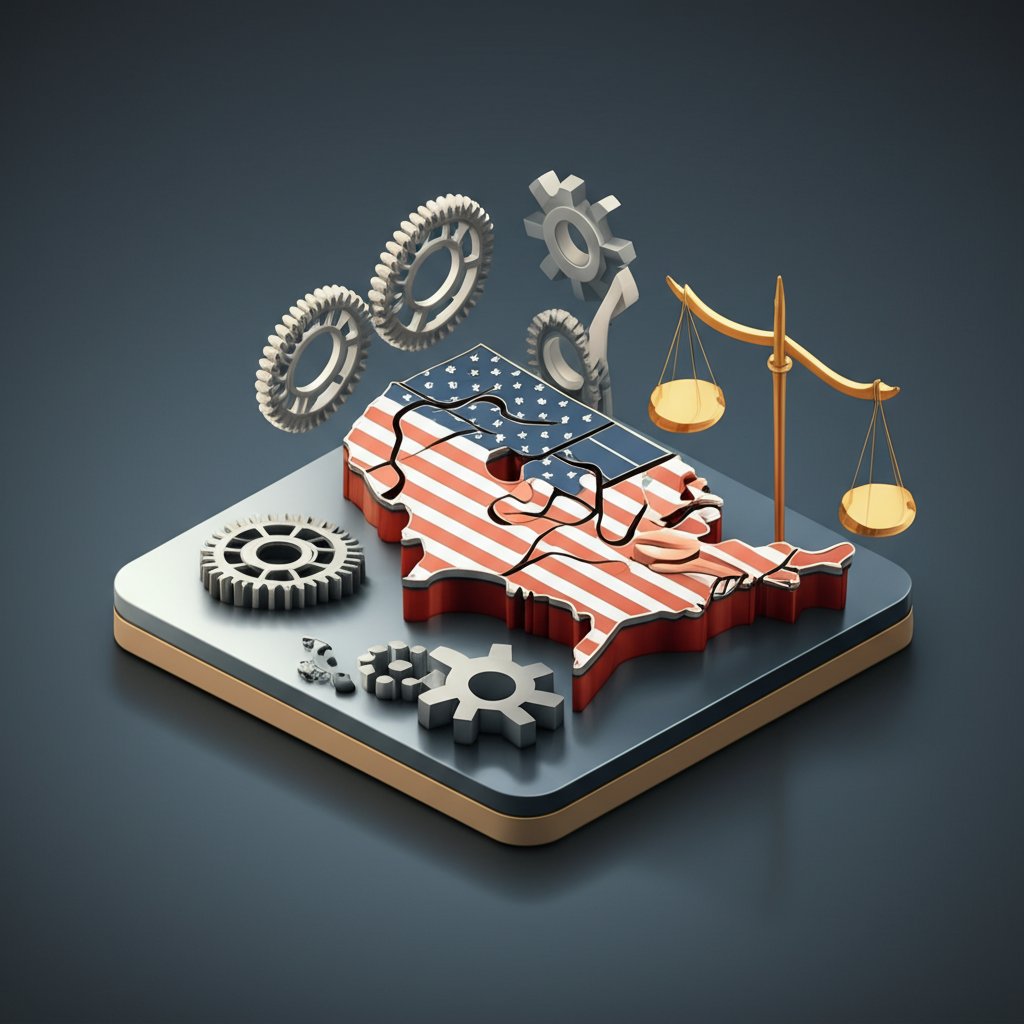
The arguments filling today’s news feeds—over voting rights, economic inequality, and America’s place in the world—can feel entirely new. But they are echoes of debates that have defined modern US history since the ashes of the Civil War. The period from the late 19th century onward wasn’t just a series of dates and events; it was the crucible where the core tensions of today’s America were forged. Understanding this history isn’t just an academic exercise; it’s a practical tool for making sense of the present.
At a Glance: What You’ll Gain
- Connect the Dots: See how the unresolved conflicts of Reconstruction after the Civil War directly influence today’s conversations about racial justice and equality.
- Trace Economic Tensions: Understand how the Gilded Age’s industrial boom and labor struggles set the stage for modern debates on Big Tech, wealth gaps, and workers’ rights.
- Grasp America’s Global Role: Unpack how 20th-century wars transformed the US into a superpower, creating foreign policy challenges that persist today.
- Recognize Patterns of Social Change: Learn how the strategies of the Civil Rights and other 20th-century movements provide a blueprint for today’s social activism.
- Build a Framework for Analysis: Get a practical method for examining any current event through a historical lens.
After the Civil War: A Fractured Peace and Its Lingering Echoes
The Civil War ended slavery, but it didn’t resolve the question of what freedom meant. The era that followed, Reconstruction (1865–1877), was a turbulent, revolutionary period that attempted to rebuild the nation and integrate four million newly freed African Americans into the body politic. Its failures are as consequential as its successes.
The Promise and Failure of Reconstruction
Three constitutional amendments—the 13th, 14th, and 15th—were radical leaps forward. They abolished slavery, granted citizenship and equal protection under the law, and established voting rights for Black men. For a brief moment, America saw a surge in Black political participation, with African Americans elected to local, state, and even federal office.
But this progress was met with a violent and systematic backlash. The withdrawal of federal troops from the South in 1877 effectively ended Reconstruction, leaving a power vacuum filled by white supremacist groups. Southern states implemented “Jim Crow” laws to enforce strict racial segregation, while economic systems like sharecropping trapped many Black families in a cycle of debt and poverty that mirrored slavery. This wasn’t just a reversal of progress; it was the construction of a new racial caste system that would endure for nearly a century.
Connection to Today: The legacy of this era is undeniable. The voter suppression tactics debated today—from restrictive ID laws to the closure of polling places—are modern iterations of the poll taxes and literacy tests designed to disenfranchise Black voters after Reconstruction. The persistent racial wealth gap has deep roots in the economic exploitation of sharecropping and the denial of property rights.
The Engine of Progress and Protest: How the Gilded Age Forged Modern America
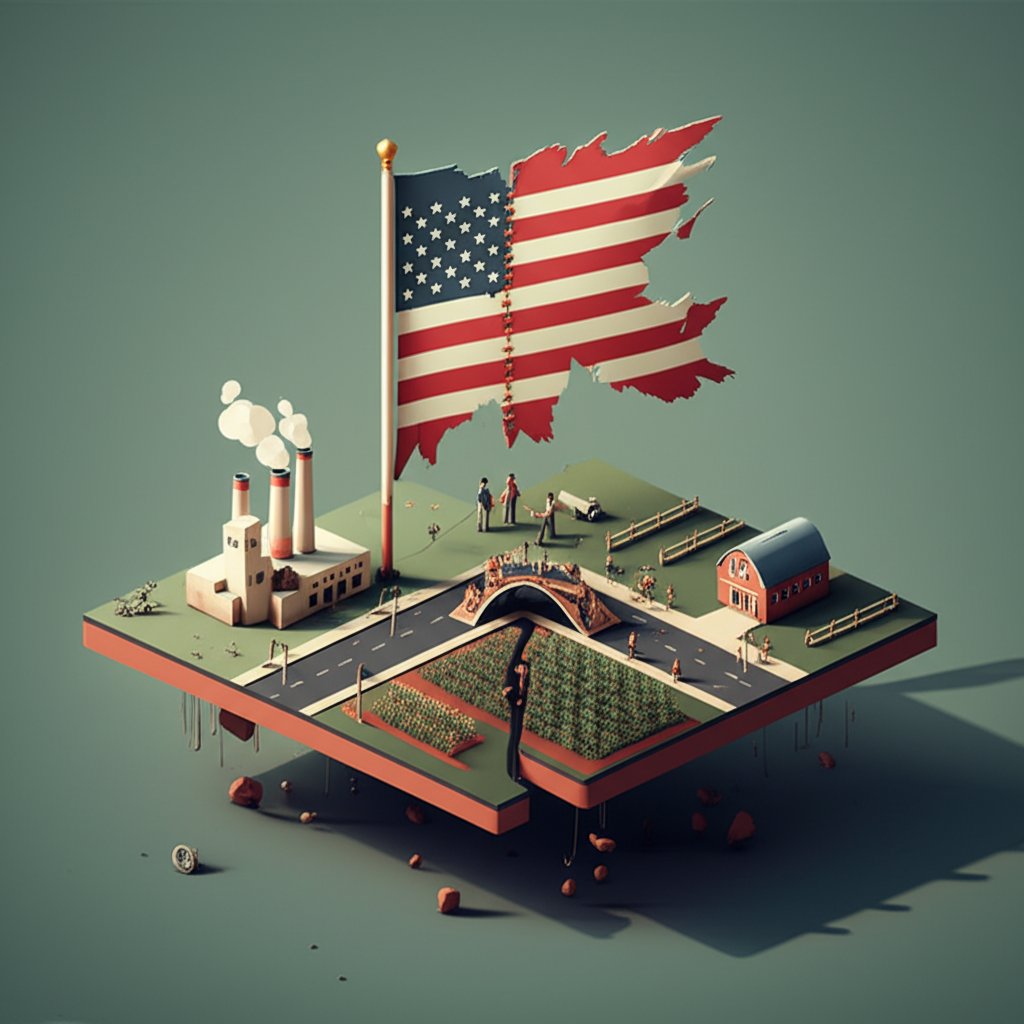
While the South grappled with the fallout of the Civil War, the rest of the country was being reshaped by an unprecedented economic explosion. From roughly 1870 to 1900, the Gilded Age saw rapid industrialization, massive immigration, and the rise of sprawling cities. This era of glittering wealth, however, masked deep-seated social problems.
Robber Barons or Captains of Industry?
Titans like John D. Rockefeller (Standard Oil) and Andrew Carnegie (U.S. Steel) built vast monopolies, amassing fortunes on a scale never before seen. They revolutionized industries with ruthless efficiency, but their methods often involved crushing competition and exploiting workers. This period gave us the transcontinental railroad and the electric lightbulb, but it also created dangerous factory conditions, grueling hours, and rampant child labor.
In response, a powerful labor movement emerged. Workers began to organize unions and demand better pay, safer conditions, and an eight-hour workday. Events like the Haymarket Affair (1886) and the Pullman Strike (1894) were violent, bloody clashes that highlighted the profound conflict between capital and labor. Understanding the Gilded Age’s place within the broader timeline of American development is key. For a complete overview of different eras, our Explore US History Guide provides a valuable framework.
Connection to Today: The Gilded Age created the central economic questions we still debate. Are today’s tech giants like Amazon and Google innovative “captains of industry” or modern “robber barons” who stifle competition? The ongoing fights over unionization at companies like Starbucks and Amazon are a direct continuation of the labor struggles that began in the factories and rail yards of the late 19th century.
From Isolation to Superpower: The Global Entanglements of the 20th Century
For much of its early history, the United States followed a path of relative isolationism. The 20th century shattered that tradition, thrusting the nation into the center of global conflicts that would define its role in the world for generations to come.
The World Wars and the End of Isolationism
World War I (1914–1918) was America’s first major intervention in a European conflict, and it marked a turning point. The nation’s industrial might was a decisive factor in the Allied victory. Two decades later, the attack on Pearl Harbor catapulted the U.S. into World War II (1939–1945), a conflict that transformed the country into a global military and economic superpower, home to the “arsenal of democracy.”
The post-war era saw the creation of international institutions like the United Nations and military alliances like NATO, with the United States at the helm. This was a permanent departure from its pre-war stance, establishing a new reality of American leadership—and responsibility—on the world stage.
The Cold War’s Shadow: Proxy Wars and Domestic Fear
The end of WWII didn’t bring peace but rather a new, ideological conflict: the Cold War against the Soviet Union. This half-century struggle (c. 1947–1991) was fought not in direct confrontation but through proxy wars in places like Korea and Vietnam, an expensive and terrifying nuclear arms race, and a competition for influence across the globe.
At home, the Cold War fueled an atmosphere of paranoia and conformity. The “Red Scare” and McCarthyism saw government officials and private citizens alike accused of communist sympathies, often with devastating consequences for their careers and lives.
Connection to Today: America’s Cold War-era commitments continue to shape its foreign policy. The NATO alliance is central to the response to the war in Ukraine. Debates over military spending and intervention in foreign conflicts are a direct legacy of the decision to become a global superpower.
The Fight for the Soul of America: Civil Rights and Social Change
While the nation was focused on external threats, a powerful revolution for freedom and equality was building within its own borders. The social movements of the mid-20th century, led by the Civil Rights Movement, fundamentally challenged the American status quo.
The Second Reconstruction: The Civil Rights Movement
The fight against Jim Crow segregation was a long, arduous struggle. Using a combination of legal challenges, nonviolent protest, and civil disobedience, activists chipped away at the foundations of white supremacy.
- Legal Victories: The Supreme Court’s 1954 decision in Brown v. Board of Education, which declared school segregation unconstitutional, was a landmark victory.
- Grassroots Activism: Events like the Montgomery Bus Boycott (1955-56) and the 1963 March on Washington, led by figures like Dr. Martin Luther King Jr., brought national attention to the injustices of segregation.
- Landmark Legislation: This pressure culminated in the Civil Rights Act of 1964, which outlawed discrimination based on race, color, religion, sex, or national origin, and the Voting Rights Act of 1965, which dismantled many of the barriers to Black political participation.
These victories were hard-won and met with fierce resistance. But they successfully dismantled the legal structure of Jim Crow, marking a “Second Reconstruction” in American history.
Connection to Today: The work of the Civil Rights Movement is unfinished. The Black Lives Matter movement directly confronts the issues of police brutality and systemic racism that were not fully resolved in the 1960s. The principles and tactics of nonviolent protest pioneered by civil rights leaders are a model for modern activists fighting for everything from climate action to gender equality.
How to Analyze Modern US History in Today’s World
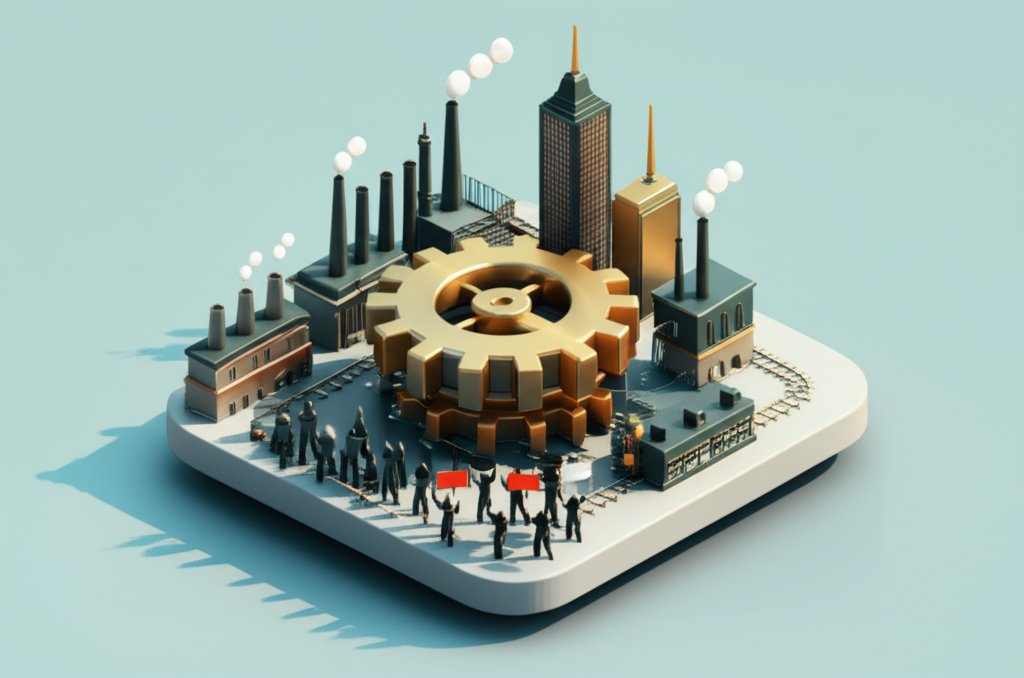
History is not just for the classroom. You can use its lessons as a lens to better understand the world around you. Here’s a simple framework for doing just that.
A Framework for Connecting Past and Present
Start by identifying a major theme and tracing its evolution from a key historical period to a current event.
| Historical Theme | Key Event/Era | Modern-Day Connection |
|---|---|---|
| Racial Justice | Reconstruction & Jim Crow | Debates on voting rights, policing reform, and critical race theory. |
| Economic Inequality | The Gilded Age | Antitrust lawsuits against Big Tech; fights for a higher minimum wage. |
| America’s Global Role | The Cold War | The NATO alliance and the war in Ukraine; debates over foreign aid. |
| Social Activism | 1960s Rights Movements | Modern protest movements like Black Lives Matter and #MeToo. |
A Step-by-Step Guide for Your Own Research
- Start with a Modern Question. Pick a news story or social issue that confuses or interests you. Why is this happening now?
- Trace Its Historical Roots. Work backward. Use reliable sources (academic journals, museum archives, reputable historical journalism) to find the origin point of the conflict. A debate over a voting law in Georgia today has a direct line to the Voting Rights Act of 1965 and, before that, the poll taxes of the 1890s.
- Analyze Cause and Consequence. Don’t just make a timeline. Ask how one event led to another. How did the failure of Reconstruction create the conditions for Jim Crow? How did the industrial power built in WWII position the US to lead the Cold War?
- Seek Out Counter-Narratives. Mainstream history often focuses on presidents and generals. Look for the stories of the people whose voices were suppressed—women in the labor movement, Native Americans during westward expansion, or Black soldiers in segregated armies. Their perspectives provide a more complete, and often more accurate, picture.
Quick Answers to Common Questions About Modern US History
Isn’t modern US history just about a few famous presidents and wars?
Not at all. While presidents and wars are important, the real engine of change is often found in social movements, technological shifts, and economic forces. The history of the labor movement, the fight for women’s suffrage, and the invention of the internet have had as much impact on daily American life as any single political leader.
Why does the period after the Civil War (Reconstruction) matter so much today?
Reconstruction was America’s first attempt to build a truly multiracial democracy. Its failure to fully secure the rights of African Americans, and the subsequent rise of Jim Crow, created patterns of systemic inequality that have persisted for generations. According to historian Eric Foner, it was an “unfinished revolution” whose core questions are still being debated.
How do historians define the “modern” era in the US?
While the global “modern” period can be traced back to the 1500s, in the context of US history, the “modern” era is most often considered to begin after the Civil War, around 1877. This marks the end of Reconstruction and the beginning of America’s transformation into an industrial, urban, and global power.
Are we living in a “new Gilded Age”?
Many historians and economists argue that we are. They point to the vast concentration of wealth in the hands of a few tech billionaires, rising economic inequality, and the powerful political influence of corporations as strong parallels to the late 19th century. The term serves as a powerful reminder that the economic tensions forged over a century ago are still very much with us.
Your Next Step: Viewing Today’s Headlines Through a Historical Lens
The past is never truly past. The core challenges of modern US history—the struggle for racial equality, the conflict between capital and labor, and the debate over America’s role in the world—are not relics in a textbook. They are living forces that animate our politics, shape our society, and define our future.
The next time you read about a protest, a political debate, or an economic trend, pause and ask: what are the historical roots of this? By doing so, you move from being a passive consumer of news to an informed, active participant in the ongoing story of America.










