Grasping the true impact of major turning points in history isn’t just an academic exercise; it’s an essential lens for understanding the complex world we inhabit today. Every societal structure, technological marvel, and political ideal we take for granted is, in essence, a direct or indirect consequence of pivotal moments that reshaped human civilization forever. By dissecting these historical shifts, we gain invaluable insight into the forces that built our present and continue to steer our future.
At a Glance: Unpacking Historical Inflection Points
- Decipher the Echoes of the Past: Understand how ancient discoveries still influence modern daily life.
- Trace Societal Blueprints: See how early governance and legal systems shaped today’s democracies.
- Recognize Catalysts for Progress: Learn how shifts in thought and knowledge accelerated human development.
- Connect Global Transformations: Grasp the profound economic and cultural changes initiated by exploration and industrialization.
- Interpret Modern Geopolitics: Identify how 20th-century conflicts forged our current global order.
- Develop a Historical Lens: Gain tools to analyze contemporary events as potential turning points.
The Irreversible Currents: How History’s Pivots Drive Our World
History isn’t a straight line; it’s a river with powerful currents, eddies, and dramatic waterfalls. Certain moments act as these waterfalls, irrevocably changing the river’s course. These are the major turning points in history – events or periods that introduced fundamental changes across political, social, economic, cultural, and technological landscapes. They aren’t just isolated incidents; they are the foundational narratives that explain why our world works the way it does.
Understanding these shifts isn’t about memorizing dates, but about comprehending cause and effect. It’s about recognizing how a discovery from a million years ago influences our biology, or how a document signed in a meadow in England still underpins our legal rights. To truly grasp the breadth of these transformations, let’s dive into some of the most profound shifts that have molded modern civilization.
Foundations of Existence: From Nomadic Survival to Structured Societies
Before we had cities or even permanent homes, humanity experienced a series of transformations that set the absolute bedrock for everything that followed.
Mastering the Elements: Fire’s Primal Spark
Imagine a world without cooked food, warmth in the cold, or protection from predators at night. The discovery and use of fire, between 250,000 and 1.5 million years ago, was arguably humanity’s first major turning point. This wasn’t just about comfort; it was a biological and social revolution. Cooked food was safer, more nutritious, and easier to digest, leading to better health, more energy, and even the potential for increased brain size. The communal hearth became a center for social bonding, likely fostering the development of complex language and early forms of culture. Modern society’s relationship with energy, from cooking to industrial power, finds its genesis in this ancient flame.
The Revolutionary Plow: Agriculture’s Lasting Harvest
For hundreds of thousands of years, humans lived as hunter-gatherers, constantly on the move. Then, around 10,000 years ago, came the Agricultural (Neolithic) Revolution. This wasn’t a single event but a gradual shift, starting in the Fertile Crescent, where people began cultivating crops like wheat and barley and domesticating animals.
The implications were staggering:
- Permanent Settlements: No longer needing to follow herds, people built homes, then villages, then cities. This is the origin of urban life.
- Population Growth: A more reliable food supply supported larger populations.
- Specialization: Not everyone needed to farm. Some could become artisans, priests, or leaders, laying the groundwork for complex social hierarchies.
- Early Innovations: The need to manage crops led to the development of writing (for record-keeping), mathematics (for irrigation and land division), and calendars (for planting cycles).
This shift fundamentally altered our relationship with nature, initiating large-scale environmental manipulation through irrigation and land clearing. Every city block, every grocery store, every property deed traces its lineage back to this foundational change.
Forging Power: The Age of Metals
Following agriculture, the discovery of how to extract and work metals like bronze (around 9,000 years ago) and iron (around 3,000 years ago) marked another critical turning point. These metals allowed for superior tools for farming, construction, and warfare. Bronze tools gave early Middle Eastern civilizations like the Assyrians and Egyptians an advantage, while the abundance and strength of iron fueled the rise of mighty empires such as the Roman Empire. The very concept of metallurgy, and the continuous innovation in materials science, continues to drive modern engineering and technology.
Structuring Humanity: Empires, Laws, and Governance
With settled populations and specialized labor, the need for organized governance became paramount, leading to the development of complex political and legal systems that still echo today.
The Enduring Legacy of Rome
The Roman Empire (from its republican roots in 509 BCE to its imperial peak) was a monumental architect of Western civilization. Its genius lay not just in conquest, but in organization and infrastructure. The Roman Republic pioneered concepts like checks and balances, separation of powers, and the notion of codified law (e.g., The Twelve Tables). These principles deeply influenced the framers of the U.S. Constitution and modern democratic systems globally. Roman engineering, from aqueducts to roads, established standards for infrastructure that facilitate modern transportation and sanitation. The Pax Romana, a period of relative peace, fostered trade and the widespread dissemination of Greco-Roman culture, whose artistic, philosophical, and linguistic influences remain pervasive.
A Power Vacuum and the Rise of New Orders: The Fall of the Western Roman Empire
The fall of the Western Roman Empire in 476 CE was not just the collapse of a superpower; it was a profound turning point marking the end of antiquity and the beginning of the Middle Ages in Europe. This event created a massive power vacuum, leading to centuries of political fragmentation, the rise of feudalism (a localized system of governance and land tenure), and the increasing authority of the Catholic Church as a unifying force. It fundamentally reshaped Europe’s political map, trade routes, and cultural development. While often labeled “The Dark Ages” (from 476 AD until approximately 1300), this period also saw the preservation of classical knowledge by the Eastern Roman (Byzantine) Empire and the gradual emergence of distinct European identities.
Laying the Foundation for Rights: The Magna Carta
Centuries later, amid the feudal landscape, the signing of the Magna Carta in 1215 in England was a seismic shift. This document, forced upon King John by rebellious barons, was revolutionary because it limited the power of the monarch, establishing that even the king was subject to the law. It introduced early concepts of due process and individual rights, laying a critical foundation for constitutional government, common law traditions, and human rights movements that would emerge much later, directly influencing documents like the U.S. Bill of Rights. For a broader overview of how such moments shift history, you can Explore historical turning points.
The Renaissance and the Rebirth of Thought: Accelerating Progress
The late medieval and early modern periods were defined by a resurgence of knowledge, new ways of thinking, and unprecedented communication.
The Black Death’s Unforeseen Impact
The Black Death (1347–1351), a bubonic plague that decimated nearly half of Europe’s population, might seem purely catastrophic. However, it inadvertently became a turning point by severely impacting the existing social and economic structures. The drastic labor shortage gave surviving peasants unprecedented bargaining power, weakening the feudal system and paving the way for economic shifts that contributed to the rise of a merchant class and individual wealth—key ingredients for the Renaissance.
Reawakening Minds: The Renaissance
Beginning around 1300, particularly in Italy, The Renaissance marked a “rebirth” of interest in classical Greek and Roman art, philosophy, and learning after the Middle Ages. It fostered humanism, emphasizing human potential and achievement, moving away from purely theological explanations of the world. This period produced masterpieces in art and literature, but more importantly, it cultivated a spirit of inquiry and individualism that was essential for the subsequent scientific and intellectual revolutions.
Spreading the Word: Gutenberg’s Printing Press
Invented by Johannes Gutenberg around 1439, The Printing Press was a game-changer for the spread of information. Before this, books were hand-copied, making them rare and expensive. The printing press made knowledge accessible to a wider audience, facilitating the spread of new ideas, fueling the Reformation, and promoting literacy. This explosion of accessible information directly parallels our modern internet age in its capacity to democratize knowledge and challenge established authorities.
The Birth of Modern Science: The Scientific Revolution
Spanning roughly from the 16th to the 18th centuries, The Scientific Revolution fundamentally reshaped how humans understood the natural world. It represented a decisive shift from relying solely on religious doctrine and ancient texts to embracing empirical observation, systematic experimentation, and mathematical reasoning. Figures like Copernicus (heliocentric model, 1543), Galileo, Kepler, and Newton (laws of motion and universal gravitation) dismantled old paradigms. The establishment of the scientific method – emphasizing inductive reasoning and rigorous testing – laid the foundation for every technological and medical advance we’ve seen since, from modern medicine to space travel.
Reshaping Economies and Global Connections: Exploration and Industry
The early modern era also saw an unprecedented expansion of human activity, linking continents and transforming economies.
A New World: Columbus’s Voyage and Globalization
Christopher Columbus’s arrival in the Americas in 1492 initiated a period of intense global exchange and profound consequences. It led to the “Columbian Exchange,” a vast transfer of goods, crops, animals, and diseases between the Old and New Worlds. While it spurred global trade and economic growth for European powers, it also led to the devastating European conquest of indigenous lands, the transatlantic slave trade, and the violent clash of civilizations. This moment fundamentally reshaped global demographics, economies, and power dynamics, creating the interconnected, yet often conflicted, world we recognize today.
The Engine of Modernity: The Industrial Revolution
Beginning in Britain in the late 18th century and spreading globally, The Industrial Revolution was a profound shift from agrarian, handicraft economies to mechanized, factory-based production. Innovations like James Watt’s improved steam engine and textile machinery transformed manufacturing. This revolution created the foundations for modern capitalist economic systems, spurred rapid urbanization (drawing people from rural areas to burgeoning cities), and dramatically altered social structures with the rise of a vast working class and a powerful industrial elite. It fueled unprecedented technological advancement, shaped our consumer culture, and created the environmental challenges we face today.
The 20th Century’s Crucible: Conflicts, Ideologies, and the Digital Age
The last two centuries witnessed cataclysmic events and rapid technological shifts that directly produced the geopolitical landscape and information society of today.
Forging New Nations: The American and French Revolutions
The American Revolution (1775–1783), where American colonies broke from British rule, redefined the very concept of governance. Its success led to the creation of the U.S. Constitution, emphasizing popular sovereignty, individual rights, and republicanism. This inspired democratic movements worldwide, demonstrating that people could successfully challenge monarchical rule. The subsequent French Revolution (1789–1799), with its cry of “Liberty, Equality, Fraternity,” further dismantled absolute monarchy in Europe, promoting the radical idea that common citizens had inherent rights and the power to overthrow corrupt rulers. These revolutions paved the way for modern republics and the spread of democratic ideals.
A Century of Global Upheaval: World Wars and the Cold War
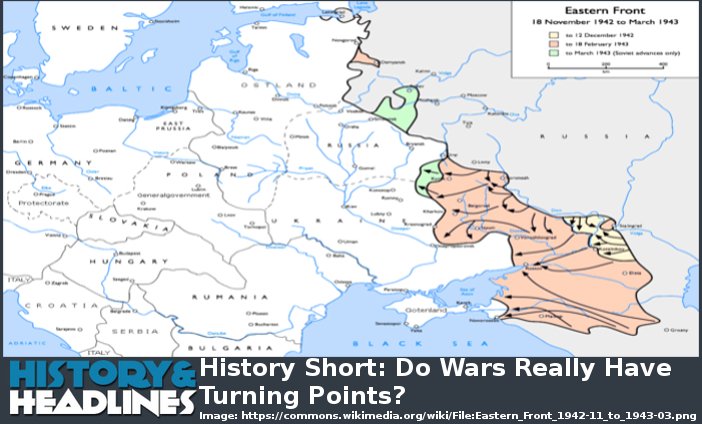
The First World War (1914–1918) was a cataclysm that reshaped the 20th century. It led to the collapse of empires (Austro-Hungarian, Ottoman, Russian, German), redrew national borders, and introduced modern, industrialized warfare and widespread propaganda. The Treaty of Versailles, intended to end the war, inadvertently laid some groundwork for the Second World War (1939–1945). WWII, an even deadlier conflict, witnessed the rise and fall of fascism, the horrors of the Holocaust, and the dawn of the Atomic Age with the use of nuclear weapons. Its aftermath fundamentally altered global politics, leading to the Cold War between the U.S. and the Soviet Union, the establishment of the United Nations (an attempt at global governance), and a bipolar world order that shaped geopolitics for decades and still influences international relations today.
The Wall Comes Down: A Symbolic Shift
The Fall of the Berlin Wall in 1989 was more than just a physical event; it was a potent symbol of the collapse of communism in Eastern Europe and the impending dissolution of the Soviet Union. This event marked a major turning point, signifying the end of the Cold War and a shift towards a more interconnected, market-oriented global economy. It reunited a divided Europe and reshaped geopolitical alliances.
The Information Superhighway: The Internet’s Revolution
While its full long-term impact is still unfolding, the invention and widespread adoption of The Internet in the late 20th and early 21st centuries stands as a colossal turning point. It has profoundly revolutionized global communication, access to information, commerce, education, and entertainment. The Internet has flattened hierarchies, fostered global communities, and created entirely new industries and ways of life, fundamentally altering how we interact, learn, and work, impacting virtually every aspect of modern society.
Your Historical Playbook: Analyzing Turning Points
Understanding how these major turning points in history unfolded provides a framework for analyzing events in our own time. Here’s a practical approach:
- Identify the Catalyst: What specific event, discovery, or idea sparked the change? (e.g., Gutenberg’s press, Columbus’s voyage, the assassination that triggered WWI).
- Trace Immediate Consequences: What were the direct, observable effects in the short term (months to a few years)? (e.g., printing press led to cheaper books; Columbus’s voyage led to European claims in the Americas).
- Unpack Long-Term Ripple Effects (The “How It Shaped” Factor): This is where the true analysis lies. Categorize the impacts:
- Political: New forms of governance, shifts in power, rise/fall of empires.
- Social: Changes in class structure, demographics, everyday life, human rights.
- Economic: New trade routes, economic systems, industries, wealth distribution.
- Cultural: Shifts in art, philosophy, religion, values, language.
- Technological: New inventions, scientific understanding, infrastructure.
- Self-Reflection: How do these effects connect to aspects of your daily life or current global news?
- Look for Parallel Patterns: Can you see similar dynamics in contemporary events? Are there technological shifts, geopolitical tensions, or social movements today that might be the beginnings of a new turning point?
Quick Answers: Common Questions About Historical Turning Points
Q: What truly defines a “major turning point” in history?
A: A major turning point is an event or series of events that fundamentally and irreversibly alters the trajectory of human development, society, or thought across multiple domains (political, social, economic, cultural, technological). Its impact must be broad, deep, and lasting, not just a temporary disruption.
Q: Are there different kinds of turning points?
A: Yes. Some are sudden events (e.g., Fall of the Berlin Wall), while others are gradual processes (e.g., Agricultural Revolution, Industrial Revolution). Some are driven by technological innovation (printing press), others by ideological shifts (Scientific Revolution, American Revolution), or cataclysmic conflicts (World Wars).
Q: How do we know if we are living through a major turning point now?
A: It’s notoriously difficult to identify a major turning point in real-time, as their true significance often only becomes clear in hindsight, after their long-term consequences have unfolded. However, hallmarks might include rapid, widespread technological disruption, fundamental shifts in global power structures, or profound changes in societal values and norms. The COVID-19 pandemic, for instance, has been proposed as a recent turning point due to its global health, economic, and social ramifications.
Q: Why is it important to study these historical turning points?
A: Studying turning points helps us understand causality in history, showing how past decisions and innovations created the present. It provides context for current events, informs policy decisions, and allows us to critically evaluate potential future trajectories. It fosters a deeper appreciation for the interconnectedness of human experience across time.
The Unfolding Story: Your Role in the Next Chapter
The study of major turning points in history is more than just looking backward; it’s about honing your ability to observe the present with a deeper understanding and to anticipate the future with greater foresight. Each era faced its own moments of profound change, and each time, the world was irrevocably altered. By internalizing the patterns of transformation—how discovery leads to social reorganization, how conflict reshapes alliances, how new ideas unleash progress—you develop a vital historical intelligence. This empowers you not just to be a passive observer of history, but to critically engage with the ongoing story, recognizing that even today, the seeds of future turning points are being sown.










