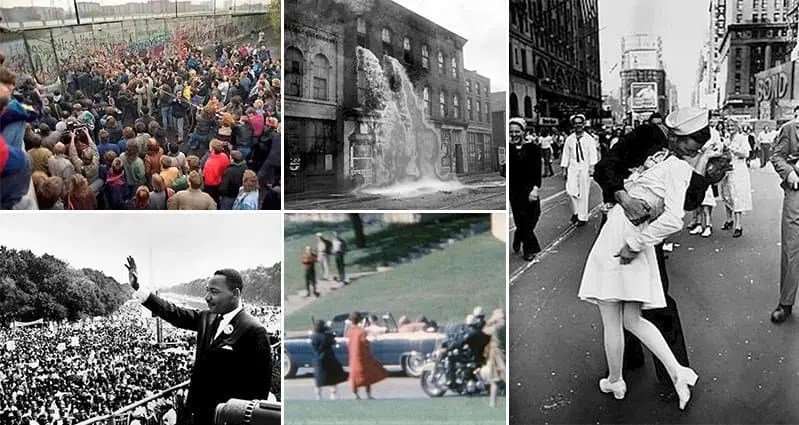
The 21st century has been a relentless crucible, forging our modern reality through an astonishing succession of major events. From seismic geopolitical shifts to rapid technological leaps and profound societal reckonings, understanding these pivotal moments isn’t just an academic exercise; it’s essential for anyone navigating the complexities of today’s world. These aren’t isolated incidents but interconnected forces that continue to shape our economies, political landscapes, and daily lives.
At a Glance: Navigating the 21st Century’s Defining Moments
- Geopolitical Reordering: Witness how global power dynamics have shifted dramatically through conflict, economic integration, and emergent alliances.
- Technological Acceleration: Understand the profound, often unexpected, impact of digital innovation and scientific breakthroughs on society.
- Economic Volatility & Transformation: Grasp the causes and far-reaching consequences of financial crises and evolving global markets.
- Societal Movements & Rights: Explore how collective action and new communication tools have driven significant social and political change.
- Global Health & Environmental Challenges: Recognize the systemic vulnerabilities exposed by pandemics and the urgent calls for climate action.
The period beginning in 2000 kicked off with a burst of activity that set the tone for decades to come. Early indicators, like Vladimir Putin’s ascent to the Russian presidency and the first-ever Inter-Korean Summit, hinted at shifting geopolitical plates. Meanwhile, the U.S. Supreme Court’s declaration of George W. Bush as president following a contentious election underscored the fragile nature of democratic processes, even in established nations. This era was less about clear-cut endings and more about the inauguration of new, often turbulent, chapters.
The Dawn of a New Millennium: Unpacking Early Shocks and Shifts (2000-2004)
The turn of the century didn’t just bring new digits to the calendar; it brought a series of profound disruptions that forced a global re-evaluation of security, economy, and human connection.
Geopolitical Earthquake: The Aftermath of 9/11 and Endless Wars
Before the dust had settled from the Dot-com Bubble’s burst, a far more devastating event reshaped global priorities. The September 11 terrorist attacks in 2001 on the United States, utilizing hijacked planes, claimed nearly 3,000 lives and immediately triggered a fundamental shift in international relations. This act of terror catalyzed the “War on Terror,” leading swiftly to the U.S. invasion of Afghanistan, the overthrow of the Taliban, and the start of a prolonged military engagement. This response wasn’t contained; it paved the way for the U.S. invasion of Iraq in 2003, which ultimately ousted Saddam Hussein.
These conflicts had immense ripple effects:
- Security Paradigm Shift: Increased surveillance, stricter travel regulations, and the establishment of facilities like the Guantanamo Bay Detention Camp redefined civil liberties versus national security.
- Regional Instability: While some conflicts, like the Sierra Leone Civil War, officially concluded, new ones emerged or intensified, notably the Second Intifada in the Israeli-Palestinian conflict and the eruption of the Darfur Conflict.
- International Alliances: The U.S. actions tested alliances, while NATO and the EU began significant enlargement, integrating Eastern Bloc countries and reshaping the European political map.
Economic Whiplash: From Bust to Boom (and Back Again)
The exuberance of the late 90s tech boom evaporated spectacularly with the Dot-com Bubble burst around 2000, triggering a global stock market crash. This early economic tremor highlighted the fragility of new economic models. Yet, amidst this, China’s entry into the World Trade Organization in 2001 signaled its growing economic power, poised to become a global manufacturing hub. The official launch of the Euro currency in 2002 further cemented European economic integration, despite ongoing debates about its long-term stability.
Breakthroughs and Beginnings: Science, Tech, and Global Institutions
Even as political tensions flared, progress continued in other spheres. The Human Genome Project announced its draft assembly in 2000 and officially concluded in 2003, opening new frontiers in medicine and biotechnology. The discovery of the Tau Neutrino in 2000 further advanced particle physics. On the technological front, Microsoft launched Windows 2000, Sony released the PlayStation 2, and Steve Jobs unveiled the first iPod in 2001, setting the stage for a mobile and interconnected future. The International Space Station began operations, a testament to international collaboration in scientific endeavor.
Institutionally, 2002 saw the establishment of both the International Criminal Court and the African Union, underscoring efforts towards global justice and continental cooperation. East Timor also gained independence, a beacon of self-determination. For a comprehensive overview of how these diverse events fit into the broader narrative of our century, you might find it helpful to Map 21st-century pivotal moments.
Waves of Change: Crises, Revolutions, and Global Interdependence (2007-2016)
The mid-period of the 21st century was characterized by widespread crises and transformative movements, demonstrating just how interconnected our world had become.
The Great Recession and Its Echoes (2007-2008)
Few events had as profound and immediate a global impact as the Global Financial Crisis of 2007-2008. Triggered by the collapse of major financial institutions, this crisis cascaded across continents, leading to widespread job losses, home foreclosures, and government-imposed austerity measures. It exposed deep flaws in the banking system, prompting significant regulatory changes and fueling grassroots movements like Occupy Wall Street, which called for greater economic equality. This period starkly reminded us that economic shocks in one region could rapidly become a global contagion.
A New Political Landscape: Hope, Uprising, and Polarization
Barack Obama’s election in 2008 as the first African American U.S. president was a historic milestone, signaling progress toward racial equality and resonating globally. His presidency embodied a sense of hope and change.
However, the political landscape was also marked by profound unrest. From 2010 to 2012, the Arab Spring swept across the Middle East and North Africa, initially fueled by calls for democracy, economic opportunity, and an end to corruption. While some regimes fell, the outcomes were complex and often led to protracted instability, most notably the outbreak of the Syrian Civil War in 2011, which remains ongoing and has generated one of the largest refugee crises in modern history.
The latter half of this period saw further political shake-ups:
- Brexit (2016): The United Kingdom’s vote to leave the European Union marked a significant turning point, challenging the post-war European integration project and sparking debates about sovereignty, nationalism, and global trade.
- Donald Trump’s Election (2016): This signaled a dramatic shift in American and global politics. His populist agenda fueled sharp polarization, reshaping debates on immigration, trade, and foreign alliances, and was accompanied by revelations regarding Russian interference in elections, highlighting new vulnerabilities in democratic processes.
Social Progress and Digital Activism
This decade also saw significant advancements in social justice, heavily amplified by the burgeoning power of social media.
- Same-Sex Marriage Legalization (2015): The U.S. Supreme Court’s decision to legalize same-sex marriage energized global movements advocating for marriage equality, inspiring activists worldwide.
- #MeToo Movement (2017): Gaining significant traction, this movement exposed widespread sexual harassment and assault, particularly in professional environments, sparking crucial conversations about power dynamics, consent, and accountability.
The Defining Challenges of the Present: Pandemics, Protests, and Climate Action (2015-Present)
As the 21st century marched on, humanity faced interconnected crises that demanded global cooperation and highlighted profound systemic inequalities.
The Urgent Call for Climate Action (2015)
Recognizing the existential threat of climate change, the Paris Climate Agreement was adopted in 2015. This landmark international accord committed nearly every nation to limit global warming, setting ambitious targets and marking a unified global effort to combat environmental degradation. While implementation remains challenging, it represents a crucial framework for international climate policy.
A World Interrupted: The COVID-19 Pandemic (2020)
Beginning in 2020, the COVID-19 Pandemic profoundly transformed global politics, economies, and societies. This public health crisis stretched healthcare systems to their breaking point, forcing governments worldwide to impose unprecedented interventions like lockdowns, travel restrictions, and massive stimulus packages.
- Economic Impact: Global supply chains were disrupted, leading to inflation and economic uncertainty. Many industries, like travel and hospitality, faced unprecedented challenges.
- Societal Changes: Remote work became the norm for millions, reshaping urban centers and daily routines. Debates over civil liberties, vaccine distribution, and public trust in institutions intensified, exposing vulnerabilities and highlighting the critical need for resilient public health infrastructure and global cooperation.
Racial Justice and the Power of Collective Action (2020)
Amidst the pandemic, the killing of George Floyd in 2020 reignited the Black Lives Matter Protests across the United States and globally. These protests reshaped public dialogue around systemic racism, police brutality, and racial inequality.
- Policy Influence: The movement influenced policy proposals at local and national levels, pushing for police reform and addressing racial disparities.
- Corporate Accountability: Corporations were prompted to address diversity, equity, and inclusion more seriously, acknowledging their role in perpetuating or dismantling systemic biases. These protests powerfully demonstrated how collective action, amplified by social media, can drive meaningful change even in the face of profound global challenges.
Practical Playbook: Making Sense of a Rapidly Changing World
Understanding these major events isn’t about memorizing dates; it’s about discerning patterns and preparing for future shifts. Here’s how to develop a more actionable perspective:
- Identify Interconnections: Few events happen in isolation. The Dot-com bust influenced economic stability, which, years later, contributed to the fragility that allowed the 2008 crisis to escalate. Similarly, the rise of social media transformed how movements like the Arab Spring and Black Lives Matter organized. When analyzing a new event, ask: “What prior events laid its groundwork, and what future events might it influence?”
- Focus on Long-Term Impacts: The immediate shock of an event is just the beginning. The U.S. invasion of Iraq, for instance, had immediate military consequences but also long-term effects on regional power dynamics and the rise of new extremist groups. Consider how an event’s ripple effects can take years, even decades, to fully manifest.
- Recognize Feedback Loops: Many situations involve feedback loops. Economic inequality can fuel social unrest, which, if unaddressed, can lead to political instability that further exacerbates economic problems. Understanding these cycles helps predict where future pressures might emerge.
- Differentiate Systemic vs. Incidental: Was the event a symptom of deeper systemic issues (e.g., the financial crisis exposing regulatory gaps) or a more incidental catalyst (e.g., a single act of terror sparking a major policy shift)? Both are important, but systemic issues require different long-term solutions.
- Utilize Diverse Information Sources: Relying on a single narrative limits your understanding. Seek out perspectives from different cultures, political ideologies, and academic disciplines to build a holistic view of an event and its implications.
Quick Answers: Common Questions on 21st-Century Events
Q: What is the single most impactful event of the 21st century so far?
A: It’s impossible to pinpoint one “most” impactful event because their significance varies depending on the lens (economic, social, political). The 9/11 attacks dramatically reshaped security and foreign policy, while the 2008 Global Financial Crisis had unparalleled economic repercussions. The COVID-19 Pandemic arguably had the broadest and most immediate societal impact across virtually every nation. Each event is a critical piece of a complex puzzle.
Q: Are the consequences of these major events still unfolding?
A: Absolutely. The 21st century is still relatively young, and the repercussions of events like the Syrian Civil War, Brexit, and the COVID-19 pandemic are very much ongoing. Geopolitical shifts, technological advancements, and societal movements create continuous ripple effects that will continue to shape our future.
Q: How can individuals prepare for future major global events?
A: While predicting specific events is impossible, individuals and organizations can build resilience by fostering critical thinking, diversifying knowledge sources, developing adaptable skill sets, and preparing for various contingencies (e.g., economic downturns, technological disruptions, public health crises). Engagement in local and global communities also helps build collective strength.
The Path Forward: Embracing a Dynamic Reality
The 21st century has proven itself a period of unprecedented dynamism, marked by the rapid interplay of technological advancement, geopolitical realignments, and profound social evolution. The major events we’ve witnessed aren’t just historical footnotes; they are active forces that continue to shape decision-making in boardrooms, policy debates in parliaments, and conversations around dinner tables. By understanding their origins, their immediate consequences, and their long-term reverberations, we gain a clearer lens through which to interpret current affairs and anticipate future challenges. The ability to connect these dots—to see the tapestry rather than just individual threads—is perhaps the most vital skill for anyone seeking to thrive in our ever-changing world.










