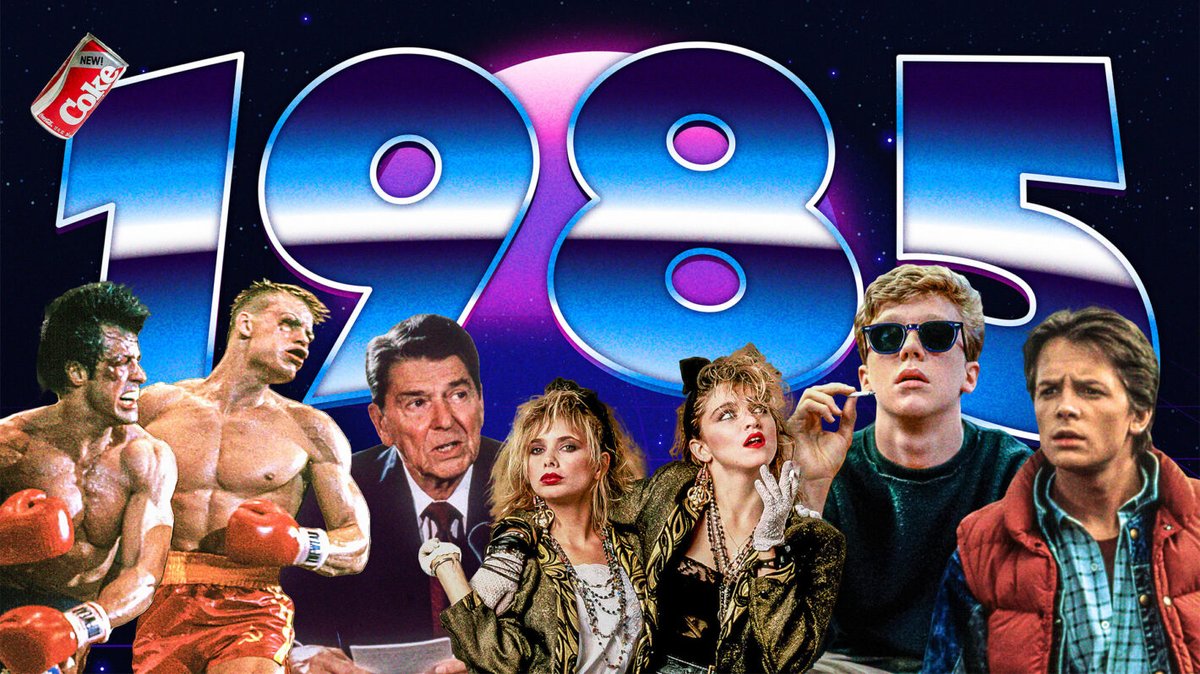
1985 wasn’t just another year on the calendar; it was a crucible for change, particularly here in America. From monumental shifts in public policy to the nascent rumblings of a digital revolution and defining moments in pop culture, important events in 1985 in America truly shaped the nation we know today, forging new paths in societal norms, technological progress, and artistic expression. It was a year where resilience was tested, and the seeds of future trends were firmly planted.
At a Glance: What Defined 1985 in America
- Public Safety First: Mandatory seat belt laws and widespread AIDS blood screening marked a new era in health and road safety.
- Pop Culture’s Ascendancy: VH-1 launched, “We Are the World” became an anthem, and “Back to the Future” redefined blockbusters.
- Tech Foundations: The Free Software Foundation laid groundwork for open-source, and Space Shuttle missions pushed the boundaries of exploration.
- Turbulence and Tragedy: Extreme weather events, aviation disasters, and complex social confrontations tested national resolve.
- Political & Social Consciousness: Debates over music censorship, the Sanctuary Movement, and urban crises highlighted evolving national values.
Reshaping American Society: Policy, Public Health, and Confrontation
1985 saw several critical shifts in how America approached public safety and social issues, demonstrating a growing awareness of collective well-being and a grappling with complex domestic challenges.
The Dawn of Mandatory Seat Belts and AIDS Screening
January 1985 ushered in a significant change for drivers: New York implemented the first mandatory seat belt law in the US. This wasn’t just a state-level decision; it kicked off a nationwide movement, fundamentally altering road safety practices and ultimately saving countless lives. It represented a governmental willingness to intervene for public good, even if initially met with resistance.
Just two months later, in March, the Food and Drug Administration (FDA) approved a blood test for AIDS infection. This was a pivotal moment in public health, immediately adopted for screening all blood donations in the United States. Before this, the safety of the blood supply was a critical concern, and this scientific breakthrough provided a vital tool in preventing further transmission and ensuring public confidence. It underscored the nation’s rapid mobilization against an emerging health crisis.
Facing Urban Crises: The MOVE Bombing
Perhaps one of the most controversial and tragic events of the year occurred in May. Philadelphia police, attempting to end a standoff with the radical group MOVE, dropped a bomb on their headquarters. This extreme measure led to the deaths of 11 MOVE members, including children, and the ensuing fire destroyed approximately 250 homes in the surrounding residential neighborhood. The incident sparked national outrage and deep introspection about police tactics, civil liberties, and urban planning. It remains a stark reminder of the volatile social tensions of the era.
The Sanctuary Movement and Legal Battles
Throughout 1985, the Sanctuary Movement, a network of churches and religious organizations offering refuge to Central American refugees fleeing civil wars, came under intense scrutiny. In January, sixteen individuals associated with the movement were indicted by the US government on charges of harboring and transporting illegal aliens. This legal challenge highlighted the moral and ethical dilemmas faced by many Americans regarding immigration, international conflict, and humanitarian aid. The trials became a focal point for national debates on compassion versus legal compliance.
Cultural Currents and Pop Culture’s Grip on the Nation
If policy shaped the framework of American life, then pop culture provided the soundtrack and visual landscape. 1985 was a powerhouse year for cultural phenomena that captivated the nation.
New Voices on Air and Screen: VH-1 and “Back to the Future”
January brought the debut of VH-1, a sister channel to MTV, aimed at an older, more adult contemporary music audience. It quickly became another fixture in American living rooms, showcasing the burgeoning power of cable television and music videos in shaping public taste and lifestyle.
Later, in July, the film “Back to the Future” hit theaters, becoming an instant classic and a massive box office success. Its blend of sci-fi, comedy, and nostalgia for the 1950s resonated deeply with audiences, cementing its place as one of the most beloved American films of all time. It wasn’t just entertainment; it was a cultural touchstone that explored themes of identity and destiny through a uniquely American lens.
When a Drink Changed: The New Coke Fiasco
In April, The Coca-Cola Company made a bold, and ultimately ill-fated, decision: it changed the formula of its iconic soft drink and released New Coke. The reaction was immediate and overwhelmingly negative. Loyal consumers expressed outrage and a sense of betrayal, leading to a massive public backlash. Less than three months later, Coca-Cola capitulated, bringing back the original formula as “Coca-Cola Classic.” This incident became a legendary case study in consumer psychology, brand loyalty, and the perils of tampering with cultural staples. It revealed how deeply ingrained certain brands were in the American identity.
To understand the broader cultural context and how these American shifts fit into a global tapestry of change in music, film, and emerging digital trends, you can explore the wider landscape of the year. See how 1985 reshaped the world.
Music for a Cause: “We Are the World” and Live Aid
1985 also demonstrated America’s capacity for collective action and philanthropy through music. In January, the supergroup USA for Africa (featuring an unprecedented assembly of stars like Michael Jackson, Lionel Richie, and Bruce Springsteen) recorded “We Are the World” to raise funds for Ethiopian famine relief. The song became a global phenomenon, selling millions and generating substantial aid.
This charitable spirit culminated in Live Aid in July, a monumental dual-venue concert held in London and Philadelphia. The Philadelphia leg, featuring performances by artists like Bob Dylan, Mick Jagger, Madonna, and the reunited Led Zeppelin, brought together hundreds of thousands to raise awareness and money for the same cause. These events showcased the immense power of popular music to mobilize humanitarian efforts on an international scale, driven by American celebrity and public engagement.
Wrestling Goes Mainstream: The First WrestleMania
Sports entertainment also reached a new pinnacle in 1985. In March, the World Wrestling Federation (WWF) held its inaugural WrestleMania event at Madison Square Garden in New York. Featuring a main event with Hulk Hogan and Mr. T, the spectacle was a grand success, televised on closed-circuit TV across the country. WrestleMania launched a new era for professional wrestling, transforming it into a mainstream pop culture juggernaut that blended athletics, showmanship, and larger-than-life characters.
The PMRC and the Battle Over Music Lyrics
As pop culture grew, so did scrutiny. In September, Tipper Gore and other political wives formed the Parents Music Resource Center (PMRC). They lobbied for a rating system for explicit music lyrics, arguing that certain content was harmful to youth. This led to high-profile U.S. Congressional hearings where musicians like Frank Zappa, Dee Snider, and John Denver testified, fiercely defending artistic freedom. The debate over censorship versus parental guidance became a lasting fixture in American cultural discourse, foreshadowing future arguments about content regulation in digital media.
Innovation and Exploration: From Code to Cosmos
While pop culture dominated headlines, quieter, foundational changes were taking place in technology and science that would have profound long-term impacts on America and beyond.
Founding the Free Software Foundation
In October, the Free Software Foundation (FSF) was founded in Massachusetts, United States. This organization, championed by Richard Stallman, advocated for software freedom – the right for users to run, study, modify, and distribute software. While not a household name at the time, the FSF laid crucial philosophical and practical groundwork for the open-source movement, which would dramatically reshape the software industry and the internet in the decades to come. It was a subtle but seismic shift in how software development and intellectual property would be approached.
America in Space: Atlantis and Challenger Missions
1985 was a busy year for NASA’s Space Shuttle program. In October, the Space Shuttle Atlantis made its maiden flight (Mission STS-51-J), adding another capable vehicle to America’s space fleet. Later that month, Space Shuttle Challenger lifted off for Mission STS-61-A, its final successful mission before its tragic loss the following year. These missions underscored America’s continued leadership in space exploration, carrying out scientific research, deploying satellites, and preparing for future endeavors, even as the inherent risks of space travel remained ever-present.
Facing Disaster and Crisis: Resilience Tested Across the Nation
America faced a series of natural and man-made disasters in 1985, highlighting both vulnerability and the capacity for rapid response and recovery.
The Great Arctic Cold Wave
January brought a severe Arctic cold wave that impacted much of the United States. This brutal cold snap led to at least 40 deaths across the country, with Chicago recording its coldest temperature ever at O’Hare International Airport (-27°F, with wind chills plummeting to -60°F). The cold wave also had significant economic repercussions, notably damaging 90% of Florida’s citrus crop. It was a stark reminder of nature’s power and the economic fragility of agricultural regions.
Aviation Tragedies: Delta 191 and Midwest Express 105
The year was marked by two significant aviation disasters on American soil. In August, Delta Air Lines Flight 191, a Lockheed L-1011 TriStar, crashed at Dallas/Fort Worth International Airport, killing 137 people. The crash, attributed to a microburst (a localized column of sinking air within a thunderstorm), spurred significant advancements in aviation weather detection and pilot training for wind shear conditions.
Just a month later, in September, Midwest Express Airlines Flight 105, a Douglas DC-9, crashed shortly after takeoff from Milwaukee, Wisconsin, killing all 31 aboard. The investigation pointed to engine failure and pilot error. Both incidents were grim reminders of the inherent risks of air travel and prompted industry-wide re-evaluations of safety protocols and emergency procedures.
The Mameyes Landslide in Puerto Rico
In October, a devastating natural disaster struck U.S. territory Puerto Rico. The Mameyes landslide, triggered by heavy rains from Tropical Storm Isabel, killed close to 300 people in the hillside barrio of Mameyes in Ponce. It became the worst landslide in North American history, destroying over 100 homes. The tragedy highlighted the vulnerabilities of communities built on unstable terrain and prompted significant discussion on infrastructure, land use planning, and emergency preparedness in vulnerable regions.
Political Echoes: From Washington to the Global Stage
While many events were domestic, America’s political decisions and international role were constantly in play, reflecting a dynamic period of Cold War tensions and evolving global responsibilities.
Reagan’s Second Inauguration
Ronald Reagan’s second inauguration took place in January, but with an unusual twist. Due to the extreme cold (-25°F wind chill), the public ceremony was moved indoors to the Capitol Rotunda, marking the first indoor inauguration since 1909. While a minor logistical change, it underscored the resilience required even for ceremonial duties during a harsh winter. Jessye Norman’s performance added a touch of elegance to the subdued occasion.
A Brief Presidential Handover
In July, a rare constitutional event occurred when Vice President George H. W. Bush became Acting President for the day. This temporary transfer of power happened while President Ronald Reagan underwent surgery for colon cancer. It was a smooth demonstration of the 25th Amendment’s provisions for presidential incapacity, reassuring the nation of governmental stability during a moment of presidential health concern.
Radio Martí: Broadcasting to Cuba
May saw the beginning of Radio Martí broadcasts to Cuba. Part of the Voice of America, this initiative aimed to provide objective news and information to the Cuban people, bypassing state-controlled media. It was a direct reflection of the ongoing Cold War and American efforts to promote democracy and counter communist influence in the region, often sparking diplomatic tensions with Cuba.
Practical Playbook: Lessons from 1985’s Defining Moments
The events of 1985 offer enduring insights for understanding societal change and response.
- Public Policy and Adaptation: The quick adoption of seat belt laws and AIDS blood screening illustrates how societies can adapt rapidly to new data and public health imperatives. When a clear threat emerges, policy can pivot quickly.
- Consumer Sentiment is King: The New Coke debacle serves as a perennial warning to brands: understand your audience’s emotional connection to your product. Innovation doesn’t always mean improvement, especially with beloved cultural icons.
- The Power of Collective Action: “We Are the World” and Live Aid proved that shared cultural experiences, particularly music, can be powerful catalysts for social change and humanitarian aid, galvanizing millions for a common cause.
- Navigating Social Tensions: The MOVE bombing and the Sanctuary Movement indictments highlight the deep fissures within society regarding law enforcement, civil liberties, and immigration. These moments underscore the need for careful deliberation and community engagement in times of conflict.
- The Unpredictability of Progress: From the founding of the Free Software Foundation to the Space Shuttle missions, 1985 reminds us that revolutionary change can come from unexpected corners, often quietly, before dramatically reshaping the future.
Quick Answers: Addressing Common Questions About 1985 in America
Q: What were the most significant social issues in America in 1985?
A: Key social issues included the burgeoning AIDS crisis and public health responses (like blood screening), ongoing debates about immigration and humanitarian aid (exemplified by the Sanctuary Movement), and contentious confrontations regarding law enforcement and civil rights (such as the Philadelphia MOVE bombing).
Q: How did pop culture profoundly influence the nation in 1985?
A: Pop culture played a huge role, from the debut of VH-1 shaping music television to the recording of “We Are the World” and the Live Aid concert uniting millions for humanitarian causes. “Back to the Future” captivated audiences, and the first WrestleMania launched a sports entertainment phenomenon, while the PMRC controversy highlighted growing concerns over media content.
Q: Were there any major technological or scientific advancements originating from the U.S. in 1985?
A: Yes, the Free Software Foundation was founded, laying the groundwork for the open-source movement. NASA’s Space Shuttle program was active, with the maiden flight of Atlantis and Challenger missions pushing the boundaries of space exploration. The FDA also approved the first AIDS blood test, a critical scientific achievement.
Q: What major disasters or tragedies affected the U.S. in 1985?
A: The U.S. faced a severe Arctic cold wave in January, causing deaths and economic damage, particularly to Florida’s citrus crops. There were two significant aviation disasters: Delta Air Lines Flight 191 near Dallas/Fort Worth and Midwest Express Airlines Flight 105 in Milwaukee. Additionally, the Mameyes landslide in Puerto Rico tragically killed hundreds, becoming the worst landslide in North American history.
Q: What was the “New Coke” controversy, and why was it so important?
A: The Coca-Cola Company replaced its classic formula with “New Coke” in April 1985. It was important because it provoked an overwhelmingly negative public backlash, demonstrating the profound emotional connection consumers had with the original brand. Coca-Cola quickly reversed its decision, teaching a powerful lesson about brand loyalty and consumer sentiment that remains relevant today.
1985: A Foundation for the Future
The tapestry of important events in 1985 in America reveals a nation in flux, navigating the complexities of modern life while laying the groundwork for what was to come. From legislative decisions that forever changed daily routines to cultural phenomena that captivated millions, and technological seeds that would blossom into global industries, 1985 was a year of profound significance. Its lessons in public health, consumer psychology, social justice, and the relentless march of innovation continue to resonate, reminding us how quickly a nation can evolve, adapt, and build towards its future.










