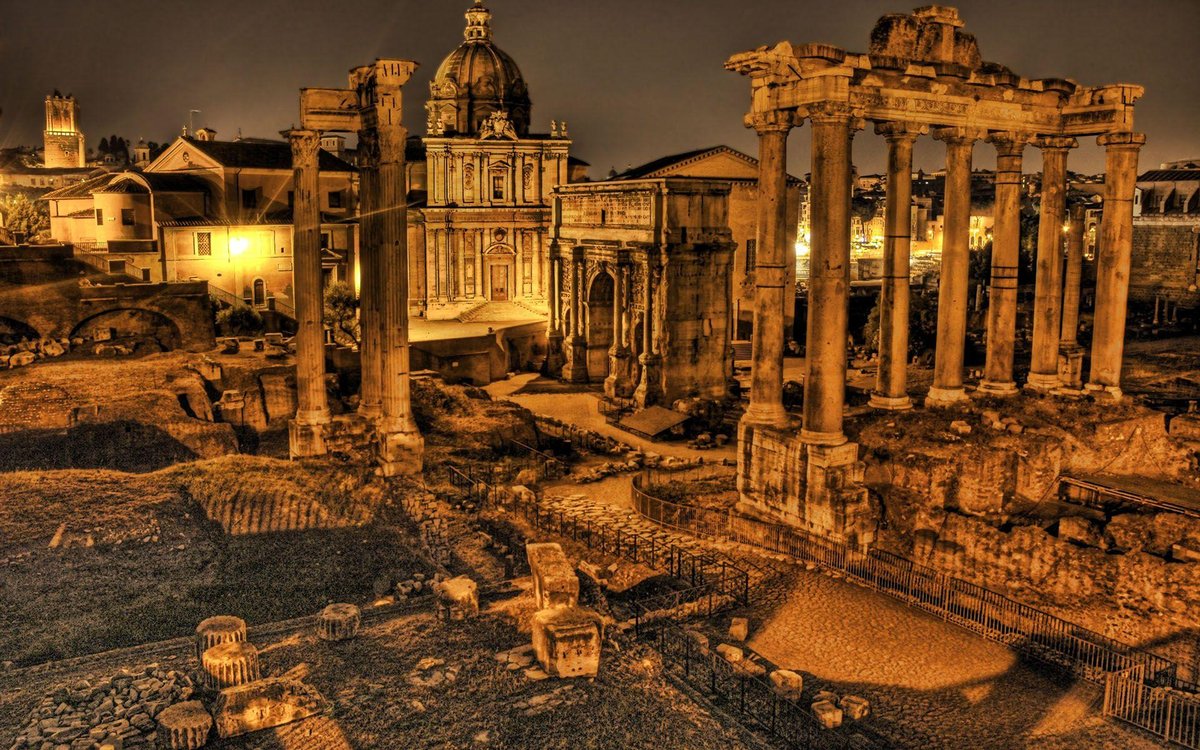
Turning a history lesson into a game is one of the best ways to spark a child’s curiosity. Instead of memorizing dates and names, history trivia for kids transforms the past into a collection of amazing stories, surprising facts, and “who knew?!” moments. It’s less about passing a test and more about finding a personal connection to the incredible events and people who shaped our world.
Think of history trivia not as a pop quiz, but as a treasure hunt. Each question is a clue that leads to a fascinating discovery, whether it’s learning that the first president to live in the White House wasn’t George Washington, or that the “100-Year War” actually lasted 116 years. This approach makes learning feel like an adventure.
At a Glance: Your Guide to Fun History Facts
This article will help you turn historical facts into engaging fun for young learners. Here’s what you’ll find:
- Age-Specific Questions: How to choose trivia that’s challenging but not frustrating for different age groups.
- Thematic Trivia Rounds: Fun categories to organize your trivia games, from “Amazing Inventions” to “Ancient Worlds.”
- A Practical Playbook: A step-by-step guide to hosting a family history trivia night.
- Quick Answers: Clear up common historical myths and answer frequently asked questions.
Why Trivia Makes History Stick
For many kids, history can feel like a distant, abstract subject. Trivia grounds it in concrete, bite-sized pieces of information that are easy to remember. When a child learns that Thomas Edison invented the light bulb, it’s a single, memorable fact. That fact can then become a “hook” for bigger questions: What was life like before light bulbs? How did his invention change the world?
This method builds a foundation of knowledge one fun fact at a time. It also encourages critical thinking by showing that history is full of surprising details and interconnected events. A simple question about the Louisiana Purchase can lead to a discussion about exploration, geography, and international relations. If you want to see how these individual facts connect to the bigger American story, you can Test your US history knowledge.
Tailoring Trivia to Your Child’s Age
The key to successful history trivia for kids is matching the difficulty to their developmental stage. A question that’s perfect for a 12-year-old might overwhelm a 7-year-old.
For Early Elementary (Ages 5–8)
At this age, focus on iconic figures, simple concepts, and “firsts.” The goal is recognition and basic association.
- Who was the first President of the United States? (George Washington)
- What ship did the Pilgrims sail on to come to America? (The Mayflower)
- What did the Wright brothers invent? (The airplane)
- Who built the pyramids? (The ancient Egyptians)
For Upper Elementary (Ages 9–11)
Kids in this range can handle more detail, including dates, causes, and consequences. You can introduce multi-part questions and more complex figures.
- On what date was the Declaration of Independence adopted? (July 4, 1776)
- Who was the first U.S. President to live in the White House? (John Adams)
- What invention is Johannes Gutenberg famous for? (The printing press)
- Which city was buried when Mount Vesuvius erupted in 79 AD? (Pompeii)
For Middle School (Ages 12–14)
Middle schoolers are ready for nuance, context, and more abstract ideas. Challenge them with questions about government, global events, and the “why” behind historical moments.
- What document begins with the words “We the People”? (The U.S. Constitution)
- The purchase of the Louisiana Territory from France happened under which president? (Thomas Jefferson)
- What event started World War I in 1914? (The assassination of Archduke Franz Ferdinand)
- Who was the first woman to win a Nobel Prize? (Marie Curie)
Here’s a quick reference table to help guide your question-making:
| Age Group | Focus | Example Question |
| —————– | —————————————- | ———————————————————————————- |
| Ages 5-8 | Big, simple ideas and famous “firsts” | Who was the first person to walk on the moon? (Neil Armstrong) |
| Ages 9-11 | Key dates, specific events, and inventors | In what year did the Titanic sink? (1912) |
| Ages 12-14 | Deeper context, causes, and global events | What was the main goal of the Civil Rights Movement in the 1960s? (To end segregation) |
Create Your Own Thematic Trivia Rounds
Organizing questions into themes makes the game more exciting and helps kids see connections between different historical facts. Try building rounds around these engaging topics.
Round 1: American Beginnings
Focus on the foundational moments of the United States.
- What was the first successful English colony in America, founded in 1607?
- Answer: Jamestown
- Which of the 13 colonies was the first to ratify the U.S. Constitution?
- Answer: Delaware
- The Declaration of Independence was primarily written by which Founding Father?
- Answer: Thomas Jefferson
- Which city is the oldest in the United States, founded by the Spanish?
- Answer: St. Augustine, Florida
Round 2: Brave Leaders and Presidents
Explore the figures who guided nations through pivotal times.
- Known as “Honest Abe,” which president issued the Emancipation Proclamation?
- Answer: Abraham Lincoln
- Who gave the famous “I Have a Dream” speech during the March on Washington in 1963?
- Answer: Martin Luther King Jr.
- Known as “The Sun King,” which French monarch had one of the longest reigns in European history?
- Answer: Louis XIV
- Who was the British Prime Minister during most of World War II?
- Answer: Winston Churchill
Round 3: Amazing Inventions That Changed the World
From ancient discoveries to modern tech, this round celebrates human ingenuity.
- Who invented the telephone in 1876?
- Answer: Alexander Graham Bell
- Which ancient civilization in Mesopotamia is credited with inventing the wheel?
- Answer: The Sumerians
- Who made the first successful powered flight in 1903?
- Answer: The Wright brothers (Orville and Wilbur)
- Who invented the World Wide Web in 1989, creating the internet as we know it?
- Answer: Tim Berners-Lee
Round 4: Journey to the Ancient World
Go back in time to explore mighty empires and legendary civilizations.
- In ancient Rome, what was the name of the giant arena used for gladiator fights?
- Answer: The Colosseum
- Which ancient Greek philosopher was the teacher of Alexander the Great?
- Answer: Aristotle
- The capital of the Aztec Empire was Tenochtitlán, located in which modern-day country?
- Answer: Mexico
- What form of writing, using wedge-shaped marks, was used in ancient Mesopotamia?
- Answer: Cuneiform
A Playbook for Family History Trivia Night
Ready to put your knowledge into action? Here’s a simple plan for a fun, low-stress trivia game night.
Step 1: Prepare Your Questions
Choose 15-20 questions organized into 3 or 4 rounds. Use the themes above or create your own, like “History’s Mysteries,” “Women Who Made History,” or “Famous Battles.” Write each question on a separate index card.
Step 2: Set the Stage
Gather everyone around a table. You can use a small whiteboard or a notepad for scoring. Let kids create team names—it gets them invested right away.
Step 3: Establish the Rules
Keep it simple.
- The “Quizmaster” (that’s you!) reads the question twice.
- Teams have 30 seconds to write down their answer.
- No phones or smart speakers allowed!
- Reveal the correct answer after each question and share a fun, related fact. For example, after asking about the Mayflower, you could mention the first Thanksgiving was celebrated a year later in 1621.
Step 4: Keep Score and Award Prizes
Give one point for each correct answer. You can offer a “halftime” bonus question or a final “wager” question to make it more exciting. Prizes don’t have to be big—the winner could get to choose the next family movie, pick what’s for dinner, or simply earn bragging rights.
The goal is participation and fun, not intense competition. Cheer for good guesses and celebrate the learning process itself.
Quick Answers to Common Questions
Here are some quick, featured-snippet-style answers to common questions and misconceptions that often come up in history trivia for kids.
Q: Who was the first U.S. President?
A: George Washington was the first President of the United States, elected in 1789. However, a great follow-up trivia question is: “Who was the first president to live in the White House?” The answer is John Adams, the second president.
Q: Did the American Civil War end slavery?
A: The American Civil War (1861-1865) was fought over the issue of slavery. While Abraham Lincoln’s Emancipation Proclamation in 1863 freed slaves in Confederate states, it was the 13th Amendment to the Constitution, ratified in 1865 after the war ended, that officially abolished slavery throughout the entire country.
Q: Were the Vikings the first Europeans in America?
A: While Christopher Columbus’s voyage in 1492 is more famous, evidence shows that Norse explorers, led by Leif Erikson, established a settlement in North America (in modern-day Canada) around 1000 AD, nearly 500 years before Columbus arrived.
Q: What’s the difference between the Declaration of Independence and the Constitution?
A: The Declaration of Independence (1776) was a document explaining why the 13 colonies were separating from Great Britain. It famously states that all men are created equal. The U.S. Constitution (ratified 1788) is the rulebook for the U.S. government, outlining its structure and powers. It begins with the words, “We the People.”
Start Your Historical Adventure Today
You don’t need to be a history professor to make the past come alive for your kids. All you need is a little curiosity and a handful of fascinating facts. Start small. Share one interesting piece of trivia at the dinner table tonight.
Ask your child: “Did you know that the first woman to fly solo across the Atlantic Ocean was Amelia Earhart?” See where the conversation goes. By turning history into a collection of incredible human stories, you give your kids a gift that lasts a lifetime: a love of learning.










