Step into a world where every stitch tells a story, every drape reflects a dynasty, and every hue hums with cultural resonance. Indian costumes are not merely garments; they are living textiles, vibrant chronicles of a civilization’s journey through time. From the timeless elegance of the sari to the regal splendor of the sherwani, Indian attire offers a mesmerizing glimpse into a heritage spanning millennia. If you’ve ever wondered about the intricate “History of Indian Clothing” or the evolution of “Traditional Indian Dress,” you’re about to embark on an unparalleled exploration. This article will unravel the rich tapestry of Indian fashion history, taking you from ancient civilizations to global runways, revealing how Indian costumes have continuously adapted, inspired, and endured. Prepare to discover the vibrant stories woven into the very fabric of India.
The Ancient Tapestry: Roots of Indian Attire
The journey into the “History of Indian Clothing” begins in the mists of antiquity, long before recorded history as we know it. The subcontinent’s early civilizations laid the foundational stones for what would become some of the world’s most enduring and beautiful Indian costumes.
Indus Valley Civilization (c. 2500 – 1900 BCE): The Dawn of Drapes
The earliest evidence of distinct “Indian Attire” can be traced back to the sophisticated urban centers of the Indus Valley Civilization, such as Mohenjo-Daro and Harappa. Archaeological excavations have unearthed figurines and pottery depictions that reveal early forms of draped garments. Cotton, first cultivated in the Indian subcontinent, was the primary fiber, woven into simple, unstitched fabrics. Both men and women wore rectangular pieces of cloth, often draped around the lower body like a “dhoti” or skirt, and another piece covering the upper body, reminiscent of a rudimentary “sari” or shawl. These early textiles were sometimes adorned with basic patterns, indicating an initial appreciation for aesthetics beyond mere utility. Jewelry, crafted from beads, terra cotta, and early metals, complemented these simple yet elegant forms of “Traditional Indian Dress,” reflecting emerging social hierarchies.
While the Indus Valley Civilization focused on draped garments, advancements in creating more tailored clothing, like those seen later in India, owe much to the broader global developments chronicled in the history of dressmaking.
The Vedic Period (c. 1500 – 500 BCE): Spiritual Influences and Simple Styles
As the Vedic period dawned, accompanied by the migration of Indo-Aryan tribes, the focus remained largely on simple, functional, and often unstitched garments, deeply influenced by spiritual practices and climatic conditions. The primary forms of “Indian Attire” included:
- Antariya: A lower garment, akin to a modern dhoti, often made of cotton or animal skin for those in forest-dwelling communities.
- Uttariya: An upper garment, draped over the shoulders or chest, serving as a shawl or veil.
- Pravara: A third piece of cloth, used as an outer covering during colder weather or for ceremonial purposes.
The color palette was often natural, derived from plants and minerals, and clothing was seen as a reflection of purity and simplicity. Differences in material and drape, however subtle, began to signify social status and occupation, marking an early chapter in “Indian Fashion History” where attire conveyed meaning.
Maurya and Gupta Empires (c. 322 BCE – 550 CE): Sophistication and Stitched Garments Emerge
With the rise of powerful empires like the Mauryas and Guptas, “Indian Costumes” began to witness greater sophistication. Trade flourished, bringing new materials and influences. While draped garments remained dominant, stitched clothing made its gradual appearance.
- Mauryan Period: Influences from Persia and Greece brought new styles. Men often wore the dhoti with a choga (a form of tunic) or kancuka (a stitched jacket). Women’s attire included the sari and petticoat (known as kanchuki or choli), and intricate hairstyles became prevalent. Fabrics included fine cotton, silk, and wool.
- Gupta Period (The Golden Age): This era is renowned for its artistic and cultural flourishing, which extended to “Indian Attire.” Clothes became more elaborate, with richer dyes, intricate weaves, and innovative draping techniques. The sari evolved into more complex forms, often paired with a short, fitted choli. Men’s clothing saw variations of dhotis, often pleated, and stitched tunics. Royal courts patronized highly skilled weavers and embroiderers, leading to the creation of luxurious silks, brocades, and muslins. The sheer quality and artistry of these textiles from this period mark a significant advancement in “Indian Fashion History.”
Evolving Silhouettes: Dynasties and Dress
As India traversed through various historical periods, successive dynasties left their indelible mark on “Indian Costumes,” introducing new silhouettes, embellishments, and textile traditions. This dynamic evolution fundamentally shaped the “History of Indian Clothing” as we know it.
The Delhi Sultanate (12th – 16th Century): Islamic Influences
The arrival of Islamic rulers with the Delhi Sultanate brought a profound shift in “Indian Attire,” particularly in Northern India. The preference for stitched garments, common in Central Asian and Persian cultures, began to integrate with existing Indian styles.
- Introduction of Stitched Garments: Tunics, trousers (salwar), and long coats (jama, qaba) became increasingly popular, especially among the aristocracy and in urban centers. Women’s garments saw the advent of the shalwar kameez, a comfortable and modest ensemble.
- Fabrics and Embellishments: Persian and Central Asian influences introduced new weaving techniques and an emphasis on rich fabrics like brocades and velvets. Intricate embroidery, often using metallic threads (zari work), also gained prominence. This period laid the groundwork for the opulent styles that would define subsequent eras in “Indian Fashion History.”
The Mughal Empire (16th – 19th Century): A Zenith of Opulence and Artistry
The Mughal era represents a true golden age for “Indian Fashion History.” Under the patronage of emperors and empresses who had a deep appreciation for art and aesthetics, “Indian Costumes” reached an unprecedented level of grandeur, sophistication, and artistry.
- Royal Wardrobes: Mughal attire was characterized by its flowing silhouettes, luxurious fabrics, and exquisite craftsmanship. For women, the Anarkali, a flowing tunic, often paired with churidar trousers, gained immense popularity. The peshwaz, a long, loose, floor-length gown, was also prevalent. The ghagra, a full skirt, often worn with a choli and dupatta, was a common sight, especially among Rajput royalties who integrated into the Mughal court.
- Men’s Fashion: Men wore elaborate jama (a floor-length tunic tied at the side), churidar pajamas, and distinctive turbans adorned with jewels. The sherwani, a long coat, evolved from the jama and became a symbol of nobility.
- Textiles and Craftsmanship: The Mughals fostered the production of opulent textiles like silk brocades (e.g., Banarasi), fine muslins, and velvets. Embroidery techniques like Zardozi (gold and silver wire embroidery), Resham (silk thread embroidery), and Chikankari (delicate white embroidery) reached their zenith, transforming garments into wearable art. Motifs like flora (flowers, vines, paisleys), fauna (peacocks, elephants), and geometric patterns were intricately woven or embroidered onto fabrics. The Mughal influence is undeniably one of the most powerful forces in shaping “Traditional Indian Dress” and “Indian Attire.”
Colonial Period and Post-Independence (18th Century Onwards): Blending East and West
The arrival of European powers, particularly the British, brought a different kind of influence to the “History of Indian Clothing.” While traditional forms endured, Western styles began to percolate into “Indian Attire.”
- British Influence: The British Raj led to a gradual adoption of Western silhouettes, especially among the educated urban elite. Men started wearing suits, trousers, and shirts. For women, the existing sari was often adapted to be worn with tailored blouses and petticoats, making it more structured. The use of more modest drapes also gained prominence.
- Nationalist Movement: Ironically, the freedom struggle saw a revival of indigenous textiles. Mahatma Gandhi’s promotion of khadi (hand-spun, hand-woven cotton) as a symbol of self-reliance spurred a movement towards traditional Indian fabrics and “Indian Costumes.”
- Post-Independence: The modern era has seen a dynamic interplay between traditional “Indian Dress” and global fashion trends. While traditional garments like the sari, lehenga, and salwar kameez remain central, there have been significant adaptations. Designers began experimenting with fusion wear, blending Indian aesthetics with Western cuts, leading to new forms of “Indian Attire” and propelling “Indian Fashion History” onto the international stage.
Iconic Drapes and Garments: Traditional Indian Dress Unveiled
The heart of “Indian Costumes” lies in its iconic garments, each a masterpiece of design, comfort, and cultural significance. These “Traditional Indian Dress” forms are not just clothes; they are expressions of identity, history, and artistry.
The Sari: India’s Enduring Emblem
The sari (or saree), perhaps the most universally recognized “Indian Attire” for women, is a timeless unstitched garment, typically 5.5 to 9 yards (5 to 8 meters) long, draped in myriad ways. Its origins trace back to the Indus Valley Civilization, evolving over millennia.
- Evolution: From a simple drape to a complex ensemble with an accompanying blouse (choli) and petticoat (ghagra or lehenga), the sari’s versatility is unmatched.
- Regional Variations: The draping styles, fabrics, and embellishments of saris vary dramatically across India, reflecting local cultures and climates.
- Kanjeevaram Sari (Tamil Nadu): Known for its rich silk, broad borders, and intricate gold zari work, often featuring temple motifs. A prized bridal “Traditional Indian Dress.”
- Banarasi Sari (Uttar Pradesh): Exquisite silk saris with heavy gold or silver brocade, known for intricate Mughal-inspired floral and foliate designs.
- Paithani Sari (Maharashtra): Handwoven silk sari with a rich, ornamental zari pallu (the decorative end piece), featuring peacock and lotus motifs.
- Mysore Silk Sari (Karnataka): Characterized by pure silk and minimal gold zari, known for its elegant simplicity.
- Bandhani Sari (Gujarat/Rajasthan): A tie-dye technique creating vibrant patterns, often featuring auspicious motifs.
- Ikat Sari (Odisha/Telangana): Known for its complex resist dyeing technique where warp and/or weft threads are dyed before weaving, creating blurred patterns.
- Chanderi Sari (Madhya Pradesh): Lightweight, sheer fabric combining silk and cotton, known for delicate zari borders.
- Kasavu Sari (Kerala): Elegant cream-colored cotton sari with a broad gold border, worn during festivals like Onam.
- Cultural Significance: The sari is a symbol of grace, modesty, and womanhood, worn in daily life, for festivals, and as bridal wear, making it central to “Indian Costumes.”
The Lehenga Choli: A Royal Legacy
The lehenga choli, or ghagra choli, is a vibrant three-piece “Traditional Indian Dress” consisting of a long, embroidered skirt (lehenga or ghagra), a fitted blouse (choli), and a scarf (dupatta). It originated in the royal courts of Rajasthan and Gujarat and remains a popular choice for weddings and celebratory occasions.
- Design and Embellishment: Lehengas are renowned for their elaborate embroidery (Zardozi, Gota Patti, Resham, Mirror work), rich fabrics (silk, velvet, georgette), and often voluminous silhouettes.
- Bridal Significance: The bridal lehenga is a cornerstone of Indian weddings, often heavily embellished and passed down as heirlooms, embodying significant “Indian Fashion History.”
The Salwar Kameez: Comfort and Style
Originating from Central Asia and popularized during the Mughal era, the salwar kameez is a versatile and comfortable “Indian Attire” popular across North India. It consists of three parts:
- Kameez: A long tunic, available in various lengths, cuts, and styles.
- Salwar: Loose-fitting trousers, wide at the top and narrow at the ankle, or its variations like the churidar (tight-fitting, gathered at the ankle) or patiala (pleated, baggy).
- Dupatta: A long scarf, draped over the shoulders or head, adding modesty and elegance.
The salwar kameez is a daily wear staple, but also appears in elaborate forms for special occasions, showcasing a blend of practicality and traditional aesthetics in “Indian Costumes.”
Dhoti and Kurta: Men’s Traditional Attire
For men, the dhoti and kurta form a quintessential “Traditional Indian Dress.”
- Dhoti: An unstitched rectangular piece of cloth, usually white or cream, draped around the waist and legs. Its draping style varies regionally. It’s often worn for religious ceremonies, festivals, and as comfortable daily wear in rural areas.
- Kurta: A loose, collarless shirt or tunic, typically made of cotton or silk, reaching to the knees or above. It can be simple for daily wear or elaborately embroidered for festive occasions.
Together, the dhoti and kurta represent a significant aspect of “Indian Attire,” reflecting comfort, tradition, and regional elegance.
Other Notable Garments
- Pheran (Kashmir): A traditional long, loose gown worn by both men and women, often embroidered, essential for warmth in the cold Kashmiri climate.
- Mekhela Chador (Assam): A two-piece “Traditional Indian Dress” for women, consisting of a draped skirt and a shawl-like top, known for its vibrant silk and motifs.
- Sherwani (North India): A long, coat-like garment, often embroidered, worn by men for formal occasions, derived from Mughal court attire.
- Pattu Pavadai (South India): A traditional skirt and blouse set for young girls, made from silk, especially for festivals.
These examples underscore the immense diversity and historical depth embedded within “Indian Costumes.”
A Kaleidoscope of Culture: Regional Diversity in Indian Costumes
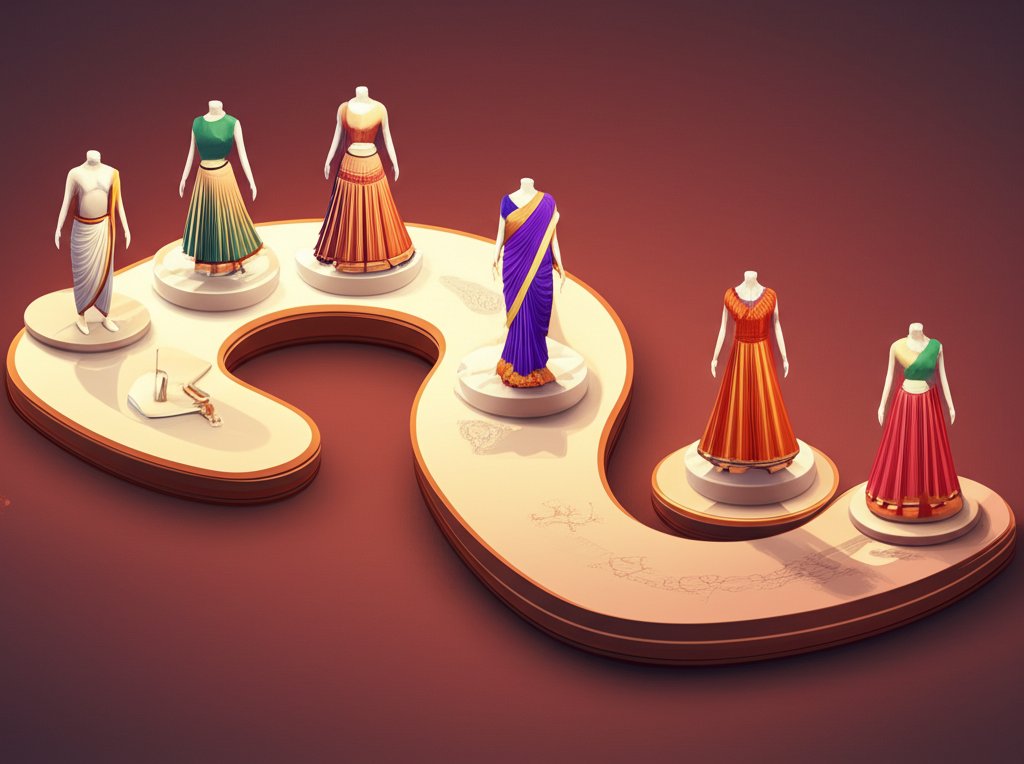
India’s vast geography, diverse ethnicities, and myriad cultural practices have given rise to an incredible spectrum of “Indian Costumes.” Each region boasts its unique “Traditional Indian Dress,” reflecting local climate, historical influences, available resources, and artistic traditions. Exploring this regional diversity is crucial to understanding the full “History of Indian Clothing.”
North India: Regal Elegance and Mountain Warmth
The North, with its varying climate and historical empires, presents a rich array of “Indian Attire.”
- Jammu & Kashmir: The Pheran, a long, loose gown, is a cultural staple for both men and women, offering warmth and comfort. Often made of wool or tweed, sophisticated versions feature intricate Aari or Kashmiri embroidery. Turbans for men and headscarves for women are common.
- Punjab: The vibrant Salwar Kameez, particularly the Patiala Salwar (ample pleating) and the Phulkari (floral embroidery) dupatta, is iconic. Men often wear kurta pajamas or achkans (a knee-length coat) with turbans.
- Rajasthan: The “Land of Kings” is famous for its colorful “Indian Costumes.” Women wear the Ghagra Choli with vibrant mirror work, tie-dye (Bandhani), and Gota Patti (applique work with metallic ribbons). Men adorn dhotis, kurta pajamas, and elaborate, distinctively tied pagris (turbans).
- Uttar Pradesh: Home to the exquisite Banarasi silk saris and delicate Chikankari embroidery, particularly from Lucknow, forming a refined segment of “Traditional Indian Dress.”
East India: Silken Drapes and Tribal Weaves
Eastern India is a land of lush greenery, rich waterways, and a strong tradition of silk weaving, deeply impacting “Indian Costumes.”
- West Bengal: The Tant and Jamdani saris (fine muslin with intricate motifs) are celebrated for their delicate weaves and lightness. Men often wear dhoti कुर्ता for traditional occasions.
- Assam: The Mekhela Chador, a two-piece “Traditional Indian Dress” made of Muga, Eri, or Pat silk, is unique. Each silk variety is indigenous to the region and highly prized, reflecting a distinct “Indian Fashion History.”
- Odisha: The Ikat weaving technique, producing mesmerizing geometric and symbolic patterns on cotton and silk saris (e.g., Sambalpuri Ikat), is a hallmark of Odishan “Indian Attire.”
West India: Vibrant Hues and Intricate Craftsmanship
The arid landscapes and coastal regions of Western India are reflected in “Indian Costumes” that burst with color, elaborate embellishments, and unique draping styles.
- Gujarat: Known for its mirror work, Bandhani (tie-dye), and Kutchhi embroidery. The chaniya choli (a variant of lehenga choli) is worn by women, especially during Navratri, while men wear kediyu (a pleated frock-style top) and chornu (drawstring trousers).
- Maharashtra: The Nauvari sari, a distinctive nine-yard drape worn by women, allowing for greater freedom of movement, is iconic. Men wear dhoti with kurta or pheta (turban).
- Goa: A blend of Indian and Portuguese influences. Women often wear a pano baju (skirt and blouse) or the kunbi sari (a simple checkered cotton sari).
South India: Golden Borders and Silk Grandeur
South India, with its tropical climate and ancient temples, is synonymous with rich silk, distinct drapes, and elegant “Indian Attire.”










