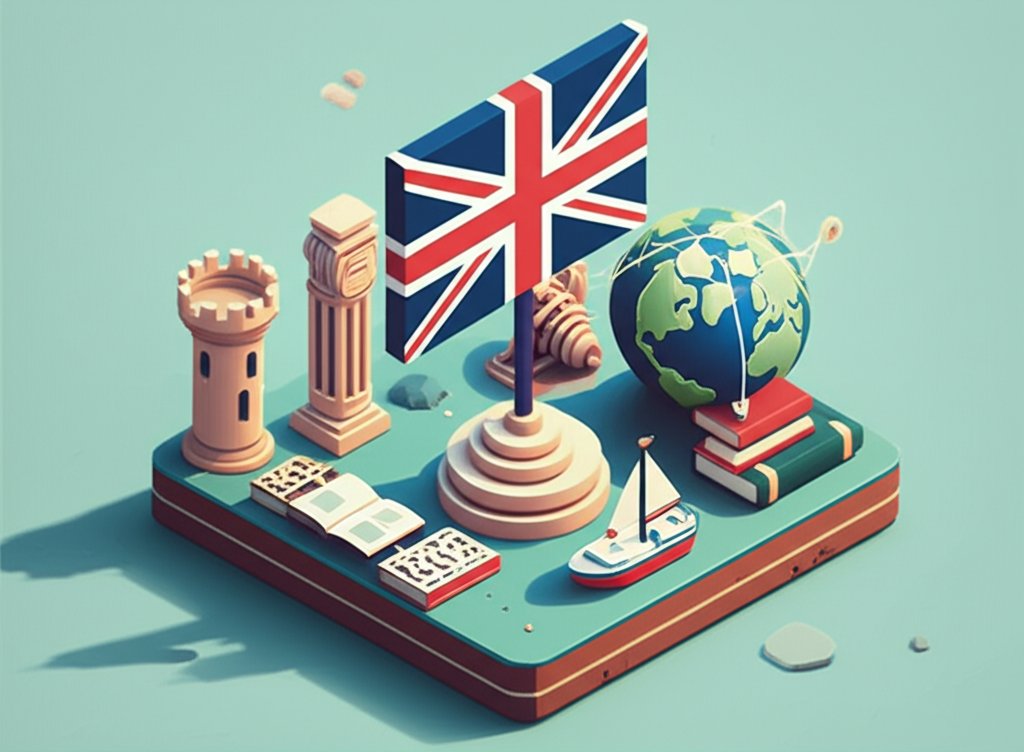
The island of Great Britain, a land steeped in millennia of human endeavor, conquest, and profound transformation, holds a history of Great Britain unlike any other. From its misty prehistoric origins to its pivotal role on the global stage, understanding this island nation’s journey is to grasp a fundamental chapter in human civilization. Many accounts touch upon fragmented periods or conflate its story with the broader United Kingdom. This article, however, offers a comprehensive, chronological, and engaging exploration of the specific history great britain, tracing the origins, evolution, and enduring legacy of England, Scotland, and Wales from ancient times to the present day. Join us as we uncover the forces that shaped its landscapes, its people, and its powerful narrative.
Prehistoric and Ancient Britain: The Dawn of a Nation
Long before kings and parliaments, the landmass we now call Great Britain was a canvas for early human activity, a dynamic interplay between geology, climate, and burgeoning communities.
Early Inhabitants and Megalithic Wonders
The earliest evidence of human presence in Great Britain dates back nearly a million years, with nomadic hunter-gatherers traversing ancient land bridges. As the last Ice Age retreated around 10,000 BCE, the island became a permanent home. The Mesolithic period (c. 8000-4500 BCE) saw sophisticated hunter-gatherer societies adapt to the changing environment.
The Neolithic Revolution (c. 4500-2500 BCE) brought farming, permanent settlements, and monumental architecture. This era gave rise to enigmatic structures like Stonehenge and Avebury, testaments to the complex astronomical and spiritual beliefs of the island’s early inhabitants. These sites reveal a highly organized society capable of immense communal effort, laying down some of the earliest markers in the prehistoric history of Great Britain.
Understanding the evolution of complex societies in prehistoric Britain, with their organized labor and resource management, offers an interesting parallel to the structured frameworks we see later in governmental bodies, such as the development of cabinet departments.
The Arrival of the Celts and Iron Age Tribes
Around 2500 BCE, the Bronze Age began, bringing new technologies, trade networks, and eventually, the influx of Celtic-speaking peoples from mainland Europe. By the Iron Age (c. 800 BCE – 43 AD), tribal societies flourished across the island, each with distinct cultural practices, art, and warfare. These Celtic Britons established hill forts, developed intricate metalwork, and formed the cultural bedrock that would significantly influence later periods of the history great britain. Despite their shared linguistic roots, these tribes were often fiercely independent and frequently in conflict, a characteristic that would prove both a strength and a weakness in the face of future invaders.
Roman Britain: Conquest and Influence (43 AD – 410 AD)
The year 43 AD marked a seismic shift when the Roman Empire, under Emperor Claudius, launched a full-scale invasion of Britain. After decades of intermittent resistance, much of what is now England and Wales fell under Roman control, becoming the province of Britannia. Scotland, however, remained largely unconquered, fiercely defended by tribes like the Picts, prompting the construction of Hadrian’s Wall in the north to mark the empire’s frontier.
Roman rule brought infrastructure – roads, cities (like Londinium, modern London), and villas – along with sophisticated administration, law, and a monetary economy. Latin became the language of power, and Roman customs permeated urban life. For nearly four centuries, Britannia was integrated into the vast Roman world. However, the influence was largely superficial for the majority of the native population. The Roman withdrawal around 410 AD, necessitated by troubles on the continent, left the island vulnerable, plunging it into a period often termed the “Dark Ages” and fundamentally altering the trajectory of the history of the great britain.
Anglo-Saxon and Medieval Britain: Kingdoms, Invasions, and Unification
Following the Roman departure, Great Britain entered a tumultuous period of migrations, conflicts, and the gradual forging of distinct kingdoms that would eventually form the foundations of its modern nations.
The Anglo-Saxon Heptarchy and Viking Age
The 5th and 6th centuries saw the arrival of Germanic tribes – the Angles, Saxons, and Jutes – from continental Europe. These groups settled in what would become England, pushing the native Britons westward into Wales and Cornwall. They established numerous small kingdoms, which eventually coalesced into seven major Anglo-Saxon kingdoms, known as the Heptarchy: Northumbria, Mercia, East Anglia, Essex, Kent, Sussex, and Wessex. Christianity, reintroduced from Ireland and Rome, gradually spread, replacing pagan beliefs.
From the late 8th century, a new threat emerged: the Vikings. Danish and Norse raiders launched devastating attacks, eventually settling large areas, particularly in the north and east, creating the “Danelaw.” The heroic resistance of Alfred the Great, King of Wessex, in the late 9th century, prevented the complete Viking conquest of Anglo-Saxon England, laying the groundwork for a unified English kingdom and a crucial turning point in the history of great britain. By the 10th century, England was largely united under a single monarch.
The Norman Conquest and Feudal England (1066)
The year 1066 is arguably the most famous date in English history great britain. Following the death of Edward the Confessor, a succession crisis led to the Battle of Hastings, where William the Conqueror, Duke of Normandy, defeated and killed King Harold Godwinson. This victory ushered in the Norman Conquest, irrevocably changing England’s political, social, and linguistic landscape.
The Normans established a strong centralized monarchy, introducing feudalism, a hierarchical system of land tenure and loyalty. The Domesday Book, a comprehensive survey of England’s land and resources, solidified Norman control. French became the language of the ruling class, profoundly influencing the English language. This era saw the construction of magnificent cathedrals and castles, asserting Norman power and leaving an indelible mark on the history of the great britain. Meanwhile, Scotland maintained its independence, though often involved in border conflicts with its southern neighbor. Wales experienced gradual English encroachment, with Norman lords establishing marcher strongholds.
Medieval Dynasties and the Wars of the Roses
The Plantagenet dynasty, descending from the Normans, ruled England for over three centuries. This period saw the development of common law and the gradual emergence of Parliament, initially as an advisory body to the monarch, gaining more power over time, particularly after the signing of Magna Carta in 1215, which limited royal power. England’s ambitions often led to conflict with continental Europe, most notably the Hundred Years’ War with France (1337-1453), which fostered a sense of national identity.
The late medieval period, specifically from 1455 to 1487, was plunged into the brutal dynastic struggle known as the Wars of the Roses, a conflict between the Houses of Lancaster (red rose) and York (white rose) for the English throne. This civil war devastated the English aristocracy and left the kingdom fractured until the emergence of a new dynasty that would once again reshape the history of great britain.
Early Modern Great Britain: Reformation, Expansion, and Civil War
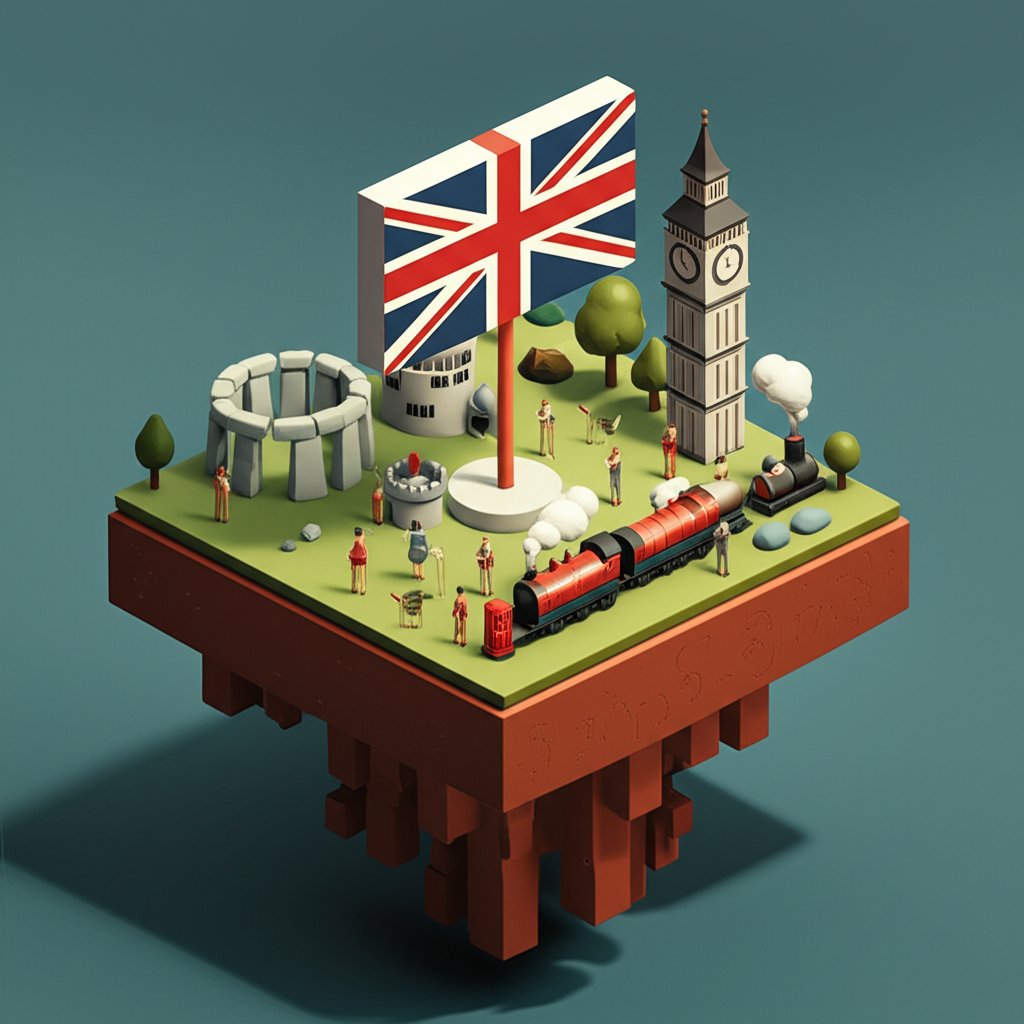
The transition from the medieval to the early modern period brought unprecedented change, from religious upheaval to the very formation of Great Britain itself.
The Tudor Dynasty: Reshaping England (1485-1603)
The Wars of the Roses concluded with the victory of Henry Tudor at the Battle of Bosworth Field in 1485, establishing the formidable Tudor dynasty. His son, Henry VIII (reigned 1509-1547), instigated the English Reformation, severing ties with the Roman Catholic Church and establishing the Church of England, driven by both personal desire for a male heir and political ambition. This monumental shift transformed religious, political, and social life across England, sparking decades of religious flux under his children – Edward VI, Mary I, and Elizabeth I.
Elizabeth I’s reign (1558-1603) is often regarded as a “Golden Age.” England experienced relative stability, economic growth, and a flourishing of arts and literature, epitomized by William Shakespeare. The defeat of the Spanish Armada in 1588 cemented England’s naval power and Protestant identity. The Tudors significantly strengthened the central government, fostering a distinct English national identity and laying crucial groundwork for the future history of great britain. During this period, Wales was fully incorporated into English law and administration through the Laws in Wales Acts (1535 and 1542), further integrating its history great britain with England’s. Scotland, however, remained an independent kingdom, albeit one increasingly influenced by its powerful southern neighbor.
The Stuart Era and the British Civil Wars (1603-1688)
The death of the childless Elizabeth I in 1603 led to the “Union of the Crowns,” as James VI of Scotland, her cousin, ascended the English throne to become James I of England. While the crowns were united, England and Scotland remained separate kingdoms with their own parliaments and laws, though sharing a monarch. This period marked the beginning of a true British identity, even if still nascent.
Tensions between the Stuart monarchs, who believed in the Divine Right of Kings, and Parliament, who sought to assert its authority, escalated throughout the 17th century. This culminated in the devastating British Civil Wars (1642-1651), a conflict that pitted Royalists against Parliamentarians. The execution of Charles I in 1649 led to the short-lived Republic and the Protectorate under Oliver Cromwell. The monarchy was restored in 1660 with Charles II, but the struggle for power between Crown and Parliament continued. The Glorious Revolution of 1688, which saw James II deposed and replaced by William III and Mary II, firmly established parliamentary supremacy and a constitutional monarchy, a defining moment in the history of the great britain.
The Formation of Great Britain (1707)
The most significant event in the legal and political history of Great Britain occurred in 1707. The Acts of Union formally merged the Kingdom of England (which by then included Wales) and the Kingdom of Scotland into a single political entity: the Kingdom of Great Britain. This union, driven by a combination of English political and economic motivations (securing the Protestant succession, preventing a Jacobite restoration in Scotland) and Scottish financial incentives (access to English markets, compensation for the Darien scheme failure), created a new sovereign state.
The Scottish Parliament was dissolved, and representatives from Scotland joined the Parliament of Great Britain in Westminster. While controversial at the time, this union laid the enduring political framework for the island’s future, solidifying the name “Great Britain” not just as a geographical term but as a sovereign state for the first time.
Georgian and Victorian Eras: Empire, Industrialization, and Global Power
The 18th and 19th centuries witnessed Great Britain’s ascent to unparalleled global power, fueled by economic transformation and imperial expansion.
The Georgian Age: Enlightenment and Imperial Growth
The Hanoverian dynasty, beginning with George I in 1714, marked the Georgian era. Great Britain became a dominant force in European politics and global trade. The British Empire rapidly expanded, particularly after victories in conflicts like the Seven Years’ War (1756-1763), which secured vast territories in North America and India. This period also saw the American Revolution (1775-1783), where thirteen American colonies successfully declared independence, a significant loss for the burgeoning empire but one that reshaped its focus.
At home, the Enlightenment fostered scientific inquiry, philosophical discourse, and early social reforms. Agricultural improvements, known as the Agricultural Revolution, provided the food and labor necessary for the next great transformation in the history great britain.
The Industrial Revolution: A Transformative Force
Beginning in the late 18th century, Great Britain became the birthplace of the Industrial Revolution, a period of profound technological innovation and economic change. Inventions like James Watt’s improved steam engine, the power loom, and new iron-making processes revolutionized manufacturing, transport, and agriculture. Factories sprung up, drawing people from rural areas into rapidly expanding industrial towns and cities like Manchester, Birmingham, and Glasgow.
This era generated immense wealth and propelled Great Britain to global economic supremacy, becoming the “workshop of the world.” However, it also created significant social upheaval, including harsh working conditions, child labor, and overcrowded slums. The dramatic shift from an agrarian to an industrial society fundamentally reshaped the British landscape, its class structure, and its unique contribution to the history of great britain.
The Victorian Era: Peak of Empire and Prosperity (1837-1901)
The reign of Queen Victoria (1837-1901) is synonymous with Great Britain’s zenith as a global superpower. The British Empire, by this point, spanned a quarter of the world’s land area and governed a quarter of its population. “Pax Britannica” (British Peace) largely ensured stability for much of the world’s trade routes under British naval dominance.
Economic prosperity, driven by continued industrialization and imperial trade, led to significant social reforms, including parliamentary reform acts that gradually expanded the franchise, and legislation addressing public health and education. Advances in science, technology, and medicine were rapid. Victorian society, characterized by its strict moral codes, technological optimism, and imperial confidence, left an indelible mark on the cultural and political history of the great britain, shaping its identity for generations to come.
20th and 21st Century Great Britain: Wars, Welfare, and a Changing World
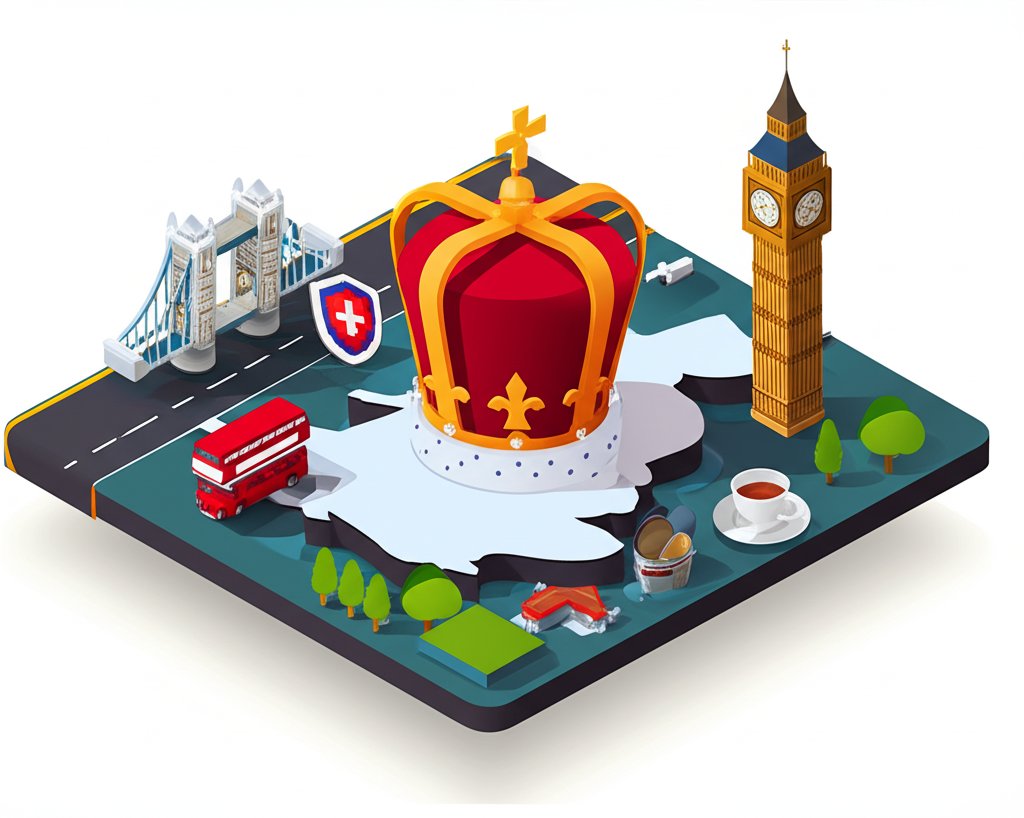
The 20th century presented Great Britain with unprecedented challenges, from devastating global conflicts to the dismantling of its empire and a redefinition of its place in the world.
World Wars and Their Aftermath
The 20th century opened with the twilight of Great Britain’s imperial power. The nation played a central, often pivotal, role in both World War I (1914-1918) and World War II (1939-1945). World War I, a brutal conflict that claimed millions of lives, severely depleted Britain’s resources and manpower, leading to significant social and economic upheaval, including the General Strike of 1926 and the Great Depression.
World War II, in particular, showcased British resilience under the leadership of Winston Churchill, as the nation stood defiantly against Nazi Germany. Despite immense sacrifice and destruction, Great Britain emerged victorious alongside its Allies. The post-war period saw the election of a Labour government committed to building a comprehensive welfare state. The National Health Service (NHS), established in 1948, provided universal healthcare, a cornerstone of modern British society and a direct consequence of the wartime spirit of collective responsibility in the history of great britain. This era also marked the beginning of a rapid decline in the British Empire, as colonies gained independence.
Decolonization and European Integration
The decades following World War II witnessed a rapid process of decolonization. India gained independence in 1947, followed by numerous other nations in Africa, Asia, and the Caribbean. While the Commonwealth emerged as a voluntary association, the era of vast imperial control came to an end, fundamentally reshaping Britain’s global identity and its economy.
In the latter half of the 20th century, Great Britain increasingly looked towards Europe. After initial resistance, the nation joined the European Economic Community (EEC), the precursor to the European Union, in 1973. This move reflected a shift in economic and political priorities, seeking closer ties with continental neighbors after centuries of global focus.
Modern Great Britain: Challenges and Identity
The late 20th and early 21st centuries have been characterized by evolving political landscapes and ongoing debates about national identity. The process of devolution granted greater self-governance to Scotland and Wales, with both nations establishing their own parliaments/assemblies in 1999, signifying a complex interplay within the history great britain.
Economically, Great Britain has transitioned towards a service-based economy. Socially, it has become increasingly multicultural and diverse. However, significant challenges remain, including social inequality, economic uncertainties, and political divisions. The referendum to leave the European Union in 2016, known as Brexit, represented another profound turning point, sparking debates about sovereignty, trade, and Great Britain’s future role in the world. As a vibrant and influential nation, Great Britain continues to adapt, building upon its rich and complex historical legacy while forging its path in an interconnected globalized world. The ongoing narrative adds new chapters to the profound history of the great britain.
Conclusion
The history of Great Britain is a magnificent tapestry woven from countless threads of human experience. From the earliest hunter-gatherers to the architects of a global empire and the innovators of the industrial age, the island has been a crucible of change, resilience, and remarkable influence. We’ve journeyed through prehistoric settlements, Roman conquests, Anglo-Saxon kingdoms, Norman dominations, the tumultuous Tudors and Stuarts, the pivotal Acts of Union in 1707 that created the unified Kingdom of Great Britain, through the expansive Georgian and Victorian eras, and into the challenges and transformations of the 20th and 21st centuries.
This comprehensive overview demonstrates that the history great britain is not merely a collection of dates and names, but a living narrative of adaptation, conflict, innovation, and enduring legacy. Understanding these deep historical roots is essential to grasping the intricate complexities of modern Britain and its continued impact on the world. Engage with this rich past, for it continues to echo in the present and shape the future of this extraordinary island.
FAQ
Q1: What is the difference between “Great Britain” and “the United Kingdom”?
A1: Great Britain refers to the island comprising England, Scotland, and Wales. The United Kingdom (UK) is a sovereign state that includes Great Britain and Northern Ireland. So, Northern Ireland is part of the UK but not part of Great Britain.
Q2: When was the political entity “Great Britain” officially formed?
A2: The Kingdom of Great Britain was officially formed in 1707 through the Acts of Union, which formally unified the Kingdom of England (which included Wales) and the Kingdom of Scotland. The term “Great Britain” itself was used geographically long before 1707 to distinguish the larger island from Brittany (Lesser Britain) on the European mainland.
Q3: Who were the first known inhabitants of Great Britain?
A3: The first known inhabitants of Great Britain were nomadic hunter-gatherers who arrived during the Paleolithic era, hundreds of thousands of years ago, when land bridges connected the island to continental Europe.
Q4: What was the most significant impact of the Roman occupation on Great Britain?
A4: While Roman occupation brought infrastructure, administration, and some cultural influence, its most significant and lasting impact was shaping the geographical and cultural divide within the island. The Romans pushed the Celtic Britons westward and northward, fortified the frontier (Hadrian’s Wall) against unconquered Scottish tribes, and upon their withdrawal, left the southern parts vulnerable to Germanic invasions, fundamentally altering the subsequent history of Great Britain.
Q5: How did the Industrial Revolution transform the history of Great Britain?
A5: The Industrial Revolution (late 18th to mid-19th century) profoundly transformed the history of Great Britain by making it the world’s first industrial nation and leading economic power. It shifted the economy from agrarian to industrial, led to massive urbanization, fostered technological innovation, created new social classes, and drove imperial expansion in search of raw materials and markets.
Q6: What is considered the most transformative period in the history of the great britain prior to the 20th century?
A6: While many periods were transformative, the Norman Conquest of 1066 and the Industrial Revolution stand out. The Norman Conquest fundamentally reshaped England’s language, governance, and social structure, laying the foundations for a centralized state. The Industrial Revolution utterly transformed its economy, society, and global standing, making it a superpower. The Acts of Union in 1707, which created the Kingdom of Great Britain, is also a pivotal moment, unifying the two major kingdoms on the island.










