The history of art is more than a timeline of paintings and sculptures; it’s the visual diary of humankind. From the first marks on a cave wall to the complex digital art of today, these creative works tell the story of our beliefs, our struggles, our innovations, and what it means to be human. By studying art, we explore the spiritual rituals, political power, and profound cultural transformations that have shaped our world.
This journey is not just about chronology or famous masterpieces. It also includes the functional beauty of crafts and the vernacular expressions of folk art that enrich our shared heritage. This overview will guide you through the pivotal eras and movements, connecting you to the epic saga of human creativity.
The Dawn of Creativity: Prehistoric and Ancient Art
Long before written history, humans felt the urge to create. These first artistic expressions offer tantalizing clues into the minds of our earliest ancestors, revealing a world shaped by survival, ritual, and a burgeoning sense of symbolism.
Prehistoric Art: Humanity’s First Expressions
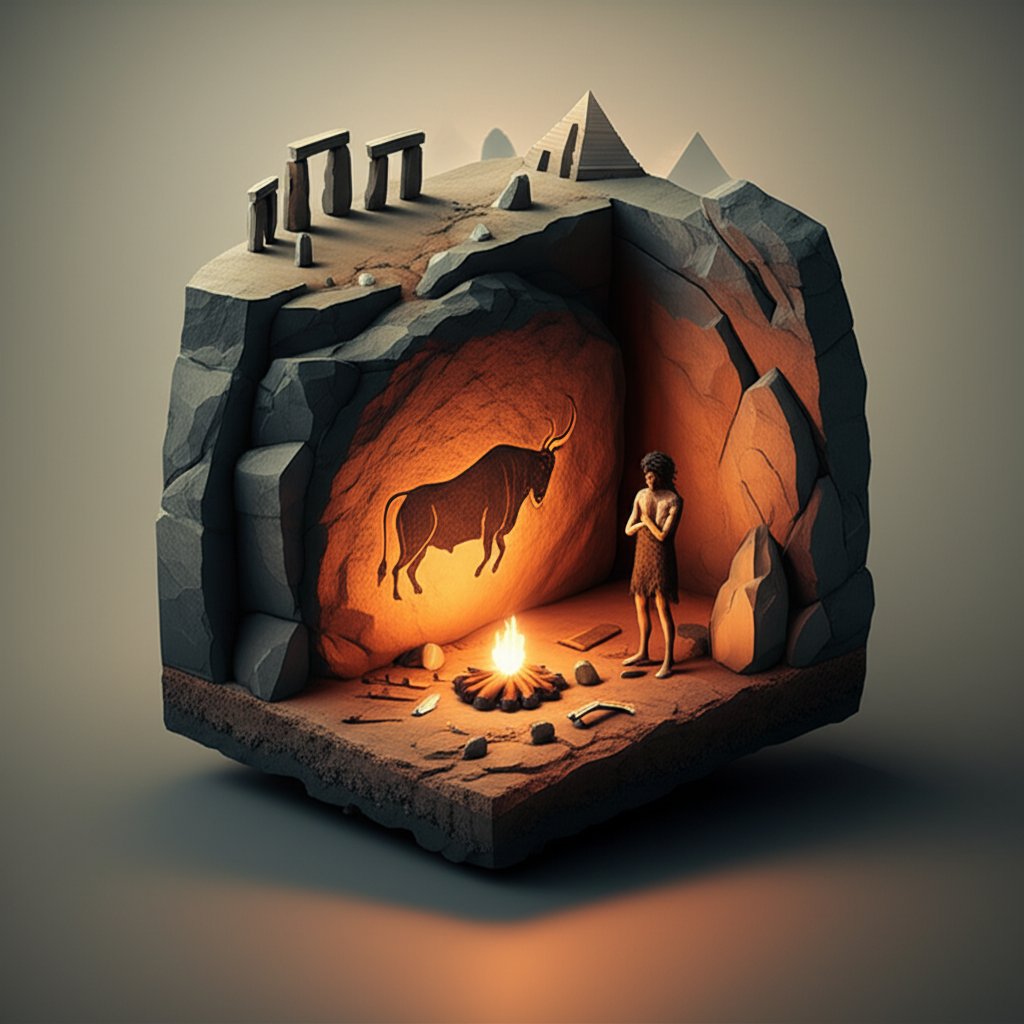
The story begins in deep time, with some of the earliest artifacts dating back 100,000 years to the Middle Stone Age in Africa. These include decorated items and containers that may have held paints. Around the globe, small statuettes known as Venus figurines, with exaggerated female features, hint at shared ideas about fertility or spirituality.
The most famous prehistoric artworks are the vast, stunning Paleolithic cave paintings found across Europe. Sites like Lascaux in France, with their powerful depictions of animals, were likely more than mere decoration. These dark, sacred spaces may have been central to hunting rituals or shamanistic beliefs, serving as humanity’s first cathedrals.
The Cradle of Civilization: Mesopotamia and Egypt
As humans built the first cities in the Near East, art took on a new role: to glorify gods and kings. In Mesopotamia, civilizations like Sumer developed organized religion and writing, expressed architecturally through massive brick temples called ziggurats. Later empires, from the Akkadians to the Assyrians, carved detailed stone reliefs depicting epic battles and royal life, while the Babylonians created the awe-inspiring Ishtar Gate, a monument of brilliant blue-glazed brick.
Meanwhile, the art of ancient Egypt was defined by a profound focus on religion, symbolism, and the afterlife.
- Monumental Architecture: The Egyptians built for eternity, using massive stone blocks for tombs like the pyramids at Giza and vast temple complexes such as Karnak and Luxor.
- Symbolic Representation: Egyptian painting and relief followed a strict code, showing figures with heads in profile but torsos and eyes facing forward, creating a timeless and hierarchical look.
- Funerary Treasures: The discovery of Tutankhamun’s tomb revealed the incredible skill of Egyptian artisans in woodwork, metalwork, and other applied arts, all designed to honor the pharaoh in his journey to immortality.
Ancient Worlds Beyond the Near East
Great civilizations also flourished elsewhere, each developing a unique artistic language. In the Indus Valley, the Harappan culture produced intricate square stamp seals with animal motifs and an undeciphered script. In China, the Shang dynasty created magnificent bronze ritual vessels, while the later Qin dynasty left an astonishing legacy with the Terracotta Army, a life-sized legion of funerary statues guarding an emperor’s tomb.
The Classical Foundations of the Western World
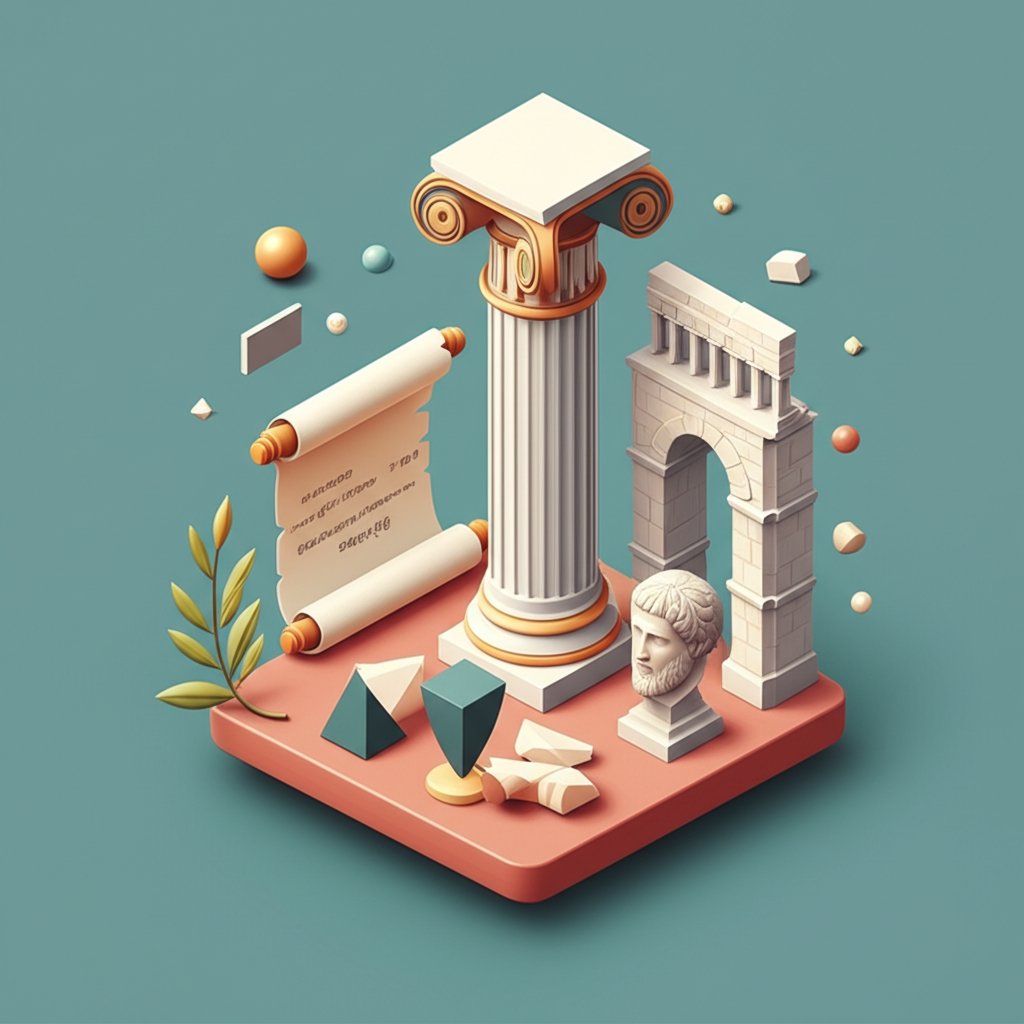
The art of ancient Greece and Rome established a foundation for Western culture that resonates to this day. Their focus on humanism, order, and technical mastery created a visual language that would be revisited and reinterpreted for centuries.
Greek Ideals and Roman Innovations
Greek art evolved through distinct periods, culminating in the Classical era of the 5th and 4th centuries BC. This period is celebrated for its perfect balance of realism and idealism, especially in its focus on the human form. Greek architects developed the iconic temple form, such as the Parthenon, which, contrary to their stark white appearance today, were originally painted in vibrant colors.
The Romans deeply admired and adapted Greek art but added their own distinct character. Roman sculpture celebrated unflinching realism, capturing every detail of an emperor’s face. More importantly, they were master engineers who revolutionized architecture with innovations like concrete, the round arch, and the dome, allowing them to build massive, enduring structures. Surviving wall paintings from Pompeii provide a rare window into the decorative styles of Roman homes. Many works from this era and beyond solidified the techniques that make certain images timeless, and you can Explore famous paintings to see how these foundational ideas evolved.
Art in an Age of Faith: Medieval and Global Traditions
As the Roman Empire declined, new spiritual and cultural forces reshaped the world. In Europe, art became overwhelmingly dedicated to communicating the Christian faith, while sophisticated artistic traditions flourished across the Islamic world, Asia, and the Americas.
The Medieval Vision in Europe
Medieval art grew from Roman heritage mixed with the vibrant cultures of northern Europe. The Byzantine Empire, centered in Constantinople, produced highly stylized and spiritual art known for its shimmering gold mosaics and iconic domed churches like Hagia Sophia.
In Western Europe, the Romanesque style emerged around the 10th century, characterized by massive, solid stone churches with rounded arches. This gave way to the Gothic style in 12th-century France. Gothic cathedrals reached for the heavens with pointed arches, ribbed vaults, and vast stained-glass windows that flooded interiors with divine light.
Artistic Expressions Across the Globe
Beyond Europe, art took diverse and spectacular forms. Islamic art, beginning in the 7th century, is renowned for its intricate geometric patterns, colorful tilework, and masterful calligraphy. In the Americas, civilizations like the Olmecs carved colossal stone heads, the Mayans built elaborate pyramid cities, and the Inca created exquisite textiles and metalwork. Asian art history is rich with Indian Buddhist sculptures, carved stupas, and the distinctive decorated pottery of Japan’s early Jōmon people.
Rebirth and Revolution: From the Renaissance to Neoclassicism
Beginning in 14th-century Italy, a powerful cultural movement known as the Renaissance, or “rebirth,” reawakened interest in the classical art and ideas of Greece and Rome. This shift sparked a revolution in art, moving from the abstract forms of the Middle Ages to a new focus on lifelike representation and human experience.
The Renaissance: A “Rebirth” of Humanism and Realism
Artists developed new techniques like linear perspective to create convincing three-dimensional space on a flat surface. The transition from tempera to oil paint allowed for richer colors, deeper shadows, and unprecedented realism. This era saw the rise of legendary masters like Leonardo da Vinci, Michelangelo, and Raphael in Italy, while the Northern Renaissance produced artists known for their meticulous detail. The era’s focus on humanism also led to a surge in personal commissions, and you can Explore famous portrait paintings. Discover iconic figures from this transformative period. The technical mastery achieved during this time set a new standard, and it’s fascinating to Explore famous oil paintings that defined the era.
Drama and Delicacy: Baroque and Rococo
Following the Renaissance, the Baroque period (c. 1580–1750) emerged, driven by the energy of the Catholic Counter-Reformation. Baroque art is characterized by emotion, dynamism, and high drama, designed to inspire awe and spiritual fervor. This powerful style was not confined to churches; it defined the opulent grandeur of palaces like Versailles. For a closer look at this dramatic style, you can Discover renowned Baroque masterpieces.
In the early 18th century, the Rococo style appeared in Paris as a reaction against Baroque intensity. Rococo is light, delicate, and playful, with soft colors and themes centered on love and nature.
The Age of Reason and Revolution: Neoclassicism
Reacting to Rococo’s perceived frivolity, Neoclassicism embraced the order, logic, and civic virtue of the Enlightenment. Inspired by archaeological discoveries at Pompeii, artists and architects returned to the clean lines and noble subjects of ancient Greece and Rome, creating art that felt both rational and heroic.
The Modern Era: Challenging Tradition and Redefining Art
From the late 18th century onward, the pace of change accelerated dramatically. Artists began to break free from traditional patrons and academic rules, pursuing individual expression and a radical new purpose for art: “art for art’s sake.”
The 19th Century’s New Ways of Seeing
The modern era began with several key movements that challenged classical norms.
- Romanticism: Focused on intense emotion, imagination, and the sublime power of nature.
- Realism: Turned away from idealized subjects to depict the unvarnished reality of everyday life and ordinary people.
- Impressionism: Revolutionized painting by seeking to capture the fleeting effects of light and atmosphere with visible brushstrokes and a bright palette. Artists like Claude Monet painted the same subject multiple times to show how light changed the scene.
- Post-Impressionism: Artists like Van Gogh, Gauguin, and Cézanne used Impressionism as a springboard to explore personal expression, symbolism, and the underlying structure of form, paving the way for abstraction.
The Explosive Innovations of the Early 20th Century
The first half of the 20th century was a whirlwind of “isms,” as artists rapidly developed new visual languages. Cubism, pioneered by Picasso and Braque, shattered objects into geometric forms viewed from multiple angles at once. Fauvism unleashed color, using it emotionally rather than naturalistically, while Expressionism sought to convey inner psychological states. Later, Surrealism, influenced by Freudian psychology, delved into the world of dreams and the subconscious.
American Ascendancy and Post-War Art
After World War II, the center of the art world shifted from Paris to New York. Abstract Expressionism was the first major American movement to gain international influence, with artists like Jackson Pollock emphasizing spontaneous and energetic gestures. This was followed by a series of reactions: Pop Art embraced the imagery of mass media and consumer culture, Minimalism stripped art down to its essential industrial forms, and Conceptual art argued that the idea behind a work was more important than the physical object itself.
The Ever-Evolving Canvas of Human Creativity
The history of art is not a finished story but an ongoing conversation. Today, artists continue to push boundaries, using new technologies like video, computers, and performance to explore contemporary issues. From ancient rituals to modern-day activism, art remains one of our most powerful tools for understanding ourselves and our world.
This vast and complex history offers endless avenues for discovery. To continue your journey and delve deeper into the masterworks and movements that have defined our visual culture, you can Explore essential art history books and start building your own library of knowledge.










