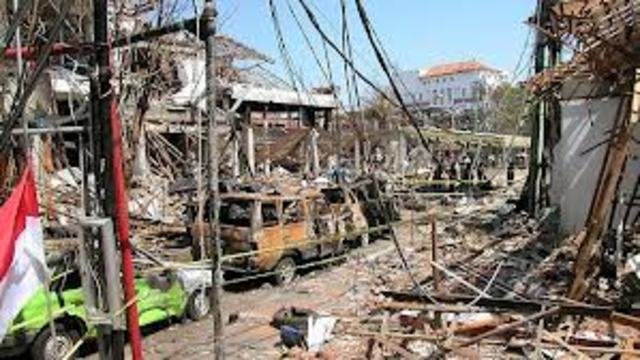
The year 2005 wasn’t just another spin around the sun; it was a remarkable period brimming with pivotal historical events in 2005 that reshaped global politics, pushed the boundaries of science, and tested human resilience. From devastating natural disasters that prompted unprecedented international responses to groundbreaking technological advancements and seismic shifts in geopolitical power, 2005 laid the groundwork for many of the issues and innovations we grapple with today. It truly was a year where every month seemed to bring news that would echo for decades.
If you’re looking back to understand the forces that shaped the early 21st century, consider 2005 a masterclass in global interconnectedness and rapid change.
At a Glance: 2005’s Defining Moments
- Natural Disasters: The world grappled with the aftermath of the 2004 Indian Ocean tsunami, devastating hurricanes like Katrina and Rita, and major earthquakes in Sumatra and Kashmir.
- Political Shifts: Iraq held its first free elections, Mahmoud Abbas became Palestinian President, and Syria withdrew from Lebanon. King Gyanendra of Nepal staged a coup.
- Scientific & Space Feats: Eris, a new dwarf planet, was discovered. The Huygens probe landed on Titan, and the Deep Impact mission hit a comet.
- Technological Milestones: The Airbus A380 was unveiled and made its first flight. YouTube, the now-ubiquitous video platform, was founded.
- Societal Developments: Canada legalized same-sex marriage, the U.S. Supreme Court banned the execution of juveniles, and the Kyoto Protocol came into force.
- Cultural & Sports Highlights: Global Live 8 concerts raised awareness for poverty, and the NHL season was cancelled due to a labor dispute.
A World in Flux: Responding to Calamity and Conflict
The early months of 2005 were profoundly marked by the devastating Boxing Day tsunami of 2004. As the new year dawned, global memorials were held for the victims, igniting an unprecedented wave of international aid mobilization for affected countries. It was a stark reminder of nature’s power and humanity’s capacity for collective action.
Tsunami Aftermath & Global Response
Starting on January 1, the world united in mourning and relief efforts. A presidential appeal for tsunami relief was launched in the U.S. on January 3, and throughout the month, nations coordinated to deliver aid, rebuild communities, and support survivors. This catastrophe underscored the importance of early warning systems and international cooperation in humanitarian crises. You’ll find many of the Major events from 2005 highlighted how global aid structures were tested and strengthened.
Devastation from Hurricanes Katrina and Rita
Later in the year, the U.S. Gulf Coast faced its own harrowing challenges. On August 29, Hurricane Katrina made landfall, unleashing catastrophic devastation on New Orleans and surrounding areas. This storm, which caused an estimated 1,836 fatalities and over $108 billion in damages, exposed critical vulnerabilities in infrastructure, emergency response, and social equity. Just weeks later, in September, Hurricane Rita became the third most intense hurricane on record, further battering the Gulf Coast and forcing massive evacuations. These events prompted a national reckoning with disaster preparedness and recovery.
Major Earthquakes and Industrial Accidents
Beyond the storms, other calamities tested communities worldwide. A magnitude 8.7 earthquake struck Sumatra, Indonesia, on March 28, causing widespread damage and fear just months after the larger 2004 quake. In October, a magnitude 7.6 Kashmir earthquake devastated parts of Pakistan, India, and Afghanistan, killing thousands.
Man-made disasters also left their mark. On January 6, a train collision in Graniteville, South Carolina, released approximately 60 tons of chlorine gas, leading to fatalities and widespread evacuations. March 23 saw the tragic Texas City Refinery explosion, killing 15 workers and raising serious questions about industrial safety protocols. These incidents often serve as stark reminders of the delicate balance between progress and peril, and are certainly counted among the Notable world events 2005.
Middle East Tensions and Hopeful Truces
The Middle East continued to be a focal point of international attention. January saw significant developments in the Israeli-Palestinian conflict, with Mahmoud Abbas elected President of the Palestinian Authority on January 5. A truce was declared between Palestinian and Israeli leaders on February 8, offering a glimmer of hope amidst ongoing tensions. However, this period wasn’t without tragedy, as a Palestinian suicide bombing at the Karni border crossing killed six Israeli civilians on January 13. By March 16, Israel handed Jericho over to Palestinian control, a small step towards de-escalation.
Sudan’s Quest for Peace
In Africa, a significant stride towards peace was made. On January 9, the Comprehensive Peace Agreement (Naivasha Agreement) was signed between the Government of Sudan and the Sudan People’s Liberation Movement. This landmark agreement aimed to end decades of civil war in Southern Sudan. However, a UN report in February detailed ongoing human rights abuses in Darfur, reminding the world that the path to lasting peace is often fraught with complex challenges.
Terrorism’s Shadow: From Iraq to Bangladesh
The specter of terrorism remained a grim reality. January 21 saw a suicide car bomb kill at least 14 outside a Baghdad mosque, a stark reminder of the ongoing violence in Iraq. The country faced further horror on February 28, when a suicide bombing at a police recruiting center in Al Hillah killed 127 people. Later in the year, on August 17, over 500 bombs were detonated by terrorists across Bangladesh, illustrating the global reach of these threats. These harrowing Global events of 2005 underscored the fragility of security in many regions.
Shifting Political Landscapes and Rights
Beyond the immediate crises, 2005 was a year of profound political shifts and advancements in human rights, particularly in emerging democracies and concerning social justice.
Democratic Milestones & Electoral Firsts
One of the most significant democratic exercises of the year took place on January 30, when Iraq held its first free parliamentary elections since the fall of Saddam Hussein. This was a monumental step for the war-torn nation, albeit one shadowed by ongoing conflict. Similarly, Egypt took a step toward broader democracy when President Hosni Mubarak ordered constitutional changes to allow multi-candidate presidential elections on February 26, though the outcome was still largely controlled. Puerto Rico saw Anibal Acevedo Villa elected governor on January 2, and in Iran, Mahmoud Ahmadinejad became president on August 3, marking a new, more conservative chapter for the nation.
The Struggle for LGBTQ+ Rights
Social rights also moved forward in various parts of the world. Canada introduced the Civil Marriage Act on February 1, legalizing same-sex marriage and becoming the fourth country to do so globally. Spain followed suit by becoming the first country to vote in a referendum on the proposed EU Constitution, and on June 6, the U.S. Supreme Court upheld a federal law banning cannabis. While progress was made, challenges persisted; on April 14, the Oregon Supreme Court nullified marriage licenses for gay couples issued by Multnomah County a year prior, highlighting the patchwork nature of legal recognition at the time. These Major world events of 2005 reflect the ongoing global dialogue about individual freedoms and societal norms.
Monarchical Shifts and Controversies
The British monarchy also had its share of news. Prince Charles announced his engagement to Camilla Parker Bowles on February 10, a union that had been many years in the making. In Nepal, however, the political climate was far more tumultuous, with King Gyanendra exercising a Coup d’état on February 1, dissolving the government and seizing absolute power, a move that sparked widespread protests.
Landmark Legal Rulings
The U.S. Supreme Court delivered a crucial ruling on March 1, declaring the execution of juveniles for murder unconstitutional. This decision reflected an evolving understanding of justice and youth culpability. In another significant legal development, Edgar Ray Killen, a former Ku Klux Klan member, was arrested on January 6 and later convicted on June 21 for the 1964 murders of civil rights workers James Chaney, Andrew Goodman, and Michael Schwerner, bringing a measure of closure to a long-unsolved chapter of the Civil Rights Movement.
Diplomatic Engagements
International diplomacy saw notable moments, including the Slovakia Summit which began on February 23, bringing together U.S. President George W. Bush and Russian President Vladimir Putin. These high-level meetings were crucial for navigating complex global security issues and bilateral relations.
Breakthroughs in Science, Space, and Technology
While political and humanitarian events dominated headlines, 2005 was also a year of incredible scientific discovery and technological innovation, laying the groundwork for how we interact with the world today.
Unveiling New Horizons: Dwarf Planets and Deep Space Missions
Space exploration offered some of the most awe-inspiring moments. On January 5, astronomers Michael E. Brown, Chad Trujillo, and David L. Rabinowitz discovered Eris, which would later be identified as the largest known dwarf planet. This discovery played a pivotal role in the reclassification of Pluto from a full-fledged planet to a dwarf planet in 2006. On January 12, the Deep Impact space mission launched from Cape Canaveral, embarking on its journey to a comet, which it successfully impacted on July 4, providing invaluable data on cometary composition.
Lunar Discoveries and Planetary Landings
Our understanding of the moon and other planets also expanded significantly. On January 15, ESA’s SMART-1 lunar orbiter discovered new elements on the moon’s surface, enhancing our knowledge of its geological history. Later that day, the Huygens probe, part of the Cassini-Huygens mission, successfully landed on Saturn’s moon Titan, sending back incredible images and data from a world previously veiled by its dense atmosphere. And back closer to home, on January 20, NASA’s Mars Rover discovered a meteorite, further expanding our understanding of the Red Planet’s geology.
Groundbreaking Aviation
The skies above also saw history in the making. On January 18, the Airbus A380, designed to be the world’s largest commercial airliner, was unveiled in France, captivating aviation enthusiasts globally. It took its first flight on April 27, marking a new era for air travel capacity. Meanwhile, on a more individual scale, Steve Fossett completed a remarkable feat on March 3, becoming the first person to fly an airplane solo around the world non-stop without refueling, covering over 40,000 km in 67 hours and 2 minutes.
The Birth of a Cultural Giant: YouTube
Perhaps one of the most transformative technological introductions of the year was the founding of YouTube on February 14 by Steve Chen, Chad Hurley, and Jawed Karim. This online video-sharing site would rapidly grow to become a dominant force in media, profoundly changing how people consume content, share stories, and build communities globally. It’s hard to imagine the internet without it today. Indeed, many Major events of 2005 had a lasting impact, but few changed daily life quite like YouTube.
Tech Innovations: iPod Shuffle and Beyond
Apple continued its innovation streak, introducing the iPod shuffle on January 10, bringing a new, compact, and affordable option to the portable music player market. These advancements show a clear trend of miniaturization and accessibility in consumer electronics that continues to this day.
Culture, Sports, and Societal Shifts
Away from the headlines of war and scientific marvels, 2005 delivered a rich tapestry of cultural moments, sporting dramas, and societal debates that reflected the evolving human experience.
Music for Change: Live 8 Concerts
On July 2, the Live 8 benefit concerts took place globally, drawing millions and featuring a star-studded lineup of musicians. Organized by Bob Geldof, these concerts aimed to pressure G8 leaders to address poverty and debt relief in Africa. While the immediate policy impact was debated, the event successfully raised global awareness and reignited conversations about international aid and social justice.
Shifting Media Landscapes
Television saw its share of new beginnings and fond farewells. Craig Ferguson became the host of “The Late Late Show” on CBS on January 3, bringing his distinctive humor to late-night television. The popular crime drama “Numb3rs” debuted on January 23, blending mathematics and mystery. However, it was a long-running animated duo that bowed out: “Tom and Jerry” aired its final episode after 162 episodes on September 27, ending a significant chapter in animation history.
Sporting Triumphs and Setbacks
In sports, the New England Patriots secured their third Super Bowl victory in four years, winning Super Bowl XXXIX on February 6 against the Philadelphia Eagles. Jeff Gordon also clinched his third Daytona 500 win on February 20. But it wasn’t all triumphs; the entire 2004-05 NHL season was cancelled on February 16 due to a labor dispute – a historic first for a North American professional sports league, much to the dismay of fans.
Controversies and Courtrooms
The year also saw high-profile legal battles and societal controversies. Michael Jackson was acquitted of child molestation charges on June 13, following a highly publicized trial that captivated global audiences. Later in the year, on September 30, controversial drawings of Muhammad were printed in the Danish newspaper ‘Jyllands-Posten’, sparking widespread outrage and protests across the Muslim world and igniting fierce debates about freedom of speech versus religious sensitivity.
Honoring History
History was honored on January 24 with the unveiling of the ‘Wall of Names’ at the Shoah Memorial in Paris, commemorating 76,000 French Jews deported during the Holocaust. These solemn acts of remembrance serve as powerful reminders of past atrocities and the enduring need for tolerance and understanding.
Record Breakers and Human Feats
Individual accomplishments also caught the world’s attention. Romanian Adriana Illiescu, at 66 years old, became the world’s oldest birth mother on January 16, a story that sparked ethical discussions about reproductive technology. Ellen MacArthur set a new record on February 7, becoming the fastest person to sail solo around the world, completing her epic journey in just over 71 days. These stories highlight the indomitable human spirit and our constant drive to push boundaries.
Looking Back: The Enduring Echoes of 2005
When you sift through the events of 2005, you find a year that was undeniably pivotal. It was a year that showcased humanity’s incredible capacity for compassion in the face of disaster, alongside its enduring struggles with conflict and injustice. We saw the tangible benefits of scientific inquiry, from new dwarf planets to deep space encounters, and witnessed the birth of digital platforms that would redefine global communication.
The major world events of 2005 laid bare our interconnectedness – how a tsunami in one ocean could unite the world, how political shifts in distant lands could impact international relations, and how technological innovations could fundamentally alter daily life. Understanding these moments isn’t just about recalling facts; it’s about recognizing the threads that connect us to the past and continue to weave the fabric of our present and future. What challenges did 2005 pose, and what lessons did it offer? Perhaps the most enduring takeaway is a reinforced awareness of both our collective fragility and our extraordinary resilience.










