markdown
Gladiator combat in the Colosseum: a scene of unimaginable brutality, yet also a carefully orchestrated display of skill and spectacle. Beyond the blood and sand, what truly defined these battles and how did the gladiator colosseum function as a stage for ancient Roman power?
At a glance:
- Understand the different gladiator types and their fighting styles.
- Explore the events beyond gladiator combat that filled the Colosseum’s program.
- Learn about the political motivations behind the games and their impact on Roman society.
- Discover the architectural marvels that made the Colosseum a functioning arena.
- Grasp the factors that led to the decline of gladiator games.
Unveiling the Gladiator Classes: More Than Just Warriors
The gladiator colosseum wasn’t a free-for-all. Different gladiator types, meticulously trained, provided the audience with varied, engaging combat. Understanding these classes is key to appreciating the nuances of the games.
- Murmillo: Heavily armed with a gladius (short sword) and a large, rectangular shield, the Murmillo was often paired against the Thraex. Their helmet featured a fish-like crest, hence the name derived from “mormylos” (a type of fish).
- Example: Imagine a heavily armored tank, slowly advancing while absorbing blows and waiting for an opening.
- Thraex: Armed with a curved sica (dagger) and a small shield, the Thraex relied on agility and speed to overcome their opponents. Their helmet featured a griffin crest.
- Example: Picture a nimble rogue, circling their opponent and looking for a weak spot to exploit.
- Retiarius: Unconventionally equipped with a net and trident, the Retiarius aimed to ensnare and impale. They wore minimal armor, making them vulnerable but also highly mobile.
- Example: Envision a fisherman, using cunning and reach to control the battlefield.
- Secutor: Specifically designed to fight the Retiarius, the Secutor had a smooth, round helmet to prevent the net from catching. They carried a gladius and shield.
- Example: Consider a relentless hunter, methodically closing in on their prey and negating their advantages.
Decision Point: Which gladiator class would you have favored and why? Were you a fan of raw power, tactical cunning, or sheer agility?
More Than Just Gladiators: A Day at the Colosseum
Gladiator combat was the main attraction, but the Colosseum offered a full day of entertainment. These varied spectacles catered to diverse tastes and ensured a captivated audience.
- Venationes (Animal Hunts): Exotic animals, imported from across the Roman Empire, were pitted against each other or trained hunters. Lions, tigers, elephants, bears, and crocodiles were common participants.
- Example: Imagine the roar of a lion echoing through the arena as it battles a skilled bestiarius (animal fighter).
- Executions: Criminals and enemies of the state were often executed in brutal displays. These executions served as a stark reminder of Roman power and justice.
- Example: Public crucifixion or being thrown to the beasts were common methods of execution.
- Naumachiae (Naval Battles): Early Colosseum events sometimes included mock naval battles. The arena would be flooded, and ships would engage in simulated warfare.
- Example: Recreations of famous sea battles, offering a glimpse into Roman naval prowess.
- Performances: Acrobats, musicians, and magicians provided entertainment between events, maintaining the audience’s excitement.
To fully understand the complex tapestry of entertainment inside this historic location, Explore Colosseum’s Ancient Stories and uncover more.
The Political Arena: Games as a Tool of Control
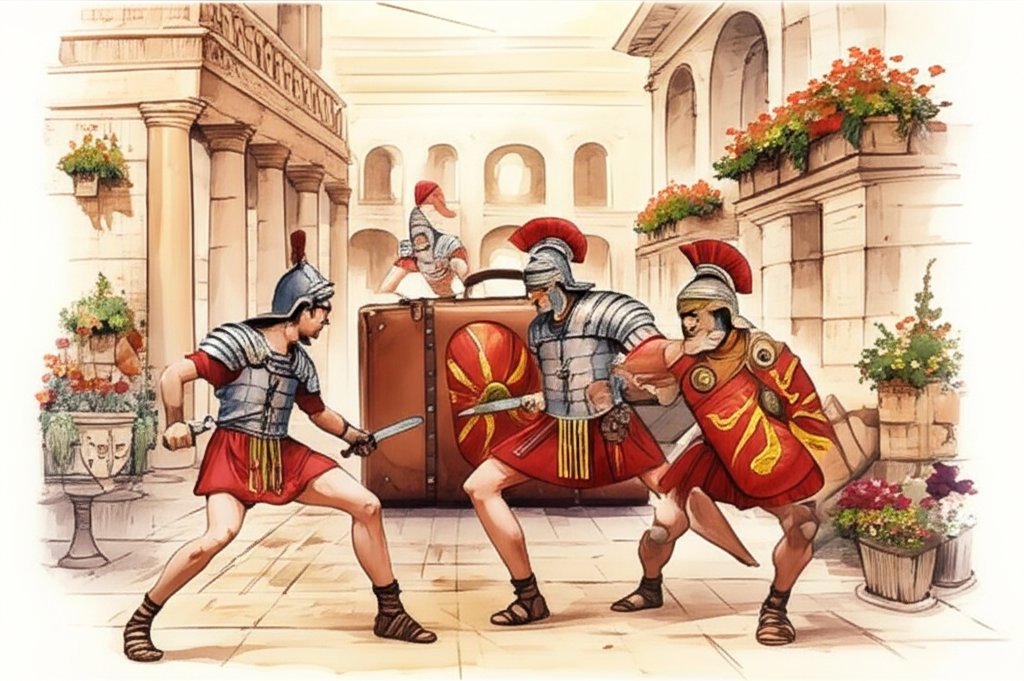
The gladiator colosseum wasn’t just about entertainment; it was a powerful political tool. Emperors used the games to maintain popularity, distract from problems, and reinforce their authority.
- Panem et Circenses (Bread and Circuses): This Roman strategy focused on providing the populace with food and entertainment to prevent unrest. The Colosseum played a crucial role in the “circenses” aspect.
- Example: Lavish games were often organized during times of political instability or economic hardship to appease the masses.
- Imperial Patronage: Emperors sponsored the games, showcasing their wealth, power, and generosity. This fostered a sense of loyalty and dependence among the citizens.
- Example: Emperor Titus inaugurated the Colosseum with 100 days of games, a spectacle of unparalleled scale and extravagance.
- Social Hierarchy: Seating in the Colosseum reflected social status, with the emperor and senators occupying the best seats, followed by other social classes. This reinforced the existing social order.
Pitfalls to avoid: Don’t underestimate the political power of spectacle. Even today, large-scale entertainment events can be used to influence public opinion and garner support.
Engineering Marvel: Building the Stage for Slaughter
The Colosseum’s impressive architecture was essential to its functioning. Its design enabled swift crowd movement, managed complex logistics, and created a dramatic atmosphere.
- Materials and Construction: The Colosseum was built using travertine limestone, tuff, and brick-faced concrete. This combination of materials ensured both durability and aesthetic appeal.
- Hypogeum (Underground Network): This complex network of tunnels, cages, and lifts housed animals, gladiators, and stage scenery. It allowed for surprise entrances and exits, adding to the spectacle.
- Example: Gladiators could emerge suddenly from trapdoors in the arena floor, creating a dramatic entrance and catching their opponents off guard.
- Velarium (Awning System): A retractable awning system provided shade for the spectators, protecting them from the harsh Roman sun.
- Efficient Crowd Management: 80 entrances allowed for rapid entry and exit, preventing overcrowding and ensuring the safety of the audience.
Quick Fact: The hypogeum was a later addition, built after the Colosseum’s initial construction, significantly enhancing the complexity and spectacle of the games.
The Arena’s End: Decline and Legacy
The decline of gladiator games marked a significant shift in Roman society. Several factors contributed to their eventual demise.
- Rise of Christianity: The growing influence of Christianity, which condemned the violence of the games, gradually eroded public support.
- Economic Decline: The weakening Roman economy made it increasingly difficult to finance the expensive spectacles.
- Changing Social Values: As Roman society evolved, attitudes towards violence shifted, and the popularity of gladiator combat waned.
- Last recorded show The last recorded gladiatorial games was in 438 AD and animal hunts ended in 532 AD.
Modern perspective: While gladiator combat is long gone, its impact on popular culture persists. Movies, books, and video games continue to explore the themes of courage, violence, and spectacle that defined the gladiator colosseum.
Practical Playbook for Understanding the Colosseum
Here is a step-by-step guide for better understanding how the gladiator colosseum operated:
- Study the Gladiator Classes: Research the different types of gladiators, their weapons, and their fighting styles.
- Explore the Events: Learn about the various events held in the Colosseum, including animal hunts, executions, and naval battles.
- Analyze the Political Context: Understand how the games were used as a political tool to maintain power and control.
- Examine the Architecture: Appreciate the engineering marvels that made the Colosseum a functioning arena.
- Consider the Decline: Investigate the factors that led to the demise of gladiator combat.
Quick Answers: Common Questions About the Gladiator Colosseum
- Q: Were all gladiators slaves?
- A: No, while most gladiators were slaves or prisoners of war, some were free men (auctorati) who volunteered to fight for fame and fortune.
- Q: Did gladiators always fight to the death?
- A: Not necessarily. While death was a frequent outcome, gladiators were valuable investments, and their lives were often spared, especially if they fought well. The decision rested with the crowd or the emperor.
- Q: How often were games held in the Colosseum?
- A: Games were held frequently, often lasting for days or even weeks. Special occasions, such as imperial birthdays or military victories, warranted especially lavish spectacles.
- Q: What was the role of the lanista?
- A: The lanista was the trainer of the gladiators, responsible for their discipline, training, and overall well-being (or lack thereof, depending on the lanista’s temperament).
- Q: Was the Colosseum only used for gladiator combat?
- A: No, the Colosseum hosted a variety of events, including animal hunts, executions, mock naval battles, and public displays.
Takeaway: Appreciate the Gladiator Colosseum
Understanding the gladiator colosseum involves more than just visualizing the battles. It requires grasping the social, political, and architectural context. By examining the different gladiator types, the variety of events, the political motivations, and the engineering marvels, you gain a deeper appreciation for this iconic structure and its significance in ancient Roman history.










