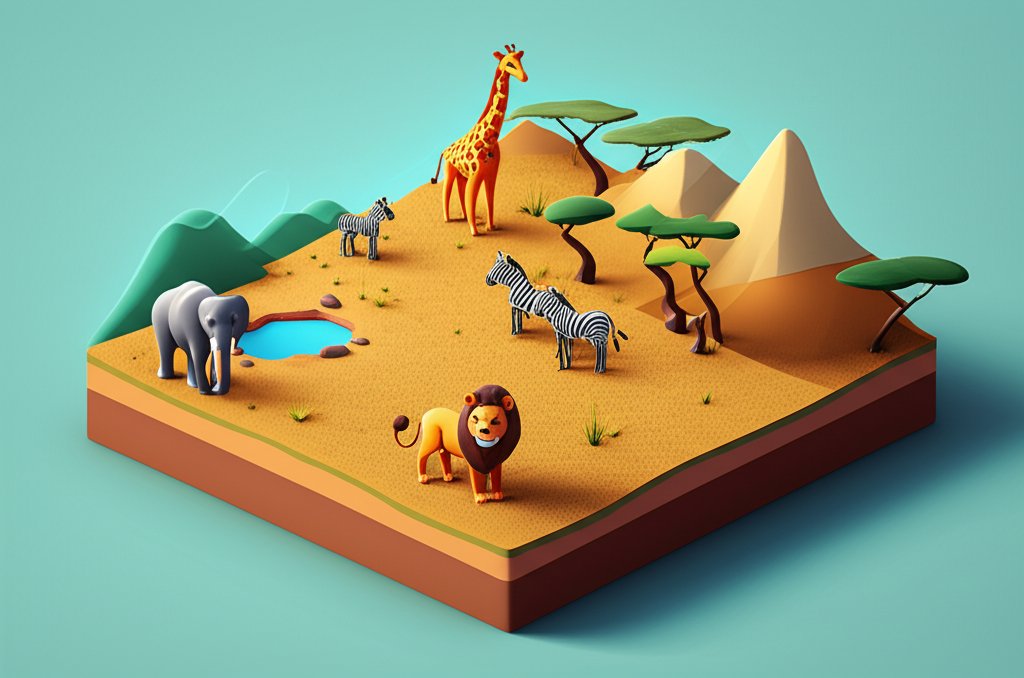
Imagine stepping into a world where golden grasslands stretch endlessly under a vast sky, dotted with iconic acacia trees and teeming with an incredible array of life. This is the savanna, a breathtaking biome that holds some of Earth’s most dynamic ecosystems. While often romanticized, the true depth of its marvels, its intricate workings, and the astonishing adaptations of its inhabitants are often overlooked. If you’ve ever wondered about the secrets of this wild wonderland, you’re in for a treat. Get ready to uncover facts about savannas and a collection of truly fun facts about savannas that will reveal 20 unbelievable wild wonders, propelling your understanding of this magnificent habitat to new heights.
What Exactly is a Savanna? Essential Facts About Savannas
Before we dive into the fascinating creatures and phenomena, let’s establish some core savanna facts. Understanding the fundamental characteristics of this biome is key to appreciating its unique beauty and resilience.
Defining the Savanna Biome: More Than Just Grass
A savanna is primarily characterized by a large expanse of grasses with scattered trees and shrubs, rather than continuous forest cover. It’s often considered a transitional zone between forests and deserts. This unique blend supports both grazing animals that feed on the abundant grass and browsing animals that munch on leaves and shoots from trees and shrubs. The term “savanna” originated from the Spanish word “sabana,” meaning “treeless plain,” though modern definitions acknowledge the woody vegetation.
Where in the World Are Savannas Found?
One of the most surprising facts about savannas is their global distribution. While often synonymous with Africa, savannas are found on almost every continent! Large expanses exist in South America (like the Llanos of Venezuela and the Cerrado of Brazil), northern Australia, India, and even parts of Southeast Asia. However, the most famous and extensive savannas are undoubtedly the African savannas, particularly the East African savanna, home to iconic wildlife spectacles. According to some estimates, savannas cover approximately 20% of the Earth’s land surface, making them a significant global biome.
Understanding the geographical distribution of these ecosystems, including details about where to find African savannas, is crucial for appreciating their global significance.
The Climate of the Savanna: Wet, Dry, and Wild
The climate is a defining feature of the savanna, characterized by distinct wet and dry seasons. This annual cycle profoundly influences the life within it. Temperatures remain consistently warm year-round, but rainfall dictates the rhythms of life. The wet season brings torrential downpours, transforming the landscape into lush green pastures. Conversely, the dry season sees little to no rain, causing grasses to turn brown and water sources to shrink, forcing animals to adapt or migrate. These dramatic seasonal shifts are crucial for the ecosystem’s health.
The Importance of Fire: A Natural Cycle
Fire might seem destructive, but it’s a natural and essential component of savanna ecosystems. Rather than being a disaster, fires, often ignited by lightning strikes, help maintain the balance between grasses and woody plants. They clear out old, dry vegetation, making way for new growth, and prevent the savanna from turning into a dense forest. Many savanna plants have evolved adaptations, like fire-resistant bark or underground root systems, to quickly regrow after a blaze. This makes for a truly unique savanna fun facts point, demonstrating nature’s incredible resilience.
Incredible Savanna Facts: Unveiling Nature’s Engineers and Communicators
The savanna is not just a stage for dramatic wildlife; it’s an arena where nature’s most ingenious designs and complex interactions play out daily. Here are some incredible savanna facts that highlight the profound intelligence and interconnectedness of this biome.
1. Talking Trees: Acacia’s Secret Weapon
Wild Wonder: You won’t hear them whisper, but acacia trees, quintessential symbols of the African savanna, communicate through a sophisticated chemical signaling system! When herbivores like giraffes start munching on their leaves, these clever trees release ethylene gas into the air. This gas acts as an airborne warning, signaling nearby acacia trees to ramp up their tannin production, making their leaves bitter and less palatable to hungry animals. Talk about a natural defense network!
2. Termite Skyscrapers: Tiny Builders, Massive Impact
Wild Wonder: Termites, often overlooked, are the unsung architects of the savanna. Their towering mounds, some reaching over 20 feet tall, are engineering marvels. These structures are more than just homes; they regulate temperature and humidity, creating a stable microclimate inside. Crucially, these mounds also enrich the surrounding soil, making them hotspots for plant growth and providing microhabitats for numerous other small creatures, from lizards to birds. It’s a fantastic fun fact about savanna ecology!
3. Elephants: The Original Landscape Architects
Wild Wonder: African elephants are not just majestic giants; they are vital ecosystem engineers. By pushing over trees, stripping bark, and digging for water, they create open clearings, maintain grasslands, and even create watering holes during dry spells. This might appear destructive, but it’s a natural process that increases biodiversity, creating diverse habitats for a wider range of species. Their impact literally shapes the savanna facts of the landscape.
4. The Great Migration: Earth’s Most Epic Journey
Wild Wonder: Millions of wildebeest, zebras, and gazelles embark on an annual pilgrimage across the East African savanna, covering thousands of miles in search of fresh grazing lands and water. This breathtaking spectacle, known as the Great Migration, is the largest overland mammal migration in the world. It’s a powerful reminder of the deep connection between the animals and the seasonal changes of the savanna, driven by instinct and survival.
5. Baobab Trees: The “Tree of Life” and Its Water Secret
Wild Wonder: With their enormous, bottle-shaped trunks, baobab trees are unmistakable icons of the savanna. These ancient giants can live for thousands of years, earning them the nickname “tree of life.” Their incredible secret lies in their ability to store vast quantities of water – up to 120,000 liters – in their fibrous trunks. This makes them a critical water source for animals and humans during the harsh dry season, a truly unique savanna fun facts point.
6. Lightning Strikes: Nature’s Fertilizer
Wild Wonder: Savannas experience dramatic lightning storms, particularly during the wet season. Beyond the dazzling light show, these electrical discharges play a crucial ecological role. Lightning converts atmospheric nitrogen into nitrates, a form that plants can readily absorb from the soil. This natural process acts as a potent fertilizer, boosting plant growth and contributing to the savanna’s immense productivity after the rains.
7. The Savanna’s Role in Global Climate
Wild Wonder: Savannas are not just local ecosystems; they have a significant influence on global climate patterns. They act as vast carbon sinks, storing carbon in their robust perennial grasses and scattered trees. The large-scale migrations and grazing patterns of herbivores also help to cycle nutrients and prevent desertification, playing a vital role in regulating the Earth’s atmosphere and maintaining ecological balance worldwide.
Fun Facts About Savanna Animals: Masters of Survival
The animals of the savanna are renowned for their strength, speed, and incredible adaptations. These fun facts about savanna creatures showcase their ingenious ways of thriving in a challenging environment.
8. The Big Five: Iconic Giants of the Plains
Wild Wonder: The “Big Five” – lion, leopard, elephant, rhino (black and white species), and buffalo – are not just magnificent to behold; they represent pivotal ecological roles. The term originally referred to the five most dangerous animals to hunt on foot, but now symbolizes the incredible biodiversity and conservation efforts in the African savanna. Each plays a critical role, from apex predators maintaining herbivore populations to elephants shaping the landscape.
9. Hyenas: Beyond the Laugh – Complex Social Structures
Wild Wonder: Often misunderstood and portrayed as mere scavengers, spotted hyenas are incredibly intelligent and social animals with complex matriarchal societies. Their “laugh” is just one of many vocalizations in a sophisticated communication system. They are formidable hunters, often out-competing lions for kills, and their powerful jaws can crush bones, making them efficient ecosystem cleaners. This is a fun fact about savannas that dispels myths!
10. Giraffes: The Tallest Drink of Water
Wild Wonder: Giraffes, the world’s tallest mammals, possess several unique adaptations. Their incredibly long necks allow them to reach high foliage that other herbivores can’t, reducing competition for food. But did you know their unique blood pressure regulation system is essential for preventing fainting when they bend down to drink? Their tough tongues, up to 20 inches long, are also prehensile and can strip leaves from thorny branches without injury.
11. Zebras: Stripes for Survival – A Confusing Camouflage
Wild Wonder: The iconic black and white stripes of zebras aren’t just for show. While scientists debate their exact purpose, theories suggest they may confuse predators by making it difficult to single out an individual in a stampeding herd, act as a natural fly repellent, or even help with temperature regulation by creating convection currents over their bodies. Whatever the reason, these stripes are a marvel of natural selection, making for great savanna fun facts.
12. Underground Wonders: Aardvarks, Pangolins, and More
Wild Wonder: While much of the savanna’s drama unfolds on the surface, a bustling, secret world exists beneath our feet. Creatures like aardvarks (whose name means “earth pig”) and pangolins are master diggers, creating elaborate tunnel systems to escape the scorching heat, evade predators, and find food like termites and ants. These burrows also provide shelter for many other animals, becoming critical microclimates in the harsh environment.
13. Speedy Hunters: Cheetahs, the World’s Fastest Land Mammal
Wild Wonder: Cheetahs are the undisputed sprinters of the savanna, capable of reaching speeds up to 70-75 mph (112-120 km/h) in short bursts. Their unique flexible spine, non-retractable claws providing extra grip, and long tail acting as a rudder for balance are all finely tuned adaptations for explosive speed when chasing down prey like gazelles. This incredible speed is a crucial fact about savanna hunting dynamics.
14. Ostriches: The Largest Birds, But Can’t Fly
Wild Wonder: The ostrich, the largest living bird, roams the African savannas. While famously flightless, it uses its powerful legs to run at speeds up to 45 mph (70 km/h), making it the fastest bird on land. Their large eggs are also the biggest of any living bird, and they have incredibly strong vision, allowing them to spot predators from a great distance.
Beyond the Basics: Even More Savanna Fun Facts
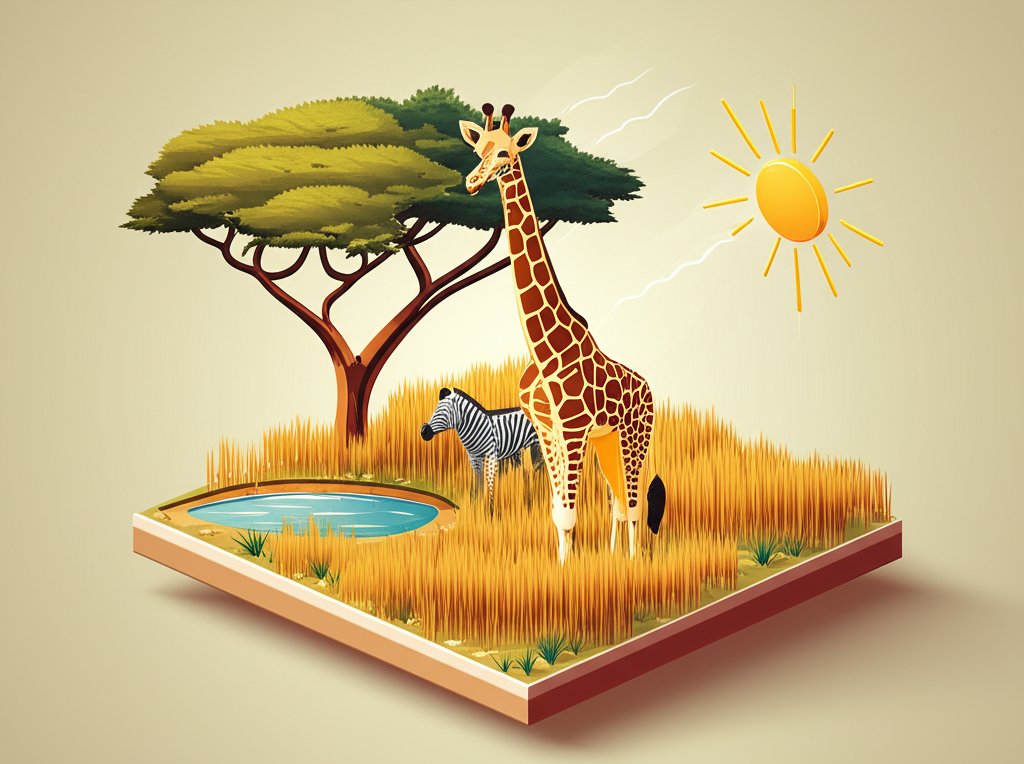
The wonders of the savanna extend far beyond its famous megafauna and ecological cycles. Here are some more fascinating and fun facts about savannas that highlight its complex nature and ongoing challenges.
15. Savannas: A Global Treasure Under Threat
Wild Wonder: While savannas cover 20% of the world’s land, this vital biome is increasingly under threat. Habitat loss due to agriculture, human encroachment, poaching, and climate change are severely impacting savanna ecosystems and their inhabitants. Understanding these facts about savannas underscores the urgent need for conservation efforts to protect this global treasure.
16. Diverse Plant Life Beyond Grasses
Wild Wonder: Although grasslands dominate, savanna plant life is incredibly diverse. Beyond the iconic acacia and baobab, you’ll find hardy shrubs, flowering plants, and various types of grasses, each adapted to the specific climate and soil conditions. Many have deep root systems to access groundwater or store moisture, while others, like the Candelabra tree, protect themselves with toxic sap.
17. The Circle of Life: Scavengers and Decomposers
Wild Wonder: Every creature in the savanna plays a role, and scavengers are no exception. Vultures, hyenas, and jackals are crucial “clean-up crews,” consuming carrion and preventing the spread of disease. Decomposers, from dung beetles to fungi and bacteria, break down organic matter, returning vital nutrients to the soil. This complete circle of life is essential for the savanna’s health, a foundational savanna fact.
18. Ancient Human Ancestors Called Savannas Home
Wild Wonder: The African savannas are considered the cradle of humanity. Many of our earliest human ancestors evolved in these very environments, adapting to the challenges and opportunities presented by the open grasslands. The savanna environment likely played a crucial role in shaping human evolution, influencing factors like bipedalism and diet.
19. Unique Bird Species: From Secretary Birds to Weavers
Wild Wonder: Beyond ostriches, savannas are a haven for a multitude of bird species. The striking Secretary Bird, a long-legged raptor known for stomping on snakes, is a unique sight. Weaver birds construct intricate, hanging nests, showcasing incredible avian architecture. These diverse bird populations add another layer of complexity and beauty to the savanna fun facts.
20. The “Smoke Follows Fire” Phenomenon
Wild Wonder: In some savanna regions, indigenous communities practice controlled burns to manage the land. There’s a fascinating traditional belief that “smoke follows fire” – meaning the smoke from a fire will attract rain. While not scientifically proven in a direct causal link, the timing of these burns often coincides with atmospheric conditions that precede rainfall, making it an intriguing cultural fact about savanna interaction.
Conclusion
From the grand migrations of wildebeest to the silent communication of acacia trees, the savanna is a realm of unparalleled natural wonders. These 20 savanna facts and fun facts about savannas reveal an ecosystem brimming with ingenious adaptations, complex interactions, and breathtaking beauty. It’s a place where every creature, big or small, plays a unique and vital role, shaping the landscape and inspiring awe.
Understanding these facts about savannas is more than just accumulating knowledge; it’s about appreciating the delicate balance and profound resilience of life on Earth. The savanna is a testament to nature’s enduring power and a critical biome that deserves our attention and protection. Let these wild wonders fuel your curiosity and inspire a deeper connection to our planet’s incredible biodiversity.
FAQ Section
What are the main characteristics of a savanna?
A savanna is characterized by vast grasslands with scattered trees and shrubs, experiencing distinct wet and dry seasons. It supports a high diversity of grazing and browsing animals adapted to these conditions. Fires are also a natural and essential part of its ecosystem.
Where are the largest savannas located?
The largest and most famous savannas are found in Africa, particularly the East African savanna. Other significant savanna regions include the Llanos of Venezuela, the Cerrado of Brazil, and parts of Australia and India.
What animals live in the savanna?
Savannas are home to an incredible array of wildlife. In Africa, this includes large mammals like lions, elephants, giraffes, zebras, wildebeest, buffalo, rhinos, leopards, cheetahs, and hyenas. Numerous bird species, reptiles, and smaller mammals also thrive there.
How do animals survive the dry season in the savanna?
Animals employ various strategies to survive the dry season. Many herbivores, like wildebeest and zebras, undertake long migrations in search of water and greener pastures. Others, like crocodiles, may enter a state of estivation (a form of dormancy) in the mud. Some animals, such as elephants, use their strength to dig for water, while baobab trees store water in their trunks, providing a vital resource.
What is the difference between a savanna and a grassland?
All savannas are a type of grassland, but not all grasslands are savannas. The defining characteristic of a savanna is the presence of scattered trees or shrubs alongside the dominant grasses, whereas a grassland may be entirely treeless. Savannas also typically have a more defined wet and dry season.
Are savannas endangered?
Yes, many savanna ecosystems around the world are facing significant threats. Human activities such as agricultural expansion, urban development, deforestation, poaching, and the impacts of climate change (leading to more frequent or intense droughts and fires) are causing habitat loss and fragmentation, putting many savanna species and the biome itself at risk. Conservation efforts are crucial to protect these vital ecosystems.










