The year 1987 was far more than just a date on the calendar; it was a pivot point, a collection of formative moments that continue to echo today. From seismic shifts in global politics to the quiet debuts of cultural behemoths, understanding the key facts from 1987 offers a crucial lens into the forces that shaped our modern world. It was a year of paradoxes: record-breaking economic highs preceding the most dramatic market crash in history, groundbreaking scientific discoveries alongside devastating natural and man-made disasters, and iconic entertainment forging new ground in the midst of intense geopolitical maneuvering.
This wasn’t just a year of headlines, but of deep undercurrents that redefined industries, influenced policy, and set the stage for much of what we now take for granted. Diving into these moments helps us appreciate the intricate tapestry of cause and effect that drives history forward.
At a Glance: Key Takeaways from 1987
- Cultural Launchpad: 1987 saw the debut of entertainment powerhouses like “The Simpsons” shorts, “Final Fantasy,” and “Dirty Dancing,” laying groundwork for decades of pop culture.
- Technological Bedrock: Innovations like the GIF format, Windows 2.0, and the first use of DNA fingerprinting in criminal cases solidified tech’s future.
- Economic Volatility: The year showcased both unprecedented market growth and “Black Monday,” the single largest stock market percentage drop in history, reshaping financial oversight.
- Geopolitical Crossroads: Ronald Reagan’s “Tear down this wall!” speech and the INF Treaty highlighted a shifting Cold War dynamic, while global population reached 5 billion.
- Sporting Dominance: Iconic athletes like Mike Tyson, Michael Jordan, and Steffi Graf achieved significant milestones, marking their places in history.
- Lessons from Disasters: Tragedies like the “Herald of Free Enterprise” sinking and “The Great Storm” underscored the constant need for safety and preparedness.
Pop Culture’s Enduring Icons: How 1987 Shaped Our Screens and Sound
In the realm of entertainment, 1987 wasn’t just a good year; it was an origin story for phenomena that would define generations. Many of the facts from 1987 in this category demonstrate an incredible foresight into what would capture the public’s imagination.
The Birth of Evergreen Entertainment
Consider “The Simpsons.” While its standalone series wouldn’t premiere until 1989, 1987 marked its humble beginnings as animated shorts on “The Tracey Ullman Show.” Who could have predicted that these crude, charming snippets would evolve into the longest-running American sitcom, forever altering the landscape of animated comedy? This initial foray showed networks that alternative, edgier animation could find an audience, paving the way for countless successors.
Video gaming also experienced a transformative year. Nintendo introduced “The Legend of Zelda” to North America, an action-adventure epic that redefined what console games could be, influencing open-world design for decades. Simultaneously, Square released the first “Final Fantasy” game, initiating a role-playing game dynasty that would become a global sensation. Less known, perhaps, but equally significant, was Square’s “3-D WorldRunner,” which pioneered 3D graphics in gaming, giving us a glimpse into the immersive virtual worlds we now inhabit. These were not just games; they were blueprints for entire genres.
Music and Media Milestones
On the silver screen, 1987 gave us instant classics. “Dirty Dancing” became a cultural touchstone, its soundtrack and iconic dance moves resonating deeply. “The Princess Bride” offered a unique blend of fantasy, humor, and romance, solidifying its place as a cult favorite that endures through generations. These films weren’t just box office successes; they became reference points in conversations and popular culture.
Musically, U2 released “The Joshua Tree,” an album that earned them multiple Grammy Awards and propelled them to global superstardom. Its themes of American mythology, spirituality, and political commentary struck a chord, proving that rock music could be both commercially successful and deeply thoughtful. And in a monumental shift for music consumption, the first Beatles albums were released on compact disc, signaling the dawn of a new audio era and the eventual decline of vinyl and cassettes. This move alone reshaped the music industry’s distribution models.
Finally, 1987 saw the Fox Broadcasting Company launch as the fourth major American television network. This expansion broke the long-standing dominance of the “Big Three” (ABC, CBS, NBC), introducing new programming and competition that would profoundly impact network television for years to come. Iconic sitcoms like “Full House” and “The Bold and The Beautiful” also began their long runs, becoming staples in millions of households.
Groundbreaking Innovations: Technology and Science Forge New Paths
Beyond entertainment, 1987 was a banner year for scientific discovery and technological advancement. These facts from 1987 reveal a period of rapid evolution, laying critical groundwork for the digital age and modern medicine.
Digital Formats and Medical Marvels
One of the most ubiquitous digital innovations born in 1987 was CompuServe’s introduction of the Graphics Interchange Format, or GIF. While its initial purpose was efficient image transfer, few could have imagined its eventual role as a cornerstone of internet culture, a versatile tool for expression, humor, and short-form animation that is still integral to online communication today.
In medicine, the FDA’s approval of Prozac was nothing short of revolutionary. As a groundbreaking antidepressant, it ushered in a new era of psychiatric treatment, offering hope and relief to millions suffering from depression and anxiety. Its introduction dramatically changed how mental health was understood and addressed globally. Simultaneously, Dr. Bruce Reitz performed the first successful heart-lung transplant, a monumental achievement that pushed the boundaries of surgical capability and offered life-saving options for patients with complex organ failures.
Observing the Cosmos and Cracking Codes
Astronomers had an unparalleled year in 1987. The observation of Supernova 1987A, the closest supernova to Earth since 1604, provided an invaluable opportunity to study stellar death and its aftermath. This event gave scientists unprecedented data about supernova dynamics, neutron stars, and heavy element formation. Adding to this cosmic spectacle, astronomers also witnessed the first direct sight of a galaxy’s birth, providing crucial insights into the early universe and galactic evolution.
On Earth, a silent revolution was taking place in forensic science. DNA fingerprinting was used for the first time in a criminal case in the United States, marking a paradigm shift in how evidence was collected and analyzed. This scientific breakthrough offered unprecedented accuracy in identification, transforming criminal investigations and justice systems worldwide.
The personal computer landscape also saw significant advancements. IBM released PC-DOS version 3.3 and introduced its PS/2 line of personal computers along with the OS/2 operating system. These moves, alongside the introduction of Microsoft Windows 2.0, signaled a race toward more powerful, graphical user interfaces and robust operating systems, setting the stage for the computing environment we experience today.
Explore the events of 1987 in more detail to grasp the full scope of how these cultural, scientific, and technological advancements intertwined with broader global phenomena.
Global Shifts and Diplomatic Tightropes: Political and Social Unrest
1987 was a year of profound political statements and social reconfigurations, where the tectonic plates of global power and individual rights shifted. The facts from 1987 in this domain reveal a world grappling with Cold War tensions, burgeoning populations, and evolving definitions of justice.
Speeches, Treaties, and Shifting Borders
Perhaps the most iconic political moment of the year came on June 12, when Ronald Reagan stood at the Brandenburg Gate and delivered his famous challenge: “Mr. Gorbachev, tear down this wall!” This powerful speech, aimed directly at the Soviet leader, symbolized the growing pressure on the Soviet Union and foreshadowed the eventual fall of the Berlin Wall just two years later. It was a potent declaration of American resolve and a rallying cry for freedom.
Later in the year, the United States and the Soviet Union signed the Intermediate-Range Nuclear Forces (INF) Treaty. This landmark agreement was a significant step toward de-escalation, eliminating an entire class of nuclear missiles and demonstrating a rare willingness from both superpowers to reduce their nuclear arsenals. It provided a glimmer of hope for a less confrontational future.
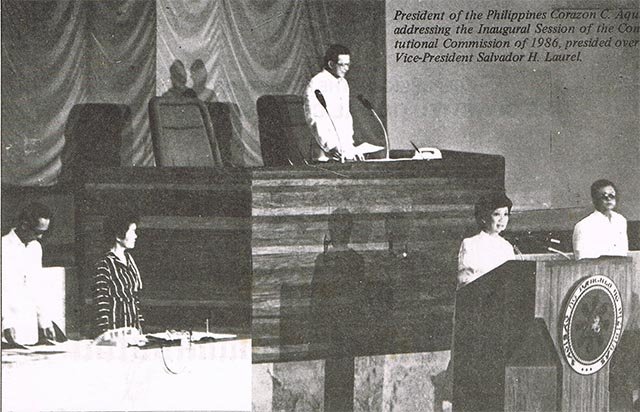
The world also reached a momentous demographic milestone on July 11, when the global population officially hit 5 billion. This milestone brought into sharp focus concerns about resource management, environmental impact, and sustainable development that continue to shape global policy discussions today. In Asia, China’s rudimentary civil code, the General Principles of the Civil Law, came into effect, marking an important step in the country’s legal modernization and economic reforms. Meanwhile, the Philippines adopted a new constitution, a critical step in solidifying its democratic institutions after years of political upheaval.
Social Progress and Ethical Debates
Domestically in the U.S., the Supreme Court made significant rulings on civil rights. It upheld affirmative action policies, affirming their role in redressing historical discrimination, and ruled that gender-based workplace affirmative action plans do not constitute discrimination. These decisions reinforced the legal framework for equality and diversity in the workplace.
However, the past also cast a long shadow. The U.S. Justice Department barred Austrian Chancellor Kurt Waldheim from entering the country due to his aid to Nazi Germany during World War II. This action underscored the lasting imperative of confronting historical atrocities and holding individuals accountable, regardless of their current political standing.
The year also saw significant internal political struggles. General Secretary of the Chinese Communist Party Hu Yaobang resigned amid democracy demonstrations, signaling internal party divisions and the growing public desire for greater freedoms, which would tragically culminate in Tiananmen Square two years later. And in a move that would later become a significant scandal, U.S. President Reagan signed a secret order permitting covert arms sales to Iran, laying the groundwork for the Iran-Contra affair. Meanwhile, the Vatican issued a formal opposition to test-tube fertilization and embryo transfer, sparking ongoing ethical debates about reproductive technologies and the intersection of science and faith.
The Economic Rollercoaster: Prosperity and Panic on Wall Street
The financial world of 1987 offered a stark lesson in market volatility, swinging from euphoric highs to unprecedented lows in a matter of months. These economic facts from 1987 vividly illustrate the dangers of unchecked speculation and the speed with which confidence can evaporate.
A Market’s Meteoric Rise and Historic Fall
The year began with optimism in the financial markets. The Dow Jones Industrial Average closed above 2,000 for the first time on January 8 (2,002.25), a psychological barrier that signaled robust growth. Just a month later, on February 5, it surpassed 2,200. This upward trajectory fueled a sense of invincibility, with investors pouring money into what seemed like an ever-climbing market.
Then came October 19. Universally known as “Black Monday,” this date etched itself into financial history. The Dow Jones Industrial Average plummeted by an astonishing 22.6% in a single day, the largest one-day percentage drop ever recorded. The panic was global, with markets worldwide following suit. This event shattered illusions of continuous growth and exposed vulnerabilities in the global financial system, prompting urgent reviews of market mechanisms, circuit breakers, and regulatory oversight to prevent a recurrence.
Corporate Moves and Global Trade
Amidst this market drama, significant corporate maneuvers were also underway. British Airways began trading stocks, a major privatization effort that reflected a broader trend of shifting state-owned enterprises to private ownership in the UK. This move was part of a Thatcher-era policy to boost efficiency and competition. Across the Atlantic, Chrysler Corp offered to buy American Motors Corp for $1 billion. This acquisition, motivated by Chrysler’s desire to gain AMC’s Jeep brand, was a significant consolidation in the automotive industry, illustrating the intense competition and strategic alliances forming in the global economy.
Sporting Legends and Record Breakers: The Year in Athletics
1987 was a year for the record books in the world of sports, featuring stunning individual achievements and memorable team victories. The athletic facts from 1987 highlight the sheer talent and competitive spirit that defined the era.
Unifying Champions and Series Victories
In boxing, Mike Tyson cemented his legendary status. Already the youngest heavyweight champion, he further unified the WBA, WBC, and IBF titles, becoming the undisputed heavyweight champion of the world. His raw power and dominance in the ring made him one of the most feared and iconic figures in sports history.
Team sports also provided thrilling narratives. The Minnesota Twins captured their first World Series title, a memorable victory that ignited the city with baseball fever. In football, the New York Giants, led by quarterback Phil Simms, defeated the Denver Broncos 39-20 in Super Bowl XXI, marking their first Super Bowl victory. On the water, Dennis Conner, captaining ‘Stars & Stripes,’ famously recaptured the America’s Cup for the San Diego Yacht Club, a triumph that avenged a previous loss and showcased American sailing prowess. In tennis, a young Steffi Graf won her first Grand Slam title at the French Open, signaling the rise of a player who would go on to dominate women’s tennis for years.
Individual Feats of Greatness
Individual athletes pushed boundaries and rewrote record books. Legendary Indian cricketer Gavaskar became the first batsman in Test cricket history to score 10,000 runs, a testament to his longevity, skill, and consistency. In basketball, Kareem Abdul-Jabbar scored his 36,000th NBA point, further solidifying his position as one of the game’s all-time leading scorers. Michael Jordan, in his burgeoning career, set a Chicago Bulls record with 58 points in a single game and became only the second NBA player ever to score 3,000 points in a season, showcasing his incredible scoring ability. Julius Erving, “Dr. J,” also reached a monumental milestone, becoming the third NBA/ABA player to score 30,000 points, a testament to his groundbreaking career. In baseball, Mike Schmidt hit his 500th home run, joining an elite club of power hitters.
Lessons from the Brink: Acknowledging 1987’s Disasters
While much of 1987 was about progress and achievement, it also served as a stark reminder of human vulnerability to disaster, both natural and man-made. These sobering facts from 1987 underscore the importance of safety protocols, infrastructure integrity, and rapid response.
Unforeseen Tragedies and Their Aftermath
One of the most devastating incidents was the Dupont Plaza Hotel fire in Puerto Rico, which tragically killed 60 people. This fire, deliberately set, highlighted critical issues in fire safety, emergency exits, and hotel security, leading to significant industry reforms. A powerful 6.8 magnitude earthquake struck Ecuador, claiming over 100 lives and causing widespread destruction, reminding the world of nature’s destructive power.
Maritime safety was tragically tested by the sinking of the Belgian ferry “Herald of Free Enterprise.” This disaster, which killed 192 people, was attributed to crew negligence (the bow doors were left open) and insufficient safety checks. It led to profound changes in ferry design and operational procedures, particularly regarding bow door mechanisms and stability regulations.
In Europe, a powerful extratropical cyclone, dubbed “The Great Storm,” battered the UK and France, resulting in 22 fatalities and immense damage to property and natural landscapes. It caught meteorologists largely by surprise, prompting significant investment in weather forecasting technology and storm preparedness. Lastly, 28 construction workers were killed in an apartment collapse in Bridgeport, Connecticut, a tragedy that brought into sharp focus the need for stringent building codes, structural integrity inspections, and worker safety protocols in construction.
Unpacking the Legacy: Why These 1987 Facts Still Resonate
Looking back at the facts from 1987 isn’t just an exercise in nostalgia; it’s a vital way to understand the foundational moments that underpin our present. This year was a crucible where many of today’s cultural trends, technological norms, economic vulnerabilities, and political landscapes were forged.
Practical Playbook: What to Learn from 1987’s Events
- Recognize Foundational Moments: The seemingly small debuts—like “The Simpsons” shorts or the GIF—often carry the seeds of future revolutions. Pay attention to early-stage innovations; they might be the next big thing.
- Understand Market Volatility: Black Monday remains a powerful case study in the rapid and unpredictable nature of financial markets. It teaches us the importance of diversified portfolios, prudent regulation, and understanding the behavioral aspects of trading. It highlighted that even robust markets can crash, influencing how financial institutions manage risk and how policymakers implement safeguards.
- Appreciate Rapid Tech Evolution: The quick succession of new software, hardware, and digital formats (GIF, Windows 2.0, PS/2) in 1987 demonstrates that technological shifts are continuous and often build upon each other rapidly. This calls for adaptability and continuous learning in any tech-driven field.
- Observe Global Interconnectedness: The INF Treaty, the 5 billion population mark, and even the global market response to Black Monday underscore how interconnected nations and systems are. Local events can have global ramifications, and international cooperation is often essential for addressing challenges.
- Learn from Disaster Prevention: Tragedies like the “Herald of Free Enterprise” sinking and the Dupont Plaza fire led directly to improved safety standards and regulations across industries. These harsh lessons are a reminder that continuous vigilance and robust safety protocols are non-negotiable.
Quick Answers: Your 1987 Fact FAQs
Q: Was 1987 primarily known for its economic events?
A: While “Black Monday” was certainly a defining economic event, 1987 was far more than just financial turmoil. It was equally significant for its pop culture breakthroughs, major scientific and technological advancements, and pivotal geopolitical shifts that impacted the Cold War and global social policies.
Q: How did the tech innovations of 1987 impact today’s world?
A: Innovations like the GIF format laid the groundwork for modern digital communication, while Windows 2.0 contributed to the graphical user interface evolution we use daily. The first use of DNA fingerprinting in criminal cases revolutionized forensic science, and the approval of Prozac transformed mental health treatment. Many of these inventions are still in use or heavily influenced current technologies.
Q: What was the lasting impact of Reagan’s “Tear down this wall!” speech?
A: Reagan’s speech became an iconic symbol of the Cold War’s end and the desire for freedom. While not immediately leading to the wall’s demolition, it served as a powerful rhetorical challenge to the Soviet Union and emboldened those seeking reform, resonating as a declaration of intent that foreshadowed the eventual fall of the Berlin Wall.
Q: Did any major long-running TV shows or movies debut in 1987?
A: Absolutely. While “The Simpsons” debuted as shorts, it was the genesis of what would become the longest-running American sitcom. “Dirty Dancing” and “The Princess Bride” premiered, both achieving iconic status and enduring popularity. The Fox Broadcasting Company also launched, becoming the fourth major TV network.
From History to Insight: The 1987 Blueprint
The facts from 1987 paint a vivid picture of a world in motion—a world of technological leaps, cultural awakening, and intense geopolitical and economic pressures. It’s a year that demands our attention not just for its specific events, but for the profound lessons these events offer. From understanding market risk to appreciating the slow burn of cultural phenomena and the rapid pace of scientific discovery, 1987 serves as a potent reminder of how quickly the world can change, and how seemingly small moments can have monumental, lasting impacts. It’s a blueprint for understanding our present and anticipating our future.










