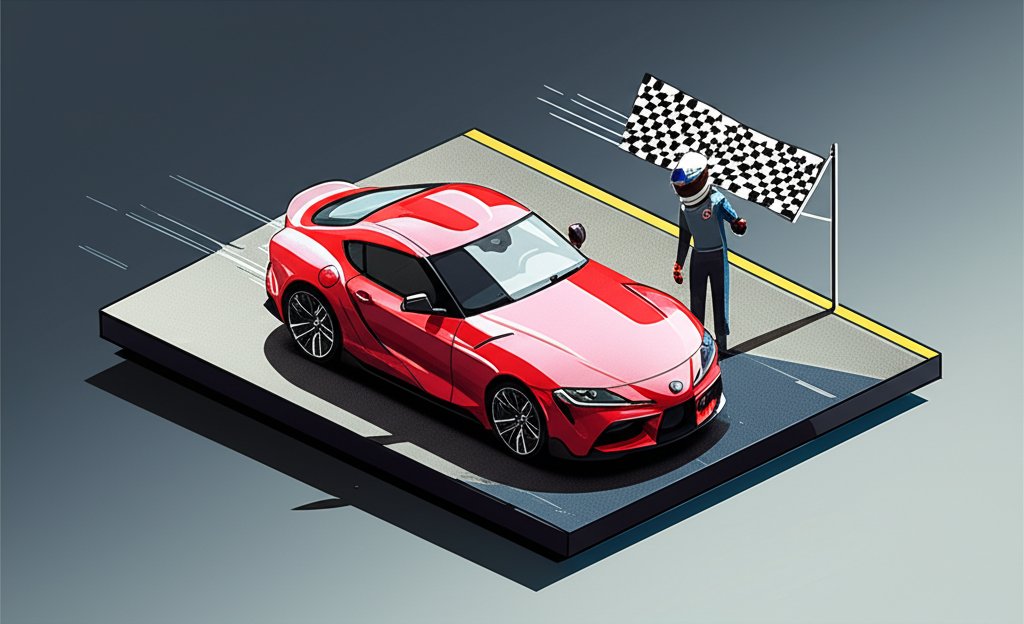
Are you ready to truly understand one of the most talked-about sports cars of the modern era? Buckle up, because we’re about to embark on an unparalleled journey into the world of the Toyota Supra MK5. This isn’t just another article; it’s the definitive resource designed to cut through the noise, reveal every crucial detail, and establish the facts that make this fifth-generation Supra an automotive legend. Whether you’re a seasoned enthusiast, a potential buyer, or simply curious about what makes the Supra MK5 tick, prepare to uncover its groundbreaking design, sophisticated engineering, breathtaking performance, and its undeniable place in automotive history. We’ll leave no stone unturned, providing you with all the essential facts about Toyota Supra MK5 you need to know, ensuring you’re comprehensively informed and ready to appreciate this iconic machine.
The Rebirth of a Legend: Unpacking the Toyota Supra MK5’s Genesis

The return of the Toyota Supra in its fifth iteration, known colloquially as the MK5 Supra, was one of the most anticipated automotive events in recent memory. After a 17-year hiatus, the legend was back, but not without a fresh approach that sparked both excitement and debate.
A Legacy Revived: The 17-Year Hiatus and Akio Toyoda’s Vision
The journey to the Toyota Supra MK5 began with a deep desire to resurrect an icon. Toyota, under the passionate leadership of Akio Toyoda, a racer and car enthusiast himself, was determined to bring back exciting, driver-focused cars. This vision, known as “Waku Doki” (Japanese for “heart-pounding excitement”), became a guiding principle for Toyota’s sports car division, culminating in the revival of beloved nameplates like the Supra. The challenge was immense: how to bring back a legend in a modern automotive landscape that was increasingly shifting away from pure sports cars.
The BMW Partnership: Engineering Collaboration and Shared Foundations
The most significant fact about Toyota Supra MK5’s rebirth is its groundbreaking collaboration with BMW. To efficiently bring the Supra back to market with world-class engineering, Toyota partnered with the German automaker, sharing a platform to develop a new sports car architecture. The result was the A90/A91 generation Supra MK5, which shares its underpinnings, including its chassis, engine, and much of its interior components, with the BMW Z4 (G29). This strategic alliance allowed Toyota to leverage BMW’s expertise in inline-six engines and rear-wheel-drive sports car dynamics, while still infusing the vehicle with their unique Gazoo Racing (GR) performance philosophy. This not only streamlined development costs but ensured a modern sports car with proven, robust components.
The most significant fact about Toyota Supra MK5’s rebirth is its collaborative engineering effort, a departure from tradition that echoes some of the broader innovative strategies you’ll find highlighted among interesting facts about Toyota cars.
From Concept to Reality: The FT-1’s Influence on the MK5 Supra’s Design
The visual identity of the MK5 Supra is unmistakable, drawing heavily from the stunning 2014 FT-1 Concept car. Penned by Toyota’s Calty Design Research in California, the FT-1 (Future Toyota One) captivated audiences with its aggressive stance, double-bubble roof, and sleek, athletic lines. While some elements were toned down for production realities – such as the more elaborate front bumper and larger rear wing – the production Toyota Supra MK5 retains much of the concept’s drama and presence. Its flared fenders, prominent grille, and distinctive rear end with an integrated ducktail spoiler all hark back to the FT-1, creating a visually striking vehicle that pays homage to its iconic lineage while firmly planting it in the 21st century.
GR (Gazoo Racing) DNA: Performance, Precision, and Toyota’s Motorsport Heritage
The “GR” in GR Supra signifies its status as part of Toyota Gazoo Racing, the brand’s global motorsports division. This branding isn’t just a badge; it represents a commitment to performance and a direct link to Toyota’s extensive racing pedigree. Every Supra MK5 benefits from Gazoo Racing’s expertise, influencing everything from chassis tuning and suspension geometry to engine calibration and aerodynamic efficiency. GR engineers were deeply involved in the development, ensuring that while the underpinnings were shared with BMW, the MK5 Supra received a distinct Toyota driving character – often described as sharper and more playful than its Z4 sibling. This dedication ensures that the Toyota Supra isn’t just a stylish coupe, but a genuinely capable performance machine engineered for driving exhilaration and track prowess.
Power Unleashed: Engines, Transmissions, and Performance Metrics of the Toyota Supra MK5
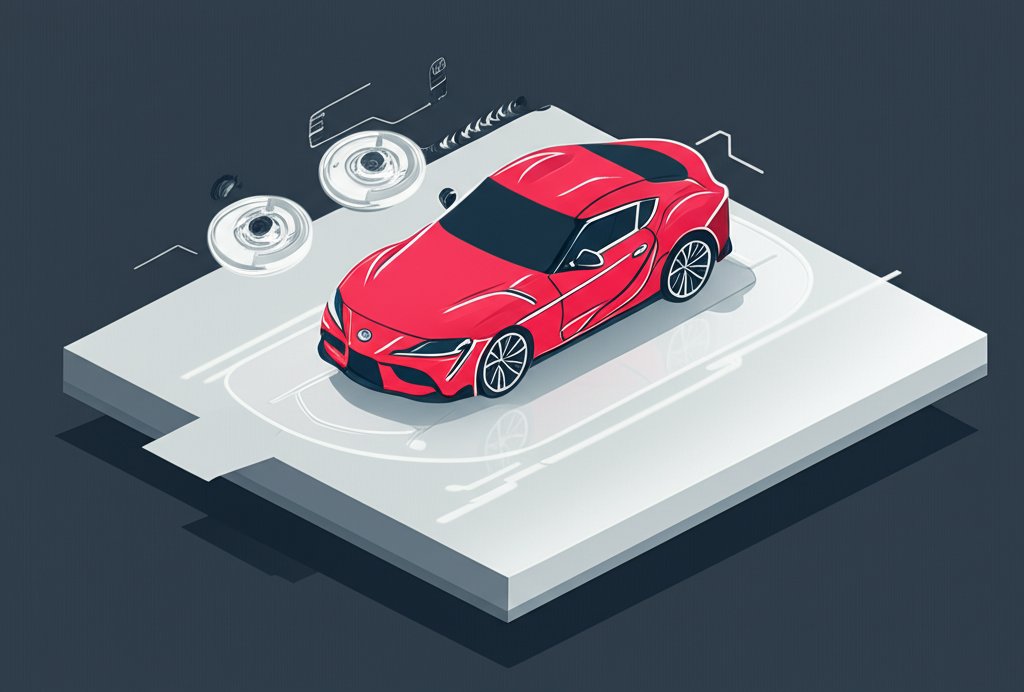
At the heart of any sports car are its powertrain and how it translates power to pavement. The Toyota Supra MK5 offers a compelling blend of German engineering and Japanese tuning, resulting in impressive performance figures.
The Heart of the Beast: The Inline-Six B58 Engine
The 3.0-liter turbocharged inline-six (B58) engine is the powerhouse that truly defines the Toyota Supra experience for many enthusiasts. Sourced from BMW, this engine is celebrated for its smoothness, robust power delivery, and significant tuning potential.
- Initial Launch (2020 Model Year): Produced 335 horsepower (US specs; often quoted as 340 PS in Europe/Japan) and 365 lb-ft of torque. Even at this initial output, it offered blistering acceleration.
- Power Boost (2021 Model Year Onwards): Toyota significantly upgraded the 3.0L engine, increasing output to a more potent 382 horsepower and 368 lb-ft of torque. This enhancement was achieved through a revised cylinder head design, new pistons, and a retuned exhaust manifold, substantially enhancing its performance capabilities and response. This bump solidified its standing against competitors.
The Nimble Alternative: The Inline-Four B48 Engine
Introduced for the 2021 model year (US market), the 2.0-liter turbocharged inline-four (B48) engine offered a lighter, more fuel-efficient, and more affordable entry point into the Supra MK5 lineup. While not as outright powerful as its six-cylinder sibling, it provides a different, yet still engaging, driving experience.
- Specifications: It delivers a respectable 255 horsepower and 295 lb-ft of torque.
- Driving Character: The lighter engine contributes to a nearly perfect 50:50 weight distribution, enhancing the car’s agility and responsiveness, particularly on twistier roads. It offers a more balanced feel and can be seen as a purist’s choice for precise handling.
- 2025 Model Year Update: For the 2025 model year, Toyota announced the discontinuation of the 2.0-liter inline-four engine option for the North American market, making the 3.0-liter inline-six the sole engine choice moving forward. This makes the earlier 2.0L models distinctive.
Driving Engagement: Automatic and Manual Transmission Options
For much of its production run, the Toyota Supra MK5 was exclusively paired with a slick-shifting 8-speed ZF automatic transmission. This unit is renowned for its quick shifts, smooth operation, and ability to handle high torque, making it an ideal partner for either engine and perfectly suited for both daily driving and spirited excursions.
However, in a move that delighted purists and enthusiasts, Toyota introduced a highly anticipated 6-speed manual transmission for the 3.0L Supra MK5 starting with the 2023 model year. This option, developed specifically for the Supra (and its BMW Z4 counterpart), featured a larger-diameter clutch, a shorter final drive ratio for improved acceleration, and a tweaked shift lever and weight for a more engaging and direct feel. This manual offering was often bundled with special “A91-MT Edition” packages, highlighting its unique appeal and providing an even more immersive driving experience.
Blistering Performance: Acceleration, Top Speed, and Track Capabilities
The MK5 Supra is no slouch when it comes to straight-line performance, and its dynamic chassis ensures it’s equally capable on a track. The performance figures vary slightly based on engine and model year:
- 3.0L (2020 Model Year – 335 hp):
- 0-60 mph: Achieved in an impressive 3.8-4.1 seconds (Car and Driver independently clocked the 2020 3.0L at a blistering 3.8 seconds with rollout).
- Quarter-mile: Around 12.3 seconds at 113 mph.
- 3.0L (2021+ Model Year – 382 hp):
- 0-60 mph: With the power bump, times dropped to a scorching 3.7-3.9 seconds, making it incredibly quick for its class.
- 2.0L (2021+ Model Year – 255 hp):
- 0-60 mph: Approximately 5.0-5.2 seconds, offering quick acceleration for its segment and a more balanced feel due to lighter front-end weight.
- Top Speed: All Toyota Supra MK5 models, regardless of engine, are electronically limited to a top speed of 155 mph (250 km/h), a common practice for high-performance vehicles.
- Braking: Equipped with robust Brembo-sourced brakes on 3.0L models, the Supra offers strong, consistent stopping power, essential for both road and track.
Design and Interior: Aesthetic Form Meets Driver-Focused Function in the MK5 Supra
Beyond raw power, the Supra MK5 captivates with its purposeful design and driver-centric interior. Every curve and control is meticulously crafted for both aesthetics and ergonomic excellence.
Exterior Prowess: Iconic Lines, Aerodynamics, and Homage to the Past
The exterior of the Toyota Supra MK5 is a masterclass in modern sports car design, blending aggressive lines with functional aerodynamics. Key visual facts about Toyota Supra MK5 include:
- Double-Bubble Roof: A distinctive design element that not only pays homage to classic racing cars (and previous Supras) but also provides extra headroom for helmeted drivers while enhancing aerodynamic efficiency by reducing the car’s frontal area.
- Broad Stance and Short Wheelbase: A wide track combined with a short wheelbase contributes to its muscular, planted appearance and allows for exceptional agility and quick changes of direction. This compact footprint is a crucial aspect of its dynamic character.
- LED Lighting Signature: Signature LED headlights and taillights ensure both optimal visibility and a distinct visual signature, day or night. The headlights, in particular, evoke a futuristic yet aggressive gaze.
- Functional Air Intakes/Vents: While some vents are purely aesthetic, many serve functional purposes, contributing to cooling for the engine and brakes, or aiding airflow for improved stability and downforce. The large main grille is highly functional for engine cooling.
- Rear Diffuser and Integrated Spoiler: These elements work in concert to manage airflow beneath and over the vehicle, reducing lift and generating crucial downforce, especially at higher speeds, enhancing stability and grip.
The Driver’s Sanctuary: Ergonomics, Materials, and Technology in the MK5 Supra’s Cabin
Step inside the Supra MK5, and you’re greeted by a cockpit designed explicitly around the driver. The layout prioritizes control and engagement, with facts about Toyota Supra MK5 interior encompassing:
- Driver-Centric Layout: Controls are intuitively placed, angled towards the driver for easy access and minimal distraction. The low seating position enhances the connection between driver and road.
- High-Quality Materials: Depending on the trim, the interior features a blend of premium materials, including supple leather, grippy Alcantara, and carbon fiber accents, creating a luxurious yet sporty ambiance. The fit and finish are excellent, reflecting its BMW origins.
- Deeply Bolstered Sports Seats: Ergonomically designed sports seats provide excellent lateral support during spirited driving, keeping the driver and passenger firmly in place through tight corners, enhancing confidence and comfort.
- Digital Instrument Cluster: A fully digital display provides customizable information, from traditional gauges like speedometer and tachometer to G-force meters, lap timers, and navigation prompts, all presented crisply and clearly.
- Compact, Intimate Footprint: While spacious enough for two occupants and offering reasonable luggage space for a sports car (10.2 cubic feet), the interior maintains a snug, intimate feeling, reinforcing its dedicated sports car identity without feeling cramped.
Dimensions and Weight: Key Facts about Toyota Supra MK5 Physical Attributes
Understanding the physical dimensions and weight is crucial to appreciating the Toyota Supra MK5’s dynamic character.
- Wheelbase: A relatively short wheelbase of 97.2 inches (2,470 mm) is a key contributor to its exceptional agility and tight turning radius.
- Length: Overall length is approximately 172.5 inches (4,382 mm), making it a compact and maneuverable sports coupe.
- Width: Roughly 73.0 inches (1,854 mm), contributing to its wide, aggressive stance.
- Height: A low profile at about 50.9 inches (1,292 mm), accentuating its sports car aesthetics and lowering its center of gravity.
- Curb Weight:
- 2.0L Supra: Approximately 3,181 lbs (1,443 kg). This lighter weight is a significant factor in its agile handling.
- 3.0L Supra (Automatic): Around 3,400 lbs (1,542 kg).
- 3.0L Supra (Manual): Slightly lighter than the automatic, at approximately 3,389 lbs (1,537 kg), due to the manual transmission’s lower mass.
- These weights, combined with its near 50:50 front-to-rear weight distribution, are fundamental facts about Toyota Supra MK5’s impressive balance and handling.
The Driving Experience: Dynamics, Handling, and Advanced Technology of the Toyota Supra
The true test of a sports car lies in how it drives. The Toyota Supra delivers an exhilarating and refined experience, supported by cutting-edge technology, making it a highly rewarding car to pilot.
Chassis and Suspension: Achieving 50/50 Balance and Agile Handling
The Supra MK5 boasts a highly rigid chassis, a crucial foundation for its excellent handling and responsiveness. Key aspects of its dynamic prowess include:
- Optimal Weight Distribution: One of the most frequently cited facts about Toyota Supra MK5 is its near-perfect 50:50 front-to-rear weight balance. This ensures predictable and neutral handling, minimizing understeer or oversteer tendencies and instilling confidence in the driver.
- Short Wheelbase and Wide Track: This specific configuration is a masterstroke in sports car dynamics. The short wheelbase contributes directly to the car’s exceptional agility and ability to pivot quickly, while the wide track enhances stability and grip, allowing the car to corner confidently and with precision.
- Adaptive Variable Suspension (AVS): Standard on most 3.0L models, AVS continuously adjusts damping force at each wheel based on road conditions, driving style, and selected drive mode. This allows the driver to switch between a comfortable, compliant ride for daily driving and a firmer, more performance-oriented setup for track days or spirited driving, making the Toyota Supra MK5 remarkably adaptable.
- Active Rear Differential: This performance-enhancing feature, standard on 3.0L models, electronically controls torque distribution between the rear wheels. It actively varies the locking force from 0 to 100 percent, improving traction out of corners, enhancing stability during hard braking, and allowing for precise power-on oversteer when desired.
Steering and Braking: Precision and Stopping Power
The feedback provided by the steering and the effectiveness of the brakes are paramount in a performance car.
- Electric Power Steering (EPS): The MK5 Supra features a well-tuned electric power steering system that offers precise control and good feedback. While some purists prefer hydraulic steering, Toyota’s tuning of the EPS provides a direct and responsive feel, making the car feel eager to turn in.
- High-Performance Braking System: The 3.0L models come equipped with large, four-piston fixed-caliper Brembo brakes (or equivalent high-performance units) at the front, paired with ventilated discs. These provide exceptional stopping power, fade resistance, and pedal feel, crucial for both high-speed runs and demanding track conditions. The 2.0L models feature slightly smaller, but still capable, braking systems.
Integrated Technology: Infotainment, Connectivity, and Driver Assistance Systems
The MK5 Supra is not just about raw power and dynamics; it integrates smart technology to elevate the driving experience without detracting from its core purpose.
- Advanced Infotainment System: Based on BMW’s intuitive iDrive system (rebranded as Toyota Supra Connect on some models), the Supra’s infotainment is intuitive, featuring a crisp 8.8-inch display (or a smaller touchscreen on base models), a convenient rotary controller on the center console, and often includes Apple CarPlay (wireless on some models) and navigation. Android Auto was notably absent for a long time but has been integrated in later models.
- Toyota Supra Connect: This suite of connected services, available on certain trims, offers features like emergency calling, remote services (e.g., remote door lock/unlock, vehicle finder), and concierge assistance, enhancing convenience and safety.
- Driver-Assistance Features: Depending on the model year and trim, the Toyota Supra MK5 can be equipped with a comprehensive suite of safety technologies. These include a pre-collision system with pedestrian detection, lane departure warning with steering assist, automatic high beams, adaptive cruise control, blind-spot monitoring, rear cross-traffic alert, and parking sensors. This blend of performance and peace of mind makes the Supra a surprisingly capable daily driver.
- Head-Up Display (HUD): Available on higher trims, the HUD projects essential driving information (speed, navigation cues, gear selection) directly onto the windshield, allowing the driver to keep their eyes focused on the road ahead.
Evolution, Controversy, and Community: The Enduring Impact of the Supra MK5
The Supra MK5 has seen subtle but significant refinements since its debut, solidifying its position in the sports car hierarchy and generating a dedicated following. Its journey hasn’t been without discussion, particularly regarding its origins.
Model Year Updates and Special Editions: A Deep Dive
Toyota has consistently refined the Supra MK5 with annual updates and exciting special editions, keeping the model fresh and desirable.
- 2020 Model Year: The initial launch, featuring the 335 hp 3.0L engine and ZF 8-speed automatic. The first 1,500 units for the US market were designated Launch Edition with specific colors (Absolute Zero, Nocturnal, Renaissance Red 2.0), red mirror caps, and a carbon-fiber interior badge.
- 2021 Model Year: Saw the significant introduction of the more powerful 382 hp 3.0L engine and the new 255 hp 2.0L inline-four, broadening its appeal and performance envelope. The A91 Edition was introduced, featuring exclusive Refraction Blue paint (later “Burnout” and “Stratosphere”), unique 19-inch wheels, and a black Alcantara/leather interior.
- 2022 Model Year: Introduced a new “Absolute Zero” white exterior color option across the range and minor interior tweaks. The A91-CF Edition focused on reducing weight and enhancing aerodynamics with genuine carbon fiber components, including a front splitter, side rockers, and a duckbill spoiler. It came in exclusive matte gray or white paint.
- 2023 Model Year: The highly anticipated 6-speed manual transmission became available for the 3.0L models, a huge win for enthusiasts. This manual option was often bundled with the A91-MT Edition, which included specific exterior colors (Matte White, CU Later Gray, Absolute Zero), unique forged 19-inch wheels, red badging, and a distinct brown interior.
- 2024 Model Year: Continued refinement with new color options and the launch of the 45th Anniversary Edition. This special edition honored the Supra’s legacy with a choice of Mikan Blast (orange) or Absolute Zero (white) paint, a large, manually adjustable black rear spoiler, black multi-spoke wheels, and a retro “Supra” script graphic on the side.
- 2025 Model Year: Notably, Toyota announced that the 2.0L inline-four engine would be dropped from the North American market, making the 3.0L inline-six the standard and only engine. This simplified the lineup and reinforced its performance-focused image.
The “BMW Debate”: Addressing Criticisms and Celebrating Synergy
The shared platform with the BMW Z4 was undoubtedly the most contentious facts about Toyota Supra MK5 at its launch. Purists and long-time fans initially expressed skepticism, bemoaning the lack of a “pure” Toyota-developed sports car and suggesting the MK5 Supra lacked its own distinct identity.
However, the “BMW Supra” controversy gradually diminished as the car proved its mettle. Reviews quickly praised the car’s dynamic capabilities, acknowledging that the BMW components contributed significantly to its high level of performance, handling, and build quality. Toyota engineers extensively tuned the chassis and suspension to give the Supra MK5 a distinct driving feel, separate from its Z4 sibling. Over time, the performance and driving pleasure of the Toyota Supra MK5 won over many skeptics, establishing it as a highly respected, high-performance coupe that effectively blended Japanese and German engineering prowess. The collaboration enabled the Supra’s return, a feat that might have been impossible otherwise.
Aftermarket Scene: Tuning Potential and a Thriving Enthusiast Culture
The Toyota Supra has always been a darling of the aftermarket world, renowned for its tunability, and the MK5 Supra continues this tradition with vigor.
- Tuning Capability: The B58 engine, in particular, has proven to be incredibly tunable, with relatively simple modifications (e.g., ECU tunes, downpipes, intake) yielding significant power gains. Enthusiasts have pushed these engines well beyond factory specifications, attracting a strong aftermarket industry developing performance parts.
- Customization Options: From suspension upgrades, aerodynamic body kits, and exhaust systems to interior enhancements and specialized track components, the MK5 Supra offers a vast canvas for personalization, allowing owners to tailor their cars to their specific tastes and performance goals.
- Vibrant Community: Websites, forums, and social media groups dedicated to the Supra MK5 thrive globally. Owners share build logs, tuning tips, track experiences, and aesthetic modifications, fostering a strong and passionate sense of community that celebrates every aspect of the car. This active community further solidifies its position as a modern enthusiast icon.
The Road Ahead: The Future and Legacy of the Toyota Supra MK5
Toyota has masterfully kept the Supra MK5 fresh and exciting through various limited-run special editions, but all good things must eventually cycle.
Nearing the Finish Line: Discontinuation Rumors and “Final Editions”
Rumors and official announcements suggest that the current generation of the Toyota Supra MK5 may be nearing the end of its production run, with Toyota hinting at a “Final Edition” for upcoming model years, such as the 2026 MkV Final Edition.
- Potential Discontinuation: While performance enthusiasts will lament its departure, the current lifecycle of the Supra MK5 has been successful, carving out a significant niche. The production run, while perhaps shorter than some previous generations, has been impactful.
- 2026 MkV Final Edition: Competitor intelligence indicates that the 2026 model year will feature a “Final Edition” with specific aesthetic and performance enhancements. This may include a bold matte exterior finish, “GT4-style” side graphics, black badging, red-painted carbon fiber mirror caps, custom interior badging, and a GR camo car cover. Performance refinements are also expected, such as larger front brake rotors and enhanced suspension tuning, under-bracing, and handling to elevate the MK5 Supra’s capabilities even further. This limited run is designed to be a celebratory send-off for the internal combustion engine (ICE) version of the Toyota Supra.
What Comes Next? Speculating on the Supra’s Future
The automotive world constantly evolves, with electric and hybrid powertrains becoming increasingly prevalent. While Toyota has not confirmed a direct successor, the spirit of the Toyota Supra is deeply ingrained in the brand.
- Future Speculation: If a future Supra emerges, it could potentially embrace hybrid performance, leveraging Toyota’s expertise in electrification (as seen with models like the GR Yaris/Corolla’s hybrid systems). A fully electric platform is also a possibility, redefining what a “Supra” means for a new era, while still upholding its legacy of performance, innovation, and driver engagement. What remains certain is that the Supra nameplate carries immense weight, and any future iteration would be expected to deliver exhilarating performance and a cutting-edge driving experience true to its heritage.
Conclusion
The Toyota Supra MK5 stands as a magnificent testament to Toyota’s commitment to building exciting, performance-driven vehicles. From its striking design, inspired by the FT-1 concept, to its potent BMW-sourced engines and precision-tuned chassis, the Supra MK5 delivers an unparalleled driving experience. We’ve explored the crucial facts about Toyota Supra MK5, including its evolution, the impactful BMW collaboration, its diverse engine and transmission options (including the beloved manual), and the vibrant culture it has fostered amongst enthusiasts.
Whether you appreciate its blistering acceleration, its razor-sharp handling, its iconic design, or its incredible aftermarket potential, the MK5 Supra has undeniably carved out its own powerful legacy. It is more than just a car; it’s a statement, a modern classic that respectfully honors its past while boldly embracing the future of performance. The Toyota Supra MK5 truly is the ultimate guide to essential facts, embodying where heritage meets innovation, and solidifying its place as a definitive icon of the 21st century. If you’re considering owning a piece of this modern legend, now is the time to unlock its full potential.
FAQ
Q1: What is the official chassis code for the Toyota Supra MK5?
A1: The official chassis code for the fifth-generation Toyota Supra, or MK5 Supra, is A90. For updated models from 2021 onwards, it is sometimes referred to as A91.
Q2: What engines are available in the Toyota Supra MK5?
A2: The Toyota Supra MK5 was available with two turbocharged BMW engines: a 2.0-liter inline-four (B48) producing 255 horsepower and 295 lb-ft of torque (discontinued for the 2025 model year in North America), and a 3.0-liter inline-six (B58). The 3.0L initially produced 335 hp/365 lb-ft, with a power bump in 2021 to 382 hp/368 lb-ft.
Q3: Does the Supra MK5 come with a manual transmission?
A3: Yes, a 6-speed manual transmission was introduced as an option for the 3.0L Toyota Supra MK5 starting with the 2023 model year. Prior to that, it was exclusively offered with an 8-speed ZF automatic.
Q4: What is the 0-60 mph time of the most powerful Supra MK5 variant?
A4: The 2021+ 3










