
The name “Toyota” echoes across continents, a universal symbol of reliability, innovation, and an unwavering commitment to quality. Far more than just a car manufacturer, Toyota Company stands as a colossal titan of the automotive industry, a visionary pioneer that has consistently reshaped the way the world moves. But what are the profound catalysts behind its unparalleled, enduring success? What are the fascinating, often guarded, facts about Toyota that illuminate its strategic brilliance, and what do its bold future prospects signify for the rapidly evolving landscape of global mobility?
This comprehensive article embarks on an in-depth exploration of Toyota’s intricate world, meticulously peeling back the layers to expose the fundamental principles, groundbreaking innovations, and forward-thinking strategies that bestow upon it a distinctive and formidable automotive edge. Prepare to uncover the secrets embedded within its rich legacy, the foundations of its current global dominance, and the ambitious, human-centric roadmap it is meticulously forging for tomorrow. This is not just a story of cars, but of a company designed for perpetual leadership in an era of unprecedented transformation.
The Foundations of a Global Giant: Essential Facts about Toyota Company’s Genesis
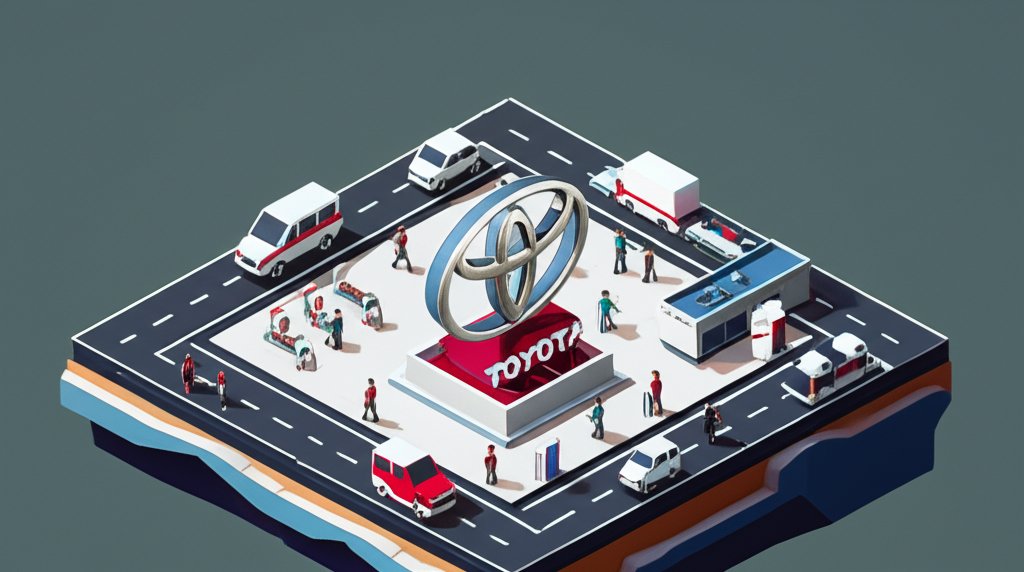
To truly grasp Toyota’s formidable present and visionary future, we must first deeply appreciate its storied past and the foundational facts about Toyota. From its surprisingly humble beginnings, it has blossomed into a corporate behemoth whose influence now actively spans across every inhabited continent.
Understanding these initial steps helps contextualize Toyota’s broader strategies, and for more detailed insights, you can explore additional interesting facts about Toyota cars.
From Looms to Automotive Legacy: Toyota’s Transformative Origin
The remarkable journey of the Toyota Company began not amidst the hum of automotive workshops, but within the rhythmic clatter of textile mills. Founded on August 28, 1937, by Kiichiro Toyoda, the automotive division was, in fact, an ingenious spin-off from his father Sakichi Toyoda’s highly successful Toyota Automatic Loom Works. This unexpected heritage instilled in the company a profound appreciation for precision engineering, automated processes, and the philosophy of “Kaizen” (continuous improvement) from its very inception. This textile legacy provided a unique foundation for manufacturing excellence that would become an indelible hallmark of the brand.
The Architect: Kiichiro Toyoda’s Vision and Early Ambitions
Kiichiro Toyoda, the visionary son, was captivated by the burgeoning Western automotive industry during his travels in the 1920s. He returned to Japan with an unshakeable conviction that his nation needed its own domestic car production. Despite initial skepticism and resource constraints, he launched the automotive department in 1933. His early aspiration wasn’t merely to build cars, but to embed a manufacturing philosophy that prioritized efficiency, quality, and adaptability – principles that would later evolve into the globally renowned Toyota Production System (TPS). This pioneering spirit laid the groundwork for an unparalleled automotive industry leader.
Milestones in Motion: Key Vehicles and Innovations that Defined Early Success
Just three years after its automotive division’s inception, in 1936, the Toyota Company unveiled its first passenger car, the Model AA, a luxurious sedan that immediately demonstrated early aspirations for quality, comfort, and advanced engineering. Simultaneously, it produced the Model G1 truck, showcasing its versatility. These early models, while limited in production, were crucial proving grounds for Toyota’s budding manufacturing capabilities and an early testament to its dedication to building robust, reliable vehicles. These formative experiences were vital facts about Toyota’s commitment to engineering prowess and diversification.
Global Footprint Expansion: Early International Ventures and Manufacturing
Even in its formative years, Toyota harbored global ambitions. While post-World War II reconstruction focused heavily on the domestic market, the company steadily built its export capabilities. By the 1950s, Toyota was exploring new markets, with its first exports to the United States and other regions. This early vision for a worldwide presence, including establishing localized manufacturing facilities, was a pivotal strategic decision that would eventually underpin Toyota’s global dominance, laying the groundwork for its vast international network and solidifying its standing in the automotive industry.
The Toyota Way: Philosophy Driving Unrivaled Automotive Industry Excellence
What truly elevates Toyota far beyond its myriad rivals is not solely its impressive product lineup, but the profound, deeply ingrained culture and comprehensive management philosophy known universally as “The Toyota Way.” This distinctive approach is, arguably, the single greatest “secret” behind its consistent and formidable automotive edge.
Kaizen and Lean Manufacturing: The Pillars of Continuous Improvement
At the very core of The Toyota Way are “Kaizen” (continuous improvement) and Lean Manufacturing. Kaizen is not a one-time initiative; it’s an ongoing, pervasive mindset that mandates every process, every task, no matter how minute, can and unconditionally should be improved constantly. This philosophy empowers every employee to identify and eliminate waste. Lean Manufacturing, meticulously developed from the Toyota Production System (TPS), focuses relentlessly on eliminating “Muda” (waste) in all its forms – overproduction, waiting, unnecessary transport, over-processing, excess inventory, unnecessary motion, and defects. These principles have not only optimized Toyota’s factories to legendary levels of efficiency but have also been extensively adopted by industries worldwide, making them fundamental facts about Toyota’s operational genius and a primary key to its enduring automotive edge in efficiency, quality, and cost-effectiveness.
Just-in-Time (JIT) Production: Revolutionizing Supply Chains and Efficiency
A cornerstone of Lean Manufacturing within the Toyota Company is the Just-in-Time (JIT) production system. JIT ensures that parts are delivered to the production line exactly when they are needed, in the precise quantity required, thereby minimizing inventory holding costs and reducing waste. This intricate system relies on highly efficient logistics, strong supplier relationships, and a robust “pull system” where production is dictated by actual customer demand, rather than speculative forecasts. JIT has become a benchmark for efficiency in the automotive industry and beyond, a direct contributor to Toyota’s competitive advantage.
Jidoka: Automation with a Human Touch for Uncompromising Quality
“Jidoka,” often translated as “automation with a human touch,” is another critical pillar of The Toyota Way. It means that equipment is designed to detect defects and stop itself, preventing the production of faulty items. This principle empowers workers to immediately halt the production line if a problem arises. This immediate problem detection and swift resolution at the source prevent defects from propagating downstream, ensuring that quality is built into every step of the manufacturing process. Jidoka is a powerful fact about Toyota’s unwavering commitment to superior quality and defect prevention, enhancing its automotive edge through proactive problem-solving.
Genchi Genbutsu: The Hands-On Approach to Problem Solving
Another indispensable component of The Toyota Way is “Genchi Genbutsu,” which literally translates to “go and see for yourself.” Instead of making critical decisions based purely on reports, statistics, or assumptions from a distance, Toyota encourages its leaders and employees to physically go to the source of a problem, observe the situation firsthand, meticulously gather data, and engage directly with those involved on the ground. This hands-on, empirical problem-solving approach ensures that solutions are rooted in actual reality, not theoretical constructs, leading to far more effective, sustainable, and impactful improvements. This practical, boots-on-the-ground approach gives the Toyota Company a distinct automotive edge in rapid responsiveness and genuinely effective innovation.
Respect for People and Long-Term Vision: Fostering a Culture of Trust
Beyond processes, The Toyota Way is deeply rooted in “Respect for People.” This philosophy emphasizes treating employees, suppliers, and customers with dignity, fostering teamwork, and empowering individuals to contribute their best. It involves investing in training, promoting skill development, and encouraging open communication. Coupled with a persistent long-term vision that prioritizes sustainable growth over short-term profits, this culture of respect builds loyalty, trust, and a shared commitment to excellence. These intangible facts about Toyota’s corporate culture are as crucial as its manufacturing prowess in maintaining its leadership in the automotive industry.
Toyota’s Unrivaled Market Position: Production Prowess, Iconic Models, and Financial Strength
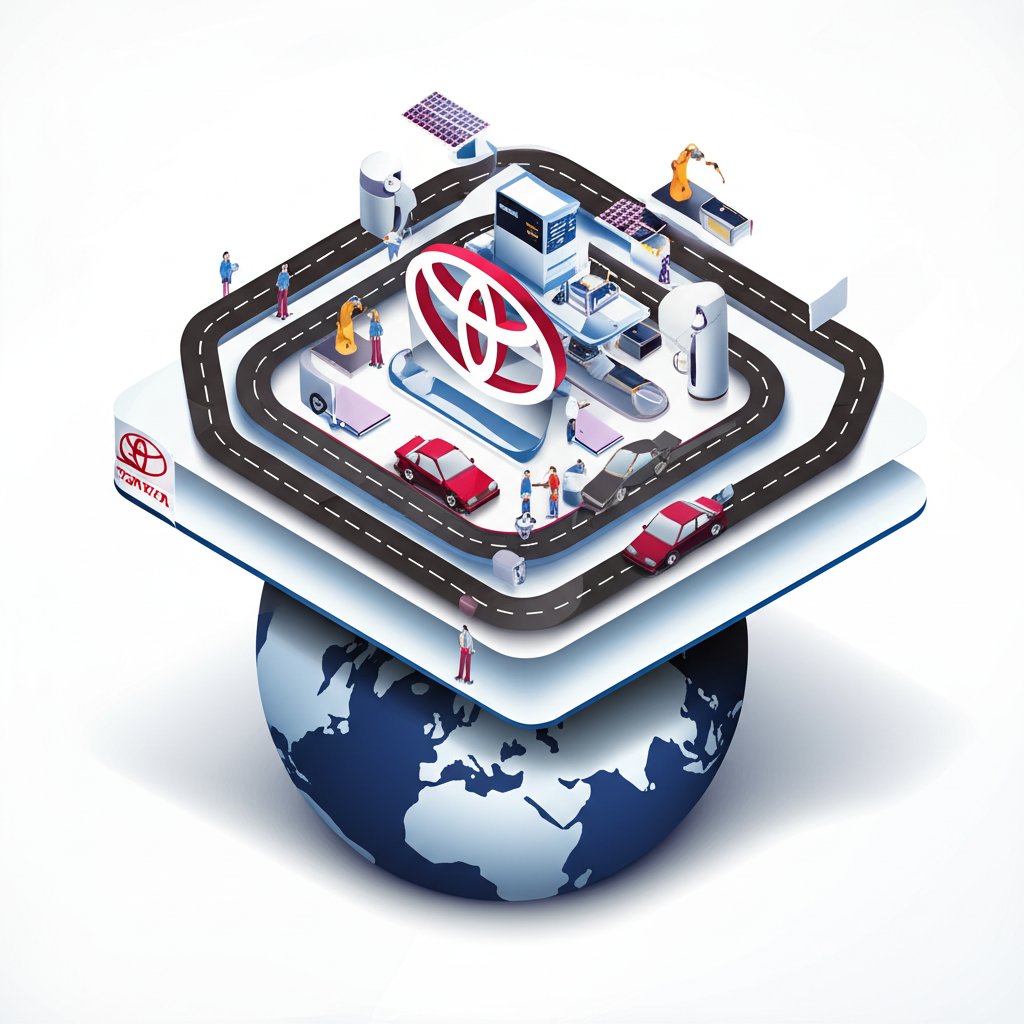
The Toyota Company’s standing in the global automotive industry is not merely a matter of reputation; it’s reinforced by staggering production volumes, market-leading models, and robust financial performance. These quantifiable facts about Toyota underpin its formidable market power.
Global Production Dominance: Scale and Scope in the Automotive Industry
Today, Toyota consistently holds the prestigious distinction of being one of the largest (and often the largest) car companies in the world by sheer production volume. Annually, Toyota and its extensive group companies produce well over 10 million vehicles – a figure that, while fluctuating, invariably positions it at the absolute apex of the global automotive industry. This astounding output is facilitated by a massive, strategically distributed manufacturing network spanning dozens of countries across every continent. This unprecedented scale is a critical component of its automotive edge, enabling unparalleled economies of scale, localized adaptation, and a pervasive brand presence that few rivals can match.
Best-Selling Legends: The Enduring Appeal of Corolla, Camry, and RAV4
When exploring the compelling facts about Toyota, its best-selling models are utterly impossible to overlook. The Toyota Corolla, venerated for its unwavering reliability, exceptional fuel efficiency, and remarkable value, has proudly held the title of the world’s best-selling car nameplate for decades, with over 50 million units sold globally. The Camry continues its formidable dominance in the fierce mid-size sedan segment, renowned for its harmonious blend of comfort, advanced safety features, and impressive efficiency. The RAV4, a true trailblazer, spearheaded the compact SUV craze and relentlessly remains a top-selling vehicle globally, consistently setting industry benchmarks. These iconic models transcend mere vehicles; they are foundational cornerstones of Toyota’s masterful market strategy and ingrained public perception, fortifying its automotive edge.
Hybrid Pioneer: The Prius’s Legacy and Toyota’s Electrification Journey
Perhaps one of the most innovative facts about Toyota is its pioneering role in hybrid technology. The Prius, launched globally in 1997, didn’t just introduce a new car; it revolutionized the automotive industry by popularizing hybrid electric vehicle (HEV) technology on a mass scale, long before environmental concerns became mainstream. Its success proved that fuel efficiency and reduced emissions could be achieved without sacrificing practicality. This foresight and consistent commitment to sustainable innovation positioned Toyota as an early leader in green technology, enabling its current multi-pathway approach to electrification and securing its lasting automotive edge in eco-conscious mobility solutions.
Financial Behemoth: Revenue, Profitability, and Strategic Investments
Toyota Company’s operational success directly translates into truly staggering financial performance. The company consistently generates hundreds of billions of dollars in revenue each year, frequently surpassing $250 billion. This immense financial prowess is far more than just a byproduct of high sales; it is a direct testament to disciplined management, supremely efficient operations, and shrewd strategic investments in pivotal research and development initiatives. Strong financial health provides the indispensable capital necessary to pursue ambitious future projects, weather unpredictable economic downturns, and strategically acquire innovative technologies, further solidifying its unassailable leadership within the global automotive industry.
Beyond Automobiles: The Diversified Toyota Group Ecosystem
While globally renowned primarily for its automobiles, the Toyota Company sits at the opulent center of the much larger Toyota Group, a diversified and expansive conglomerate. This formidable group encompasses an array of companies involved in critical financial services (Toyota Financial Services), advanced housing solutions, heavy industrial equipment (Toyota Industries), cutting-edge robotics, and even highly specialized automotive components (such as Denso and Aisin). This broad and meticulously orchestrated ecosystem offers unparalleled stability, fosters powerful synergies, and provides fertile ground for the cross-pollination of technological advancements across disparate sectors. Understanding the sheer breadth and comprehensive scope of the Toyota Group provides a much deeper and invaluable insight into the true scale and sophisticated strategic depth of Toyota’s enduring automotive edge.
Navigating the New Frontier: The Future of Toyota in a Transforming Automotive Industry
The automotive industry is currently undergoing an unprecedented, seismic shift, intrinsically driven by the rapid acceleration of electrification, the advent of sophisticated autonomous technology, and the emergence of innovative new mobility services. Toyota is not merely a passive observer of these monumental changes; it is actively and assertively shaping its future prospects through strategic, multi-billion-dollar investments and bold, visionary initiatives.
Multi-Pathway Electrification: Beyond BEVs to a Holistic Sustainable Future
While Toyota masterfully pioneered and perfected hybrid technology, its future prospects now encompass a highly diversified and pragmatic electrification strategy. Recognizing that a singular solution will not effectively address all global needs and diverse market demands, the Toyota Company is investing colossal sums and immense intellectual capital into a multi-pathway approach, designed for maximum resilience and impact:
- Continued Hybrid (HEV) and Plug-in Hybrid (PHEV) Advancement: Relentlessly enhancing efficiency, extending electric-only ranges, and expanding existing, immensely successful platforms to meet evolving consumer and regulatory demands.
- Battery Electric Vehicles (BEVs): Aggressively accelerating the development and widespread rollout of a comprehensive lineup of pure electric vehicles, with an intense focus on maximizing performance, extending practical range, and building out robust charging infrastructure globally.
- Fuel Cell Electric Vehicles (FCEVs): Remaining an undisputed global leader in cutting-edge hydrogen fuel cell technology, as powerfully demonstrated by the Mirai. Toyota is actively exploring its transformative potential for heavy-duty transport, long-range applications, and stationary power generation, anticipating a hydrogen-based economy.
This pragmatic, yet incredibly ambitious, strategy positions Toyota to maintain its leadership position regardless of how quickly or unevenly the global market fully transitions to new power sources, solidifying its automotive edge in sustainable and adaptable mobility.
Autonomous Driving and AI: Reshaping Safety and Mobility Services
The Toyota Company views autonomous driving and advanced connectivity not merely as incremental features but as absolutely integral components of future mobility paradigms. Its substantial investments in entities like Woven by Toyota (formerly Woven Planet) vividly underscore a profound and serious commitment to developing cutting-edge advanced driver-assistance systems (ADAS) and, ultimately, fully autonomous vehicles. The overarching goal is multi-faceted: to dramatically enhance road safety, optimize traffic flow to alleviate congestion, and offer entirely new, revolutionary forms of personal and public transportation. Leveraging sophisticated AI, these technologies promise a future where commuting is safer, more efficient, and fundamentally more accessible, directly impacting the future of Toyota’s core business model.
Connected Services and Data Intelligence: The Smart Vehicle Ecosystem
Complementing autonomous driving, Toyota is heavily invested in connected services. These systems, utilizing real-time data, will personalize the driving experience to an unprecedented degree, intelligently predict maintenance needs before issues arise, and seamlessly integrate vehicles into broader smart city ecosystems. From over-the-air updates to integrated infotainment and advanced geolocational services, connected cars will become intelligent hubs within a larger network. This data-driven approach is central to Toyota’s future prospects, transforming vehicles from mere transportation devices into intuitive, integrated partners in a human-centric mobility society.
Carbon Neutrality and Circular Economy: Toyota’s Environmental Challenge 2050
Sustainability is not an afterthought but a core, guiding tenet of Toyota’s long-term corporate vision. The Toyota Company is vigorously pursuing incredibly ambitious goals, notably achieving carbon neutrality across its entire lifecycle (encompassing manufacturing, vehicle use, and facilities) by 2050 – articulated as the “Toyota Environmental Challenge 2050.” This monumental endeavor involves drastically reducing CO2 emissions, minimizing water usage, establishing a truly recycling-based society, and actively protecting biodiversity across its global operations. From designing eco-friendly manufacturing plants to developing highly recyclable vehicle components, environmental stewardship is a pivotal fact about Toyota’s corporate responsibility and an increasingly significant factor in appealing to environmentally conscious consumers, thereby significantly enhancing its automotive edge in a greener world.
Woven City: A Living Laboratory for Future Mobility and Urban Innovation
Perhaps the most visionary and boldest declaration of Toyota’s future prospects is the ambitious Woven City project. This experimental, “prototype city of the future” is actively being constructed at the majestic base of Mount Fuji, Japan. Imagined as a fully connected, human-centered urban ecosystem, this living laboratory will serve as an unparalleled testing ground for the most advanced autonomous vehicles, sophisticated robotics, intelligent smart homes, and revolutionary new mobility services, all within a real-world, dynamic environment. It represents a paradigm-shifting commitment to redefine not only how communities are meticulously built but also how cutting-edge technology can effectively solve complex urban challenges. This initiative transcends mere car manufacturing; it’s an audacious move to actively shape entire human experiences and societal structures. This bold project powerfully showcases the Toyota Company’s relentless innovative spirit and its unwavering determination to lead the automotive industry into a genuinely new age of seamlessly integrated mobility solutions, where vehicles are just one component of a holistic, smart living experience.
Challenges and Adaptations: Sustaining Toyota’s Automotive Edge
Despite its formidable position, Toyota operates in a dynamic, often turbulent, global environment. Sustaining its automotive edge requires constant vigilance and strategic adaptation to a multitude of evolving challenges.
Global Competition and Market Dynamics: Adapting to Rapid Shifts
The automotive industry is fiercely competitive, with new entrants and rapidly evolving technologies fundamentally reshaping consumer expectations. From established giants accelerating their EV transitions to agile tech startups entering the mobility space, Toyota Company faces relentless pressure. This necessitates continuous investment in R&D, swift product development cycles, and aggressive market strategies to maintain its leadership. Adapting to diverse regional tastes, economic fluctuations, and geopolitical realignments demands flexibility and foresight, crucial for the future of Toyota.
Supply Chain Resilience: Lessons from Global Disruptions
Recent global events, such as the semiconductor shortage and the COVID-19 pandemic, exposed vulnerabilities across all industries, including the automotive industry. Toyota, despite its renowned Just-in-Time system, was not immune. Moving forward, a key fact about Toyota’s strategy involves building even greater resilience into its supply chains, diversifying sourcing, fostering deeper relationships with suppliers, and leveraging advanced analytics to predict and mitigate future disruptions. This focus on robust supply chain management is vital for maintaining consistent production and market supply.
Workforce Evolution: Attracting Talent and Fostering Diversity
As a global entity, the Toyota Company faces the continuous challenge of balancing its deeply rooted Japanese corporate culture with the diverse needs, expectations, and innovative spirit of a multinational workforce. While the company’s commitment to “The Toyota Way” provides a strong foundational framework, attracting and retaining top-tier talent in specialized fields like AI, software engineering, and battery technology, across vastly different cultural contexts, requires significant adaptability and genuine inclusion. Toyota is actively working to foster a more diverse and inclusive workplace, recognizing that varied perspectives, backgrounds, and approaches are absolutely crucial for fostering groundbreaking innovation and expertly navigating the complexities of the global automotive industry. This ongoing effort is a key aspect of how the Toyota Company strategically evolves its internal structure to perfectly align with its expansive external ambitions.
Regulatory Landscapes and Geopolitical Factors: Navigating Complexities
Operating across nearly 200 countries means navigating a labyrinth of diverse and constantly changing regulatory landscapes, particularly concerning emissions standards, safety protocols, and trade policies. Geopolitical tensions, shifts in economic alliances, and regional protective measures add further layers of complexity. Toyota’s ability to localize production, adapt its vehicle offerings to specific market regulations, and engage proactively with governments worldwide is essential to mitigate risks and capitalize on opportunities, directly influencing the future of Toyota’s global operations.
Conclusion: Toyota’s Unyielding Automotive Edge
The journey through the intricate world of Toyota Company unveils a meticulously crafted enterprise, built upon a bedrock of unwavering principles, relentless continuous innovation, and astute strategic foresight. The vast array of facts about Toyota – from its fascinating textile origins to its unparalleled global production dominance, and from its formidable financial might to its iconic, best-selling models – paints an undeniable picture of a company engineered for enduring, generational success.
Its distinctive “Toyota Way” philosophy, profoundly characterized by the transformative principles of Kaizen, Lean Manufacturing, its unwavering commitment to Quality, Durability, and Reliability (QDR), and the hands-on wisdom of Genchi Genbutsu, is far more than just a mere set of management tools; it is the very essence of its unyielding automotive edge. This philosophy fosters an pervasive culture of unparalleled excellence that translates directly and consistently into superior products, operational efficiency, and profound customer trust. Looking ahead, Toyota’s future prospects are meticulously defined by an ambitious, multi-faceted, and adaptable approach to electrification, sophisticated autonomous technology, and holistic sustainable mobility, powerfully exemplified by visionary, transformative projects like the Woven City.
In a rapidly changing and increasingly complex automotive industry, Toyota continues not merely to compete, but to redefine what it truly means to be a global leader. By honoring its rich past, relentlessly optimizing its present operations, and boldly innovating with unwavering confidence for the future, the Toyota Company is unequivocally poised not just to survive the impending transformations, but to spectacularly thrive, maintaining its formidable and unyielding automotive edge for generations to come.
FAQ Section
Q: When was Toyota Company founded?
A: Toyota Company (specifically Toyota Motor Corporation) was officially founded on August 28, 1937, evolving from the automotive division of Toyota Automatic Loom Works, which began in 1933. This is one of the key facts about Toyota’s origins.
Q: What is “The Toyota Way”?
A: “The Toyota Way” is Toyota’s comprehensive management philosophy and set of core principles. It includes continuous improvement (Kaizen), respect for people, Lean Manufacturing (focused on eliminating waste), Jidoka (automation with a human touch), and Genchi Genbutsu (go and see for yourself). It’s a key factor in Toyota’s pervasive automotive edge and global success in the automotive industry.
Q: How many vehicles does Toyota produce annually?
A: Toyota and its extensive group companies consistently produce over 10 million vehicles annually, frequently making it one of the largest automakers in the world by volume, a testament to its scale in the automotive industry.
Q: What are Toyota’s future plans for electrification?
A: Toyota’s future prospects in electrification involve a comprehensive “multi-pathway” strategy. This includes continued advancements in hybrids (HEVs) and plug-in hybrids (PHEVs), significant and rapid expansion of battery electric vehicles (BEVs), and ongoing leading-edge development of hydrogen fuel cell electric vehicles (FCEVs).
Q: What are some core “facts about Toyota” regarding its financial performance?
A: The Toyota Company consistently generates hundreds of billions of dollars in revenue each year, often exceeding $250 billion. This robust financial health underscores its market leadership and allows for significant strategic investments within the global automotive industry.
Q: How does Toyota maintain its “automotive edge” in quality?
A: Toyota maintains its automotive edge through an unwavering, embedded commitment to Quality, Durability, and Reliability (QDR). This commitment is deeply integrated into its engineering and manufacturing processes, meticulously supported by the foundational principles of Kaizen (continuous improvement) and Lean Manufacturing, and further enhanced by Jidoka for defect prevention.
Q: Is Toyota the largest car company in the world?
A: Toyota is consistently ranked among the largest car companies in the world by production and sales volume, often holding the #1 position, reflecting its global dominance within the fiercely competitive automotive industry.
Q: What is the Woven City project?
A: Woven City is a visionary prototype city being meticulously built by the Toyota Company at the base of Mount Fuji in Japan. It will serve as a living laboratory to test and develop advanced autonomous vehicles, robotics, smart home technology, and revolutionary new mobility solutions in a real-world, human-centered environment. This project powerfully showcases Toyota’s future prospects in smart community development and integrated mobility ecosystems, extending beyond traditional car manufacturing.
Q: How does Toyota contribute to sustainability in the automotive industry?
A: Toyota is committed to sustainability through its “Toyota Environmental Challenge 2050,” aiming for carbon neutrality across its entire lifecycle. This involves developing fuel-efficient hybrids, BEVs, and FCEVs, reducing CO2 emissions in manufacturing, minimizing water usage, and promoting a recycling-based society. These efforts are crucial facts about Toyota’s dedication to environmental leadership within the automotive industry.
Q: What role does AI and autonomous driving play in the future of Toyota?
A: AI and autonomous driving are integral to the future of Toyota. Through initiatives led by Woven by Toyota, the company is developing advanced driver-assistance systems (ADAS) and fully autonomous vehicles to enhance safety, improve traffic flow, and offer innovative mobility services. AI will also power connected car features, personalizing the driving experience and integrating vehicles into smart city infrastructures.










