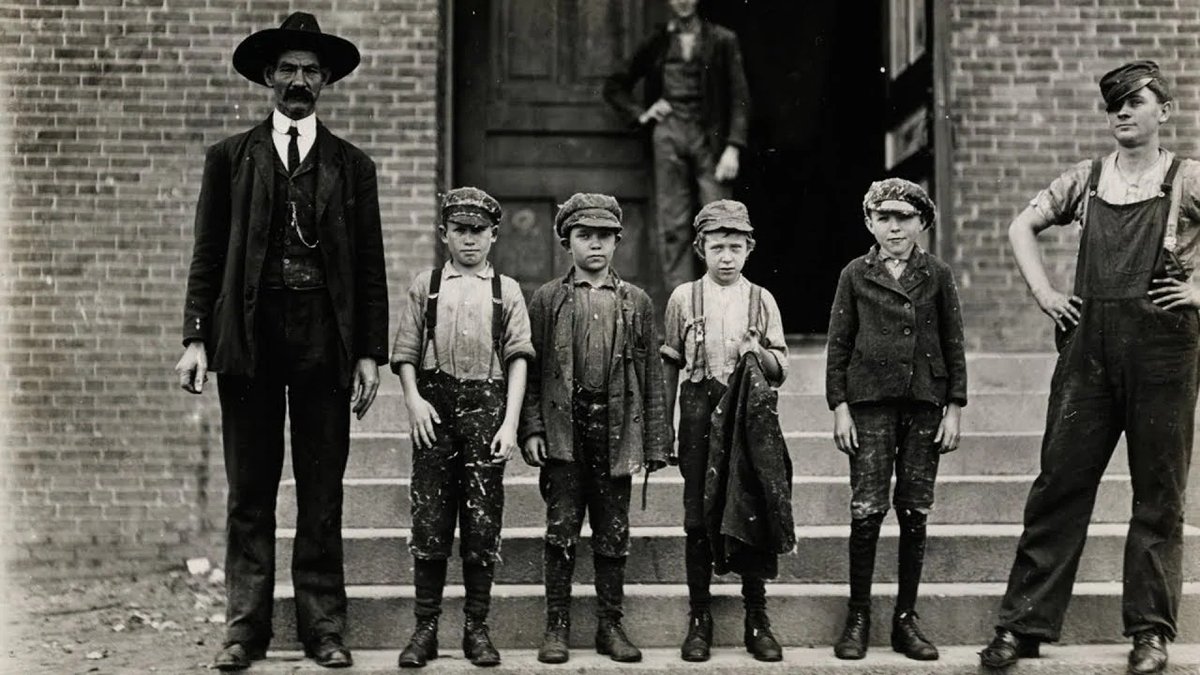
The turn of the century was a dizzying time. In early 1900s America, you could witness the clatter of a horse-drawn cart be drowned out by the roar of a new Ford motorcar. Millions of immigrants were pouring into cities pulsing with electric light and steel skeletons climbing toward the sky, yet many lived in squalid tenements and worked in perilous conditions for pennies a day. This era wasn’t just one of simple progress; it was a period of profound contradiction, where dazzling innovation collided with deep-seated social injustices, ultimately forging the blueprint for the modern nation.
This wasn’t a slow evolution. It was a rapid, often chaotic transformation that set the stage for the next hundred years of conflict, reform, and technological revolution.
At a Glance: What You’ll Discover
- The Progressive Era’s Dual Mission: Understand how reformers fought to curb the immense power of industrial monopolies while also trying to solve urban poverty, poor sanitation, and political corruption.
- Innovation That Reshaped a Nation: See how breakthroughs like the assembly line and the first powered flight weren’t just inventions, but catalysts that radically altered American industry, travel, and culture.
- Deep-Rooted Social Tensions: Explore the fault lines of the era, from the massive influx of new immigrants and the backlash they faced, to the burgeoning fights for civil rights and women’s suffrage.
- America’s Shift onto the World Stage: Trace the nation’s journey from determined isolationism to its pivotal role as a global power in the crucible of World War I.
- The Lasting Constitutional Changes: Grasp how foundational reforms like the federal income tax and the direct election of senators permanently shifted the balance of power in American government.
The Engine of Progress: Industry, Innovation, and Urbanization
By the 1900 census, America’s population had swelled to over 76 million people, many of whom were flocking to cities for jobs in the nation’s booming factories. This growth was supercharged by a series of transformative innovations that fundamentally rewired the American economy and daily life. It was a period defined by raw power—both the power of new machines and the power of the industrialists who controlled them.
From Spindletop to the Assembly Line
Two events in the decade’s opening years acted as rocket fuel for this expansion. First, on January 10, 1901, a geyser of oil erupted from a drill site at Spindletop Hill in Texas. This discovery unlocked a torrent of cheap, accessible fuel, making the internal combustion engine a viable powerhouse for the nation.
Second, Henry Ford, leveraging this new energy source, perfected the moving assembly line for his Model T car. By 1913, his factory could produce a car in just 93 minutes, a staggering improvement over the 12 hours it took before. This didn’t just make cars affordable for the average family; it created a new paradigm for manufacturing—mass production—that would be copied across all industries.
These forces pulled millions of Americans and immigrants into rapidly expanding cities like New York, Chicago, and Detroit. But this explosive urban growth came at a cost, leading to overcrowded housing, inadequate public services, and dangerous working conditions that would soon spark a powerful backlash.
The Progressive Response: A Fight for the Soul of America
The glitter of the Gilded Age left a dark residue: unchecked corporate power, rampant political corruption, and brutal inequality. The Progressive Era, which spanned roughly from the 1890s to the 1920s, was a widespread reform movement aimed at cleaning up the mess. Progressives believed that government could—and should—be a tool for fixing society’s problems.
Theodore Roosevelt and the “Square Deal”
When an assassin’s bullet killed President William McKinley in September 1901, the dynamic Theodore Roosevelt took office and became the embodiment of the Progressive spirit. He promised a “Square Deal” for all Americans, arguing that the government should act as a neutral arbiter between powerful corporations, labor unions, and the public.
His administration became known for “trust-busting”—using the Sherman Antitrust Act to break up monopolies that stifled competition. His most famous victory came against J.P. Morgan’s Northern Securities railroad conglomerate. Roosevelt wasn’t anti-business, but he was fiercely against corporate interests wielding more power than the elected government.
Case Snippet: The Muckrakers
This reform impulse was fueled by a new brand of investigative journalists dubbed “muckrakers” by Roosevelt himself.
- Upton Sinclair’s The Jungle (1906): His horrifying exposé of the Chicago meatpacking industry turned the public’s stomach and led directly to the passage of the Meat Inspection Act and the Pure Food and Drug Act within the year.
- Ida Tarbell’s The History of the Standard Oil Company (1904): Her meticulous, multi-part investigation revealed the ruthless, monopolistic practices of John D. Rockefeller’s empire, helping build public support for its eventual breakup by the Supreme Court in 1911.
Reforming Government Itself
Progressives under President Woodrow Wilson, elected in 1912, turned their attention to the very structure of government. They pushed through two of the most significant constitutional amendments in the nation’s history.
- The 16th Amendment (1913): This authorized a federal income tax. Before this, the government was funded mainly by tariffs, which disproportionately burdened the poor. The income tax created a new, stable revenue stream and allowed for a system where higher earners contributed a larger share.
- The 17th Amendment (1913): This established the direct election of U.S. Senators by popular vote. Previously, senators were chosen by state legislatures, a system often dominated by political machines and corporate lobbyists. This change was a massive step toward making the federal government more responsive to the will of the people.
These reforms were central to the larger narrative of change that defines American 20th Century History, shifting power dynamics and setting new precedents for federal authority.
Social Fault Lines: The Unfinished Work of a Nation
For all the talk of progress, the benefits of this new era were not shared equally. Early 1900s America was a society fractured by deep-seated tensions over immigration, race, labor, and gender. While some fought for reform from the top down, others were fighting for basic dignity and survival from the bottom up.
The Struggle for Dignity: Labor, Race, and Women’s Rights
The fight for a better life took many forms. Labor unions organized strikes for safer conditions and fair wages, often met with violent resistance from management and even the government. Meanwhile, two other major movements were gaining critical momentum.
- The Founding of the NAACP: For African Americans, the early 1900s represented a brutal low point. The protections of Reconstruction were long gone, replaced by Jim Crow segregation, systemic disenfranchisement, and the terror of lynching. In response to this crisis, a multiracial group of activists, including W.E.B. Du Bois, Ida B. Wells, and Oswald Garrison Villard, founded the National Association for the Advancement of Colored People (NAACP) in 1909. Its mission was to use the legal system to challenge segregation and fight for full civil rights.
- The Suffrage Movement Gains Momentum: The campaign for women’s right to vote, which had been active for decades, adopted more assertive tactics. Women organized massive parades, picketed the White House, and engaged in civil disobedience, enduring arrest and imprisonment. Their tireless activism during this period laid the essential groundwork for the passage of the 19th Amendment in 1920.
From Isolation to Intervention: The Great War
For most of this period, America’s focus was domestic. But the outbreak of a massive war in Europe in 1914 would eventually drag the nation onto the world stage and transform its global role forever.
America’s Reluctant Path to World War I
President Wilson won reelection in 1916 on the slogan, “He kept us out of war.” The majority of Americans favored neutrality. However, Germany’s policy of unrestricted submarine warfare, which targeted all ships in the war zone, made this position untenable. The sinking of the British passenger liner Lusitania in 1915, which killed 128 Americans, stoked public anger.
The final straws came in early 1917. Germany resumed its unrestricted attacks, sinking three American merchant ships. Simultaneously, British intelligence intercepted the Zimmermann Telegram, a secret German proposal to Mexico to join the war against the U.S. in exchange for reclaiming Texas, New Mexico, and Arizona. Public outrage exploded, and on April 6, 1917, the U.S. officially declared war on Germany.
The Home Front: Mobilizing a Nation for Total War
America’s entry tipped the scales for the Allies, but it required a massive, unprecedented mobilization at home. The government implemented a military draft, sold “Liberty Bonds” to finance the war, and took control of key industries. A powerful propaganda machine, the Committee on Public Information, worked to sell the war to the American people.
However, this mobilization also had a dark side. The Espionage Act of 1917 and the Sedition Act of 1918 were used to suppress dissent, imprisoning anti-war activists and socialists. The war effort demanded national unity, but it often came at the cost of civil liberties.
Practical Playbook: A Snapshot of Progressive Era Reforms
To understand the practical impact of this era, it’s helpful to see the direct lines drawn between its problems and the proposed solutions.
| Problem of the Gilded Age | Progressive Era Solution | Real-World Example |
|---|---|---|
| Corporate Monopolies | Trust-Busting & Regulation | The Supreme Court’s breakup of Standard Oil (1911). |
| Political Corruption | Direct Democracy Reforms | The 17th Amendment (direct election of senators). |
| Unsafe Products | Federal Consumer Protection | The Pure Food and Drug Act (1906). |
| Environmental Destruction | Conservation & Preservation | Creation of the U.S. Forest Service (1905). |
| Inequitable Tax Burden | Progressive Taxation | The 16th Amendment (federal income tax). |
Quick Answers: Common Questions About Early 1900s America
Q: Was the Progressive Era a success?
A: It was a mixed bag. The era brought crucial reforms in government and business regulation that we still live with today. However, it largely failed to address racial and gender inequality in a meaningful way. Many Progressive leaders held racist views, and the period saw the rise of Jim Crow laws.
Q: Did World War I help or hurt the Progressive movement?
A: Both. The war allowed the government to implement Progressive ideas on a massive scale (like federal control of industry and a progressive income tax to fund the war). But it also diverted attention from domestic reform and led to a crackdown on dissent, effectively ending the movement’s momentum by the war’s end.
Q: Why is this period so often defined by Theodore Roosevelt?
A: Roosevelt’s personality and presidency perfectly captured the era’s energy and contradictions. He was a reformer who expanded federal power, a conservationist who preserved millions of acres of wilderness, and an imperialist who believed in American might. He used the presidency as a “bully pulpit” to champion his causes, making him the face of the movement.
Q: What was the biggest legacy of this era?
A: The most enduring legacy was the fundamental shift in the American understanding of government. The era established the precedent that the federal government had a right and a responsibility to regulate the economy and address social problems—a concept that would be the foundation for the New Deal and much of modern American politics.
The Enduring DNA of Modern America
The period from 1900 to the end of World War I was not merely a prelude to the Roaring Twenties. It was a crucible that forged a new nation. The debates that raged during these years—over the role of government, the rights of citizens, the responsibilities of corporations, and America’s place in the world—never truly ended. They were the raw, often contradictory, building blocks of the modern American state, and their echoes can be heard in the headlines and political arguments of today.










