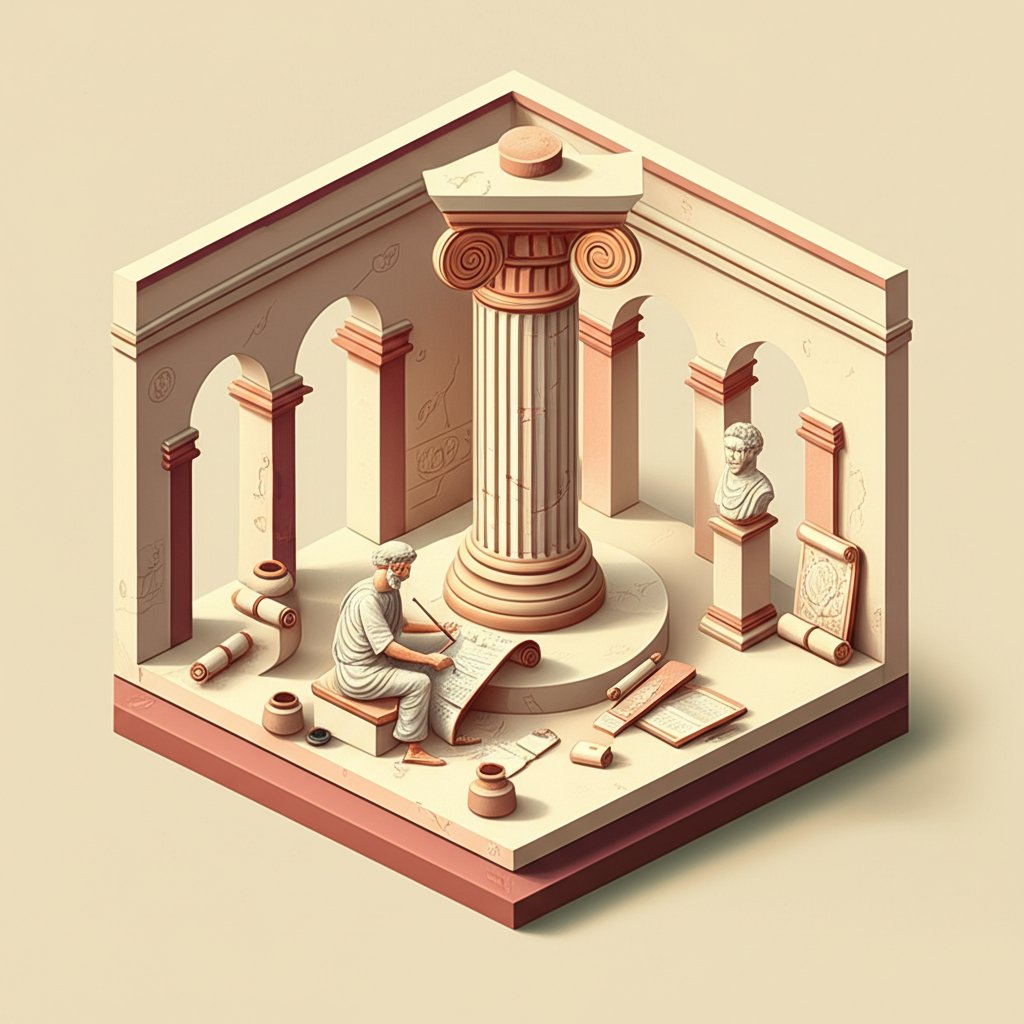
Step into a world where power, beauty, and innovation converged to forge one of history’s most enduring empires. Ancient Rome, a civilization that once commanded an empire stretching from Britain to the deserts of North Africa, communicated its grandeur and values not just through laws and legions, but through an extraordinary visual language. From monumental architecture to intimate frescoes, Roman art offers an unparalleled window into its core. It’s a journey beyond the ruins, into the very heart of Roman Civilization, revealing how visual narratives shaped a society and continue to resonate today. This article will meticulously explore the history of Roman art, dissect its unique characteristics, and even delve into the elusive realm of Ancient Rome drawings, uncovering the profound secrets etched into every stone and brushstroke.
To fully appreciate the context in which Roman art flourished, exploring an ancient history timeline helps to situate these artistic developments within the broader sweep of Mediterranean civilizations.
The Foundations of Roman Artistic Identity: A Synthesis of Genius
The artistic landscape of Ancient Rome was never a blank canvas. Instead, it was a vibrant tapestry woven from diverse threads, initially drawing heavily from the aesthetic traditions of its predecessors and neighbors. Understanding this synthesis is crucial to appreciating the unique Roman art philosophy.
A Tapestry of Influences: Greek, Etruscan, and Beyond
The indelible mark of ancient Greek art on early Roman artistic endeavors is undeniable. Rome’s initial expressions often mirrored Greek masterpieces, a testament to their profound admiration for Hellenistic culture. However, to label Romans as mere imitators would be a disservice. They were astute adaptors, pragmatic innovators, and selective synthesizers. Romans meticulously integrated Greek concepts, refining them to align with their distinct utilitarian sensibilities, political ambitions, and societal values. This process wasn’t about replication; it was about recontextualization.
Beyond the Greeks, the sophisticated Etruscan culture, which predated and once ruled Rome, significantly shaped early Roman artistic tastes. From the Etruscans, Romans absorbed a linear artistic style, often seen in funerary contexts, with themes drawn from daily life and decorative patterns. This early influence laid the groundwork for distinctive Roman portraiture and the detailed narrative reliefs that would become hallmarks of their art. Elements of formalized Egyptian aesthetics were also selectively incorporated, especially as Rome expanded its dominion, further diversifying the visual vocabulary of Roman Civilization.
Early Roman Art: From Kingdom to Republic
The history of Roman art truly begins with this formative period. During the Roman Kingdom and early Republic (c. 753 BCE – 27 BCE), the art produced was largely functional and less concerned with the idealized forms beloved by the Greeks. Instead, a strong emphasis on practicality, civic duty, and the veneration of ancestors emerged. This period saw the rise of a distinct Italic tradition, valuing concrete representation and a direct, often unvarnished, portrayal of individuals.
As Rome transitioned from a monarchy to a republic, the character of its art began to crystallize. The need to honor prominent citizens, document lineage, and visually reinforce political power led to the development of early portrait busts characterized by an uncompromising realism, known as verism. This marked a significant departure from Greek idealism, establishing a uniquely Roman artistic direction focused on individual identity and lived experience.
Architectural Grandeur: Engineering the Empire’s Narrative
Perhaps the most tangible and enduring legacy of Ancient Rome lies in its architecture. Far more than mere structures, Roman buildings were monumental statements – engineering marvels that projected power, facilitated daily life, and communicated the very essence of Roman Civilization.
Mastering the Arch, Vault, and Concrete
While they adopted fundamental Greek architectural elements like columns and entablatures, the Romans innovated daringly, mastering the arch, the vault, and, most crucially, concrete. This revolutionary building material, combined with an unparalleled ambition for monumental scale, allowed them to erect structures of unprecedented grandeur and longevity.
Concrete, often faced with brick or stone, allowed for complex curvilinear forms previously impossible with post-and-lintel construction. This enabled the creation of vast, internally spacious structures like the Pantheon, whose colossal dome remains an engineering marvel, and the iconic Colosseum, an amphitheater designed for mass entertainment. The widespread adoption of concrete significantly boosted the speed and efficiency of Roman construction, surpassing the capabilities of prior civilizations. Concurrently, their exceptional organizational capabilities, strategic access to vast material resources, and systematic approach to labor were pivotal factors in their unparalleled architectural triumphs. Even the intricate networks of aqueducts, supplying fresh water to urban centers, stand as enduring symbols of Roman innovation and design prowess, transforming cityscapes and public life.
Public Spaces and Imperial Statements
Roman architecture profoundly shaped the urban experience and served as a powerful instrument of imperial ideology. Monumental forums, basilicas, and public baths transformed cityscapes into expressions of imperial order and civic pride. These structures were not just functional; they were carefully designed to impress, inspire awe, and reinforce the omnipresent authority of the state.
Triumphal arches, like the Arch of Titus (c. 81 CE) and the Arch of Constantine (c. 315 CE), were erected to commemorate military victories and glorify emperors. Adorned with elaborate relief sculptures, they visually narrated historical events, cementing the emperor’s image as a victorious and civilizing agent. The strategic layout of Roman cities, meticulously designed with their imposing temples and luxurious public amenities, was intended to both impress and subtly control the populace, cultivating a sense of belonging and subservience within the vast Roman Civilization.
Sculptural Narratives: From Idealism to Unflinching Realism
Roman sculpture, mirroring its architecture, blended the idealized perfection of earlier Classical Greek sculpture with a profound aspiration for realism. This duality, coupled with its narrative power, defines a crucial chapter in the history of Roman art.
The Power of Roman Portraiture: Verism and Imperial Imagery
One of the defining and most celebrated characteristics of Roman art is its unwavering commitment to verism — a hyper-realistic style that meticulously captured every wrinkle, scar, and imperfection in their subjects. Unlike their Greek predecessors who often idealized human forms into abstract perfection, Roman artists sought to portray authenticity and individual character.
This profound emphasis on verisimilitude is particularly striking in Roman portraiture. Veristic portraits, especially those from the Republican era (e.g., Portrait of a Roman Patrician), explicitly aimed to showcase the subject’s age and experience—a visual testament to the deeply rooted Republican values of wisdom, civic duty, and a long family lineage. These were not merely depictions but visual biographies emphasizing personal gravitas. Later imperial portraits, while still realistic, often incorporated idealized features to convey divine or heroic qualities, as seen in the iconic Augustus of Primaporta, which portrays Augustus not only as a victorious general but also as a divine leader. These portraits served as ubiquitous propaganda, disseminating the imperial image across the empire.
Relief Sculpture: History Carved in Stone
Beyond individual portraits, Roman art excelled in relief sculpture, using it as a powerful medium for historical narrative and political messaging. Sculpture on Roman buildings and altars served a dual purpose: it was often decorative but, more frequently, a potent political tool.
On triumphal arches, architectural sculpture captured key campaign events in vivid detail, reinforcing the message that the emperor was a victorious and civilizing agent. The Arch of Constantine, for instance, depicts defeated and enslaved “barbarians” to emphasize Rome’s superiority—a stark contrast to Greek sculpture, where great military victories were usually presented metaphorically, using figures from mythology. One of the most ambitious examples is Trajan’s Column (completed 113 CE), a 100-foot column spiraling with a continuous narrative relief depicting his Dacian Wars. This served as a historical record, an imperial monument, and a powerful visual testament to Roman military might. Altars, like the magnificent Ara Pacis of Augustus (completed 9 BCE), commemorated religious processions and depicted the imperial family in a favorable, almost photographic, light, emphasizing peace and prosperity under Augustus’s rule.
The Canvas of Daily Life: Roman Paintings & Mosaics
While grand sculptures and architecture conveyed imperial might, the vibrant world of Roman painting and mosaics offered a more intimate, colorful glimpse into daily life, beliefs, and artistic innovation within Ancient Rome.
Unveiling Roman Wall Painting: The Four Styles
Very few examples of Roman paintings survive today, primarily due to the perishable nature of the medium. The most notable exceptions are the remarkably preserved frescoes of Pompeii and Herculaneum, buried under the ashes of Mount Vesuvius in 79 CE, and paintings found in the catacombs of Rome. These sites have provided invaluable insights, allowing scholars like August Mau to classify Four Styles of Roman Wall Painting:
- First Style (Incrustation Style, 2nd century BCE – c. 80 BCE): Characterized by the imitation of costly marble blocks using painted stucco reliefs, emphasizing the solidity of the wall and showcasing wealth through illusion.
- Second Style (Architectural Style, c. 80 BCE – c. 20 BCE): Introduced illusionistic architectural elements (columns, windows) that “opened up” the wall to grand vistas, cityscapes, or landscapes, often with a remarkable understanding of mathematical perspective. The Villa of the Mysteries in Pompeii, with its enigmatic life-sized figures engaged in Dionysian rites, is a prime example of this immersive style.
- Third Style (Ornate/Ornamental Style, c. 20 BCE – c. 40 CE): A more delicate and refined style, moving away from illusionistic depth. Walls became monochromatic with small, intricately framed central mythological scenes, often adorned with slender columns, candelabra, and Egyptian motifs. Landscapes, like those in the Villa of Livia, gained prominence, serving as serene focal points.
- Fourth Style (Intricate/Composite Style, c. 40 CE – 79 CE): An eclectic style that combined elements from all previous styles. It featured large central panels, often mythological, framed by fantastical, irrational architectural elements, vivid colors, and a greater freedom in brushwork, sometimes approaching impressionistic effects. The House of the Vettii in Pompeii showcases this vibrant and complex style, often with multiple scenes layered within a single wall.
Themes in Roman paintings were wide in variety, offering depictions of landscapes, portraits, mythological animals, real animals, still-lifes, and everyday scenes. The Fayum Mummy Portraits from Roman Egypt, created using encaustic (pigments mixed with beeswax), offer remarkably naturalistic painted portraits on wood, providing a rare glimpse into individual Roman faces.
Roman Mosaics: Durable Stories in Tiny Tiles
Roman mosaics were a common and highly durable feature of private homes and public buildings across the empire. Known as opus tessellatum, they were made with small black, white, and colored squares (tesserae) of marble, tile, glass, pottery, stone, or shells. Fine details, especially in the central panel (emblemata), were often rendered using even smaller pieces.
The Alexander Mosaic from the House of the Faun in Pompeii, a detailed battle scene believed to be a copy of a famous Greek painting, showcases the incredible skill of mosaic artists and their ability to capture complex narratives with astonishing detail and dynamic composition. Mosaics often depicted scenes from mythology, gladiator contests, daily life, flora, fauna, and even detailed portraits, offering both decorative beauty and narrative richness to Roman floors and walls.
Ancient Rome Drawings: Evidence and Interpretation
When discussing Ancient Rome drawings, it’s important to clarify that direct examples of preparatory sketches or complete drawings on paper (which was not widely used for such purposes) are exceedingly rare due to the fragility of materials. However, the concept of “drawing” as a foundational artistic practice was undoubtedly central to Roman art.
We infer the prevalence of Roman drawing in several ways:
- Preparatory Work: Artists almost certainly used sketches to plan their frescoes, mosaics, and sculptures. While these preliminary drawings on wax tablets, papyrus, or plaster would have largely perished, their existence is implied by the complexity and precision of finished works. The geometric and perspectival accuracy seen in Second Style wall paintings, for instance, suggests careful planning that would have necessitated drawing.
- Graffiti and Informal Markings: The walls of Pompeii and other Roman sites are covered with graffiti, which often include simple sketches, caricatures, and figures. These informal Ancient Rome drawings provide insights into everyday visual culture, humor, and communication among the populace.
- Painted Illusions: Many Roman frescoes employ linear drawing techniques to create architectural illusions, trompe l’oeil effects, and framed scenes. The lines defining these structures and figures are, in essence, painted “drawings” that give form and depth to the compositions.
- Architectural Plans: Architects certainly created detailed plans and schematics for their monumental structures. While few original “blueprints” survive, the precision of Roman engineering attests to a robust tradition of technical drawing.
Thus, while we may not possess many “drawings” in the modern sense, the spirit of line, form, and preliminary design was an integral and unseen force behind the grand creations of Roman Civilization. Modern artists and scholars often create “Ancient Rome drawings” today as reconstructions or interpretations, serving as valuable tools for understanding and visualizing the ancient world.
The Minor Arts and Everyday Objects: Art for All
Beyond the grand imperial monuments and official portraits, the “minor arts” were intrinsically woven into the fabric of Roman daily life. These ubiquitous forms of artistic expression—encompassing glassware, intricate metalwork, jewelry, and functional pottery—offer invaluable insights into the routines, deeply held beliefs, and intricate social stratification of the average Roman citizen.
Function and Aesthetics: Crafting Roman Life
Roman art permeated every aspect of existence, from the most elaborate public buildings to the most humble household items. Roman jewelers were skilled in various metalworking techniques, producing elaborate rings, necklaces, and brooches that signified status and individual taste. Cut-glass vessels, sardonyx cameos, and engraved gems demonstrated a love for finely worked precious materials and miniaturized designs, often depicting mythological scenes or portraits.
Ceramics, from common cooking pots to fine terra sigillata table ware, demonstrate both practical utility and aesthetic sophistication. Even everyday lamps were often adorned with mythological figures or gladiatorial scenes. These items highlight how deeply integrated aesthetics were into Roman daily life, providing ordinary citizens with tangible connections to the broader cultural and aesthetic currents of their time.
Inscriptions and Graffiti: Unofficial Roman Drawings
The walls of Roman cities were living canvases. Beyond official declarations and painted murals, they pulsed with the informal artistry of graffiti. These scratched or painted messages, caricatures, political commentaries, and simple figures represent a raw and unfiltered form of Ancient Rome drawings. They speak volumes about the humor, passions, opinions, and literacy levels of a diverse populace. From gladiatorial fan art to declarations of love or crude insults, these impromptu visuals offer a direct, unmediated connection to the voices and daily lives of ordinary Romans, providing a vivid counterpoint to the more formal imperial art.
Art as a Tool of Power: Propaganda and Perception

Throughout the Roman Empire, art functioned as an indispensable apparatus for political messaging and public persuasion. Roman leaders possessed a shrewd understanding of art’s capacity to shape public opinion and project an unshakeable image of strength, legitimacy, and unquestioned authority. This strategic utilization is a cornerstone of the history of Roman art.
Shaping the Imperial Image
Emperors, such as the astute Augustus, meticulously cultivated their public image through ubiquitous statues, carefully designed coinage featuring their likenesses, and numerous public works adorned with their glorified deeds. This was less about factual reality and considerably more about shaping collective perception, presenting them as divinely favored rulers, guardians of peace, and capable military commanders. Every portrait, every coin, every public monument was a carefully crafted message designed to cement their authority and inspire loyalty across the vast Roman Civilization.
Visualizing Roman Dominance and Identity
Roman art was a powerful instrument for defining and disseminating Roman identity. Drawings, sculptures, and grand monuments were far more than mere artistic creations; they were meticulously crafted narratives. Triumphal arches and historical reliefs depicted Roman military victories, the emperor’s magnanimity, and the myriad benefits of living under Roman rule, disseminating these messages to a largely illiterate populace.
Crucially, Rome frequently portrayed its adversaries as savage, uncivilized, and inherently inferior through art. This stark, often dehumanizing, depiction served to rationalize their military conquests and powerfully reinforced the self-perception of Rome as the bringer of order and civilization to a chaotic world. This clear ideological division fostered an acute sense of Roman identity and perceived superiority, creating a cohesive narrative for its diverse citizens. Iconic structures like the Colosseum, the Roman Forum, and countless other grand edifices were not merely functional; they stood as undeniable statements of Roman power and their extraordinary engineering prowess. They visually reinforced the empire’s overwhelming dominance and perpetual presence within the urban landscape.
The practice of damnatio memoriae, the elaborate attempt to erase an individual’s presence from historical records and public memory through the destruction of their artworks and inscriptions, further underscores the Roman understanding of art’s power. It was a testament to their belief that art could not only build a legacy but also dismantle one.
An Enduring Legacy: Rome’s Artistic Echoes Through Millennia
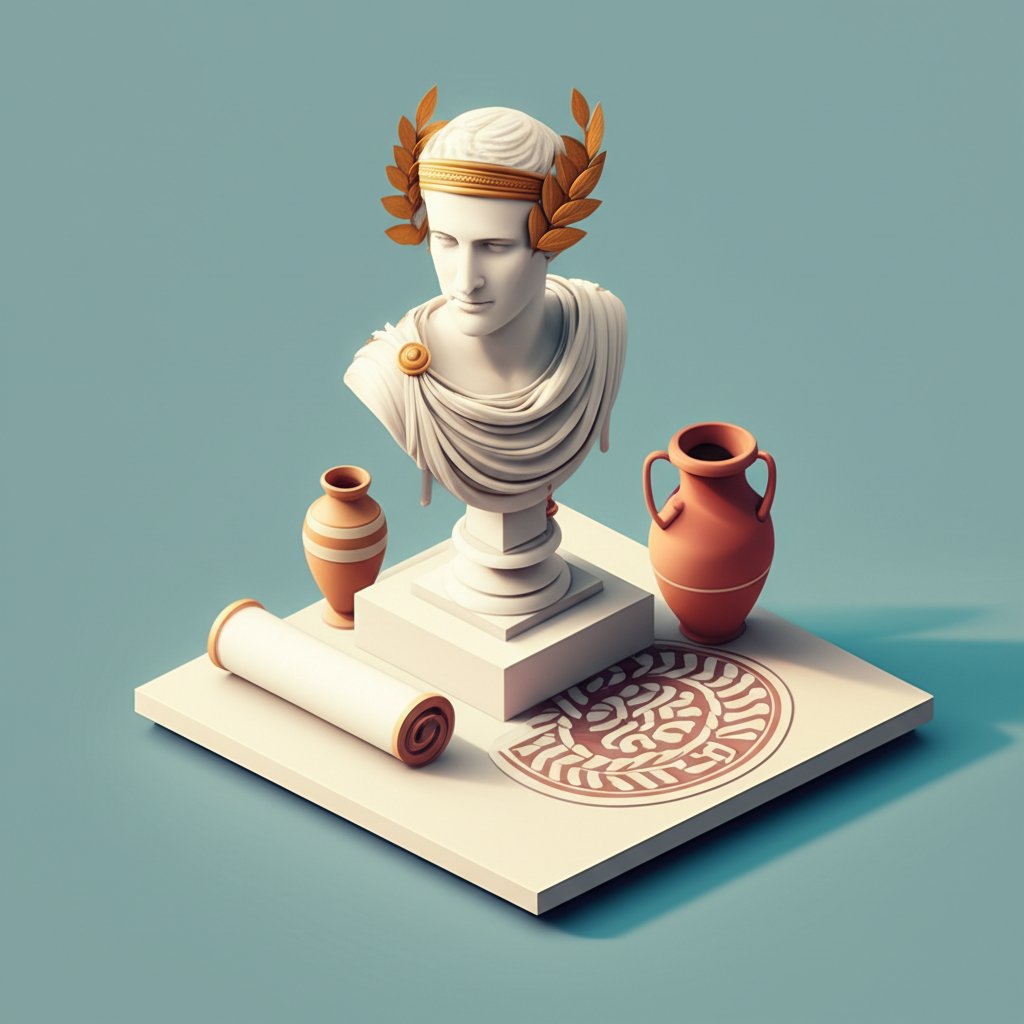
The profound influence of Roman art reverberates through centuries of artistic movements, notably shaping the Renaissance and the Neoclassical periods. This enduring legacy continues to sculpt Western aesthetic values and artistic conventions, demonstrating how deeply these ancient expressions still resonate in contemporary culture. The innovations in architecture, the realism in portraiture, and the narrative power of relief sculpture established paradigms that artists would revisit and reinterpret for generations. Even today, the design language of many public buildings, monuments, and even popular culture draws inspiration from the unparalleled achievements of Ancient Rome.
The exploration of Roman art transcends mere aesthetics; it serves as an invaluable portal into the complexities, innovations, and enduring fascination of a pivotal civilization. Rome’s profound legacy in art and architecture is not just a chapter in history; it is a foundational text that continues to inform, inspire, and shape our modern world, inviting us to continually unlock Ancient Rome: Art, Drawings & Civilization Secrets.
Frequently Asked Questions about Ancient Rome’s Art and Civilization
What are the main characteristics of Roman art?
Roman art is primarily characterized by its pragmatism, utilitarianism, and a strong sense of realism, particularly in portraiture (verism). It also incorporated grand architectural scale, narrative relief sculpture, and vibrant wall paintings and mosaics. Unlike Greek art’s focus on idealism, Roman art often served practical purposes like propaganda, historical documentation, and civic instruction, reflecting the values of Roman Civilization.
How did Greek art influence Ancient Rome?
Greek art heavily influenced Roman art in its early stages, particularly in sculptural forms, mythological themes, and architectural elements like columns. However, Romans didn’t merely copy; they adapted and synthesized these influences, refining them to suit their own political, social, and functional needs. The Romans introduced innovations like concrete, the arch, and a distinct emphasis on realism and historical narrative, distinguishing their art from its Greek predecessors.
Where can I find examples of Ancient Rome drawings?
Direct examples of Ancient Rome drawings on perishable materials like papyrus or wooden tablets are extremely rare due to decay. However, we can infer their existence through:
What role did art play in Roman Civilization?
Art played an indispensable role in Roman Civilization. It was a powerful tool for:
When did Roman art begin to develop its own distinct style?
The history of Roman art began to develop its own distinct style during the Roman Republic (c. 509–27 BCE). While influenced by the Etruscans and Greeks, this period saw the emergence of veristic portraiture, which prioritized unflinching realism and individual character over Greek idealism. This focus on practical utility, historical narrative, and a unique approach to architectural innovation (like the use of concrete and arches) further cemented a uniquely Roman artistic identity separate from its predecessors.
What is “verism” in Roman sculpture?
Verism (from Latin verus, meaning “true”) is a hyper-realistic style in Roman sculpture, particularly prevalent during the Republican era. It involves meticulously capturing every physical detail and imperfection of a subject—wrinkles, scars, age—rather than idealizing the form. This style aimed to convey gravitas, wisdom, and the accumulated experience of a respected citizen, reflecting core Republican values.
What are the Four Styles of Roman Wall Painting?
The Four Styles of Roman Wall Painting, primarily identified from Pompeii and Herculaneum, illustrate the evolution of fresco techniques and aesthetics:











1 thought on “Unlock Ancient Rome: Art, Drawings & Civilization Secrets”
Comments are closed.