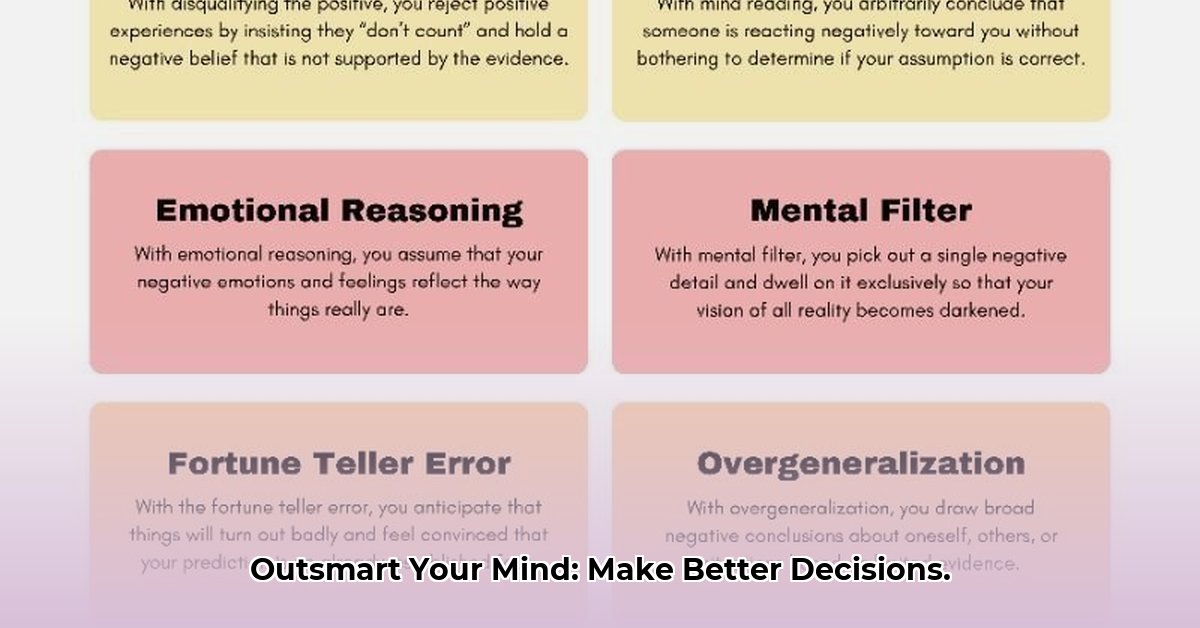
We all like to think we make rational, well-reasoned choices. But what if our brains are subtly playing tricks on us, leading us down paths we wouldn’t consciously choose? These mental shortcuts, known as “cognitive biases,” are inherent to how we process information. Understanding these insidious influences and mastering their effects is the key to unlocking better decision-making, both personally and professionally. This guide will unveil common cognitive biases, explore their impact on your daily life, and, most importantly, equip you with actionable techniques to recognize and overcome them. Let’s learn to outsmart our brains and build a decision-making system that propels us toward a more successful and fulfilling life.
Unveiling the Hidden Influencers: How Cognitive Biases Secretly Shape Your Life
Ever wonder why you impulsively bought that item you didn’t need, clung to a losing investment for too long, or stubbornly defended a viewpoint despite overwhelming evidence to the contrary? It’s likely due to cognitive biases – those sneaky mental shortcuts that subtly sway our decisions, often leading us to suboptimal outcomes. Think of them as the hidden programmers influencing your every move. This guide will help you pull back the curtain, identify these biases, and equip you with strategies to make more informed, rational choices.
Decoding the Mind’s Quirks: Common Cognitive Biases Explained
Cognitive biases aren’t conscious deceptions; they’re automatic, ingrained thought patterns that have evolved over time. Let’s examine some of the most prevalent:
- Confirmation Bias: Our tendency to actively seek out, interpret, and remember information that confirms our existing beliefs, while simultaneously dismissing or ignoring contradictory evidence. It reinforces existing beliefs, even when inaccurate.
- Anchoring Bias: The first piece of information we receive acts as an “anchor,” disproportionately influencing all subsequent judgments and decisions, even if the initial information is irrelevant.
- Availability Heuristic: We overestimate the likelihood of events that are easily recalled – typically due to their vividness, recency, or emotional impact – regardless of their actual probability.
- Loss Aversion: The psychological pain of experiencing a loss is felt more strongly than the pleasure of an equivalent gain, leading to risk-averse behavior and reluctance to cut losses.
- Bandwagon Effect: We are more likely to adopt beliefs, behaviors, and trends if we see that many other people are doing the same, irrespective of our own independent assessment.
- Halo Effect: A single positive trait or attribute disproportionately influences our overall impression of a person, product, or brand, skewing our evaluation of other characteristics.
- Dunning-Kruger Effect: Individuals with limited knowledge or competence in a specific domain tend to overestimate their abilities, while experts often underestimate their competence.
- Hindsight Bias: After an event has occurred, we tend to believe that we knew it was going to happen all along, overestimating our ability to have predicted it.
- Sunk Cost Fallacy: We continue to invest time, money, or effort into a failing endeavor simply because of the resources we’ve already committed, even when it’s no longer rational.
- Framing Effect: The way information is presented (framed) significantly influences our decisions, even if the underlying facts remain the same. Presenting something as a gain versus a loss, for instance, can drastically alter our choices.
- Optimism Bias: We tend to overestimate the likelihood of positive events happening to us while underestimating the probability of negative events.
- Negativity Bias: We give more weight to negative experiences or information than to positive ones, leading to a disproportionate focus on potential threats and risks.
This list represents just a fraction of the cognitive biases that subtlety shape our lives, influencing everything from personal relationships to financial investments. The good news is that increased awareness allows us to counteract their effects.
The Ripple Effect: How Cognitive Biases Impact Your Daily Life
These seemingly minor biases have surprisingly far-reaching consequences. They can lead to:
- Poor Financial Decisions: From impulsive spending fueled by the availability heuristic to clinging to losing investments due to loss aversion, our financial well-being can suffer.
- Strained Relationships: Confirmation bias can lead to misunderstandings and conflict, as we selectively interpret information to support our existing beliefs about others.
- Missed Opportunities: Fear of change driven by loss aversion can prevent us from pursuing new ventures or taking calculated risks.
- Health Problems: Ignoring medical advice that contradicts our preconceived notions due to confirmation bias can have serious health consequences.
- Ineffective Problem-Solving: Anchoring bias can limit our ability to explore alternative solutions, leading to suboptimal outcomes.
- Erosion of Critical Thinking: Uncritically accepting information that aligns with our existing beliefs, reinforced by confirmation bias, can hinder intellectual growth and open-mindedness.
The subtle yet pervasive influence of these biases underscores the importance of actively working to mitigate their effects.
Reclaiming Control: Practical Strategies for Better Decision-Making
You don’t need a psychology degree to improve your decision-making. Here are simple yet powerful strategies to incorporate into your daily routine:
- Cultivate Self-Awareness: Regularly reflect on your decisions and thought processes. Ask yourself: Did a bias potentially influence my judgment? Keep a journal to record your thoughts, decisions, and potential biases you identify. Analyze past choices to uncover recurring patterns of biased thinking.
- Embrace Diverse Perspectives: Actively seek out opinions from individuals with differing viewpoints and backgrounds. Deliberately challenge your own assumptions by engaging in conversations with people who hold contrasting beliefs. Read articles and books that present alternative perspectives on topics you feel strongly about. Don’t isolate yourself in an echo chamber.
- Structure Your Decision-Making: Utilize structured tools and frameworks to minimize emotional influence and promote more rational analysis. Create pro/con lists, decision matrices, or checklists to systematically evaluate options. Establish clear criteria for evaluating information and making choices.
- Question Your Assumptions: Challenge your own viewpoints and actively seek out counter-arguments. Ask yourself, “What other explanations might there be?” “What evidence would change my mind?” Be willing to revise your beliefs in the face of new information.
- Practice Mindfulness: Cultivate present moment awareness through mindfulness meditation or other relaxation techniques. This helps reduce impulsive decisions driven by emotions and biases. Pay attention to your thoughts and feelings without judgment, allowing you to recognize when biases may be influencing your thinking.
- Consider the Opposite: Deliberately imagine the opposite of what you believe to be true. This can help you identify potential flaws in your reasoning and broaden your perspective.
- Seek Feedback: Ask trusted friends, family members, or colleagues for honest feedback on your decisions and thought processes. Be open to constructive criticism and willing to learn from your mistakes.
- Establish “Cooling-Off” Periods: For significant decisions, give yourself time to step away and clear your head before making a final choice. This can help you avoid impulsive decisions driven by emotions or biases.
A Long-Term Game Plan: Building Better Decision-Making Habits
Cognitive biases are an inherent part of being human, but that doesn’t mean you’re powerless against them. Here’s how to build long-term resilience and cultivate better decision-making habits:
- Embrace a Growth Mindset: See mistakes as valuable learning opportunities, not as personal failings. Focus on continuous improvement rather than perfection.
- Continuously Learn: Stay curious and actively seek out knowledge about cognitive biases and decision-making strategies. Read books, articles, and research papers on the topic.
- Regularly Evaluate: Periodically review your decision-making process. What worked well? Where did you fall short? Identify areas where you can improve your strategies and techniques.
- Seek Professional Guidance: If biases significantly affect your life, consider seeking therapy, such as Cognitive Behavioral Therapy (CBT), to develop strategies for managing and overcoming them.
- Cultivate Intellectual Humility: Recognize the limits of your knowledge and be willing to acknowledge when you’re wrong. Embrace a spirit of open-mindedness and intellectual curiosity.
Real-World Applications: From Finances to Relationships to Healthcare
These strategies aren’t just theoretical concepts; they translate into tangible improvements in various aspects of your life:
- Finances: Avoid impulsive online shopping by giving yourself a 24-hour cooling-off period before making a purchase. Make more informed investment decisions by comparing different options and seeking professional advice.
- Relationships: Strengthen relationships by actively listening, seeking diverse perspectives, and challenging your own assumptions. Resolve conflicts constructively by understanding how biases may be influencing your perception of the situation.
- Health: Make informed healthcare decisions by seeking second opinions, questioning medical advice, and actively researching potential treatments.
- Career: Improve your performance at work by seeking feedback, embracing a growth mindset, and developing structured problem-solving approaches.
- Everyday Life: Make more rational decisions in everyday situations by being aware of cognitive biases and consciously applying the strategies outlined in this guide.
Even small changes and consistent application of these techniques can lead to significant improvements in your decision-making abilities.
The Bottom Line: You Can Take Control of Your Decisions
Cognitive biases are powerful influences, but you are not at their mercy. By becoming aware of these biases, consistently applying the suggested strategies, and cultivating a mindset of continuous learning and self-reflection, you can significantly improve your decision-making. Start small, stay consistent, and celebrate your progress along the way! Remember, this is a journey, not a sprint. Commit to lifelong learning and personal growth, and you’ll be well on your way to unlocking your full potential.










