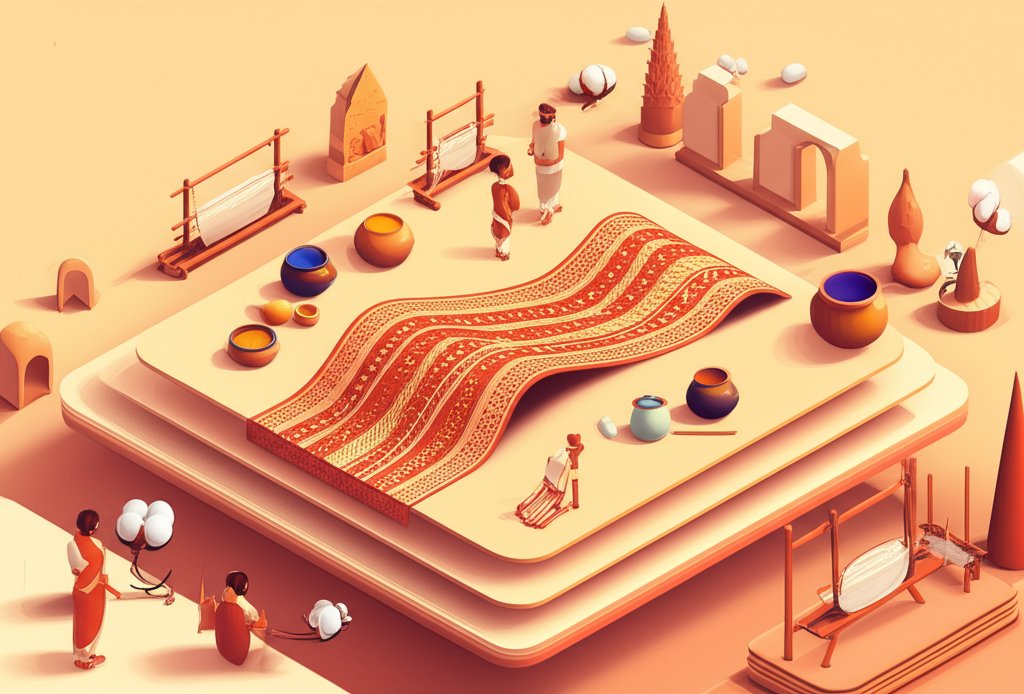
Step into a time machine and embark on an extraordinary journey through 5000 years of Indian clothing history. From the earliest whispers of cotton in ancient river valleys to the dazzling fusion wear of modern runways, the evolution of clothing India presents a vibrant, intricate tapestry woven with threads of culture, climate, conquest, and creativity. This isn’t just a tale of garments; it’s a profound narrative reflecting societal changes, artistic innovations, and the enduring spirit of clothing in India. Get ready to uncover the rich Indian textile history and the captivating history of Indian fashion that has shaped one of the world’s most visually stunning sartorial legacies.
The Dawn of Dress: Ancient India (Indus Valley to Gupta Empire)
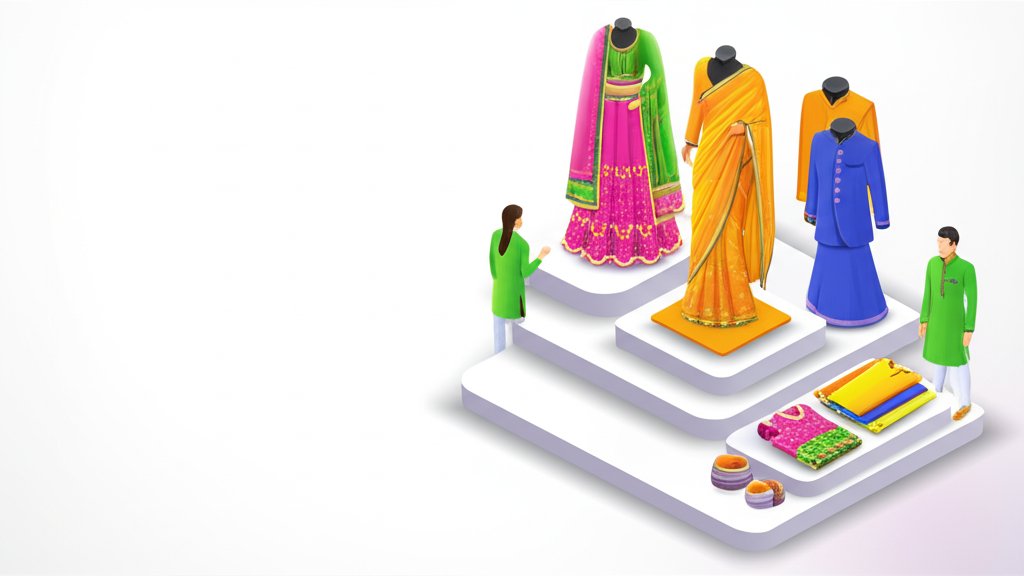
The roots of Indian clothing history stretch back to antiquity, revealing a sophisticated understanding of textiles and adornment that laid the foundation for millennia of fashion. This period, largely dominated by unstitched, draped garments, showcases the brilliance of early Indian craftsmanship and cultural expression.
Understanding the nuances of ancient garment construction helps us appreciate the broader scope of the history of dressmaking and its impact on cultures worldwide.
Indus Valley Civilization (c. 2500 – 1900 BCE): The First Threads
The story of Indian textile history begins in the venerable Indus Valley Civilization, one of the world’s oldest urban cultures. Archaeological findings from sites like Mohenjo-Daro and Harappa offer tantalizing glimpses into the earliest forms of clothing in India. Evidence of cotton cultivation, dating back to around 2500 BCE, suggests India was one of the first regions to master this essential fiber.
Figurines and seal impressions reveal garments that were primarily unstitched. Men often wore a loincloth or a draped lower garment akin to a modern dhoti, sometimes paired with a shawl (uttariya) draped over the shoulders. Women are depicted in knee-length skirts, some leaving the upper body bare, while others wore a simple wrap or a blouse-like garment. Adornment was crucial, with elaborate jewelry made of beads, gold, and terracotta enhancing these minimalist outfits. The early evolution of clothing India was thus marked by simplicity, functionality, and a focus on natural fibers.
Vedic Period (c. 1500 – 500 BCE): Simplicity and Sacred Garments
Following the Indus Valley Civilization, the Vedic Period saw the consolidation of foundational garment styles that would persist for centuries. The primary forms of clothing in India during this era continued to be unstitched. Men traditionally wore the dhoti, a long piece of cloth wrapped around the waist and legs, allowing for ease of movement and adapting to the warm climate.
Women adopted a saree-like garment, the antariya, a cloth draped around the lower body. An uttariya, a thinner strip of cloth, was often used as an upper covering or headwear. These garments, generally made from cotton or wool, were simple yet elegant, reflecting a society deeply connected to its environment and spiritual practices. The Indian textile history of this period saw an emphasis on weaving sturdy and breathable fabrics suitable for daily life and ritual.
Mauryan and Sunga Periods (c. 322 BCE – 72 BCE): Refining the Drape
The Mauryan Empire, a powerful and expansive kingdom, ushered in an era of greater refinement in Indian clothing history. While the fundamental unstitched forms remained, their execution became more sophisticated. Men and women commonly wore three distinct, unstitched garments:
- Antariya: The lower garment, often draped elegantly and pleated.
- Muraja: A sash or waistband, used to secure the antariya and add a decorative element.
- Uttariya: The upper garment, a long scarf or shawl draped over the shoulders or head, often intricately embroidered.
Textile production flourished, with cotton, linen, and early forms of silk becoming more prevalent. Artwork from this period, particularly sculptures and relief carvings, showcase elaborate drapery, indicating a growing appreciation for the aesthetic potential of clothing in India. The evolution of clothing India here was towards more decorative and varied draping styles, laying the groundwork for future advancements in history of Indian fashion.
The Golden Age: Gupta Empire (c. 320 – 550 CE): The Rise of the Saree
Often hailed as the “Golden Age of India,” the Gupta Empire witnessed a remarkable flourishing of art, science, and culture, profoundly impacting Indian fashion history. During this period, the saree — in a form recognizable today — truly emerged as a prominent garment for women. Diverse draping styles evolved, reflecting regional preferences and social status.
The Indian textile history reached new heights, with India becoming a major exporter of fine muslins and silks to the Roman Empire and beyond. Natural dyes became more sophisticated, adding vibrant colors to garments. Men continued to wear the dhoti and uttariya, often combined with a kancuka (a short tunic) or angavastram (chest cloth), and turbans became increasingly common. The intricate designs, rich materials, and elegant drapes of the Gupta period represent a pinnacle in the evolution of clothing India before the advent of widespread stitched garments.
Medieval Transformations: Sultanates, Mughals, and Cultural Fusion
The medieval period brought significant changes to clothing in India, primarily through the influence of various Central Asian and Persian cultures. This era saw the gradual introduction and popularization of stitched garments, blending indigenous draping traditions with foreign tailoring techniques.
Early Medieval Period (c. 6th – 12th Century CE): Regional Diversification
As the Gupta Empire waned, various regional kingdoms rose to prominence, leading to a natural diversification in Indian clothing history. While unstitched garments like the saree and dhoti remained prevalent, particularly in the south, cultural exchanges with Central Asia through trade routes began to introduce stitched garments in the northern parts of the subcontinent. Tunics and trousers, more suited to equestrian cultures, started making their appearance, influencing the evolution of clothing India. This marked an important shift towards the forms of dress that would become widely adopted in later centuries.
Delhi Sultanate (c. 1206 – 1526 CE): Islamic Influences and Stitched Silhouettes
With the establishment of the Delhi Sultanate, a distinct shift occurred in the history of Indian fashion. Islamic rulers brought with them Persian and Central Asian sartorial traditions, emphasizing stitched garments, modesty, and elaborate ornamentation. Key additions to clothing in India during this period included:
- Salwar Kameez: A comfortable ensemble comprising loose trousers (
salwar) and a tunic (kameez), often paired with a scarf (dupatta). - Sherwani: A long coat-like garment for men, often worn by nobility.
- Churidars: Tightly fitted trousers, gathered at the ankles.
Fabrics like brocades, velvets, and fine muslins gained popularity, often adorned with intricate embroidery techniques such as zardozi (gold and silver thread work) and ari work. The emphasis on tailored silhouettes added a new dimension to Indian clothing history, creating a rich blend of foreign cuts with local textile artistry.
The Mughal Empire (c. 1526 – 1857 CE): Opulence, Grandeur, and New Forms
The Mughal Empire ushered in an era of unparalleled opulence and grandeur in Indian fashion history. Mughal emperors and empresses were patrons of the arts, and fashion flourished under their influence. This period refined many stitched garments and introduced new, highly elaborate styles:
- Anarkali: A floor-length, flared tunic, often paired with churidars, popularized by courtesans and royalty.
- Lehenga Choli: A long, embroidered skirt (
lehenga) paired with a fitted blouse (choli) and a scarf (dupatta), gaining immense popularity among women, famously worn by figures like Akbar’s Rajput wife, Queen Jodha. - Pajamas: Loose-fitting bottom wear that became common for both men and women.
The Indian textile history reached its zenith under the Mughals, with the development of exquisite fabrics like Jamdani, fine brocades, and gossamer-thin muslins. Motifs from Persian gardens, calligraphy, and intricate floral patterns adorned garments, creating a distinctive aesthetic that continues to influence clothing in India even today. Mughal fashion was a powerful force in the evolution of clothing India, establishing a legacy of luxury and detailed craftsmanship.
Colonial Crossroads: British Raj and Western Influences
The arrival of European powers, particularly the British, marked another profound turning point in Indian clothing history, introducing Western sartorial norms and significantly impacting the indigenous textile industry.
Economic Shifts and Textile Decline
The British Raj brought with it industrialization and a colonial economic structure that heavily impacted Indian textile history. The thriving handloom industry, once renowned globally, faced severe competition from machine-made textiles imported from Britain. This led to a drastic decline in local production and traditional textile crafts, fundamentally altering the landscape of clothing in India. The focus shifted from exquisite hand-spun and hand-woven wonders to cheaper, mass-produced fabrics.
Hybrid Styles and Social Norms
Colonial rule led to a fascinating period of sartorial adaptation and cultural clash. While traditional garments persisted, especially in rural areas, urban dwellers and the educated elite began adopting Western attire. Men increasingly wore shirts, trousers, and suits, particularly for formal occasions and professional settings.
For women, the influence was more subtle but equally significant. The British deemed some traditional Indian draping styles, which might have revealed the midriff or back, as immodest. This led to the widespread adoption of blouses and petticoats to be worn under the saree, a practice that became the norm and continues to this day. This period saw a unique evolution of clothing India, where traditional forms were adapted to align with new social etiquettes and imported sensibilities, creating hybrid styles that reflected the times.
The Swadeshi Movement: Reviving Indian Identity
In response to British economic policies and as a symbol of resistance, the Swadeshi (self-reliance) movement gained momentum, deeply impacting Indian clothing history. Mahatma Gandhi championed Khadi, hand-spun and hand-woven cloth, as not just a textile but a potent symbol of Indian independence and self-sufficiency.
Wearing Khadi became a patriotic act, encouraging Indians to boycott foreign goods and support local artisans. This movement, while political, had a profound effect on clothing in India, temporarily reviving traditional crafts and imbuing indigenous attire with a renewed sense of national pride and identity. It highlighted the intrinsic link between Indian textile history and the country’s struggle for freedom.
Modern India: A Global Runway of Tradition and Trend
Post-independence, Indian fashion history has been characterized by a dynamic interplay between deeply rooted traditions and rapidly evolving global trends. Clothing in India today is a vibrant reflection of a nation confident in its heritage yet open to international influences.
Post-Independence to Globalization (Mid-20th Century – 1990s)
After gaining independence, clothing in India saw a consolidation of national identity. The saree and salwar kameez became emblematic garments, worn by women across all strata of society. Bollywood, the burgeoning Indian film industry, played a crucial role in shaping Indian fashion history. Actresses became style icons, popularizing specific saree drapes, blouse designs, and anarkali styles that quickly filtered into mainstream fashion.
While Western wear slowly gained traction in urban centers, especially among younger generations, traditional attire held its ground, evolving subtly with changing aesthetics rather than undergoing radical transformation. The focus remained on preserving the rich Indian textile history through continued handloom traditions, even as machine-made fabrics became more accessible.
The New Millennium and Fusion Fashion (2000s – Present)
The turn of the millennium and the accelerating pace of globalization brought about a dramatic shift in the evolution of clothing India. Increased exposure to international fashion, the rise of e-commerce, and a growing urban-metropolitan culture led to the emergence of fusion wear.
Indian designers, both established and emerging, began experimenting with blending traditional Indian elements (fabrics, embroidery, motifs, drapes) with Western silhouettes and cuts. This resulted in:
- Indo-Western ensembles: Kurtis worn with jeans, saree gowns, dhoti pants with crop tops, and ethnic prints on contemporary Western garments.
- Contemporary Ethnic: Traditional wear reinterpreted with modern cuts, lighter fabrics, and minimalist aesthetics.
- Revival of Traditional Crafts: A renewed appreciation for India’s rich
Indian textile history. Designers actively started collaborating with artisan clusters, bringing forgotten handlooms, regional embroideries (likechikankari,bandhani,kantha), and dyeing techniques back into vogue, albeit with a modern twist. This not only preserved heritage but also created sustainable livelihoods.
This era truly showcased the dynamism of Indian fashion, demonstrating its ability to absorb and adapt while retaining its unique cultural essence.
Bollywood and Celebrity Influence in the Evolution of Clothing India
Bollywood’s influence on clothing in India has only intensified in the modern era. Films and celebrity culture are powerful trendsetters, dictating what’s in vogue. Designer collaborations with movie stars, red-carpet looks, and wedding attire of celebrities extensively covered by media, all contribute to shaping mass fashion trends. Fashion weeks, often featuring Bollywood showstoppers, have also become key platforms for showcasing the latest Indian fashion.
This constant interplay ensures that the history of Indian fashion remains vibrant, continuously reinventing itself while drawing deep from its historical wells.
Regional Splendor: A Kaleidoscope of Clothing in India
One of the most captivating aspects of Indian clothing history is its incredible regional diversity. The vast geographical, climatic, and cultural variations across the subcontinent have given rise to a breathtaking array of distinct clothing traditions, each telling its own story of clothing in India.
North India: Regal Drapes and Vibrant Hues
The northern states often feature vibrant colors, intricate embroidery, and regal styles, heavily influenced by historical kingdoms and colder climates.
- Punjab: Famous for the
Salwar Kameez, particularly thePatialasuit with its voluminous pleated trousers.Phulkariembroidery, characterized by vibrant floral patterns, adorns dupattas and shawls. Turbans are significant for Sikh men. - Rajasthan: A desert state known for its explosion of color. Women wear
Ghagra Choli(flared skirt, fitted blouse) with anOdhani(veil), often adorned withLeheriya(wave-patterned tie-dye) orBandhani(dot-patterned tie-dye). Men wearAngarkhas(a type of tunic) and elaborate turbans (pagri). - Kashmir: Known for its warm
Pheran(a loose, cloak-like garment) and intricateKashmiri embroidery(likePashminashawls), designed for its chilly climate.
South India: Graceful Silks and Elegant Dhotis
The southern regions are renowned for their exquisite silk sarees, traditional drapes, and a more subtle elegance, influenced by tropical climates and ancient Dravidian cultures.
- Tamil Nadu: Home of the iconic
Kanjeevaram sarees, made from pure silk with rich gold zari borders and intricate temple motifs, a pride ofIndian textile history.Pattu Pavadai(silk skirt and blouse) is a traditional garment for young girls. - Kerala: Features the
Kasavusaree (orMundum Neriyathum), a two-piece white or off-white cotton saree with a golden border. Men wear theMundu, a traditional white cottondhoti. - Karnataka, Andhra Pradesh/Telangana: Known for
Mysore silk,Gadwal,Pochampally Ikatsarees, showcasing complex weaving techniques.
East India: Artistic Weaves and Traditional Simplicity
Eastern India boasts a rich weaving heritage, often characterized by distinct artistic patterns and comfortable, breathable fabrics.
- West Bengal: Synonymous with the
saree, featuring diverse styles likeDhakai Jamdani(fine muslin with intricate patterns),Tantsarees (light cotton), andKanthaembroidery (running stitch patterns). - Odisha: Famous for its
Sambalpuri Ikatsarees, known for their elaborate tie-dye patterns and vibrant colors. - Assam: Known for its unique silks –
Muga(golden silk),Eri(peace silk), andPat(white silk) – woven into the traditionalMekhela Chador(a two-piece saree-like garment).
West India: Dynamic Designs and Rich Textiles
Western India, with its history of trade and vibrant communities, showcases dynamic designs, intricate crafts, and a fusion of styles.
- Gujarat: A powerhouse of
Indian textile history, known for itsBandhaniandPatolasilks (double ikat weaves with vibrant geometric designs).Kanchhiembroidery, with its mirror work and dense stitching, is also highly distinctive. Women often wearChaniya Choliduring festivals. - Maharashtra: Features the unique
Nauvarisaree, draped in a distinctive nine-yard style resembling adhoti.Paithanisilks, with their peacock and lotus motifs, are highly prized. - Goa: Influenced by Portuguese culture, traditional
Pano Bhaju(saree-blouse-skirt combination) is still seen, alongside more modern Western beachwear.
Each region’s clothing in India is a testament to the ingenuity of its people, adapting to local conditions, available resources, and cultural narratives, making the evolution of clothing India a truly multifaceted story.
Conclusion
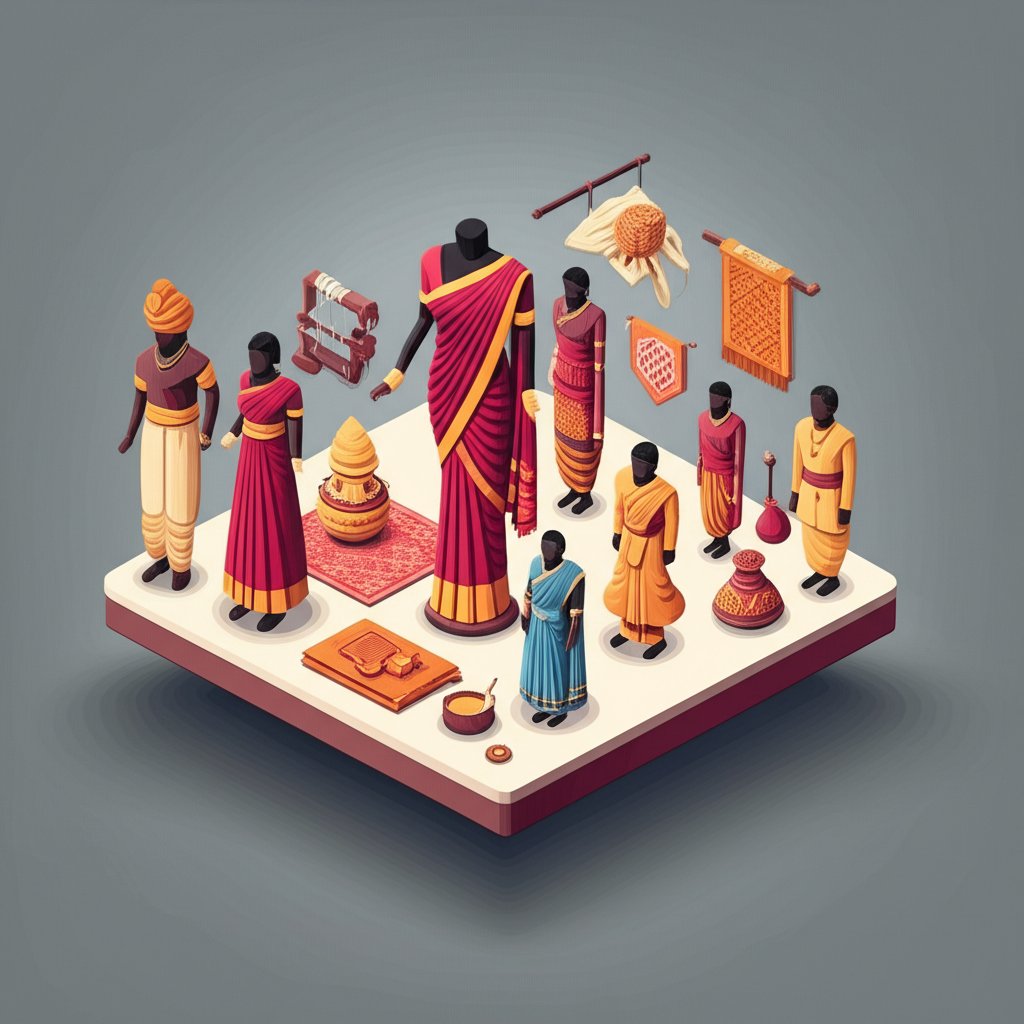
From the unstitched cotton drapes of the Indus Valley to the global influences shaping contemporary runways, the history of Indian clothing spans an astonishing 5000 years, offering a compelling narrative of innovation, adaptation, and unwavering cultural expression. The evolution of clothing India is a testament to its resilience and creativity, reflecting complex socio-political changes, artistic prowess in Indian textile history, and a deeply ingrained connection to tradition.
Today, clothing in India stands as a vibrant mosaic, where ancient drapes coexist with tailored silhouettes, and traditional crafts are reinterpreted through a contemporary lens. The history of Indian fashion is not just a chronological account; it’s an ongoing story, constantly being re-stitched and re-imagined by designers, artisans, and wearers alike. To truly understand India is to appreciate the timeless elegance and dynamic spirit woven into every thread of its sartorial heritage. Embrace this journey, and explore the enduring magic of Indian attire.
FAQ
Q1: What is the earliest evidence of clothing in India?
A1: The earliest evidence of clothing in India dates back to the Indus Valley Civilization (c. 2500-1900 BCE). Archaeological findings suggest the cultivation and use of cotton, with people wearing unstitched draped garments like loincloths, dhoti-like wraps for men, and skirts with simple upper coverings for women.
Q2: How did unstitched garments evolve into stitched ones in Indian clothing history?
A2: The evolution of clothing India from unstitched to stitched garments primarily occurred during the medieval period, influenced by the arrival of Central Asian and Persian cultures. The Delhi Sultanate (c. 13th-16th centuries) and especially the Mughal Empire (c. 16th-19th centuries) popularized tailored attire like the salwar kameez, sherwani, lehenga choli, and anarkali, which were better suited for new courtly aesthetics and equestrian activities.
Q3: What role did the Mughals play in Indian fashion history?
A3: The Mughal Empire (c. 1526-1857 CE) played a transformative role in Indian fashion history. They introduced unparalleled opulence, intricate embroidery techniques like zardozi, and refined many stitched garments such as the anarkali and lehenga choli. Mughal patronage also led to the development of exquisite textiles like fine muslins and brocades, blending Persian motifs with Indian sensibilities to create a distinct, luxurious style.
Q4: How did British rule affect clothing in India?
A4: British rule significantly impacted clothing in India by introducing Western styles like shirts, trousers, and suits, which were adopted by men, particularly in urban areas. For women, the British emphasis on modesty led to the widespread adoption of blouses and petticoats to be worn under the saree. Economically, British industrial goods harmed the indigenous handloom industry, though the Swadeshi movement later championed Khadi as a symbol of national pride.
Q5: What is fusion wear in contemporary Indian fashion?
A5: Fusion wear in contemporary Indian fashion refers to styles that blend traditional Indian elements with Western cuts and aesthetics. This trend gained prominence in the new millennium due to globalization and includes garments like kurtis paired with jeans, saree gowns, dhoti pants, and ethnic prints on Western silhouettes. It reflects the ongoing evolution of clothing India towards modern, versatile, and culturally rich attire.
Q6: What are some iconic regional textiles in India that contribute to Indian textile history?
A6: Indian textile history is rich with iconic regional textiles. Examples include:
Q7: What is the significance of the saree in Indian clothing history?
A7: The saree holds immense significance in Indian clothing history as one of the oldest and most enduring forms of clothing in India. Originating as the antariya in the










