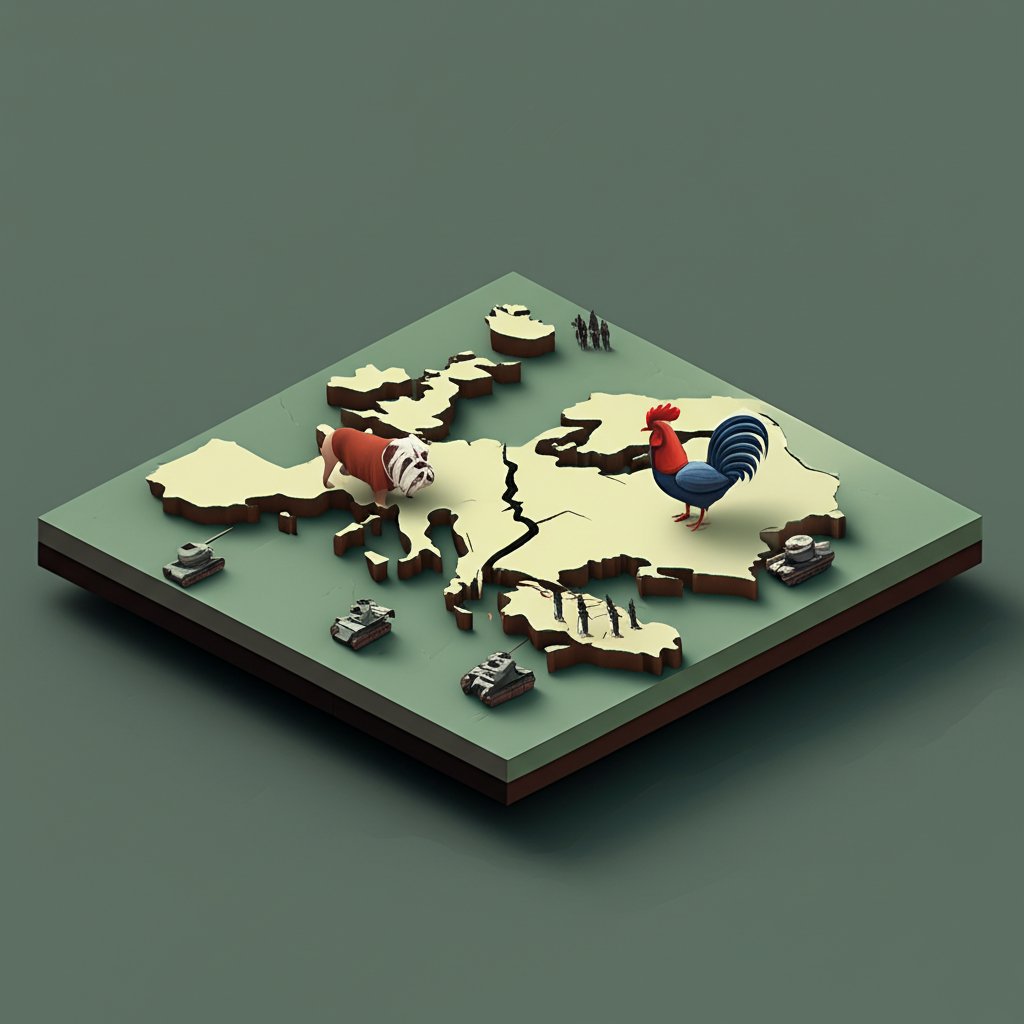
The German invasion of Poland on September 1, 1939, irrevocably shattered the fragile peace in Europe. But the invasion, itself, wasn’t the only pivotal event that month. It was the response to that invasion – specifically, when Britain France declare war september 3rd, 1939 – that truly signaled a new, global conflict. This wasn’t just another localized squabble; the declarations transformed a regional crisis into the Second World War.
At a glance:
- Understand the strategic calculations behind Britain and France’s decision.
- Explore the immediate impact of the declarations on the war’s trajectory.
- Debunk common misconceptions about the “Phony War” period that followed.
- Identify key lessons learned from the Allied response (or lack thereof) to the Polish invasion.
- Grasp the long-term consequences of the declarations on the Allied war effort and post-war Europe.
The Inevitable Choice: Why Declare War?
Why, after years of appeasement, did Britain and France finally draw the line? The answer lies in a complex web of treaty obligations, political pressure, and a growing realization that Hitler’s ambitions extended far beyond the annexation of Czechoslovakia.
- Treaty Obligations: Both countries were bound by treaties to defend Poland against aggression. While the specifics differed, the core commitment was clear: an attack on Poland would trigger a military response.
- Public Opinion: Years of rising Nazi aggression had shifted public sentiment. The appeasement policies pursued by British Prime Minister Neville Chamberlain had become increasingly unpopular as Hitler continued to break agreements and expand German territory.
- Strategic Considerations: Allowing Germany to conquer Poland unhindered would have shifted the balance of power in Europe decisively in Germany’s favor. It would have provided Germany with crucial resources, territory, and manpower, making it a far more formidable adversary in any future conflict.
- Deterrence Failure: Appeasement had failed to deter Hitler. By invading Poland despite warnings from Britain and France, Hitler demonstrated that he was willing to risk war to achieve his goals. This left Britain and France with little choice but to make good on their promises.
September 3rd: The Day the World Changed
The declarations came on September 3rd, 1939. Britain declared war at 11:15 AM, followed by France at 5:00 PM. While these declarations were monumental, the immediate practical impact on the ground in Poland was limited. The Wehrmacht continued its relentless advance, and Poland was left largely to fend for itself.
A Timeline of Diplomatic Maneuvering:
- September 1st: Germany invades Poland. Britain and France issue an ultimatum demanding German withdrawal.
- September 2nd: The ultimatum expires. Britain and France prepare to declare war.
- September 3rd: Britain and France declare war on Germany.
- September 4th: Australia and New Zealand declare war on Germany.
The “Phony War”: Action or Inaction?

The period following the declarations is often referred to as the “Phony War” or “Sitzkrieg” (sitting war). This period of relative inactivity on the Western Front has led some to question the sincerity of the Allied commitment to Poland. However, understanding the context is crucial.
- Military Preparedness: Britain and France were not fully prepared for a large-scale war in 1939. Mobilizing their armies, deploying troops to the front, and coordinating a joint offensive would take time.
- Strategic Doctrine: Allied military doctrine at the time emphasized a defensive strategy, focusing on holding the line against a German offensive. This contrasted sharply with the German “blitzkrieg” tactics, which prioritized rapid, offensive operations.
- The Maginot Line: France placed great faith in the Maginot Line, a heavily fortified defensive line along its border with Germany. This led to a sense of complacency and a reluctance to launch a major offensive that would expose French forces.
- Political Considerations: There were also political considerations at play. Some Allied leaders hoped that Hitler might still be willing to negotiate a settlement, and they were reluctant to take actions that could escalate the conflict unnecessarily.
However, dismissing this period as complete inaction is misleading. The Allies did implement a naval blockade of Germany and began mobilizing their forces. British and French air forces conducted reconnaissance flights over Germany, and the British Expeditionary Force (BEF) was deployed to France. Despite these efforts, these actions were too little and too late to save Poland.
Could the Allies Have Done More?
This is a question that has been debated by historians for decades. While it’s impossible to say for certain what would have happened if the Allies had taken a more assertive stance, here are some key considerations:
- A Preemptive Strike: Some argue that the Allies should have launched a preemptive strike against Germany immediately after the invasion of Poland. This could have disrupted German war plans and potentially prevented the conquest of Poland.
- A More Robust Air Campaign: The Allies could have launched a more aggressive air campaign against German industrial targets and military installations. This could have weakened Germany’s ability to wage war and provided support to the Polish defenders.
- A Land Offensive: Launching a major land offensive into Germany would have been a risky undertaking, but it could have forced Germany to divert resources from the Eastern Front, potentially relieving pressure on Poland.
Ultimately, the decision to adopt a more cautious approach was based on a complex calculation of risks and benefits. The Allies were not confident in their ability to defeat Germany in a head-on confrontation, and they were reluctant to take actions that could have resulted in heavy casualties.
To understand the broader landscape, September 1939: War Begins offers a comprehensive overview of the month’s pivotal events.
Lessons Learned: Allied Response and Post-War Implications

The Allied response to the invasion of Poland provides several important lessons about the challenges of collective security and the dangers of appeasement.
- The Importance of Deterrence: A credible deterrent is essential to prevent aggression. Hitler was emboldened by the Allies’ previous concessions, which led him to believe that they would not intervene in Poland.
- The Need for Decisive Action: When deterrence fails, decisive action is necessary to halt aggression. The Allies’ reluctance to take strong action in the early stages of the war allowed Germany to consolidate its gains and strengthen its position.
- The Value of Collective Security: Collective security arrangements are only effective if all members are willing to fulfill their obligations. The failure of the Allies to provide meaningful assistance to Poland undermined the credibility of the entire system.
The declarations of war by Britain and France on September 3rd, 1939, marked a turning point in world history. While the immediate impact on Poland was limited, the declarations signaled a new phase of the conflict and paved the way for the eventual defeat of Nazi Germany. The events of September 1939 serve as a reminder of the importance of vigilance, resolve, and collective action in the face of aggression.
A Practical Playbook for Analyzing International Crises
How can we apply the lessons of 1939 to current international crises? Here’s a simplified decision tree:
- Assess the Aggressor’s Intentions: Is the aggressor likely to stop at their initial objective, or is this a stepping stone to further expansion? (Consider: past behavior, ideology, resource needs.)
- Evaluate Treaty Obligations: What formal commitments exist? Are they credible? (Consider: political will, military capabilities.)
- Analyze Public Opinion: Is there sufficient public support for intervention? (Consider: media coverage, historical narratives, economic impact.)
- Consider the Strategic Balance: How will inaction shift the balance of power? What are the potential long-term consequences? (Consider: resource control, geographic advantages, alliance formations.)
- Weigh the Military Options: What are the potential costs and benefits of military intervention? What alternatives exist? (Consider: air power, naval blockade, ground forces, diplomacy, sanctions.)
Quick Answers: Common Questions & Misconceptions
Q: Why didn’t Britain and France launch a full-scale invasion of Germany immediately after declaring war?
A: They weren’t militarily ready. Their armies were still mobilizing, and their strategic doctrine was primarily defensive. A premature attack could have resulted in a disastrous defeat.
Q: Was the “Phony War” a waste of time?
A: Not entirely. It allowed the Allies to mobilize their forces and implement a naval blockade of Germany. However, it also gave Germany time to consolidate its conquests and prepare for its next offensive.
Q: Could Poland have resisted Germany longer if the Allies had provided more support?
A: Possibly. More substantial air support and economic aid could have bolstered Polish defenses. However, Poland was geographically isolated and vastly outmatched in terms of military power. Soviet invasion on September 17th sealed Poland’s Fate.
Q: What was the significance of the Molotov-Ribbentrop Pact in the context of the declarations of war?
A: The Molotov-Ribbentrop Pact, the non-aggression pact between Nazi Germany and the Soviet Union, contained secret protocols that divided Eastern Europe into spheres of influence. This pact effectively gave Hitler the green light to invade Poland without fear of Soviet intervention and ensured that when Poland fell, it would be divided between the two powers. It also revealed to the Allies that Poland was on its own when the Soviets backstabbed Poland on September 17th.
Taking Action Now: Building a More Secure Future
The lessons from September 1939 remain relevant today. By understanding the factors that led to the outbreak of World War II, we can work to prevent similar tragedies from happening again. This requires a commitment to international cooperation, a willingness to confront aggression, and a recognition that appeasement only emboldens those who seek to undermine the international order. Examining these events through a modern lens helps us better understand how treaties, declarations of war, and even seemingly innocuous negotiations have had a major impact on our world’s history.










