
The world of crypto investing is a dynamic, fast-paced frontier, constantly evolving with new tokens, decentralized applications, and market movements. Navigating this labyrinth of information, where prices can shift dramatically in moments, demands more than just diligence – it requires the right tools. Enter the crypto price aggregator, an indispensable digital command center that consolidates fragmented market data into a cohesive, actionable overview.
In this comprehensive 2025 guide, we’ll demystify cryptocurrency price aggregator platforms, revealing why they are not just useful, but absolutely essential for anyone serious about crypto investing. Whether you’re a beginner tracking your first digital asset, a seasoned trader seeking arbitrage opportunities, or an institutional investor requiring deep data analytics, understanding and utilizing the best crypto price aggregator can be your ultimate market advantage. We’ll explore core features, compare leading platforms, delve into advanced strategies, and project future trends to ensure you’re equipped to dominate the crypto landscape in 2025 and beyond.
What is a Crypto Price Aggregator and Why It’s Your 2025 Edge in Crypto Investing?

Imagine trying to drive a car by looking at individual mirrors for each wheel, instead of a single windshield. That’s what crypto investing without a crypto price aggregator feels like. These powerful platforms cut through the noise, offering a singular, comprehensive view of the entire digital asset market.
Decoding the Cryptocurrency Price Aggregator
At its core, a cryptocurrency price aggregator is a data collection service that pulls real-time market information from hundreds, if not thousands, of different cryptocurrency exchanges worldwide. Instead of visiting Binance for Bitcoin’s price, then Coinbase for Ethereum, and a DEX for a specific altcoin, an aggregator brings all that diverse crypto price data to one centralized dashboard.
These platforms provide more than just current prices. They display crucial metrics like:
Crypto Price: The current trading value across various exchanges.They are not exchanges themselves; you cannot buy or sell crypto directly on most aggregators. Instead, they serve as powerful intelligence hubs, empowering users with the data needed for informed decisions.
To truly understand the numbers you’re seeing on these platforms, it’s crucial to first grasp the fundamentals of how crypto quotes are determined and interpreted across different exchanges, giving you a critical edge as you analyze market trends, and that starts with deeply understanding cryptocurrency quotes.
The Indispensable Role of Aggregators in Modern Crypto Investing
In the volatile world of crypto price movements, information is power, and speed is critical. Here’s why crypto price aggregators are not just beneficial, but indispensable for crypto investing in 2025:
- Mitigating Volatility with Real-time
Crypto PriceAccuracy: Prices can fluctuate wildly across different exchanges due to varying liquidity, trading volumes, and geographical factors. An aggregator provides an averagecrypto priceor displays prices from multiple sources, giving you a more accurate, consolidated view and helping you avoid overpaying or underselling. - Unlocking Arbitrage Opportunities: For active traders, knowing actual
cryptocurrency pricediscrepancies across exchanges in real-time is golden. Aggregators highlight these differences, enabling savvy investors to potentially buy an asset on one exchange at a lower price and sell it immediately on another for a profit. - Fostering Informed Decisions, Free from Bias: Relying on a single exchange for
crypto pricedata can lead to a skewed market perspective. Aggregators offer a broader, more neutral outlook, allowing you to gauge true market sentiment and value without being influenced by a single platform’s conditions. - Efficiency in
Crypto Investing: Time is money, especially in fast-moving markets. Consolidating allcrypto pricedata into one place saves countless hours of manual research, freeing you to focus on strategy and execution rather than data collection. - Comprehensive Market Overview: Beyond individual asset prices, a
best crypto price aggregatoroften provides macro market data, trending coins, news updates, and sometimes even sentiment analysis, offering a holistic view crucial for strategiccrypto investing.
As digital assets become more ingrained in global finance, the sophistication and necessity of these tools will only grow.
Essential Features: Unpacking the Best Crypto Price Aggregator Tools for 2025
Choosing the best crypto price aggregator means looking beyond just a list of numbers. The true value lies in the depth, accuracy, and utility of its features. Here’s what discerning investors should prioritize in 2025:
Real-time Data Accuracy and Reliability
The cornerstone of any good cryptocurrency price aggregator is the trustworthiness of its data.
best crypto price aggregator pulls data from hundreds of exchanges (CEXs, DEXs, OTC) and employs sophisticated algorithms to normalize and verify these disparate data points, ensuring a true average or weighted average crypto price.Comprehensive Data Coverage
Breadth and depth of data are critical, especially as the crypto ecosystem diversifies.
best crypto price aggregator for niche assets.Intuitive User Interface (UI) & Customization
An abundance of data is only useful if it’s accessible and digestible.
crypto investing.crypto price thresholds, significant volume changes, or breaking news, delivered via email, mobile push, or desktop, are crucial for staying ahead without constant screen time.Advanced Analytical and Charting Tools
For deep analysis, a crypto price aggregator needs more than just basic line graphs.
cryptocurrency price aggregator, access to on-chain metrics (e.g., transaction counts, active addresses, miner flows, exchange balances) provides fundamental insights into network health and holder behavior, which can often precede crypto price movements.Robust API Access for Developers & Institutions
For advanced users, programmatic access to data is a game-changer.
crypto price data, market metrics, exchange information, and potentially on-chain data.crypto investing strategies.Security, Privacy, and Data Governance
While most aggregators don’t hold your funds, data security is still paramount.
best crypto price aggregator prioritizes user privacy.Pricing Models and Value Proposition
Aggregators come in various pricing tiers, from entirely free to premium subscriptions.
crypto price tracking and casual users.Mobile Accessibility and Community Support
An accessible cryptocurrency price aggregator is vital for the on-the-go nature of crypto.
Top Crypto Price Aggregators: A Detailed Comparison for Every Investor’s Journey
The market for crypto price aggregator platforms is diverse, each with its unique strengths. Here’s a deeper look at some of the leading contenders that could be the best crypto price aggregator for you in 2025.
CoinMarketCap & CoinGecko: The Industry Standard for Crypto Prices
These two giants are often considered the go-to starting points for anyone entering crypto investing. They offer unparalleled coverage and user-friendliness.
- CoinMarketCap (CMC): Acquired by Binance, CMC is arguably the most recognized
crypto price aggregator.- Strengths: Massive asset coverage (over 13,000 cryptocurrencies), intuitive user interface, extensive historical data, vibrant community features, and a widely used mobile app. It’s excellent for finding basic
crypto pricedata and discovering new projects. - Limitations: While it offers basic charting, its analytical tools are less advanced than specialized platforms. There have also been concerns raised about its data accuracy and transparency post-acquisition, though it remains a primary reference.
- Strengths: Massive asset coverage (over 13,000 cryptocurrencies), intuitive user interface, extensive historical data, vibrant community features, and a widely used mobile app. It’s excellent for finding basic
- CoinGecko: A fierce competitor to CMC, known for its commitment to transparency and community.
- Strengths: Similar broad asset coverage, a slightly more detailed focus on decentralized finance (DeFi) metrics, strong emphasis on data transparency (e.g., Trust Score for exchanges), and an active community. It’s often cited for its robust API for developers seeking reliable
crypto pricedata. - Limitations: The interface, while feature-rich, can sometimes feel a bit cluttered compared to CMC for absolute beginners. Advanced charting and on-chain analytics are also limited to basic functions.
- Strengths: Similar broad asset coverage, a slightly more detailed focus on decentralized finance (DeFi) metrics, strong emphasis on data transparency (e.g., Trust Score for exchanges), and an active community. It’s often cited for its robust API for developers seeking reliable
Both are excellent free-to-use platforms essential for general crypto investing and tracking crypto price across the market.
TradingView: Charting Powerhouse for Technical Analysis
While not exclusively a cryptocurrency price aggregator, TradingView stands out for its superior charting capabilities and broad asset integration.
crypto price data from numerous exchanges (and other financial markets) and provides one of the most powerful charting platforms available.crypto price movements deeply.crypto price data, its primary focus isn’t market aggregation in the same vein as CMC or CoinGecko but rather advanced charting.Messari & Glassnode: Diving Deep with Institutional-Grade Data
For professionals, institutions, and serious researchers, these platforms offer a level of depth far beyond basic crypto price tracking.
- Messari: A premier platform for crypto research, data, and institutional insights.
- Strengths: Provides in-depth asset profiles, comprehensive industry reports, robust screening tools, and
crypto pricedata tailored for institutionalcrypto investing. Its focus is on verifiable, accurate data and deep analysis rather than just surface-level prices. - Limitations: Primarily subscription-based, with a higher cost, and a steeper learning curve for new users. It’s less about quick
crypto pricechecks and more about strategic research.
- Strengths: Provides in-depth asset profiles, comprehensive industry reports, robust screening tools, and
- Glassnode: The go-to source for on-chain analytics.
- Strengths: Offers exceptionally detailed on-chain data for major cryptocurrencies like Bitcoin and Ethereum. This includes metrics on supply distribution, network health, transaction activity, and investor behavior directly from the blockchain – crucial for understanding the underlying fundamentals driving
crypto price. - Limitations: Highly specialized in on-chain data, so it doesn’t offer broad asset coverage for altcoins. It’s also a subscription service, geared towards advanced analysts.
- Strengths: Offers exceptionally detailed on-chain data for major cryptocurrencies like Bitcoin and Ethereum. This includes metrics on supply distribution, network health, transaction activity, and investor behavior directly from the blockchain – crucial for understanding the underlying fundamentals driving
DeFiLlama & Other Niche Aggregators: Specializing in Decentralized Finance
The rise of DeFi and NFTs has led to specialized cryptocurrency price aggregator tools.
- DeFiLlama: The leading data aggregator for the entire DeFi ecosystem.
- Strengths: Tracks Total Value Locked (TVL) across thousands of DeFi protocols and blockchains, provides yield farming data, liquidity pool information, and detailed protocol analytics. Essential for anyone involved in decentralized
crypto investing. - Limitations: Strictly focused on DeFi; does not cover assets or market cap data outside this niche.
- Strengths: Tracks Total Value Locked (TVL) across thousands of DeFi protocols and blockchains, provides yield farming data, liquidity pool information, and detailed protocol analytics. Essential for anyone involved in decentralized
- Niche Examples: Other aggregators specialize in areas like NFT floor prices (e.g., OpenSea, LooksRare, or dedicated NFT analytics platforms), specific blockchain ecosystems, or unique data points like crypto project development activity. These are vital for targeted
crypto investingstrategies.
CryptoCompare & Nomics: Transparency and API-First Approaches
These platforms emphasize data integrity and provide powerful API solutions.
- CryptoCompare: Offers a wide range of data, portfolio management tools, and detailed exchange reviews.
- Strengths: Good balance of user-friendly interface and intermediate analytical tools. Provides a robust API for developers and a strong focus on community insights.
- Limitations: Some users find the interface a bit overwhelming due to the sheer volume of information. Data accuracy can vary for less liquid assets compared to top-tier platforms.
- Nomics: Prioritizes transparent, auditable, and high-fidelity market data.
- Strengths: Known for its “full historical data” from numerous exchanges and a strong API-first approach, making it a favorite for developers and quantitative traders. Its data is often regarded as highly reliable due to its focus on raw data from exchanges.
- Limitations: While the UI is clean, it’s not as feature-rich with advanced charting as TradingView, and its premium API tiers can be expensive for heavy usage.
Summary Table: Key Crypto Price Aggregators at a Glance (2025 Perspective)
| Aggregator | Primary Focus | Key Strength | Ideal User Profile | Pricing Model |
|---|---|---|---|---|
| CoinMarketCap | Broad Market Overview, Beginner-Friendly | Extensive asset coverage, intuitive UI, community features | Beginners, general crypto investing, market discovery | Mostly Free |
| CoinGecko | Broad Market Overview, Transparency, DeFi | Data transparency, robust API, DeFi focus | Beginners, intermediate users, developers | Mostly Free |
| TradingView | Advanced Charting & Technical Analysis | Powerful charting tools, social trading, multi-asset class | Active traders, technical analysts | Freemium |
| Messari | Institutional Research, In-depth Data | Verifiable data, research reports, enterprise tools | Institutional investors, researchers, professionals | Subscription |
| Glassnode | On-Chain Analytics (BTC, ETH) | Deep blockchain insights, fundamental analysis | Quantitative analysts, macro investors, researchers | Subscription |
| DeFiLlama | Decentralized Finance (DeFi) Data | TVL, yield data, protocol analytics | DeFi enthusiasts, yield farmers | Free |
| CryptoCompare | Comprehensive Data, Portfolio Tools, API | Wide range of coins/exchanges, developer API | Intermediate traders, developers, portfolio managers | Freemium |
| Nomics | Transparent Data, API-First, Historical Data | Auditable data, extensive historical data, robust APIs | Developers, quantitative traders, data scientists | Freemium |
Important Note: The crypto investing landscape is dynamic. Features, pricing, and market standing of these platforms can evolve rapidly. Always verify the latest details directly on each platform’s official website.
Advanced Strategies: Maximizing Your Crypto Price Aggregator for Competitive Crypto Investing
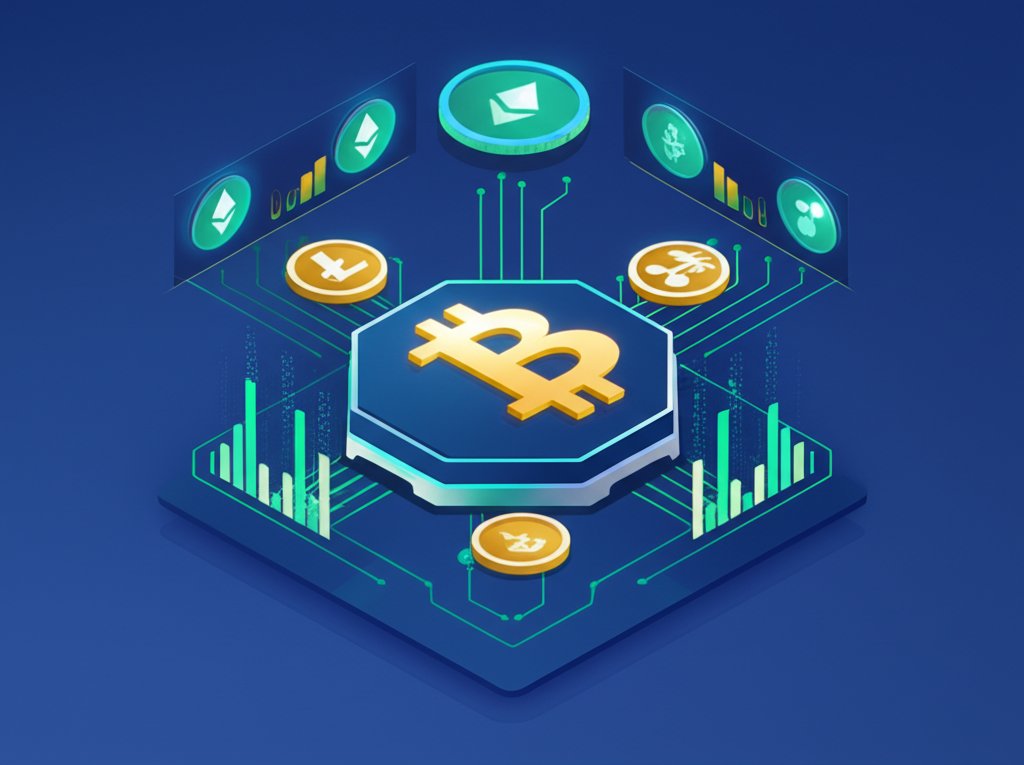
Beyond simply checking crypto price, a cryptocurrency price aggregator can be a potent weapon in your crypto investing arsenal. Here’s how to unlock its full potential:
Crafting Dynamic Portfolios with Integrated Tracking
Many aggregators offer sophisticated portfolio tracking features that go beyond basic balance sheets.
crypto investing.Leveraging API Data for Algorithmic Trading and Research
For developers and quantitative traders, the API of a best crypto price aggregator is










