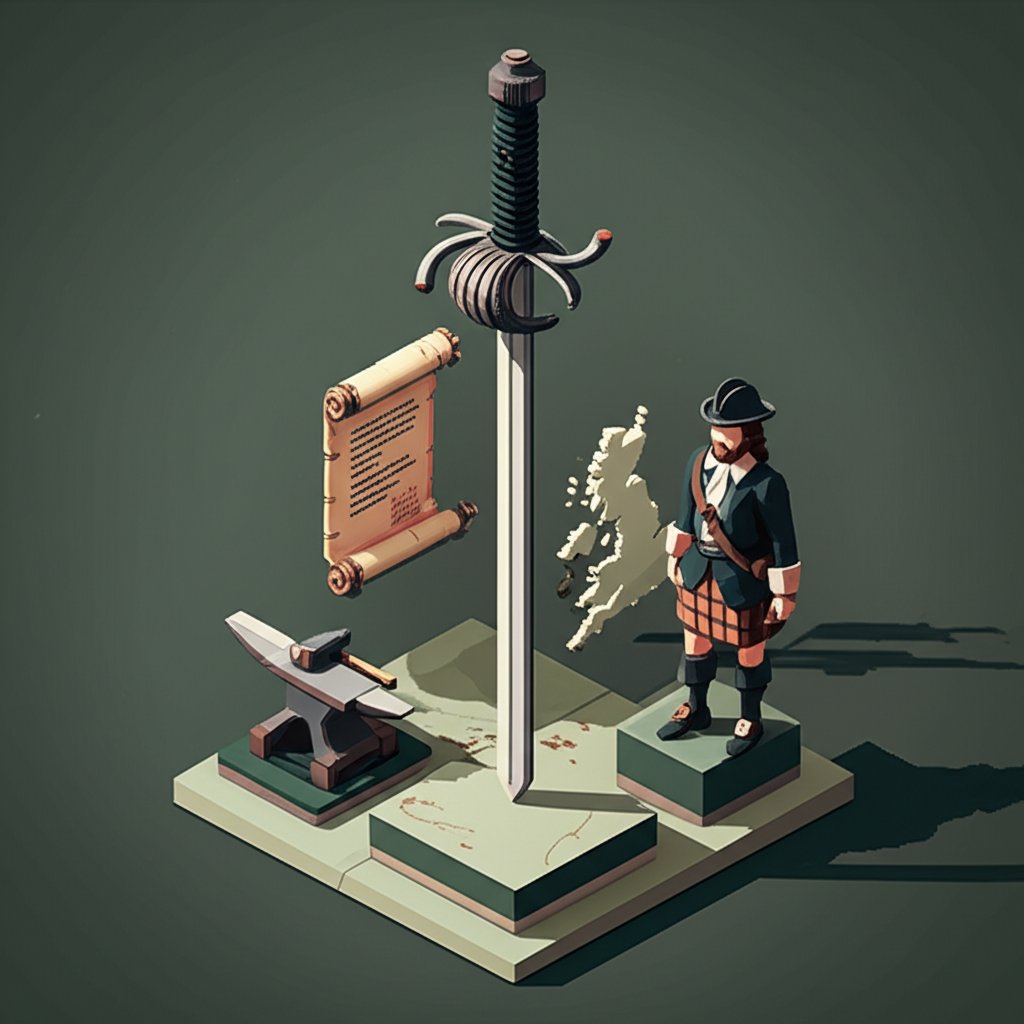
Step into a world of steel, skill, and unparalleled protection as we embark on a journey through the storied past of the basket-hilted broadsword. This iconic weapon, a marvel of historical engineering, didn’t just revolutionize personal defense in combat; it carved a deep and enduring mark on military history, cultural identity, and the art of swordsmanship itself. For centuries, its intricate guard shielded the hands of warriors across Europe, none more famously than the fierce Scottish Highlanders. But what exactly is a basket hilt, how did it evolve, and what truly defines the powerful blade it so often protected? In this definitive guide, we’ll cut through the myths and delve into the fascinating reality of this legendary weapon, ensuring you gain a comprehensive understanding of its design, historical impact, and lasting legacy.
The Evolution of the Basket Hilt: Shielding the Swordsman’s Hand
The quest for enhanced hand protection in close-quarters combat led directly to the ingenious invention of the basket hilt. Born from necessity and refined over generations, this sophisticated guard transformed sword design and significantly improved a warrior’s chances of survival on the battlefield.
Origins and Early Development
The concept of a full hand guard wasn’t an overnight revelation but a gradual evolution from simpler cross-guards and quillons that offered minimal hand defense. By the 16th century, as fencing techniques became more advanced and firearms began to shift battlefield dynamics, the need for superior hand protection became paramount. Early iterations of what would become the basket hilt began to appear, incorporating additional rings and bars to the traditional cross-guard. A remarkable testament to its early adoption comes from the wreck of the Mary Rose, an English warship that sank in 1545, where a sword with an early form of a basket hilt was recovered, indicating the design was already in use by the mid-1500s. This innovation marked a pivotal moment, moving beyond basic protection to an integrated defensive structure.
Anatomy of Protection: What is a Basket Hilt?
At its core, a basket hilt is an elaborate, cage-like structure made of metal bars, plates, and a knuckle bow that completely envelops and protects the sword hand and often a portion of the wrist. This intricate design, forged from iron or steel, offered unparalleled defense against cuts, thrusts, and even glancing blows from an opponent’s blade. Key components typically include:
- Knuckle Bow: The primary bar extending from the cross-guard to the pommel, protecting the knuckles.
- Side Bars/Plates: A series of interwoven or solid metal elements that form the ‘basket’ on the outside of the hand. These could be pierced, engraved, or plain.
- Finger Rings: Sometimes integrated into the guard, especially in earlier rapier-hilts, offering additional grip and finger protection.
- Quillons: The extensions on either side of the blade, from which the basket often emerged.
The genius of the basket hilt lay in its balance of strength and agility. It provided robust protection without unduly hindering the wielder’s grip or maneuverability, allowing for more aggressive and defensive actions in combat.
Understanding the basket-hilted broadsword also provides insight into the era’s unique societal values and its many evolving cultural traits, particularly regarding warfare and honor.
European Variations: A Tapestry of Regional Designs
While the term basket hilt unifies these guards, countless regional variations emerged across Europe, each reflecting local fighting styles, aesthetic preferences, and craftsmanship traditions.
- Italian Schiavona: Primarily used by the Venetian Doge’s guard, it often featured distinctive, often rectangular, “thumb-rings” and cat’s-head pommels. Its hilt was typically very open, allowing for a flexible grip.
- German Basket-Hilts: Many variations existed, from elaborate swept hilts to denser cages, often accompanying heavy broadswords or sabers.
- English Basket-Hilts: Often more robust and less ornate, evolving alongside cavalry sabers and infantry swords.
- Scottish Basket-Hilts: Arguably the most famous, these developed into a distinct and highly recognizable form, often featuring intricate piercing and a flat, disc-shaped pommel, deeply tied to the scottish basket hilt sword.
These diverse designs highlight a widespread recognition of the basket hilt’s effectiveness, leading to its adaptation and integration into various martial traditions throughout the 17th and 18th centuries.
What is a Broadsword? Defining the Blade of Consequence
The term “broadsword” is frequently used, but often with imprecision. To truly understand the basket-hilted sword, it’s crucial to define what a broadsword is and how it distinguished itself in the age of edged weapons.
Broadsword vs. Backsword: A Crucial Distinction
Historically, a “broadsword” refers to a sword with a relatively wide, double-edged blade. This design made it suitable for both powerful cutting (slashing) and effective thrusting. The term emerged primarily in the 17th century to differentiate these wider, military-style blades from the increasingly popular, slimmer, and often single-edged smallswords and rapiers favored by civilians.
In contrast, a backsword also features a wide blade but is single-edged with a thickened back. This design provides structural rigidity for powerful cuts while allowing the back of the blade to be thicker and stronger. Many basket-hilted swords were, in fact, mounted on backsword blades, particularly in the British Isles, showcasing that the type of hilt was often separate from the specific blade geometry. However, the quintessential scottish basket hilt sword is typically associated with a “broad” (wide) blade, even if some variations leaned towards a backsword profile.
The Double-Edged Advantage: Cut, Thrust, and Utility
The dual nature of a broadsword’s double-edged blade offered significant versatility in combat. It excelled in:
- Cutting: The wide, sharp edges inflicted devastating cuts, particularly effective against unarmored or lightly armored opponents.
- Thrusting: The pointed tip allowed for thrusts, capable of penetrating gaps in armor or targeting vital organs.
This balanced capability made the broadsword a highly practical military weapon, capable of adapting to diverse combat situations, from open battlefields to more confined skirmishes. When paired with a robust basket hilt, it became an incredibly formidable implement of war, offering both offensive power and defensive security.
Historical Context: Why Broadswords Rose to Prominence
The rise of the broadsword coincides with a period of significant military innovation from the late Renaissance through the early modern era. As plate armor became less common for the average soldier and gave way to more flexible, textile-based protection, the need for weapons that could effectively cut and thrust against softer targets increased. The broadsword filled this niche perfectly. Its substantial presence on the battlefield, particularly alongside the advent of the pistol and musket, underscored its utility as a reliable secondary weapon for close-quarters engagements, often carried by cavalry and infantry alike.
The Iconic Scottish Basket Hilt Sword: A Symbol of Highland Might
Of all the European variations, the scottish basket hilt sword holds a particularly revered place in history and popular imagination. More than just a weapon, it became an enduring symbol of Scottish martial heritage and national identity.
From Battlefield to Identity: The Scottish Basket Hilt’s Role
The scottish basket hilt sword became synonymous with the Highland warrior, especially during the turbulent Jacobite Risings of the 17th and 18th centuries. These swords were not only practical tools for war but also powerful symbols of clan loyalty and the Jacobite cause. The design evolved to meet the specific demands of Highland combat, which often involved fierce, rapid charges and close-quarters melee. The sturdy defense offered by the basket hilt was crucial in these chaotic engagements.
Even after the defeat of the Jacobites and the subsequent proscription of Highland dress and weapons, the scottish basket hilt sword demonstrated its enduring utility. It was eventually adopted by Highland regiments within the British Army, where it continued to serve as both a functional weapon and a potent symbol of their unique heritage. Its presence in these regiments solidified its status as an iconic piece of Scottish history.
Design Hallmarks of the Scottish Basket-Hilted Broadsword
While variations exist, a classic scottish basket hilt sword often features several distinctive characteristics:
- Blade Type: Typically a wide, double-edged blade (though a strong backsword profile was also common), optimized for powerful cut-and-thrust actions. Blade lengths usually ranged from 30 to 34 inches.
- Hilt Construction: The basket hilt itself is often characterized by a dense, intricate cage of interwoven bars, frequently featuring pierced plates (heart, circle, or knot motifs were common). This provided comprehensive hand protection.
- Grip: Typically made of wood, often covered in sharkskin or ray skin (frequently called “fish skin”) for a secure grip, and wrapped with silver or copper wire.
- Pommel: Often a distinct globular or flattened oval shape, sometimes faceted, and usually threaded onto the tang of the blade.
- “Andrea Ferrara” Blades: While many genuine scottish basket hilt swords bore this inscription, it became a generic mark for a high-quality blade rather than a specific maker. The actual Andrea Ferrara was an Italian bladesmith, but his name became a byword for excellence.
These hallmarks contributed to the scottish basket hilt sword’s reputation as a beautifully crafted yet brutally effective weapon.
Dispelling Myths: Claymore, Ferrara, and the True Scottish Sword
The world of Scottish swords is rich with history but also rife with popular misconceptions:
- The “Claymore” Confusion: The term “claymore” (from Scots Gaelic claidheamh mòr, meaning “great sword”) traditionally refers to a large, two-handed sword used in the late medieval period. The single-handed scottish basket hilt sword that became famous during the Jacobite era is not historically a claymore. While some modern reproductions and popular media inaccurately apply the term, it’s crucial for historical accuracy to differentiate. The single-handed version is sometimes, though controversially, referred to as a claidheamh beag (“small sword”).
- Andrea Ferrara: A Mark of Quality, Not a Maker: As mentioned, “Andrea Ferrara” was a renowned Italian bladesmith, but his name on a blade, particularly a scottish basket hilt sword, often signified a high-quality, imported blade rather than a direct provenance from Ferrara himself. Many blades were made by others and stamped with this name to denote superior craftsmanship.
Understanding these distinctions allows for a clearer appreciation of the true history and terminology surrounding the scottish basket hilt sword.
Swordsmanship and Impact: Wielding the Basket-Hilted Blade

The introduction of the basket hilt did more than just protect the hand; it fundamentally influenced the techniques and tactics of historical swordsmanship, shaping combat across Europe.
Adapting Combat: New Techniques with Enhanced Protection
The unparalleled hand protection offered by the basket hilt allowed for the development of new and more aggressive fighting styles. Swordsmen could now parry with greater confidence, using the hilt itself to deflect blows that might have otherwise disarmed or severely injured them. This enhanced security:
- Bolstered Defense: Allowed for stronger, more committed parries and guards, knowing the hand was well-protected.
- Enabled Aggressive Offense: Freed the wielder to engage more directly, bringing the sword to bear with greater force and less hesitation about hand vulnerability.
- Integrated Blade and Hilt: The entire weapon became a defensive tool, not just the blade. Blocked strikes could slide off the basket, guiding the opponent’s weapon away.
This evolution of swordsmanship, intertwined with the development of the basket-hilted sword, provides a fascinating glimpse into the biomechanics and strategic thinking of close-quarters combat centuries ago.
The Basket Hilt in Military History: From Skirmish to Formation
The basket hilt sword was a ubiquitous military weapon throughout the 17th and 18th centuries. It saw extensive use in:
- The English Civil War: Both Royalist and Parliamentarian forces utilized various forms of the basket-hilted sword, often paired with broad or backsword blades.
- The Thirty Years’ War: European armies across the continent employed these swords.
- The Jacobite Risings (Scotland): As discussed, the scottish basket hilt sword was central to the Highland warrior’s arsenal.
- Colonial Wars: British and European forces deployed basket-hilted broadswords in conflicts globally.
Its robust construction and versatile cutting and thrusting capabilities made it an ideal companion for soldiers who might find themselves in desperate hand-to-hand combat after their primary firearms were discharged. It served as a vital secondary weapon in an era of evolving military tactics.
Beyond the Battlefield: Ceremonial and Civilian Use
While primarily a military weapon, the elegance and craftsmanship of many basket-hilted swords also led to their use in other contexts:
- Ceremonial Purposes: High-ranking officers and noblemen often commissioned exquisite examples, adorned with elaborate engraving or precious metals, to be worn as symbols of rank and authority. These could be the same functional basket-hilted broadswords but with aesthetic enhancements.
- Self-Defense for Civilians: While rapiers were more common for civilian dueling, a sturdy basket-hilted sword was certainly carried by some civilians who valued its robust protection and versatility, especially in areas where personal safety might be a concern.
These diverse applications underscore the widespread appeal and practical value of the basket hilt sword beyond just its battlefield role.
Collecting and Preserving Basket-Hilted Swords for Future Generations
Today, genuine basket-hilted broadswords are highly prized historical artifacts, cherished by collectors, museums, and history enthusiasts worldwide. Their aesthetic appeal, historical significance, and intricate craftsmanship make them compelling pieces to own and study.
What Makes a Desirable Basket Hilt Sword?
For collectors, several factors contribute to the desirability and value of a basket hilt sword:
- Condition: Original, unrestored condition is paramount. Minimal corrosion, intact grip (original wire wrap, fish skin), and a strong blade are highly valued.
- Provenance: A documented history of ownership, especially if tied to a specific regiment, battle, or famous individual, dramatically increases value. Swords with a clear connection to a Jacobite figure or a known Highland regiment are particularly sought after.
- Markings: Blades bearing specific maker’s marks, inspection stamps, or the elusive “Andrea Ferrara” inscription (especially on a scottish basket hilt sword) are often more desirable, though authentication is key.
- Hilt Intricacy: The complexity and quality of the basket hilt itself – intricate piercing, fine engraving, or unique regional characteristics – can significantly enhance its appeal.
- Original Scabbard: While rare, an original scabbard that matches the sword is a significant bonus for collectors.
Authenticity and Avoiding Forgeries
The popularity and value of true historical basket-hilted broadswords have unfortunately led to a rise in forgeries and reproductions. It is crucial for collectors to:
- Consult Experts: Seek advice from reputable specialized dealers, auction houses, or conservators who have extensive experience in examining historical swords.
- Study Materials and Construction: Genuine antique swords show signs of period manufacturing techniques, specific alloys, and natural patination that are difficult for forgers to replicate accurately.
- Be Skeptical of “Too Good to Be True” Deals: Extremely low prices for seemingly perfect examples are often a red flag.
- Understand Patina: The natural aging and wear on metal and grip materials are key indicators of authenticity.
Owning a genuine basket hilt sword is akin to possessing a tangible piece of history, a responsibility that requires careful authentication, preservation, and respect for its legacy.
Notable Collections and Museums
Those wishing to experience these magnificent weapons firsthand can find them in leading institutions around the world:
- National Museum of Scotland (Edinburgh): Houses an unparalleled collection of scottish basket hilt swords, offering deep insights into their design and historical context.
- Royal Armouries (Leeds): Features a broad array of basket-hilted swords from across the British Isles and continental Europe.
- The Wallace Collection (London): Renowned for its high-status and historically significant examples of European swords, including several exceptional basket hilt variants.
- Stirling Castle Armoury (Scotland): Offers focused displays on Jacobite weaponry and the role of the scottish basket hilt broadsword.
These institutions provide invaluable resources for understanding the artistry, engineering, and historical impact of the basket-hilted sword.
Conclusion
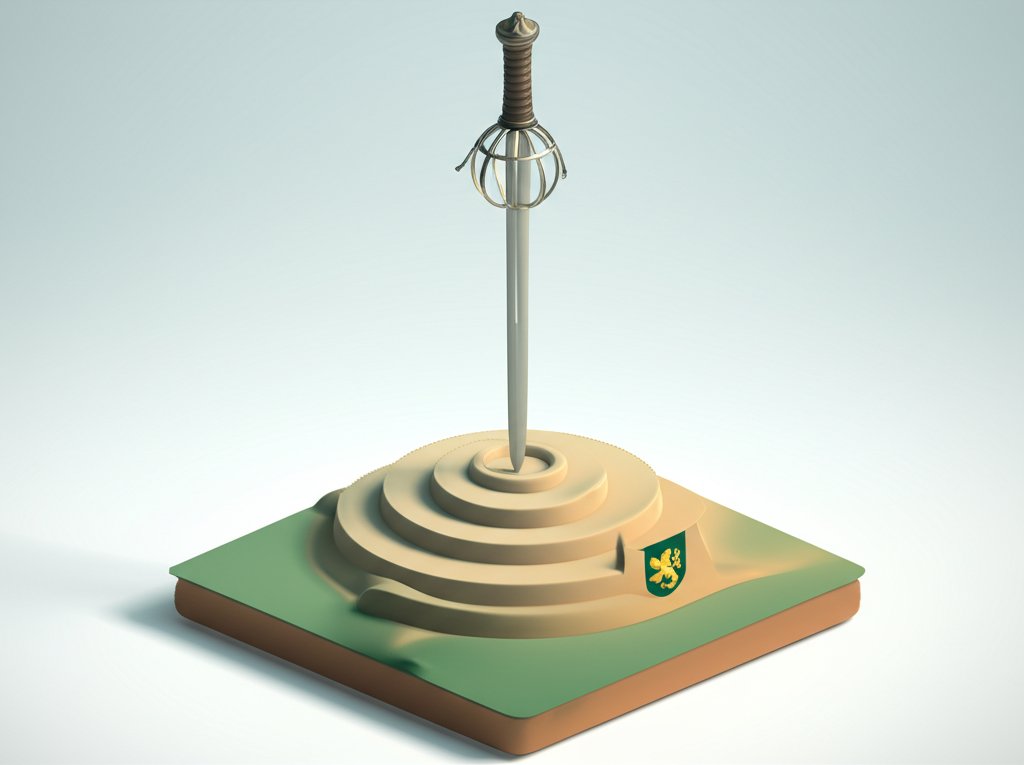
The basket-hilted broadsword stands as a testament to human ingenuity in the face of conflict. From its humble origins as a simple guard enhancement to its transformation into an iconic symbol of martial prowess – particularly as the scottish basket hilt sword – its journey mirrors the evolution of warfare and culture across centuries. We’ve explored what is a broadsword, distinguished it from its counterparts, and delved into the intricacies of the protective basket hilt. Its epic history is a rich tapestry of innovation, regional variation, and profound cultural significance. Understanding this formidable weapon not only deepens our appreciation for historical arms and armor but also connects us to the lives of the warriors who wielded these beautiful, deadly instruments.
FAQ: Your Questions About Basket-Hilted Broadswords Answered
Q1: What is a basket hilt?
A: A basket hilt is an elaborate, cage-like metal guard on a sword handle designed to completely enclose and protect the wielder’s hand from cuts and thrusts. It evolved from simpler cross-guards in the 16th century and became a defining feature of many early modern military swords.
Q2: Is a basket-hilted sword the same as a broadsword?
A: Not always. A basket hilt refers specifically to the hand guard, while a broadsword refers to the blade type (typically wide and double-edged, suitable for both cutting and thrusting). Many basket-hilted swords were indeed fitted with broadsword blades, but the hilt and blade are distinct components. Some also used single-edged backsword blades.
Q3: What is a Scottish basket hilt sword?
A: The scottish basket hilt sword is a specific regional variant of the basket-hilted sword particularly associated with Highland warriors from the 17th and 18th centuries. It features a distinctive, often intricately pierced, cage-like hilt and typically a wide, double-edged blade (a broadsword). It became a powerful symbol of Scottish identity.
Q4: When did the basket hilt originate?
A: The basket hilt began to emerge in the mid-16th century, evolving from earlier protective guard designs. Evidence, such as swords found on the Mary Rose wreck (sank 1545), indicates its use by that time.
Q5: Is a “claymore” the same as a Scottish basket hilt sword?
A: No, this is a common misconception. Historically, a “claymore” (Gaelic for “great sword”) refers to a large, two-handed sword used in late medieval Scotland. The single-handed scottish basket hilt sword that gained fame during the Jacobite eras is a distinct weapon, not a true claymore.
Q6: What does “Andrea Ferrara” mean on a basket-hilted sword?
A: “Andrea Ferrara” was originally the name of a renowned Italian bladesmith. However, his name became a byword for quality. Many basket-hilted swords, especially Scottish ones, bear this inscription, often signifying a high-quality, possibly imported, blade rather than a direct provenance from the man himself.
Q7: What is the difference between a broadsword and a rapier?
A: A broadsword typically has a wider, heavier, double-edged blade designed for both cutting and thrusting, often paired with a protective basket hilt. A rapier has a longer, more slender, sharply pointed blade optimized primarily for thrusting, and its hilt, while intricate, usually features rings and bars rather than a full basket, focusing on deflecting an opponent’s blade. Broadswords were generally military, rapiers often civilian.










