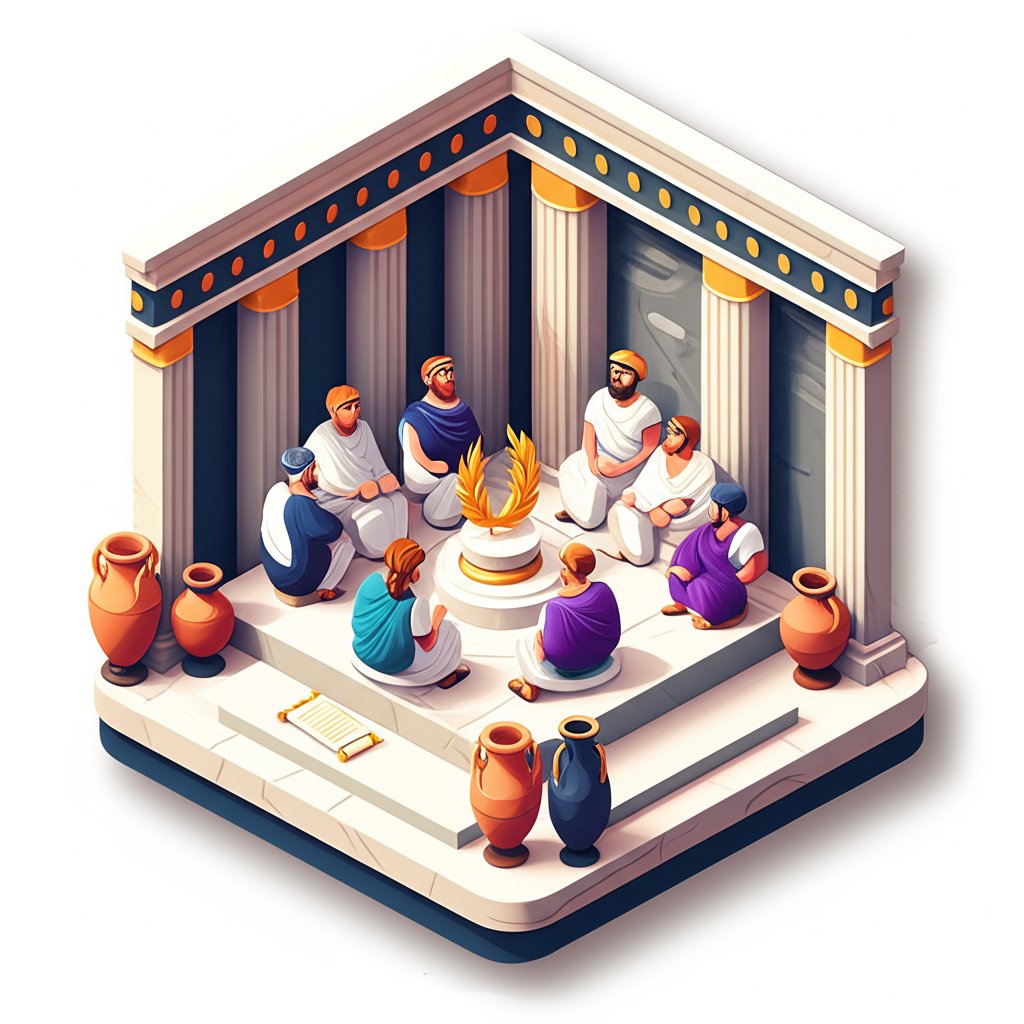
Step into the intricate world of ancient Greece, where power, privilege, and philosophical ideals intertwined to shape a civilization that laid the foundations for Western thought. At the heart of this dynamic society stood the ancient Greek aristocracy, a class of elite citizens whose influence penetrated every facet of public and private life. Far from a simple hereditary class, the aristocracy ancient Greece represented a complex system of governance and social order, evolving from the ashes of monarchy to become the dominant force in many city-states, or poleis.
This article delves deep into the lives, roles, and lasting legacy of these influential figures. We will unveil the origins of their power, explore their economic and social advantages, examine their pivotal impact on governance and military affairs, and uncover their profound contributions to the cultural and intellectual landscape of the Hellenic world. Prepare to understand how the greek nobility, driven by their distinct conception of “rule by the best,” forged an indelible mark on history, leaving an enduring legacy that continues to resonate today.
The Dawn of Elite Rule: Defining Ancient Greek Aristocracy
The emergence of the ancient Greek aristocracy marked a pivotal transition in the political landscape of early Greece. Following the collapse of the Mycenaean palace systems and the subsequent Greek Dark Ages, new forms of social and political organization arose. Among these, the rule of the aristoi – “the best” – became prominent, fundamentally altering the governance structures of nascent city-states.
From Monarchy to Aristocracy Ancient Greece
Before the widespread establishment of aristocratic rule, many early Greek communities were governed by monarchs. These kings, often claiming divine or heroic lineage, held centralized power. However, as communities grew and became more complex, the influence of powerful landowning families began to expand. These families, possessing significant wealth and often commanding private retinues, gradually challenged and eventually supplanted the authority of the kings. This transition wasn’t always violent but often a gradual erosion of monarchical power, with the king’s responsibilities being diffused among a council of elites or elected magistrates drawn from the most prominent families.
While the power of these aristocrats grew, the era of the kings was fading, making way for new forms of leadership as explored in our article about the most famous kings of ancient Greece.
The shift towards aristocracy ancient Greece typically saw power consolidating in the hands of councils (like the Areopagus in Athens, initially composed of former archons) and officials elected for limited terms, rather than a single, lifelong ruler. This system, while still exclusive, represented a move away from absolute individual power towards a form of collective elite governance.
The Philosophy of “Rule by the Best”
The very term “aristocracy” (Greek: aristokratia) is derived from aristos (best) and kratos (power/rule), hence “rule by the best.” This was not merely a descriptive term for a ruling class but an ideological concept. Ancient Greek thinkers like Plato and Aristotle grappled extensively with the ideal forms of government, often considering aristocracy, in its purest sense, as a superior system. For them, true aristocracy was not about inherited wealth or lineage alone, but rule by those possessing the greatest intelligence, moral excellence, virtue (aretē), and wisdom.
Plato, in his Republic, envisioned an ideal state governed by “philosopher kings” – individuals perfectly educated to discern truth and justice, embodiment of the highest moral and intellectual standards. While the historical ancient Greek aristocracy rarely lived up to this philosophical ideal, the underlying concept of rule by the most qualified profoundly influenced their self-perception and justification for power. They believed their birthright often coincided with inherent virtues and a cultivated capacity for leadership, making them uniquely suited to guide the polis.
Who Were the Ancient Greek Aristocrats?
The ancient Greek aristocrats were primarily defined by their lineage, wealth, and land ownership. In city-states like Athens, these powerful clans were known as the Eupatridae (“those of good fathers” or “well-born”). Membership in these families conferred immense social prestige and often exclusive access to political offices and religious priesthoods. Unlike modern conceptions of nobility, which might include specific titles like “duke” or “baron,” the greek nobility of ancient times was less about formal titles and more about inherited status, wealth, and the social networks that came with it.
Their distinguished ancestry was often traced back to mythical heroes, gods, or early kings, providing a powerful narrative of legitimacy and exceptionalism. This connection to a glorious past underpinned their claim to lead. While not every landowner was an aristocrat, most ancient Greek aristocrats were certainly large landowners, with their estates forming the bedrock of their economic power. This allowed them leisure for education, political participation, and military training, further solidifying their perceived superiority.
Pillars of Power: Economic and Social Privileges of Greek Nobility
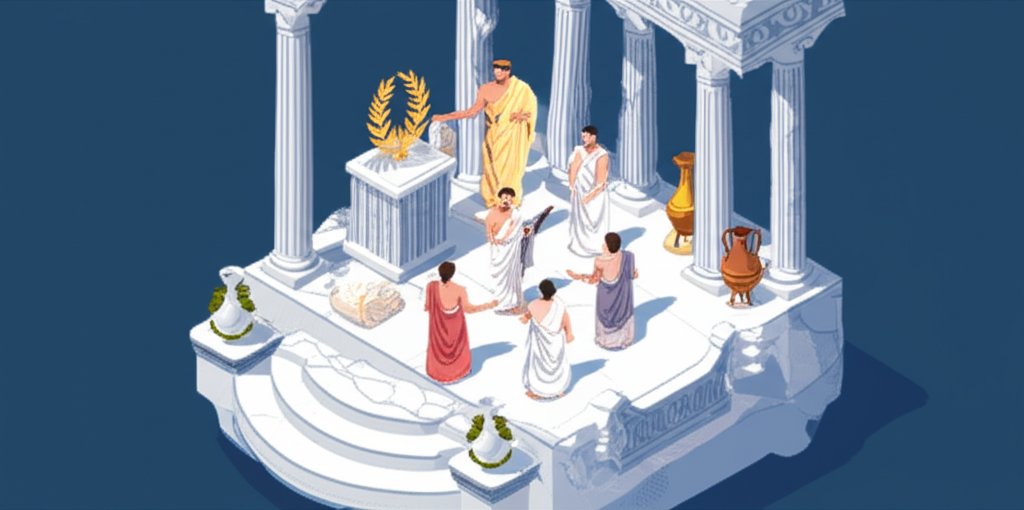
The dominance of the greek nobility was not merely ideological; it was deeply rooted in their economic and social advantages. These privileges provided the necessary foundation for their political authority, cultural patronage, and distinctive way of life.
Land Ownership: The Foundation of Ancient Greek Nobility Wealth
For the ancient Greek nobility, land was the primary source of wealth and power. Vast estates, often worked by slaves or tenant farmers, provided a steady income, agricultural produce, and a degree of self-sufficiency that most ordinary citizens could only dream of. Owning significant tracts of land meant controlling vital resources and, by extension, people. This economic leverage allowed them to maintain lavish households, fund military ventures, and invest in the cultural life of the city-state.
The concentration of land in aristocratic hands was a constant source of social tension, particularly as populations grew and land became scarcer. Debt bondage, where poorer citizens were forced to pledge themselves or their families into servitude due to unpaid debts, often exacerbated these inequalities. The land-rich ancient Greek aristocrats were thus not just wealthy individuals but economic titans whose control over the means of production was instrumental in maintaining their position as the ruling elite.
Exclusive Access to Education and Cultural Capital
One of the most defining privileges of the ancient Greek aristocrats was their exclusive access to extensive education and intellectual pursuits. Unlike the general populace, who received basic training, young aristocrats were thoroughly educated in rhetoric, philosophy, poetry, music, and physical training. This rigorous curriculum aimed to cultivate both their minds and bodies, preparing them for leadership in politics, war, and public life.
This education allowed them to refine their knowledge, engage in sophisticated debates, and appreciate high culture. Cultivating this “cultural capital” – a deep understanding of literature (especially Homeric epics), philosophy, and rhetoric – was crucial for demonstrating their intellectual superiority and justifying their claim to govern. It fostered a shared intellectual environment among the elite, reinforcing their social bonds and distinguishing them from common citizens.
Luxuries, Lifestyles, and Social Stratification
The wealth derived from their land allowed the ancient Greek aristocracy to indulge in lifestyles of unparalleled luxury for their time. Grand estates, fine clothing, elaborate symposia (drinking parties with intellectual discussions), and patronage of the arts were hallmarks of their elevated status. These visible markers of wealth and refinement served not only as personal comforts but also as social signals, reinforcing their position at the apex of society.
Their daily lives contrasted sharply with those of ordinary citizens, farmers, and artisans. While the latter toiled for survival, the ancient Greek aristocrats had the leisure to pursue politics, philosophy, athletics, and military training. This clear social stratification was not merely about wealth but about a distinct way of life, characterized by leisure, refinement, and a keen sense of honor (timē) and glory (kleos), often pursued through competitive displays in athletics and warfare. The agoge in Sparta, while different in its collectivist approach, still aimed to produce an elite class of warriors and citizens.
Governing the Polis: Political Authority and Responsibilities
The ancient Greek aristocracy did not merely enjoy privileges; they were expected to actively participate in the governance and defense of their city-states. Their political authority was often formal and deeply integrated into the state’s institutions, reflecting their self-proclaimed role as “the best qualified to rule.”
The Role in Ruling Councils and Legal Systems
In the oligarchic systems that often succeeded monarchies, ancient Greek aristocrats dominated the executive and judicial branches of government. They served on powerful ruling councils, such as the Areopagus in early Athens, which held extensive powers over legislation, justice, and the oversight of magistrates. Key magistracies, like the archonships in Athens before Solon’s reforms, were almost exclusively held by members of the Eupatridae. These positions were often annual and sometimes even priestly, further blending religious and political authority.
Their intimate knowledge of traditional laws and customs, combined with their rhetorical skills honed through education, made them formidable figures in public debate and legal proceedings. While they held the ultimate decision-making power, they also bore the responsibility for maintaining order, administering justice, and guiding the polis through crises. However, this power was sometimes abused, with some ancient Greek aristocrats prioritizing personal gain over the welfare of the citizenry, leading to resentment and eventually, challenges to their authority.
Ancient Greek Aristocrats as Military Leaders
Warfare was another domain where the ancient Greek aristocrats asserted their leadership. In the early archaic period, warfare often revolved around individual heroic combat and cavalry, areas where wealthy aristocrats excelled. They could afford expensive armor, horses, and chariots, making them the primary heavily armed warriors and military commanders. Their valor (andreia) in battle was a crucial aspect of their aretē and a powerful means of acquiring glory and maintaining their social standing.
As city-states evolved, so did military tactics. The rise of the hoplite phalanx – formations of heavily armed infantry made up of ordinary citizens – began to shift the balance of military power. While ancient Greek aristocrats still retained leadership roles as generals (strategoi) and officers, the increasing reliance on a citizen army meant that military prowess was no longer an exclusive aristocratic preserve, contributing to their eventual decline in absolute power. Nonetheless, their strategic acumen and resources remained vital for defending the city-states during conflicts throughout much of the archaic and classical periods.
Patronage and Public Service: The Dual Role
Beyond direct governance, the greek nobility also engaged in extensive patronage and various forms of public service. This included funding public works, sponsoring religious festivals, or maintaining diplomatic relations with other city-states. Such expenditures, known as liturgies in Athens, were not merely acts of generosity but also strategic investments that enhanced their prestige (timē) and influence. By visibly contributing to the welfare and grandeur of the polis, aristocrats reinforced their indispensable role and garnered the respect (or at least tolerance) of the populace.
They were expected to represent their city-state honorably, both domestically and abroad. This dual role of benefiting from privilege while also contributing significantly to public life was central to the aristocratic ideal, even if the balance often tilted in favor of their self-interest. The expectation of selfless service, particularly in wartime, was a core tenet of their social contract, legitimizing their claim to rule.
Cultural Architects: Shaping Art, Philosophy, and Religion
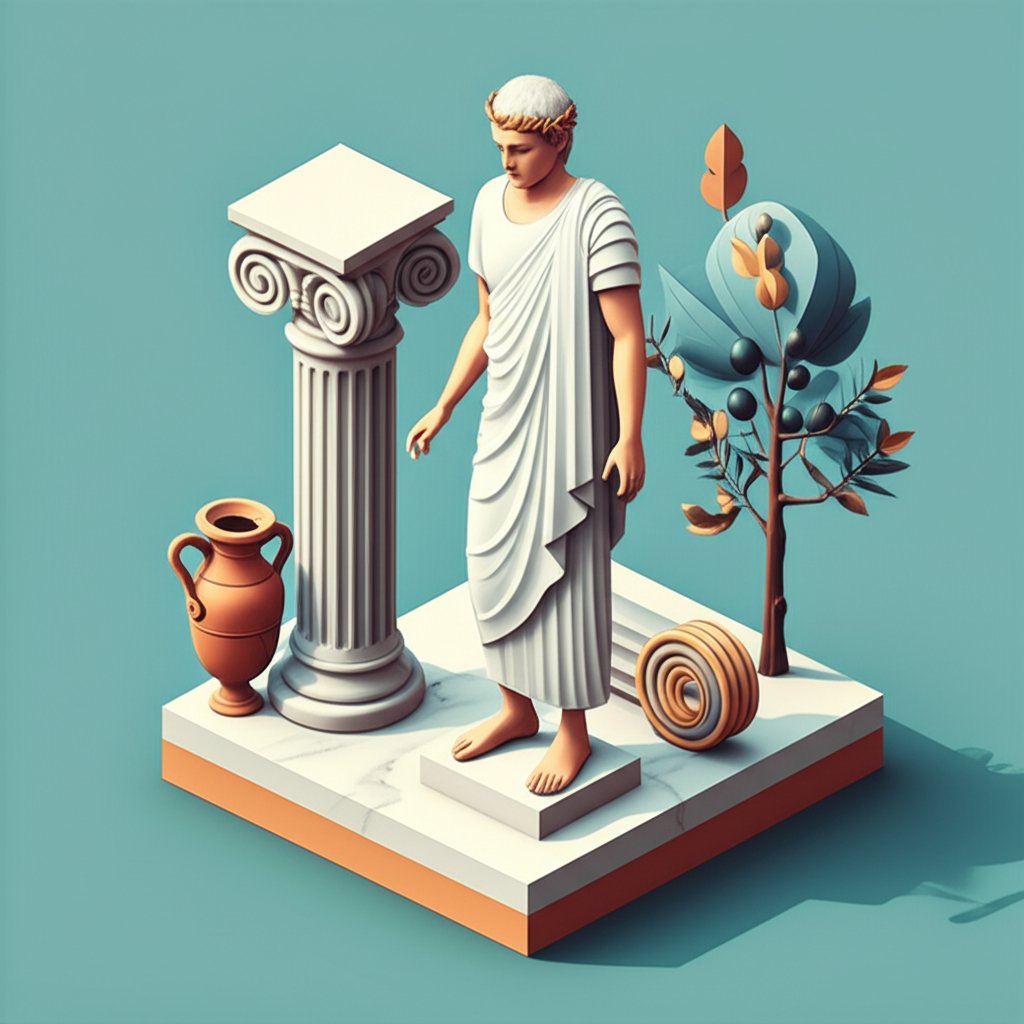
The influence of the ancient Greek aristocracy extended far beyond the political and economic spheres, profoundly shaping the cultural and intellectual landscape of ancient Greece. Their wealth, leisure, and commitment to education made them primary patrons and participants in the development of art, philosophy, and religious practices.
Guardians of Knowledge: Aristocratic Support for Thinkers
The flourishing of philosophy, literature, and the sciences in ancient Greece owes a significant debt to the ancient Greek aristocrats. Figures like Plato and Aristotle, themselves from noble backgrounds or supported by noble patrons, were integral to intellectual discourse. Aristocratic households often served as centers for intellectual gatherings, where philosophers debated, poets recited their works, and scholars exchanged ideas.
By providing financial support and intellectual space, these ancient Greek aristocrats enabled thinkers to pursue knowledge without the immediate pressures of earning a living. This patronage fostered an environment where groundbreaking ideas in ethics, politics, metaphysics, and logic could develop, laying the groundwork for Western intellectual traditions. The works of playwrights like Aeschylus, Sophocles, and Euripides, often performed at festivals sponsored by wealthy citizens, explored themes relevant to aristocratic values such as honor, fate, and justice.
Festivals, Rituals, and Religious Influence
Religion was deeply interwoven with political and social life in ancient Greece, and the greek nobility played a significant role in its practice and organization. Aristocrats often held important priestly offices, which conferred both religious authority and considerable social prestige. These positions allowed them to oversee major religious festivals and rituals, ensuring the proper worship of the gods and the maintenance of civic piety.
Their involvement in these ceremonies reinforced their traditional role as mediators between the human and divine realms, further solidifying their status as arbiters of social and cultural norms. Lavish sacrifices, processions, and dramatic performances at festivals like the Dionysia were often funded by wealthy ancient Greek aristocrats, demonstrating their piety and generosity, while also serving as a public display of their immense wealth and influence.
Symposia: Elite Gatherings and Intellectual Exchange
The symposium (meaning “drinking together”) epitomized the social and cultural practices of the ancient Greek nobility. These exclusive gatherings, held in aristocratic homes, were far more than mere drinking parties. They were sophisticated events where elite men reclined, drank wine, engaged in philosophical debates, recited poetry, listened to music, and enjoyed entertainment.
Symposia served multiple purposes: they were venues for intellectual exchange, social bonding among the elite, and a display of refined tastes and education. Participants would discuss ethics, politics, art, and love, often guided by designated “masters of the symposion.” These gatherings were crucial for forging common aristocratic identity, reinforcing social networks, and cultivating the intellectual and cultural capital that distinguished the ancient Greek aristocrats from the rest of society. They were a microcosm of aristocratic life, where learning, leisure, and social status converged.
The Shifting Sands: Decline and Transformation of Aristocratic Power
While the ancient Greek aristocracy enjoyed a prolonged period of dominance, their exclusive power was not immutable. Over time, various political, economic, and military developments led to a gradual decline and transformation of their influence, paving the way for new forms of governance, most notably democracy and broader oligarchies.
The Rise of the Hoplite Phalanx and Citizen Soldiers
One of the most significant factors in the erosion of aristocratic control was the advent and widespread adoption of the hoplite phalanx in warfare, particularly from the 7th century BCE onwards. The hoplite was a citizen-soldier, typically a farmer or artisan, who could afford the basic panoply of armor and weapons. Fighting shoulder-to-shoulder in dense formations, the phalanx relied on cohesion and discipline rather than individual heroic valor or expensive cavalry.
This military innovation dramatically altered the social contract. If ordinary citizens were now crucial to the defense of the polis, risking their lives on the battlefield, they began to demand a greater say in how the city-state was governed. The monopoly on military prowess previously held by aristocratic cavalry was broken. This shift empowered the emerging middle class, who, though not ancient Greek aristocrats, possessed enough wealth to equip themselves and became indispensable to the state’s security. This new military reality fostered a sense of collective identity and shared responsibility, challenging the notion that only the “best” – the born aristocrats – were fit to rule.
Economic Changes and the Challenge to Landed Gentry
Economic transformations also played a crucial role in undermining the traditional power base of the ancient Greek nobility. While land ownership remained a significant source of wealth, the growth of trade, craftsmanship, and maritime commerce created new avenues for accumulation. Wealthy merchants, shipowners, and artisans, though not of aristocratic birth, amassed considerable fortunes. This new “moneyed” class, often referred to as the nouveau riche, began to challenge the traditional landed aristocracy for influence and status.
These new forms of wealth were more fluid and less tied to inherited land, making them accessible to a broader segment of society. As economic power diversified, so did the demands for political inclusion. The rigid aristocratic system, based on inherited land and lineage, struggled to accommodate these burgeoning economic interests. This economic shift led to increased social tensions and calls for reforms that would grant political rights based on wealth (timocracy) rather than birth, directly threatening the exclusive privileges of the aristocracy ancient Greece.
Towards Democracy and Oligarchy: New Forms of Greek Governance
The cumulative effect of military and economic changes, coupled with widespread social unrest (e.g., debt crises in Athens), led to a series of political reforms across various Greek city-states. In many places, the absolute rule of the ancient Greek aristocracy was either curtailed or completely overthrown.
In Athens, figures like Solon, Cleisthenes, and Pericles introduced reforms that gradually moved the city-state towards a more democratic system, where citizenship and political participation were extended to a wider body of free men. While aristocratic families continued to hold influence, especially due to their wealth and networks, their exclusive control over political offices diminished.
In other city-states, the system evolved into broader oligarchies, where power was still concentrated in the hands of a few wealthy individuals, but not necessarily solely based on ancient aristocratic lineage. Sparta, for instance, maintained a unique form of aristocratic oligarchy with its dual kingship and the powerful Gerousia (council of elders), which continued for centuries. Even in democratic Athens, old aristocratic families continued to play significant roles, demonstrating the long-lasting impact and adaptability of the ancient Greek aristocrats, even as their absolute power waned. Their legacy, however, remains undeniable in the institutions, laws, and cultural achievements that defined ancient Greece.
Conclusion
The ancient Greek aristocracy stands as a testament to a pivotal era in history, embodying the transition from archaic monarchies to the diverse political systems of the classical Greek world. From their philosophical justification as “rule by the best” to their concrete control over land, military, and religious institutions, the greek nobility were the driving force behind many of the defining characteristics of ancient Greek civilization.
They wielded immense economic power through vast landholdings, cultivated a distinct elite culture through exclusive education and intellectual pursuits, and held critical sway over governance and military leadership. Their patronage fueled the flourishing of philosophy, literature, and art, leaving an enduring cultural blueprint that shaped Western thought for millennia. While their exclusive hold on power eventually gave way to more inclusive forms of governance like democracy and broader oligarchies, influenced by the rise of citizen-soldiers and new economic realities, the aristocracy ancient Greece laid much of the groundwork.
Understanding the ancient Greek aristocrats is not merely an academic exercise; it provides crucial insights into the evolution of political ideologies, social structures, and the very concept of leadership. Their legacy, intertwined with the birth of democracy and the foundations of Western philosophy, ensures their place as indispensable figures in the grand tapestry of human history.
FAQ
Q1: What defined the Ancient Greek aristocracy?
A1: The ancient Greek aristocracy was primarily defined by their inherited noble lineage, significant land ownership, and considerable wealth. They were considered “the best” (aristoi) due to their presumed moral and intellectual superiority, often tracing their ancestry back to legendary heroes or gods.
Q2: How did the Ancient Greek aristocracy gain power, replacing monarchies?
A2: Following the Greek Dark Ages, powerful landowning families gradually asserted their influence, challenging and eventually superseding the authority of individual kings. They consolidated power by forming ruling councils and holding key magistracies, shifting governance from singular monarchy to collective elite rule in many city-states.
Q3: What were the main privileges enjoyed by the Greek nobility?
A3: The greek nobility enjoyed extensive privileges, including vast land ownership as their primary source of wealth, exclusive access to comprehensive education in philosophy and the arts, and luxurious lifestyles. They also held prestigious religious offices and led military forces.
Q4: What roles did Ancient Greek aristocrats play in governance and military affairs?
A4: Ancient Greek aristocrats dominated ruling councils and served as chief magistrates, making crucial decisions regarding law and justice. They were also prominent military leaders, initially commanding cavalry and later serving as generals for hoplite armies, responsible for the defense and strategic direction of their city-states.
Q5: How did the Ancient Greek aristocracy influence culture and intellectual life?
A5: The ancient Greek aristocrats were significant patrons of the arts, philosophy, and literature, providing financial support and intellectual spaces for thinkers like Plato and Aristotle. They also organized major religious festivals and engaged in sophisticated intellectual discussions at symposia, thereby shaping the cultural and intellectual landscape of the time.
Q6: What led to the decline of the aristocracy ancient Greece?
A6: The decline of the aristocracy ancient Greece was driven by several factors, including the rise of the hoplite phalanx, which empowered ordinary citizens in warfare; the growth of trade and new forms of wealth that challenged land-based power; and social unrest that eventually led to political reforms moving towards more democratic or broader oligarchic systems.
“@context”: “https://schema.org”,
“@type”: “FAQPage”,
“mainEntity”: [
“@type”: “Question”,
“name”: “What defined the Ancient Greek aristocracy?”,
“acceptedAnswer”: {
“@type”: “Answer”,
“text”: “The ancient Greek aristocracy was primarily defined by their inherited noble lineage, significant land ownership, and considerable wealth. They were considered \”the best\” (aristoi) due to their presumed moral and intellectual superiority, often tracing their ancestry back to legendary heroes or gods.”
“@type”: “Question”,
“name”: “How did the Ancient Greek aristocracy gain power, replacing monarchies?”,
“acceptedAnswer”: {
“@type”: “Answer”,
“text”: “Following the Greek Dark Ages, powerful landowning families gradually asserted their influence, challenging and eventually superseding the authority of individual kings. They consolidated power by forming ruling councils and holding key magistracies, shifting governance from singular monarchy to collective elite rule in many city-states.”
“@type”: “Question”,
“name”: “What were the main privileges enjoyed by the Greek nobility?”,
“acceptedAnswer”: {
“@type”: “Answer”,
“text”: “The greek nobility enjoyed extensive privileges, including vast land ownership as their primary source of wealth, exclusive access to comprehensive education in philosophy and the arts, and luxurious lifestyles. They also held prestigious religious offices and led military forces.”
“@type”: “Question”,
“name”: “What roles did Ancient Greek aristocrats play in governance and military affairs?”,
“acceptedAnswer”: {
“@type”: “Answer”,
“text”: “Ancient Greek aristocrats dominated ruling councils and served as chief magistrates, making crucial decisions regarding law and justice. They were also prominent military leaders, initially commanding cavalry and later serving as generals for hoplite armies, responsible for the defense and strategic direction of their city-states.”
“@type”: “Question”,
“name”: “How did the Ancient Greek aristocracy influence culture and intellectual life?”,
“acceptedAnswer”: {
“@type”: “Answer”,
“text”: “The ancient Greek aristocrats were significant patrons of the arts, philosophy, and literature, providing financial support and intellectual spaces for thinkers like Plato and Aristotle. They also organized major religious festivals and engaged in sophisticated intellectual discussions at symposia, thereby shaping the cultural and intellectual landscape of the time.”
“@type”: “Question”,
“name”: “What led to the decline of the aristocracy ancient Greece?”,
“acceptedAnswer”: {
“@type”: “Answer”,
“text”: “The decline of the aristocracy ancient Greece was driven by several factors, including the rise of the hoplite phalanx, which empowered ordinary citizens in warfare; the growth of trade and new forms of wealth that challenged land-based power; and social unrest that eventually led to political reforms moving towards more democratic or broader oligarchic systems.”










