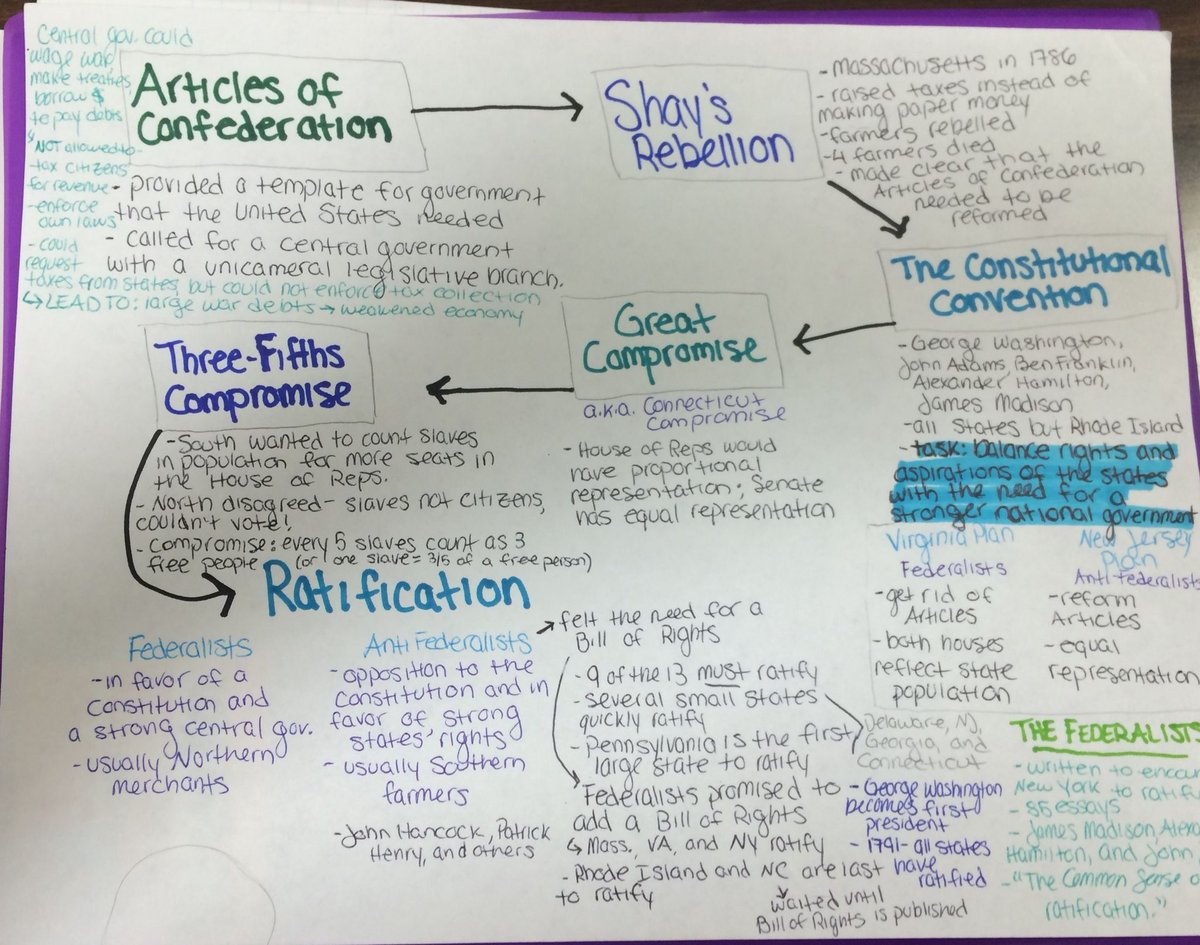
The AP U.S. History syllabus lands on your desk like a history book in itself—dense, intimidating, and stretching from 1491 to yesterday. Your first thought isn’t about the Declaration of Independence; it’s about survival. The key isn’t just to read the 1,000+ pages of The American Pageant or your assigned textbook, but to distill that ocean of information into powerful, effective apush notes. This is your guide to doing just that.
We’re not talking about passively highlighting every third sentence. We’re talking about creating a dynamic study tool that helps you think like a historian, connect the dots across centuries, and walk into the exam room with confidence instead of dread.
At a Glance: Your APUSH Note-Taking Playbook
- Focus on Themes, Not Just Facts: APUSH tests your ability to analyze, not just regurgitate dates. Structure your notes around the course’s key themes (like NAT, WXT, POL) to build a web of connections.
- Master the Nine Periods: The course is divided into nine distinct historical periods, each with a specific weight on the exam. Your notes should be organized the same way.
- Active Recall is Your Best Friend: Don’t just copy from the book. Paraphrase concepts, create charts comparing different viewpoints, and write one-sentence summaries of major events.
- Connect Cause and Effect: For every major event, your notes should clearly answer two questions: “Why did this happen?” and “So what?”
- Prep for the Writing: Great notes are your secret weapon for the Short-Answer Questions (SAQs), Document-Based Question (DBQ), and Long Essay Question (LEQ). They are your personal, curated evidence locker.
Why Your Notes Are Your Most Valuable Asset in APUSH
Let’s get one thing straight: APUSH is less a history class and more a historical thinking class. The College Board isn’t trying to find out if you know the exact date of the Gadsden Purchase. They want to see if you can explain why it happened and how it reflected the era’s debates over expansion and slavery.
Your textbook is full of facts. Your notes are where you turn those facts into arguments.
The exam is designed to test skills. Consider its structure:
- 55 Multiple-Choice Questions: These aren’t simple trivia. Most are “stimulus-based,” meaning you’ll get a political cartoon, a diary entry, or a data table and have to analyze it.
- 3 Short-Answer Questions (SAQs): These require you to make a clear point, provide a specific piece of evidence, and explain its significance—fast.
- 1 Document-Based Question (DBQ): You’ll analyze seven documents to build a cohesive essay.
- 1 Long Essay Question (LEQ): You’ll choose one of three prompts to write a thesis-driven essay using evidence from your own knowledge.
Notice a pattern? It’s all about analysis and evidence. A random fact is useless. A fact connected to a cause, an effect, and a broader theme is gold. Your notes are where you forge those connections.
The Anatomy of an A-Grade Note-Taking System
There’s no single “best” way to take notes, but the most effective systems share common principles. They are active, organized, and built for review.
Step 1: Choose Your Weapon (Digital vs. Analog)
- Digital (Notion, Google Docs, OneNote): Excellent for organization, easy to edit, and searchable. You can quickly drop in images, links, and charts. The downside? The temptation to copy-paste, which is a passive learning disaster.
- Analog (Notebooks, Binders): The act of physically writing helps with memory retention. It forces you to slow down and synthesize information. The downside? It can be messy and harder to reorganize.
Pro-Tip: Try a hybrid approach. Take handwritten notes in class to stay engaged, then type them up later, organizing and expanding on them. This forces you to process the information a second time.
Step 2: Ditch Passive Highlighting for Active Note-Taking
Reading a chapter and dragging a highlighter across the page feels productive, but research shows it’s one of the least effective study methods. Instead, engage with the material.
Try these active strategies:
- Thematic Charts: Create a chart for each chapter or unit. Make columns for the key APUSH themes (e.g., American and National Identity (NAT), Politics and Power (POL), Work, Exchange, and Technology (WXT), etc.). As you read, slot key events, people, and laws into the appropriate columns. This is a game-changer for making connections.
- Cause & Effect Flowcharts: For major events like the Civil War or the Great Depression, create a visual flowchart. Start with the long-term causes, map them to short-term triggers, and then branch out to the immediate and long-term consequences.
- Person-Concept-Event (PCE) Sheets: For each chapter, create a three-column list. Identify the key People (e.g., Andrew Jackson), the core Concepts (e.g., Jacksonian Democracy), and the major Events (e.g., Bank War, Indian Removal Act). This helps you organize the raw information.
Your Period-by-Period APUSH Notes Outline
The course is broken into nine periods. Your notes should be, too. This structure not only helps with organization but also aligns with how the exam is weighted. Periods 3 through 8 are the heart of the course—make sure your notes reflect that. While these summaries are a great starting point, they work best when you supplement them with your own Comprehensive APUSH notes from your class lectures and readings.
Period 1: 1491–1607 (4–6% of Exam)
The Big Idea: Diverse Native American societies were transformed by the arrival of Europeans, sparking the Columbian Exchange and a clash of worlds.
Your Notes Must Cover:
- Native Societies: Note the diversity, especially comparing nomadic Plains tribes with settled agricultural groups like the Pueblo.
- The Columbian Exchange: Create a T-chart. Goods, ideas, and diseases that went from Europe to the Americas, and vice-versa. Focus on the impact (e.g., horses transformed Plains Indian life; European population boomed with new crops).
- Spanish Colonization: Key concepts are the encomienda system and the development of a caste system based on race.
Period 2: 1607–1754 (6–8% of Exam)
The Big Idea: European powers established distinct colonial models, leading to conflict with Native Americans and the development of an Atlantic slave trade.
Your Notes Must Cover:
- Colonial Regions: The single most important concept here. Create a table comparing the New England, Middle, and Southern colonies. Compare their motives for settlement, economic systems, social structures, and relationship with Native Americans.
- The Atlantic Economy: Define and diagram “triangular trade” and “mercantilism.” Note the role of the Navigation Acts.
- Seeds of Rebellion: Document early examples of colonial resistance and self-government, like Bacon’s Rebellion and the House of Burgesses.
Period 3: 1754–1800 (10–17% of Exam)
The Big Idea: The British attempt to tighten control over the colonies after the Seven Years’ War leads to a revolution, a new nation, and intense debates over the Constitution and the role of government.
Your Notes Must Cover:
- The Seven Years’ War (French & Indian War): This is a critical turning point. Note its main consequence: Britain was in debt and ended salutary neglect, leading to colonial taxes.
- The Road to Revolution: Chart the British actions (Stamp Act, Townshend Acts) and the colonial reactions (Sons of Liberty, boycotts). It’s a clear cause-and-effect chain.
- The Constitution: Compare the Articles of Confederation with the Constitution. Chart the arguments between the Federalists (strong central government) and Anti-Federalists (states’ rights, demand for a Bill of Rights).
- Early Republic: Focus on Washington’s Farewell Address (warning against factions and foreign entanglements) and the rise of the first two-party system (Hamilton’s Federalists vs. Jefferson’s Democratic-Republicans).
Period 4: 1800–1848 (10–17% of Exam)
The Big Idea: The new republic expands its borders and its democratic ideals, but these changes spark debates over federal power, markets, and slavery.
Your Notes Must Cover:
- Jeffersonian & Jacksonian Democracy: How did the idea of “the common man” change American politics? Connect this to the expansion of voting rights (for white men).
- The Market Revolution: Document the key innovations (canals, railroads, telegraph) and their social effects (growth of cities, factory work, emergence of a middle class).
- The “American System”: Know the three parts of Henry Clay’s plan: a national bank, protective tariffs, and internal improvements.
- Reform Movements: Create a web diagram connecting the Second Great Awakening to movements like abolitionism, temperance, and women’s rights (Seneca Falls Convention).
- Slavery and Expansion: The Missouri Compromise is a non-negotiable topic. Note how it set the “balance of power” precedent for admitting free and slave states.
Period 5: 1844–1877 (10–17% of Exam)
The Big Idea: Manifest Destiny fuels westward expansion and intensifies the debate over slavery, leading to the Civil War and a tumultuous period of Reconstruction.
Your Notes Must Cover:
- Manifest Destiny: Key events are the annexation of Texas, the Mexican-American War, and the resulting territorial acquisitions (the Mexican Cession).
- The Path to War: Create a timeline of the “failed compromises” of the 1850s: the Compromise of 1850, the Kansas-Nebraska Act, and the Dred Scott decision.
- The Civil War: Focus on the Union’s advantages, key turning points (Antietam and the Emancipation Proclamation, Gettysburg), and the reasons for its victory.
- Reconstruction: Compare Presidential and Radical Republican Reconstruction plans. Note the significance of the 13th, 14th, and 15th Amendments and the reasons for Reconstruction’s failure (Southern resistance, waning Northern resolve).
Period 6: 1865–1898 (10–17% of Exam)
The Big Idea: The Gilded Age sees rapid industrialization, immigration, and urbanization, creating immense wealth alongside stark social and economic problems.
Your Notes Must Cover:
- The “New South”: Document the rise of sharecropping and Jim Crow laws as systems to control the African American population after Reconstruction.
- Industrial Titans & Technology: Note the key figures (Carnegie, Rockefeller) and business practices (trusts, monopolies). Contrast the “captain of industry” idea with the “robber baron” critique.
- Labor & Populism: Chart the goals and outcomes of early labor unions (Knights of Labor, AFL) and the Populist Party’s platform (Omaha Platform).
- Immigration and Urbanization: Contrast “New Immigrants” (from Southern/Eastern Europe) with “Old Immigrants.” Note the problems of cities (tenements, sanitation) and the rise of political machines.
Period 7: 1890–1945 (10–17% of Exam)
The Big Idea: America grapples with its new role as a world power, experiences the Progressive Era’s reforms, weathers economic collapse, and fights two world wars.
Your Notes Must Cover:
- Progressive Era: This is about using government to fix the Gilded Age’s problems. Organize your notes by type of reform: economic (trust-busting), political (17th/19th Amendments), and social (muckrakers, settlement houses).
- Imperialism: What were the arguments for and against U.S. expansion? Key event: Spanish-American War.
- World War I: Focus on the reasons for U.S. entry, the home front experience (Espionage & Sedition Acts), and Wilson’s Fourteen Points.
- The Roaring Twenties & The Great Depression: Create a cause-and-effect chart. Causes of the Depression (speculation, overproduction) lead to Hoover’s response, which then leads to FDR’s New Deal.
- The New Deal: Don’t memorize every agency. Categorize them by the “3 Rs”: Relief (direct aid), Recovery (jobs/economy), and Reform (long-term fixes like Social Security, FDIC).
- World War II: Note the shift from isolationism to intervention, the mobilization of the home front (women in factories, Japanese internment), and the war’s end as the start of the Cold War.
Period 8: 1945–1980 (10–17% of Exam)
The Big Idea: The Cold War against the Soviet Union shapes U.S. foreign policy and domestic life, while the Civil Rights Movement and other social upheavals transform American society.
Your Notes Must Cover:
- The Cold War: Define containment. Key events: Truman Doctrine, Marshall Plan, Korean War, Cuban Missile Crisis, Vietnam War.
- The Civil Rights Movement: Create a timeline distinguishing the strategies and goals of different phases/groups (e.g., MLK’s nonviolence vs. the Black Power movement). Key legislation: Civil Rights Act of 1964, Voting Rights Act of 1965.
- LBJ’s Great Society: Frame this as the “domestic New Deal.” Note its key programs (Medicare, Medicaid) and its connection to the “War on Poverty.”
- The 1960s & 1970s: A period of massive change. Your notes should touch on the counterculture, the feminist movement, the environmental movement (EPA), and the political turmoil of Vietnam and Watergate.
Period 9: 1980–Present (4–6% of Exam)
The Big Idea: The rise of modern conservatism, the end of the Cold War, and the challenges of globalization and terrorism define the most recent era.
Your Notes Must Cover:
- The Rise of Conservatism: What were the key elements of the “Reagan Revolution”? (Tax cuts, deregulation, strong military).
- The End of the Cold War: Note Reagan’s role and the collapse of the Soviet Union.
- Globalization & The Digital Age: The impact of computers, the internet, and trade agreements like NAFTA.
- The War on Terror: The 9/11 attacks and their impact on U.S. foreign policy (wars in Afghanistan and Iraq) and domestic policy (Patriot Act).
From Notes to Action: Winning the Exam
Your beautifully organized notes are worthless if they just sit in a binder. Here’s how to weaponize them for the exam.
For Short-Answer Questions (SAQs)
The SAQ format is strict: ACE (Answer, Cite, Explain).
- Answer the prompt directly in one sentence.
- Cite a specific piece of historical evidence from your notes.
- Explain how your evidence proves your answer.
Practice Drill: Open your notes to a random section. Pick a key term (e.g., “Manifest Destiny”). Formulate an SAQ-style response explaining its significance. This takes 5 minutes and builds the exact mental muscle you need.
For the Document-Based Question (DBQ)
The DBQ is all about weaving together your outside knowledge with the provided documents.
- Plan First (10-12 mins): Read the prompt. Quickly skim the documents.
- Group the Docs: Don’t just summarize them. Group them into 2-3 categories based on their arguments (e.g., “These docs support expansion,” “These docs criticize it”).
- Write Your Thesis: Your thesis should answer the prompt and preview your document groups.
- Source It Up: For at least three documents, you must analyze Historical Context, Intended Audience, Purpose, or Point of View (HIPP). Your notes are your source for “Historical Context.” When a document mentions “the corrupt bargain,” your notes on the Election of 1824 give you the context to explain it.
Your New Study Rhythm: A Sustainable Plan
You can’t cram for APUSH. The sheer volume of content will crush you. The only way to succeed is through consistent, focused effort.
- Pre-Read Before Class: Skim the upcoming chapter. You don’t need to master it, just get the lay of the land.
- Take Active Notes in Class: Focus on what your teacher emphasizes. They know what the AP readers are looking for.
- Consolidate After Class (The 24-Hour Rule): Within a day, review and consolidate your class notes and reading notes into your master system (your charts, outlines, etc.). This is the most important step.
- Weekly Review: Every Friday, spend 30-45 minutes reviewing the week’s notes. This moves information from your short-term to your long-term memory.
This process transforms note-taking from a chore into a powerful learning cycle. Your notes become a living document, a testament to your understanding, and your single best tool for conquering the APUSH exam. Get to it.










