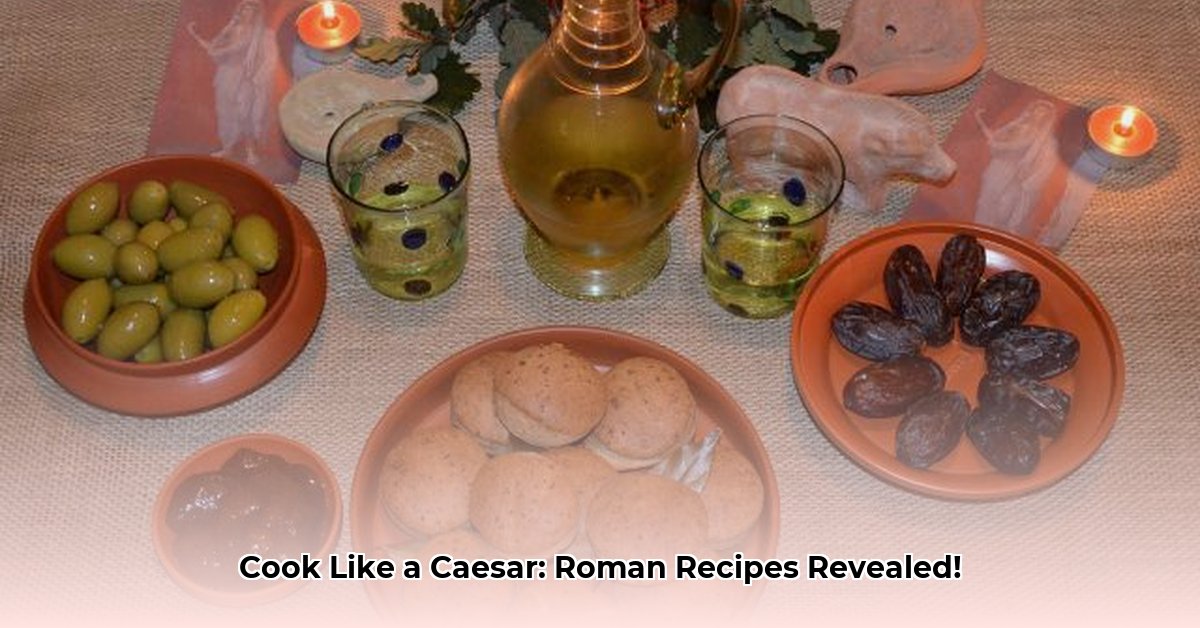
Ever wondered what folks in ancient Rome truly ate? Ditch the images of dusty history books – we’re diving headfirst into seriously tasty food! Imagine bubbling pots of flavorful sauces, herbs that make your kitchen sing, and honey so good it’s fit for an emperor. This is your chance to get hands-on and recreate the surprisingly delicious recipes of the past. You can also discover even more ancient Roman recipes. Beyond a culinary journey, understanding Roman cooking unlocks a deeper appreciation for ancient culture and innovation. Are you ready for a culinary adventure that brings a true taste of history right to your table?
The Roman Kitchen Unveiled: Core Culinary Principles
What if you could step back in time and dine like a Roman citizen, or even a Caesar? Forget sterile museums. Imagine a world of rich, complex flavors, often combining sweet and savory notes. Roman meals were a true social experience. Delving into ancient Roman recipes isn’t just about cooking; it’s about embarking on a delicious journey back through culinary history. Let’s explore how to recreate authentic Roman dishes right in your modern kitchen, ensuring you bring a genuine taste of the past to your table.
Ancient Roman cooking offers fascinating insights into historical gastronomy. Here are three pivotal points that define their unique culinary identity:
- Garum’s Ubiquitous Role: This fermented fish sauce was the cornerstone of flavor. It contributed vitally to nearly every Roman dish, similar to how salt is used today. Modern alternatives provide a practical path to replicating this essential taste.
- Mastery of Sweet and Savory: Romans excelled at blending honey, spices, and herbs. They created sophisticated flavor profiles that often married sweetness with savory elements. This stands as a testament to their innovative palate.
- Foundation in Simple Staples: While elaborate banquets existed, the core Roman diet was built on hearty, accessible dishes. Examples include grain porridges (puls) and simple spreads. This reflected a practical approach to daily sustenance.
Garum: The Undisputed King of Roman Flavor
If one ingredient truly defines Roman cuisine, it’s garum (fermented fish sauce). This powerful flavor enhancer was the Roman equivalent of modern soy sauce or Worcestershire sauce – an umami bomb designed to make dishes sing! Romans incorporated it into virtually everything. This included vegetables, meats, and even, surprisingly, some desserts. Imagine a dish without a key seasoning; that’s how integral garum was.
Authentic Roman-style garum can be challenging to locate today. However, a high-quality Asian fish sauce or a dash of anchovy paste mixed with a little water can reliably provide a similar savory depth. While not an exact replica, these modern culinary staples offer a highly effective way to capture the essence of that distinctive Roman flavor, making your dishes authentically rich.
Honey’s Sweet and Savory Reign
Before the widespread use of sugar, honey reigned supreme! Honey was the primary sweetener in ancient Rome. It was used not merely for desserts, but generously to balance and enhance the savory elements within meals. How often do we consider honey as a savory ingredient in modern cooking? Romans mastered this sweet-savory balance with exceptional skill.
Consider honey-glazed pork with apples and coriander, a popular dish that perfectly illustrates this blend. Roman cooks were maestros of this culinary balancing act. They used honey to create complex and mouthwatering combinations, even incorporating it into sweet omelets. This ancient practice of harmonizing flavors provides valuable inspiration for contemporary cooking.
Herbs and Spices: Crafting Complex Aromas
Roman cooks were truly masters of flavor, possessing an intimate understanding of herbs and spices. They skillfully combined these aromatic elements to create richly appealing sauces and main dishes. While significantly influenced by Greek culinary traditions, they forged their own distinctive style. They primarily utilized ingredients readily available across the vast Roman Empire. This widespread access contributed to diverse and robust flavor profiles.
Commonly employed herbs included bay leaves, celery seeds, dill, fennel, mint, oregano, rosemary, and thyme. These versatile herbs were frequently infused into olive oil or wine. This created potent, flavorful sauces that significantly enhanced the taste of meats, vegetables, and even certain desserts. Indeed, these herbal infusions were a hallmark of Roman culinary sophistication.
Recreating Ancient Tastes: Essential Recipes for Your Table
Ready to infuse ancient Roman flavors into your cooking? This framework includes classic dishes adapted for high success rates in modern kitchens.
Crafting Your Own Garum Substitute: A Practical Guide
Imagine savoring a dish seasoned with a flavor so deeply ingrained in Roman cuisine that it was as common as salt and pepper are today. That flavor was garum, a fermented fish sauce. It added a distinct umami note to countless Roman dishes. If you desire to experience this ancient flavor in your own kitchen, crafting a Garum substitute is achievable with modern ingredients and techniques, ensuring a reliable outcome.
Garum wasn’t simply a single product; it existed in various forms, from the highly refined liquamen to other variations made from different parts of the fish. It was as diverse as the social classes consuming it, with quality and price reflecting its ingredients and sophisticated production methods. For instance, a high-quality garum made from premium fish could command a significant price, indicating its value in Roman society.
Salt is the unsung hero of garum production. It’s not just for flavor; salt serves as a crucial preservative and fermentation controller. Think of it as the guardian. It prevents unwanted bacteria from spoiling the batch while allowing beneficial enzymes to break down the fish, thus ensuring a safe and effective fermentation process.
While replicating garum exactly can be challenging, commercially available fish sauces offer a close approximation of its flavor. Many chefs and home cooks find that these modern alternatives provide a highly reliable umami boost, effectively capturing the essence of ancient Roman cuisine.
Ingredients for a Reliable Garum Substitute:
- 2 lbs (approx. 900g) of fresh, high-quality anchovies or sardines (the smaller, the better for deep, complex flavor)
- 1 cup (approx. 240g) of coarse sea salt (for a crunchy, mineral-rich bite)
- 1 gallon (approx. 3.8 liters) of filtered water (because your fish sauce deserves the best)
Instructions for Homemade Garum Substitute:
- Layer Ingredients: In a large, non-reactive glass or food-grade plastic container, alternately layer the prepared fish and sea salt. Begin and end with a layer of salt. This ensures every fish receives its salty spa treatment.
- Submerge and Cover: Pour the filtered water over the layers until all ingredients are completely submerged. Cover the container with a clean cheesecloth or breathable fabric to keep out unwanted guests (like bugs) while allowing airflow.
- Ferment Safely: Place the container in a warm, sunny spot (around 75°F to 85°F / 24°C to 29°C) for a minimum of 3 months. Stir the mixture weekly with a clean spoon to encourage consistent fermentation. This controlled environment is highly effective for home production.
- Extract the Golden Liquid: After 3 months, strain the liquid through a fine-mesh sieve or cheesecloth into a clean bottle. Press gently on the solids to extract every last drop of that golden goodness. Discard the remaining solids or compost them.
- Storage: Store your homemade Garum Substitute in the refrigerator. It will keep for up to a year, but typically gets used much faster. The flavor often improves with age.
Pros and Cons of Making Your Own Garum Substitute
| Feature | Pros | Cons |
|---|---|---|
| Control | You gain complete control over ingredients and the final flavor profile. | Requires careful monitoring and meticulous attention to detail at every stage. |
| Authenticity | Can be a closer approximation to ancient methods, if desired. | Achieving a truly authentic historical flavor can be challenging due to variations in ancient production techniques. |
| Cost | Potentially more cost-effective than purchasing high-end commercial alternatives. | Time-consuming, demanding patience, and may require specific equipment, such as a thermometer and fermentation vessels. |
Remember, fermentation involves the purposeful cultivation of microorganisms. While the inherent high salt content inhibits the growth of harmful bacteria, it is absolutely essential to practice impeccable hygiene throughout the process. Sterilize all your equipment meticulously, carefully monitor the fermentation, and most importantly, trust your senses. If anything smells off or looks unusual, it is safest to discard the batch.
Moretum: The Simple, Flavorful Cheese Spread
Looking for a straightforward, yet incredibly flavorful dish to kickstart your Roman culinary adventure? Look no further than Moretum (a Roman cheese spread). It’s incredibly easy to make and serves as an ideal accompaniment for crusty bread or fresh vegetables, offering a direct taste of Roman simplicity. This recipe has a high success rate for capturing authentic daily Roman flavors.
Ingredients for Moretum:
- 2 cups (approx. 220g) of freshly grated Pecorino Romano cheese (the sharper, the better)
- 4 cloves of garlic, minced (for that bold, in-your-face flavor)
- 1/2 cup (approx. 120ml) of rich extra virgin olive oil (the liquid gold of the kitchen)
- 1/4 cup (approx. 6g) of fresh parsley, finely chopped (for a pop of color and freshness)
- 1/4 cup (approx. 6g) of fresh mint, finely chopped (because why not?)
- 1/2 tsp of finely ground black pepper (for a little kick)
- 1/2 tsp of sea salt (to bring all the flavors together)
Instructions for Moretum:
- Combine Cheese and Garlic: In a large mixing bowl, combine the freshly grated Pecorino Romano cheese and minced garlic. Mix until the garlic is evenly distributed throughout the cheese.
- Drizzle in Oil: Slowly drizzle in the rich extra virgin olive oil while continuously stirring the mixture. This ensures the oil is fully incorporated, creating a smooth, spreadable consistency.
- Add Herbs: Add the finely chopped fresh parsley and mint to the bowl. These herbs not only add vibrant color but also a refreshing taste that balances the sharpness of the cheese.
- Season: Sprinkle in the finely ground black pepper and sea salt. Mix everything together until well combined. Taste and adjust seasoning if necessary, but remember, the flavors will meld and intensify as it sits.
- Chill and Serve: Transfer the mixture to a serving dish. For best results, let it chill in the refrigerator for at least 30 minutes before serving. This allows the flavors to marry and the spread to firm up slightly.
Rich in flavor with a creamy yet slightly crumbly texture, this Moretum Herb and Cheese Spread is a versatile delight. Try it slathered on crusty bread or as a bold addition to your favorite sandwich for an extra layer of deliciousness.
Puls: The Hearty Roman Grain Porridge
Puls was a fundamental staple in the Roman diet, often referred to as the ancestor of modern polenta or porridge. It was a versatile dish, served throughout the day, and could be made savory or sweet. This version adds a delightful sweetness with honey and cheese, transforming a humble grain into a comforting, flavorful meal.
Ingredients for Puls with Honey and Cheese:
- 1 cup (approx. 200g) of pearled barley, rinsed and ready to soak up flavors
- 2 cups (approx. 470ml) of water, because even barley needs a bath
- 1/2 cup (approx. 120g) of creamy ricotta cheese
- 2 tbsp (approx. 30ml) of golden, sticky honey
- 1/4 tsp of finely ground sea salt, to make everything pop
- 1 tbsp (approx. 15ml) of rich extra virgin olive oil, for that smooth finish
Instructions for Puls:
- Cook Barley: In a medium saucepan, combine the pearled barley and water. Bring to a boil over high heat, then reduce heat to a simmer. Cover and cook for 45 minutes, or until barley is tender and has absorbed all the water. Stir occasionally to prevent sticking.
- Steam and Fluff: Once cooked, remove from heat and let sit covered for 5 minutes. This allows it to steam and become even fluffier.
- Season Barley: Fluff the barley with a fork, then drizzle with extra virgin olive oil and sprinkle with sea salt. Mix well to combine.
- Fold in Cheese: Gently fold in the ricotta cheese, leaving some streaks for a marbled effect. For an extra creamy texture, let the ricotta come to room temperature before mixing.
- Drizzle Honey: Drizzle the honey over the top just before serving. Warm the honey slightly for easier drizzling and a more pronounced flavor.
Kick back and enjoy the creamy, cheesy goodness with a sweet honey finish. Serve it warm for a comforting side dish, or chill for a refreshing summer salad alternative. Either way, it’s a texture and flavor party in your mouth!
Libum: Roman Honey Cheesecake
Let’s time-travel to ancient Rome with a slice of Libum Roman Cheesecake, a dessert so divine, it’ll have you toga-twirling in delight. This isn’t your average cheesecake—oh no—it’s a rustic, honey-drizzled masterpiece that’s as easy to make as it is to devour. The Roman consul Cato’s agricultural writings included simple recipes for farmers, and Libum was one such cheesecake, sometimes served hot.
Ingredients for Libum Roman Cheesecake:
- 1 cup (approx. 240g) of creamy ricotta cheese, as smooth as a Roman statue
- 1 large farm-fresh egg, beaten to golden perfection
- 1/2 cup (approx. 60g) of all-purpose flour, sifted like the sands of the Colosseum
- 2 tbsp (approx. 30ml) of rich, golden honey, plus extra for drizzling
- 1/2 tsp of finely ground bay leaves, for a whisper of ancient flavor
- A pinch of sea salt, as precious as Roman gold
Instructions for Libum:
- Preheat Oven: Preheat your oven to 375°F (190°C), because even ancient Romans knew the importance of a hot oven.
- Combine Wet Ingredients: In a mixing bowl, combine the ricotta cheese and beaten egg until smoother than a chariot ride on the Appian Way.
- Fold in Dry Ingredients: Gently fold in the sifted flour, ground bay leaves, and sea salt, mixing just until the dough comes together—think of it as building Rome, not all in one day.
- Shape and Bake: Shape the dough into a round loaf and place it on a parchment-lined baking sheet. For an authentic touch, press a bay leaf into the top before baking. Bake for 25-30 minutes, or until the cheesecake is golden and firm to the touch, like the walls of the Pantheon.
- Cool and Serve: Remove from the oven and immediately drizzle with honey, because everything’s better with a little sweetness. Let it cool slightly before serving, allowing the










