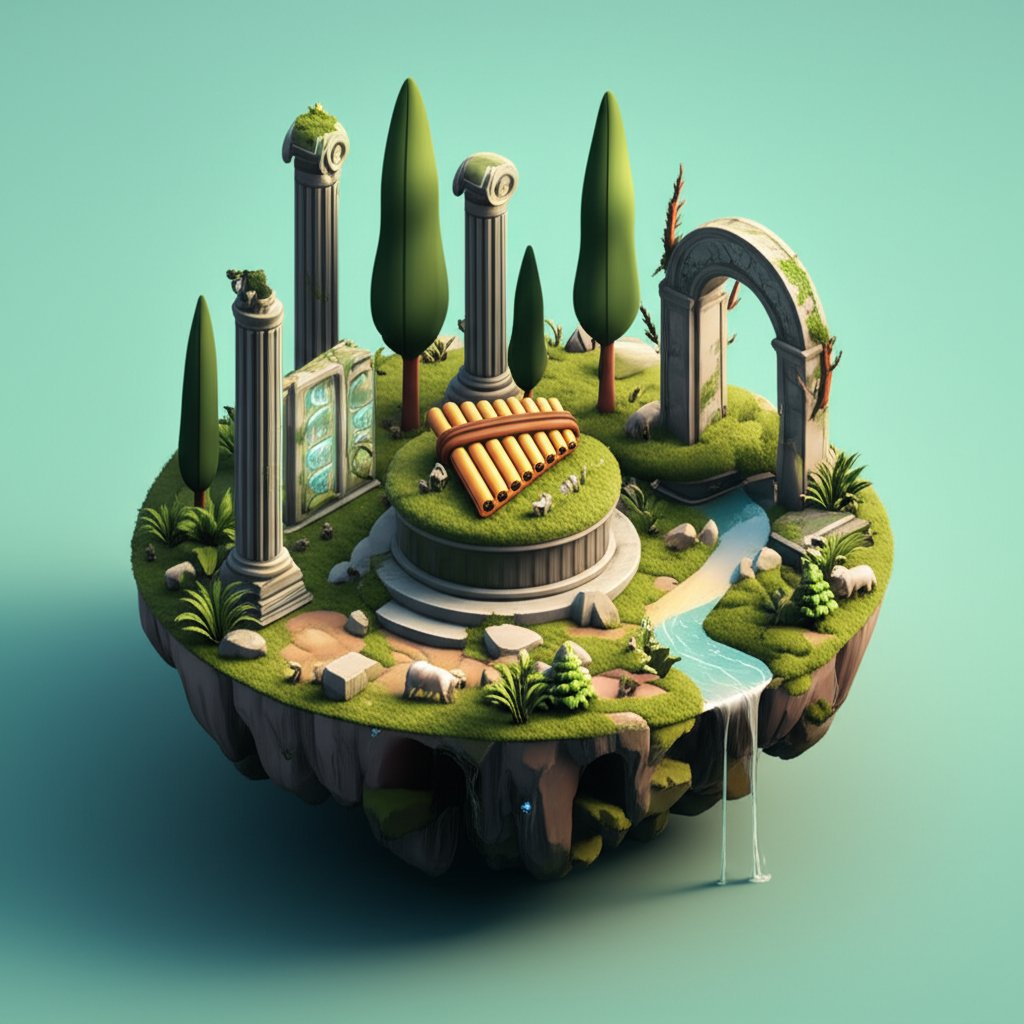
Have you ever imagined a land untouched by time, a world of tranquil shepherds and idyllic natural beauty? For centuries, this romanticized vision of Arcadia has captivated imaginations. Yet, beneath the veneer of myth lies a complex, rugged reality: ancient Arcadia was a vibrant, often turbulent region in the heart of the Peloponnese, a land where formidable mountains shaped destiny, political struggles defined communities, and a unique cultural identity blossomed amidst the challenges. This article will peel back the layers of legend to reveal the true secrets of ancient Arcadia, exploring its profound myths, intricate power dynamics, and rich history, ensuring we address every question about this remarkable corner of the ancient Greek world.
Understanding Arcadia’s place within the broader scope of the ancient world is crucial, so delving into an ancient history timeline can provide valuable context.
The Mountainous Heart of Ancient Arcadia: Geography and Isolation
To understand ancient Arcadia, one must first grasp its formidable geography. Nestled in the central Peloponnese, Arcadia was a land of towering peaks, deep valleys, and winding rivers, fundamentally shaping the lives, culture, and political trajectory of its inhabitants. This rugged terrain was not merely a backdrop; it was a defining characteristic, a silent architect of Arcadian identity.
A Natural Fortress: Peaks, Valleys, and Rivers
Imagine a landscape meticulously carved by nature: the imposing peaks of Mount Lykaion, Mount Mainalon, and Mount Kyllene piercing the sky, their slopes dense with forests of pine and fir. Below, swift rivers like the Alpheios and Ladon carved deep, fertile valleys, providing essential water for agriculture and sustenance. These rivers, while life-giving, also created natural divides, contributing to the isolation of various communities within ancient Arcadia.
The mountainous topography served as a natural barrier, protecting Arcadian communities from external invasions but also isolating them from one another and from the powerful coastal city-states like Sparta and Corinth. Travel between settlements was arduous and often perilous, hindering the formation of a unified political entity. This physical isolation fostered a robust sense of self-reliance and community, where inhabitants learned to depend on their own resources, cultivating a unique culture deeply rooted in their connection to the land.
Life Shaped by Land: Economy, Resources, and Adaptation
The economy of ancient Arcadia was predominantly agrarian, centered on pastoralism. The verdant hillsides were ideal for raising sheep and goats, which provided food, wool, and other vital resources. Limited farming activities, primarily of cereals and olives, were confined to the more fertile valleys. This subsistence-based economy meant that Arcadians were intimately connected to nature’s rhythms, developing a profound practical knowledge of their environment.
Despite the challenges, Arcadians adapted and thrived. Their resilience was evident in their ability to navigate difficult terrain, utilize natural resources, and develop communities that could withstand both natural hardships and external pressures. The land dictated their daily routines, their social structures, and even their religious practices, turning them into expert mountain dwellers and skilled pastoralists.
A Tapestry of Power: Political Evolution and Conflicts in Ancient Arcadia
Unlike many of its neighbors, ancient Arcadia never coalesced into a single, enduring kingdom. Instead, its political landscape was a complex mosaic of independent city-states, shifting alliances, and constant internal as well as external conflicts. This fragmentation, far from diminishing its significance, highlights a unique form of power and resilience.
A Patchwork of Poleis: Fragmentation and Local Autonomy
For much of its history, ancient Arcadia was characterized by numerous independent communities, or poleis, each with its own governance, customs, and aspirations. Prominent among these were cities like Tegea, Mantinea, Orchomenus, and Kleitor. These cities often vied for regional dominance, leading to frequent skirmishes and territorial disputes.
This internal competition meant that efforts to forge lasting alliances and leagues were often ephemeral. The Arcadian League, a notable attempt at unification, frequently faltered due to persistent internal disagreements and rivalries. Despite these challenges, the Arcadian cities maintained a remarkable degree of autonomy, navigating a world dominated by larger powers through astute diplomacy, strategic alliances, and, when necessary, fierce military resistance. Their capacity to endure and sustain independence, despite political divisions, speaks volumes about the Arcadian people’s adaptability and enduring spirit.
External Pressures and the Push for Unity: Sparta, Thebes, and Megalopolis
The political landscape of ancient Arcadia was perpetually influenced by external powers, most notably Sparta. Sparta, a dominant force in the Peloponnese, often projected its influence onto Arcadian affairs, using smaller communities as pawns in its broader strategic games. This constant pressure, however, inadvertently played a crucial role in pushing Arcadians towards greater unity.
A pivotal moment arrived with the Battle of Leuctra in 371 BCE, where the Theban general Epaminondas decisively defeated Sparta. This event dramatically altered the balance of power in Greece, providing ancient Arcadia with a critical opportunity to assert its independence and consolidate its own path. Anti-Spartan sentiment, long simmering beneath the surface, surged to the forefront, fueling a concerted drive for shared sovereignty.
In the aftermath of Leuctra, the Arcadians, with Theban support, founded Megalopolis (“Great City”) in 371/370 BCE. This ambitious project aimed to create a robust federal capital that would serve as a defensive bulwark against Sparta and a center for a unified Arcadian state. Megalopolis was strategically located, designed to house representatives from various Arcadian communities, symbolizing a decisive shift towards centralized governance. While the unified Arcadian state eventually fractured, the establishment of Megalopolis marked a monumental turning point, signifying a strong aspiration for collective strength and a unified identity.
Analyzing Arcadian Political Structures: Texts, Coins, and Inscriptions
Understanding the complex political structures of ancient Arcadia requires a multifaceted approach, drawing upon a wide range of evidence. Ancient Greek texts, such as those by Xenophon and Pausanias, offer invaluable, albeit sometimes biased, narratives of Arcadian affairs, detailing alliances, conflicts, and internal dynamics.
Archaeological finds, including the distinctive Arkadikon coinage, provide further clues. Scholars debate whether this coinage represented a nascent pan-Arcadian organization or was primarily a tool used by powerful cities like Tegea to assert regional dominance. Similarly, epigraphic evidence—inscriptions on stone detailing laws, treaties, and religious practices—offers direct insights into local governance and social norms across different Arcadian sites. By meticulously comparing and critically analyzing these diverse sources, modern historians piece together a comprehensive, nuanced picture of Arcadia’s political evolution, revealing the interplay between local autonomy, federal aspirations, and external influences.
Gods, Shepherds, and Sacred Groves: The Myths and Religion of Ancient Arcadia
Ancient Arcadia holds a distinctive place in Greek mythology and literature, often depicted as an untouched pastoral paradise. This idealized image, though largely a romanticized interpretation, reflects a genuine facet of Arcadian identity: a deep-seated connection to nature and a reverence for the gods who embodied the wild.
The Pastoral Ideal: Pan, Nymphs, and a Lost Paradise
At the heart of Arcadian mythology is Pan, the god of shepherds, flocks, wild nature, and rustic music. His goat-like appearance and playful, sometimes terrifying, nature made him the quintessential spirit of ancient Arcadia. Pan’s presence embodied the intimate connection between the Arcadian people and their rugged, untamed environment, celebrating their agrarian way of life and their profound interaction with the natural world.
Beyond Pan, Arcadia was also believed to be home to countless nymphs, dryads, and other mythical creatures inhabiting its forests, mountains, and rivers. This rich tapestry of nature-based deities and spirits cultivated an image of Arcadia as a magical, unspoiled realm—a world away from the burgeoning urban centers and their perceived corruption. Poets like Theocritus and later Virgil, in their bucolic verses, further immortalized Arcadia as a literary trope for a simple, harmonious existence, a timeless image that resonated deeply with urban audiences longing for a return to nature.
Cults and Rituals: Despoina, Zeus Lykaios, and Local Traditions
While the pastoral image dominated literature, the religious practices of ancient Arcadia were far more complex and deeply rooted in local traditions. The cult of Despoina, meaning “the Mistress,” was particularly significant. Worshiped alongside her mother Demeter in secret mysteries, Despoina represented a powerful chthonic deity associated with fertility, the underworld, and the sacred bond between humans and the earth. Her cult, celebrated in sanctuaries like Lykosoura, highlights a unique Arcadian religious identity, distinct from the Olympian pantheon dominant elsewhere in Greece.
Another prominent cult was that of Zeus Lykaios, centered on Mount Lykaion. This ancient sanctuary was associated with mysterious rites, including human sacrifice in early times (though this practice is often debated by scholars), and a sacred precinct where, it was believed, no living creature could cast a shadow. The Lykaia games, pan-Arcadian athletic contests held at this site, further solidified a shared religious and cultural identity, fostering a sense of unity among the otherwise fragmented communities of ancient Arcadia. These local cults, often predating the Olympian system, underscore the deep indigenous roots of Arcadian spiritual life.
Daily Rhythms and Social Strata: Life in Ancient Arcadia
Moving beyond myths and political machinations, understanding ancient Arcadia requires a look at the everyday lives of its people, their social structures, and how the unique environment shaped their existence. Life in Arcadia was largely agrarian, localized, and profoundly influenced by the region’s mountainous terrain.
A Life of Toil and Community: Farmers, Shepherds, and Artisans
For the majority of Arcadians, daily life revolved around the rhythms of farming and pastoralism. Men and women alike engaged in arduous labor, tending to fields of grain, olive groves, and vineyards, or herding sheep and goats across the challenging mountain pastures. Their lives were intimately connected to the seasons and the bounty (or scarcity) of the land.
Beyond subsistence, small-scale craft production was vital. Arcadians were skilled in weaving wool, working local timber, and producing pottery for daily use. Communities were often self-sufficient, relying on strong communal bonds for survival. Festivals, religious ceremonies, and local markets provided opportunities for social interaction, trade, and the reinforcement of shared cultural values. Children were taught practical skills from a young age, preparing them for a life reliant on their own labor and the strength of their community.
Social Hierarchies and Gender Roles in Ancient Arcadia
While the idealized image of Arcadia suggests a egalitarian society, social hierarchies undoubtedly existed within its communities. Land ownership, wealth from pastoralism, and military prowess likely determined social standing. Elite families would have wielded significant influence in local governance, religious ceremonies, and military decisions.
Information on gender roles in ancient Arcadia is sparse but can be inferred from broader Greek societal norms and unique Arcadian practices. Women would have been central to household management, food production, and textile crafts. The prominence of female deities like Despoina suggests a strong reverence for female power and fertility within Arcadian religious life, perhaps hinting at a more significant role for women in certain cults or aspects of community life than in other Greek city-states. While the idyllic representations often exclude the complexities of social stratification and the realities of daily labor, it is crucial to remember that Arcadian society, like any other, had its own divisions and power structures.
Urban Development: The Impact of Megalopolis
The founding of Megalopolis in the 4th century BCE profoundly altered daily life and social structures for many Arcadians. This large, planned urban center brought together populations from numerous smaller communities, creating a new civic administration and a more diverse social environment. For the first time, many Arcadians experienced life within a significant urban setting, with centralized markets, public buildings, and a more complex social stratification than that found in their traditional villages.
This urban development brought both opportunities and challenges. While it fostered a stronger sense of pan-Arcadian identity and provided a defensive center, it also necessitated new forms of governance, economic integration, and social adjustment. The transition from isolated pastoral communities to a more unified, urbanized federal state was a testament to the Arcadians’ capacity for adaptation and their strategic response to the political realities of their time.
Ancient Arcadia’s Enduring Echoes: Cultural Legacy and Modern Interpretations
The influence of ancient Arcadia extends far beyond its geographical boundaries and historical timeline. Its unique geography, rich mythology, and the romanticized ideals associated with it have left an indelible mark on Western culture, shaping artistic representations, literary themes, and philosophical thought through the centuries.
The Arcadian Ideal: From Antiquity to Renaissance
The poetic image of Arcadia as a pastoral paradise, nurtured by ancient Greek and Roman writers like Theocritus, Virgil, and Horace, became a powerful archetype. This “Arcadian ideal”—a vision of a simple, harmonious life in communion with nature, free from the corruptions of urban society—reverberated through the Middle Ages and profoundly influenced the Renaissance.
Renaissance artists and poets, especially in Italy, embraced Arcadia as a symbol of lost innocence and rediscovered natural beauty. Painters depicted bucolic landscapes with shepherds, nymphs, and classical ruins, often drawing direct inspiration from Virgil’s Eclogues. Nicolas Poussin’s famous painting, Et in Arcadia ego (“Even in Arcadia, I [Death] am present”), captures this bittersweet sentiment, reminding viewers that even in the most idyllic settings, mortality is an inescapable reality. This philosophical dimension added depth to the Arcadian ideal, transforming it from a mere landscape into a meditation on life, death, and human longing.
Literary and Artistic Influence: Enlightenment to Modernity
The legacy of ancient Arcadia continued to flourish through the Enlightenment and Romantic eras. Philosophers pondered its significance as a model for a more natural, authentic existence, while poets and writers used it as a metaphor for an idealized past or a utopian future. The yearning for a “simpler life” often found its expression through the lens of Arcadia, symbolizing a counterpoint to the growing complexities of industrial society.
In modern times, the term “Arcadian” still evokes images of tranquility, unspoiled nature, and rustic charm. Its cultural impact can be seen in literature, film, music, and even video games, where it often represents a sacred, elemental, or utopian place. The enduring appeal of Arcadia lies in its timeless promise of escape from the anxieties of civilization, a potent symbol of humanity’s ongoing quest for harmony with the natural world.
Unearthing the Past: Archaeology and Future Research on Ancient Arcadia
Our understanding of ancient Arcadia is a dynamic and continuously evolving field, enriched by new archaeological discoveries and innovative re-evaluations of existing sources. While significant progress has been made, many questions remain, inviting future generations of scholars to delve deeper into this fascinating region.
The Ongoing Quest: Archaeological Excavations and Discoveries
Archaeological research in ancient Arcadia faces unique challenges due to its rugged terrain and the historical fragmentation of its communities. Nevertheless, dedicated excavations continue to unearth vital evidence. Sites such as Tegea, Mantinea, and Megalopolis have yielded remnants of temples, public buildings, fortifications, and residential areas, providing concrete insights into civic life, religious practices, and defensive strategies.
Recent archaeological efforts have focused not only on large urban centers but also on smaller rural sanctuaries and settlements, shedding light on the daily lives of pastoralists and farmers. Artifacts—pottery, tools, coins, and votive offerings—help reconstruct trade networks, social hierarchies, and the material culture of the Arcadian people. The meticulous analysis of these finds, combined with advanced dating techniques, offers a tangible connection to the past, grounding mythical narratives in historical reality.
Avenues for Future Inquiry: Interdisciplinary Approaches
The future of research on ancient Arcadia is vibrant and interdisciplinary, promising to illuminate its mysteries from multiple angles:
- Environmental Archaeology: Analyzing pollen records, ancient soil samples, and faunal remains can reconstruct the ancient Arcadian landscape, track changes in climate and vegetation, and understand how human activity impacted the environment over millennia.
- Bioarchaeology and Genetics: Studying human remains can reveal dietary habits, health conditions, migratory patterns, and genetic relationships among ancient Arcadian populations, offering insights into their origins and demographic shifts.
- Digital Humanities: The application of digital mapping (GIS), 3D modeling of ancient structures, and computational analysis of textual sources can create new ways to visualize and interpret archaeological and historical data, making complex information more accessible and revealing hidden patterns.
- Re-evaluating Literary Sources: A critical re-examination of ancient Greek and Roman texts, accounting for potential biases and rhetorical purposes, can offer fresh perspectives on Arcadian history, culture, and its representation in the wider Greco-Roman world.
- Comparative Studies: Placing ancient Arcadia within a broader comparative context—comparing its social and political structures with other isolated or federalized regions in ancient Greece or even other ancient cultures—can highlight its unique characteristics and universal patterns.
The study of ancient Arcadia is an ongoing journey of discovery. Each new excavation, each re-interpreted text, and each innovative research methodology brings us closer to a fuller, more nuanced understanding of this remarkable corner of the ancient world. The story of Arcadia continues to unfold, inviting curious minds to unravel its enduring secrets.
Frequently Asked Questions about Ancient Arcadia
Q1: Where was ancient Arcadia located?
Ancient Arcadia was a landlocked, mountainous region located in the central Peloponnese peninsula of Greece. Its terrain was rugged, characterized by high peaks, deep valleys, and fertile river plains.
Q2: What is ancient Arcadia famous for in mythology?
In mythology, ancient Arcadia is most famous as the homeland of Pan, the god of shepherds and wild nature. It was widely depicted as a pastoral paradise, an idyllic land of unspoiled beauty inhabited by nymphs, satyrs, and simple shepherds, far removed from urban complexities.
Q3: Did ancient Arcadia have a unified government like Athens or Sparta?
No, for much of its history, ancient Arcadia did not have a single, unified government. It was composed of numerous independent city-states (poleis) like Tegea and Mantinea. While there were attempts to form leagues (like the Arcadian League), these were often fragile due to internal rivalries. A significant step towards unity was the founding of Megalopolis in the 4th century BCE.
Q4: What was the economy of ancient Arcadia primarily based on?
The economy of ancient Arcadia was predominantly based on pastoralism (raising sheep and goats) due to its mountainous terrain and abundant pastures. Agriculture, cultivating cereals and olives, was also practiced in the more fertile valleys, but pastoralism formed the backbone of their economy.
Q5: How did the geography of Arcadia influence its inhabitants?
Arcadia’s rugged, mountainous geography profoundly influenced its inhabitants by creating natural isolation. This fostered a strong sense of self-reliance, close-knit communities, and a deep connection to nature. It also contributed to political fragmentation but prompted ingenious adaptations to their environment for survival and defense.
Q6: What role did the Battle of Leuctra play in Arcadian history?
The Battle of Leuctra in 371 BCE, where Thebes defeated Sparta, was a pivotal moment for ancient Arcadia. It weakened Spartan dominance, allowing Arcadian city-states to assert greater independence and ultimately leading to the formation of Megalopolis as a unified federal capital and a bulwark against future Spartan aggression.
Q7: What is the “Arcadian ideal” and its legacy?
The “Arcadian ideal” refers to the long-standing concept of Arcadia as a utopian, pastoral paradise, symbolizing a simple, harmonious life in nature, free from the complexities of urban civilization. This ideal, heavily influenced by ancient poets, has had a profound and lasting cultural impact on Western art, literature, and philosophy, inspiring works from the Renaissance to modern times.
Q8: Are there archaeological sites in ancient Arcadia?
Yes, there are several significant archaeological sites in ancient Arcadia. Key sites include Tegea, Mantinea, and Megalopolis, which offer ruins of temples, theaters, fortifications, and homes. Mount Lykaion also hosts the sanctuary of Zeus Lykaios, a site of ancient religious significance. These sites continue to be excavated and studied, providing crucial insights into Arcadian history and daily life.










