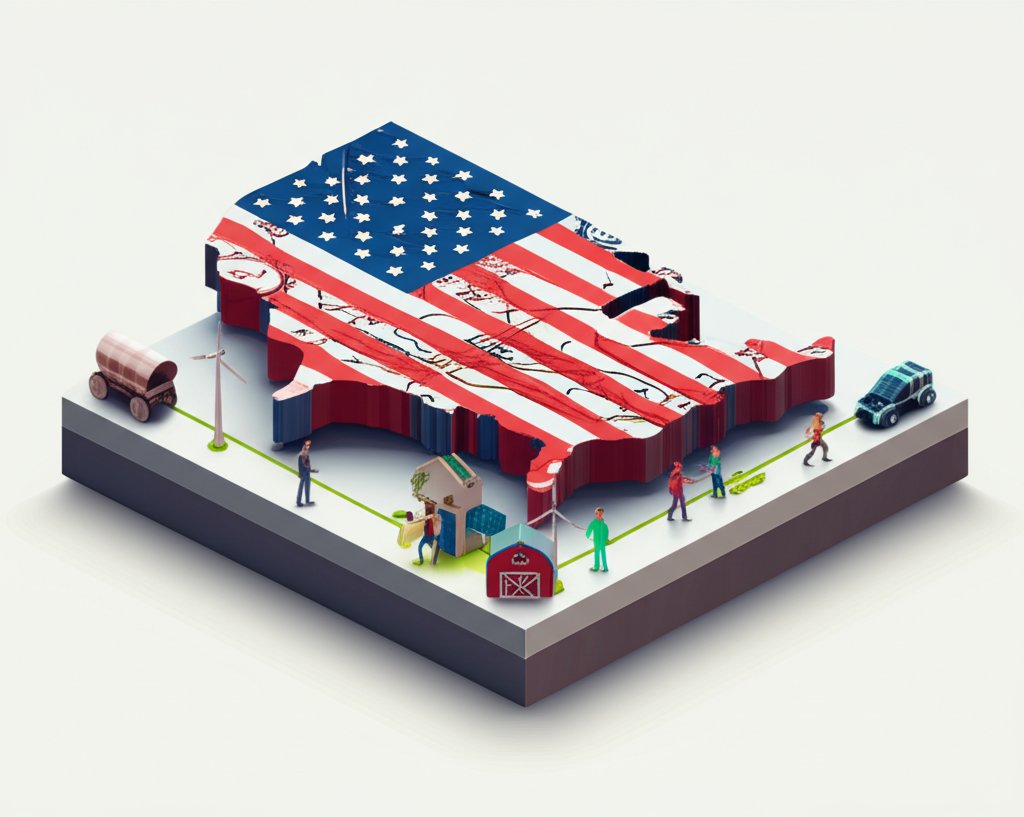
The study of American modern history often feels like watching a nation undergo a radical growth spurt. In just a few decades starting around the 1890s, the United States transformed from a predominantly rural, agrarian society into an urban, industrial powerhouse grappling with a new, complex identity. This era wasn’t just a collection of dates and events; it was the crucible where the core tensions and triumphs of the 21st-century American experience were forged.
At a Glance: Your Guide to America’s Modern Metamorphosis
- Identify the Three Core Engines of Change: Understand how industrialization, urbanization, and mass immigration converged to fundamentally reshape the nation.
- See Cities as Historical Laboratories: Discover why cities became the epicenter of technological innovation, social strife, and cultural fusion.
- Move Beyond the “Melting Pot” Myth: Grasp the complex realities of assimilation, including the formation of ethnic enclaves and the struggles of the Great Migration.
- Connect the Past to the Present: Learn how Progressive Era reforms and the rise of consumer culture laid the groundwork for modern American life.
- Apply a Practical Framework: Use a simple “Push, Pull, and Pressure” model to analyze the forces that drove historical change.
The Urban Forge: How Cities Became the Epicenter of a New America
At the close of the 19th century, the American landscape was still largely defined by the farm. By 1930, it was dominated by the smokestack and the skyscraper. This seismic shift from rural to urban life is the foundational story of modern America. According to research from institutions like the Smithsonian, the urban population grew by over 700 percent during this period, creating unprecedented challenges and opportunities.
Cities weren’t just getting bigger; they were being completely re-engineered. The influx of millions of immigrants and rural migrants created immense “strains on urban America,” as scholars note. The response was a surge of technological innovation born of sheer necessity.
- Building Up: The invention of the steel-frame skyscraper allowed cities to grow vertically, cramming more business and life into a smaller footprint.
- Spreading Out: The development of electric streetcars and subways enabled the creation of suburbs, allowing cities to expand horizontally and segregate by class.
- Connecting Everyone: The telephone and mass-circulation newspapers created a new kind of urban consciousness, connecting millions of strangers through shared information and culture.
This era of intense urban growth created the physical and social infrastructure we still navigate today. To truly grasp how this period fits into the broader arc of the nation’s development, it’s helpful to Understand America’s historical identity.
A Tale of Two Cities: The Promise and Peril of Urban Life
For every story of an industrialist’s success, there were a thousand stories of struggle in tenement housing. The same city that hosted grand department stores and electric lights was also home to overflowing slums, dangerous factory conditions, and rampant political corruption.
Case Snippet: Chicago in the Early 20th Century
Chicago serves as a perfect microcosm of this dual reality. It was a hub of architectural innovation (the “Chicago School” pioneered the skyscraper) and a titan of industry, with its massive stockyards processing a huge portion of the nation’s meat. Yet, it was also the scene of brutal labor conflicts, like the Haymarket affair and the Pullman Strike. Upton Sinclair’s 1906 novel The Jungle exposed the horrific conditions in the meatpacking industry, becoming a catalyst for federal food safety laws and highlighting the deep social fissures carved by rapid, unregulated growth.
The Great Influx: Immigration and Migration Redefine “American”

Parallel to the rise of cities was the massive wave of immigration from Southern and Eastern Europe, alongside continued immigration from Asia and Latin America. These “new immigrants” were culturally and linguistically distinct from the Northern European groups that had dominated earlier waves, sparking both economic dynamism and social anxiety.
This wasn’t a simple, happy story of a “melting pot.” Immigrants often settled in dense ethnic enclaves—like Little Italy or the Lower East Side in New York—where they could preserve their culture while navigating a new, often hostile, world. They provided the essential labor that powered factories and built cities, but they also faced discrimination, exploitation, and immense pressure to assimilate.
The Great Migration: An Internal Exodus
The same period saw a monumental internal migration. Seeking to escape the Jim Crow South and find economic opportunity, millions of African Americans moved to northern industrial cities. This “Great Migration” reshaped the cultural and demographic maps of cities like Chicago, Detroit, and Harlem.
While they escaped one form of oppression, they often faced another in the North: housing segregation, job discrimination, and periodic outbreaks of racial violence. Yet, this migration also fostered vibrant new centers of Black culture, business, and political activism, most famously exemplified by the Harlem Renaissance.
| Population Movement | Primary Drivers (The “Push”) | Destination (The “Pull”) | Key Challenges |
|---|---|---|---|
| “New” Immigration | Poverty, religious persecution, political instability in Europe/Asia. | Industrial jobs, promise of freedom and upward mobility. | Language barriers, tenement living, workplace exploitation, Nativist backlash. |
| The Great Migration | Jim Crow laws, sharecropping debt, racial violence in the South. | Factory jobs (especially during WWI), hope for social justice. | De facto segregation, housing covenants, race riots, competition for jobs. |
Forging a Modern Identity: Reform, Regulation, and a New World Role
The chaos and inequality of the Gilded Age and early industrialization didn’t go unchallenged. This era of American modern history is also the story of a powerful reform movement known as Progressivism. Progressives were a diverse group—journalists, academics, social workers, and politicians like Theodore Roosevelt—who believed the government had a role to play in smoothing the rough edges of capitalism.
Their efforts fundamentally altered the relationship between the government, business, and the individual.
- Trust-Busting: Breaking up monopolies to promote fair competition.
- Consumer Protection: Establishing agencies like the Food and Drug Administration (FDA).
- Political Reform: Introducing the secret ballot, direct election of senators, and women’s suffrage.
- Conservation: Creating the national park system to preserve natural resources from unchecked exploitation.
These reforms were a direct response to the pressures of industrialization and urbanization. They represented a national reckoning, an attempt to reconcile America’s founding ideals with the realities of a modern, industrial society. At the same time, events like the Spanish-American War and World War I thrust the United States onto the global stage, forcing it to abandon its traditional isolationism and assume the role of a world power.
Decoding the Modern Era: A Practical Framework for Analysis
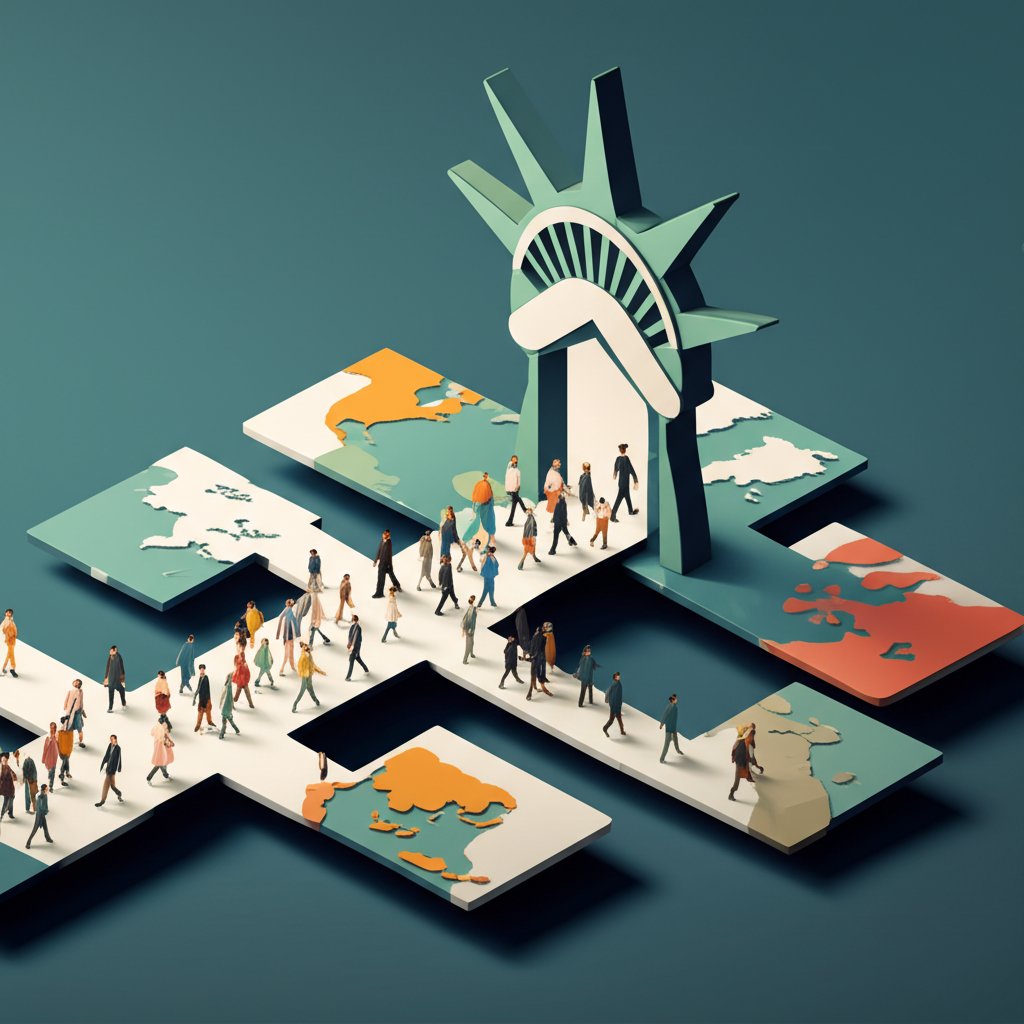
When studying American modern history, it’s easy to get lost in the details. To make sense of the era’s complex events, you can use a simple “Push, Pull, and Pressure” framework.
- Identify the PUSH Factors: What forces were compelling people to change their lives? Think of economic hardship in rural areas, persecution in Europe, or the oppressive realities of the Jim Crow South. These are the negative drivers of change.
- Identify the PULL Factors: What was attracting people to new places and new ideas? Consider the lure of factory jobs in northern cities, the promise of religious freedom, or the appeal of new consumer goods and entertainments. These are the positive magnets of change.
- Analyze the PRESSURE Points: What happened when these push and pull forces collided? This is where the most significant historical developments occur. The pressure of crowded cities led to technological innovation in housing. The pressure of exploited labor led to the rise of unions and strikes. The pressure of social inequality fueled the Progressive movement.
By applying this lens, you can move from simply memorizing events to understanding the underlying dynamics that shaped this pivotal period.
Quick Answers to Common Questions
Is “American modern history” just the period from 1890 to 1930?
While historians often use 1890 as a starting point for the “modern” era due to the convergence of industrialization and the closing of the frontier, the term is broad. The journal Modern American History, for instance, defines its scope as the United States since the 1890s, showcasing that the forces set in motion then continue to shape events today. The period from 1890 to the Great Depression is best seen as the foundational phase of modern America.
Did the “melting pot” actually exist?
The idea of immigrants seamlessly blending into a single American culture is more myth than reality. While assimilation did occur over generations, the immediate experience for many was one of cultural preservation within ethnic communities. The “melting pot” metaphor often overlooks the intense pressure, discrimination, and conflict involved in the process, as well as the enduring cultural contributions of distinct immigrant groups.
Was the Progressive Era a success?
It was a mixed bag. Progressives achieved major victories in consumer protection, anti-trust legislation, and political reform (like women’s suffrage). However, the movement had significant blind spots. Many Progressives held paternalistic or even racist views, and their reforms often failed to address the systemic racial inequality faced by African Americans, Asian Americans, and other minority groups.
The Foundation for Today’s Debates
The whirlwind of change between 1890 and the 1930s did more than just build skyscrapers and factories; it laid the very foundation of the society we inhabit today. The debates from that era—over immigration policy, the role of government in the economy, the challenges of urban life, and the fight for racial and social justice—are still the central debates of our own time. By understanding how this period of American modern history unfolded, we gain a crucial toolkit for navigating the complexities of the present. The nation that emerged was louder, more crowded, more diverse, and more powerful, carrying with it the very same tensions and aspirations that continue to define its identity.










