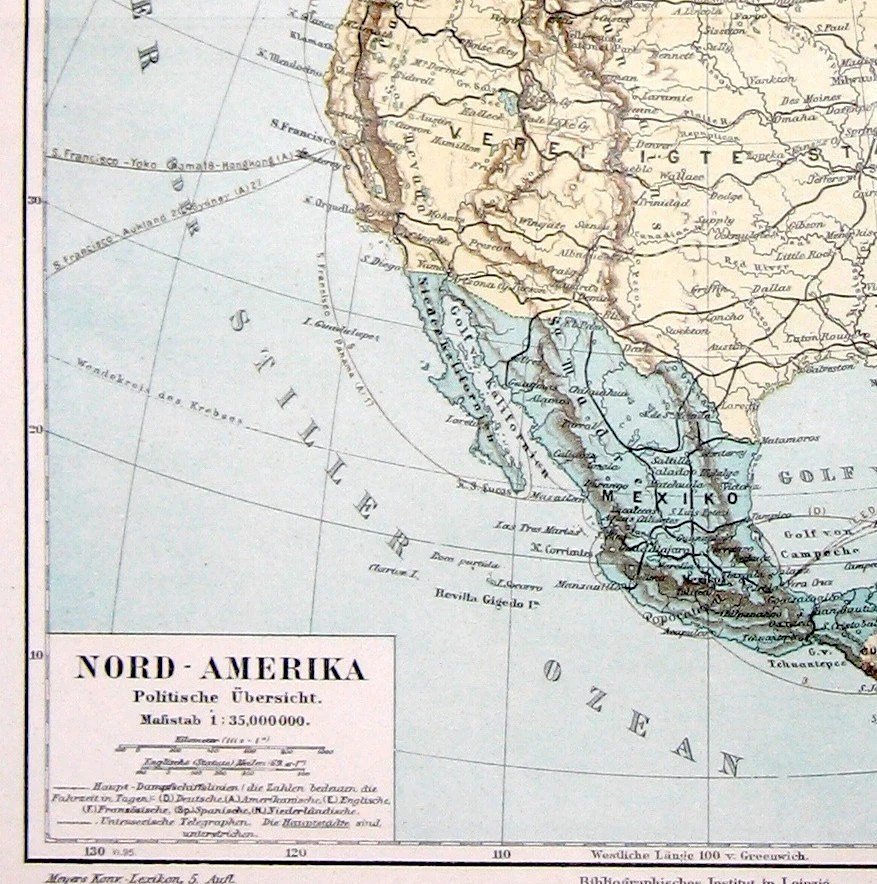
The map of america in 1889 was being redrawn at a pace unseen in a century. For years, a vast swath of the American Northwest—the Dakota, Montana, and Washington territories—existed in a state of political limbo, populous and developed yet lacking the full rights of statehood. This changed dramatically in a single, nine-day stretch in November, when four new states entered the Union, forever altering the nation’s political and cultural landscape. This wasn’t a simple administrative act; it was the culmination of a fierce political chess match, a testament to the ambitions of westward expansion, and a signal that the frontier era was drawing to a close.
At a Glance: Understanding the Great Statehood Boom of 1889
- Political Compromise: Learn how the Enabling Act of 1889, also known as the “Omnibus Bill,” broke a years-long congressional deadlock between Democrats and Republicans over admitting new states.
- The Four Newcomers: Discover the unique identities and paths to statehood for North Dakota, South Dakota, Montana, and Washington, each driven by different economic and social forces.
- A Presidential Puzzle: Find out why North and South Dakota were admitted simultaneously and why, to this day, it’s officially unknown which one became the 39th state first.
- The Impact of Statehood: Understand what gaining statehood actually meant for the people on the ground—from full congressional representation to attracting new investment.
- A Nation Transformed: See how this rapid expansion reflected America’s post-Civil War identity, consolidated its continental power, and set the stage for the 20th century.
The Political Chess Match Behind the “Omnibus Bill”
To understand why four states joined the Union in such a short span, you have to look at the Gilded Age political climate. For much of the 1880s, power in Washington was split. Democrats often controlled the House of Representatives, while Republicans held a slim majority in the Senate. This created a stalemate over the admission of new states.
Territories were not just empty spaces on a map; they were reservoirs of potential voters and congressional seats. Both parties knew this.
- The Republican Angle: The territories of Dakota, Washington, and Montana were largely settled by farmers, miners, and merchants from the Midwest and Northeast—demographics that leaned heavily Republican. The GOP was eager to admit them to bolster their numbers in the Senate and Electoral College.
- The Democratic Angle: Democrats, predictably, blocked these admissions for years. They saw the admission of these territories as a move that would permanently cement Republican control of the federal government. They countered by advocating for the admission of the more Democratic-leaning New Mexico territory.
The logjam finally broke with the election of 1888. Republican Benjamin Harrison won the presidency, and the GOP took control of both houses of Congress. The outgoing Democratic President, Grover Cleveland, saw the writing on the wall. Rather than let the incoming Republican administration take full credit, the Democrats struck a deal.
On February 22, 1889, President Cleveland signed the Enabling Act of 1889. This “omnibus” legislation authorized North Dakota, South Dakota, Montana, and Washington to hold constitutional conventions and apply for statehood. While this statehood boom was a defining feature of the year, it was part of a much larger narrative of change, as detailed in the broader guide to what 1889: Four States Joined meant for the nation. The act was a landmark piece of political compromise, unlocking the future of the American West.
From Territory to Statehood: The Four-Step Playbook
The Enabling Act kicked off a formal, multi-step process. For the citizens of these territories, it was a chance to finally shape their own destiny.
Step 1: The Constitutional Convention
Each territory had to elect delegates to a convention to draft a state constitution. These were intense gatherings where the fundamental laws and values of the new states were hammered out. Debates raged over key issues of the day: women’s suffrage, prohibition of alcohol, the power of corporations (especially railroads and mining trusts), and the contentious issue of where to locate the new state capital.
Step 2: Ratification by the People
The drafted constitution wasn’t law until it was approved by the voters of the territory. This was the moment of truth. Ratification campaigns were held, with proponents arguing that statehood would bring investment, political power, and respect, while opponents (a small minority) sometimes warned of higher taxes.
Step 3: Congressional Approval
Once a constitution was ratified, it was sent to Washington, D.C. for Congress to review. The main purpose was to ensure the new state’s laws were “republican in form” and did not contradict the U.S. Constitution.
Step 4: The Presidential Proclamation
With congressional approval, the final step was for the President to issue a formal proclamation admitting the territory as a state. In the fall of 1889, President Benjamin Harrison’s desk was the final stop on this long journey.
A Tale of Four Territories: The Class of 1889
Each of the four “omnibus states” brought a distinct character and history to the Union.
The Dakota Double: Why Two States and Who Was First?
The massive Dakota Territory had been a political headache for years. It was geographically and culturally split. The southern part, centered around Sioux Falls and Yankton, was more populated, agricultural, and had been settled earlier. The northern part, with its economic lifeblood flowing along the Northern Pacific Railway through Fargo and Bismarck, had a separate identity.
For years, residents had argued for splitting the territory. The Enabling Act made it official, creating two states from one territory. This led to one of history’s great political curiosities.
On November 2, 1889, President Harrison was presented with the statehood proclamations for both North and South Dakota. To avoid showing favoritism, he shuffled the papers on his desk and signed them without looking. He then refused to tell anyone which he had signed first. By alphabetical tradition, North Dakota is listed as the 39th state and South Dakota as the 40th, but the true order remains a presidential secret.
Montana: The Treasure State’s Rugged Path
Montana’s path to statehood was defined by its immense mineral wealth and the powerful corporate interests that controlled it. The territory was home to the “Richest Hill on Earth” in Butte, and the “Copper Kings” who ran the mining syndicates wielded immense political power.
Montana had tried and failed to achieve statehood before. The 1889 constitutional convention was heavily focused on reining in corporate power, with debates on taxation for mines and regulations for railroads. Admitted on November 8, 1889, as the 41st state, Montana entered the Union with a fierce independent streak and a legacy of conflict between labor and capital that would define its politics for decades.
Washington: The Evergreen State Looks to the Pacific
Washington’s identity was shaped by timber, shipping, and its position as the nation’s gateway to the Pacific. The completion of the Northern Pacific Railway in the 1880s had triggered a massive population boom.
A dramatic event underscored the territory’s readiness for self-governance. In June 1889, the Great Seattle Fire destroyed the city’s entire central business district. Instead of despair, the citizens immediately began a massive, organized rebuilding effort, constructing a more modern, fire-resistant city from the ashes. This display of resilience and civic pride was not lost on the nation. On November 11, 1889, Washington became the 42nd state, its gaze fixed firmly on a future of Pacific trade and commerce.
What Statehood Meant on the Ground
For the average person, the shift from territory to state was profound. It wasn’t just about a new star on the flag; it was about power, money, and identity.
| Feature | Territorial Status | Statehood Status |
|---|---|---|
| Leadership | Governor appointed by the President | Governor elected by state citizens |
| Congress | One non-voting delegate in the House | Two Senators, at least one voting Representative |
| Laws | Subject to federal override | Sovereign over internal affairs (within Constitution) |
| Judiciary | Federal judges appointed | State court system established |
| Perception | A temporary, dependent entity | A permanent, equal member of the Union |
| Statehood was a seal of approval that attracted investment. Railroads felt more secure extending lines, banks were more willing to lend money, and settlers were more confident in buying land. It meant local issues would be decided by elected neighbors, not by a bureaucrat appointed from Washington, D.C. |
Quick Answers to Common Questions About 1889 Statehood
Q: Why were these four states admitted together?
A: It was a political compromise. The “Omnibus Bill,” formally the Enabling Act of 1889, broke a years-long deadlock between Democrats, who feared adding Republican-leaning states, and Republicans, who were eager for the political reinforcement. Passing them as a package deal was the only way to get it done.
Q: Did everyone in the territories want statehood?
A: The vast majority did, as it promised political representation and economic growth. However, there were pockets of dissent. Some rural citizens worried about the higher taxes needed to fund a full state government. In places like Montana, there was also concern that powerful corporations would dominate the new state politics even more than they did under federal oversight.
Q: Were there other territories waiting for statehood in 1889?
A: Absolutely. The “omnibus states” were just the first wave. Wyoming and Idaho, which were included in early drafts of the Enabling Act, followed in 1890. Others had longer waits due to unique political challenges: Utah’s admission was delayed until 1896 over the issue of polygamy, while Oklahoma, Arizona, and New Mexico wouldn’t join until the 20th century.
Q: How did this expansion affect Native American populations?
A: This is the tragic and crucial counter-narrative. Statehood was a disaster for the Native American tribes of the region. New state governments, hungry for land and resources, worked with the federal government to accelerate the dismantling of treaty lands and tribal sovereignty. The pressures of settlement, mining, and railroads intensified, leading to further displacement and the erosion of traditional ways of life. The celebration of statehood was, for them, a confirmation of their loss.
From a Changing Map to a Changed Nation
The admission of four states in November 1889 was more than a footnote in American history. It was a powerful declaration that the United States had functionally completed its continental expansion. The Gilded Age’s political paralysis was momentarily broken to solidify the nation’s map, bringing millions of acres and hundreds of thousands of new citizens into the democratic fold.
This great wave of statehood solidified Republican political power for a generation and integrated the resource-rich West more fully into the nation’s industrial economy. The america in 1889 was a nation closing one chapter—the wild, loosely governed frontier—and opening another, one defined by transcontinental commerce, growing cities, and the complex social challenges that would dominate the coming century.










