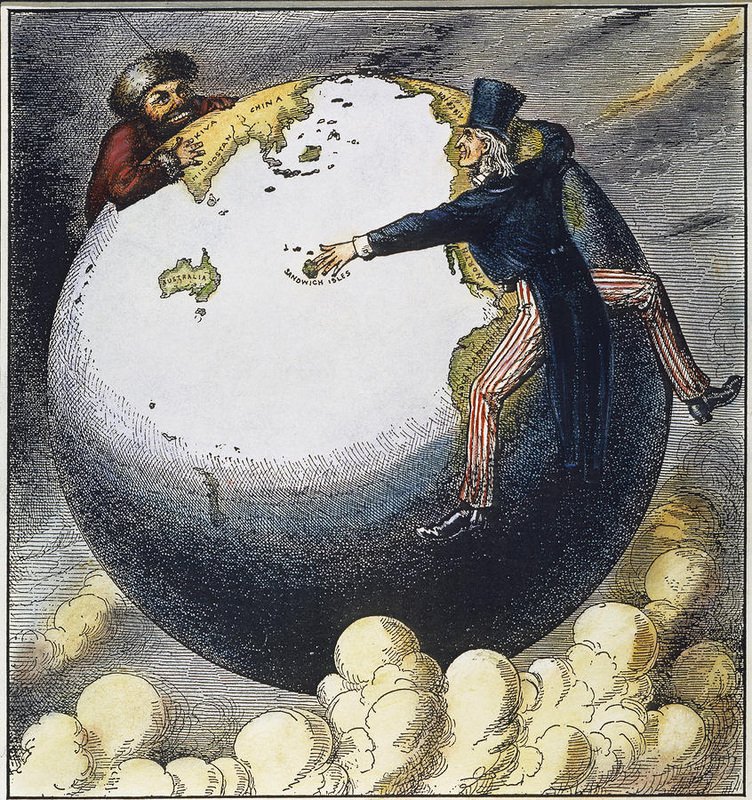
World War I wasn’t an isolated eruption; it was the explosive culmination of deep-seated tensions, and understanding how did imperialism contribute to WWI means examining the complex web of rivalries it spun across continents. Europe’s relentless pursuit of colonial expansion in the late 19th and early 20th centuries didn’t just carve up the globe; it carved fault lines into international relations, turning competition for distant lands into a direct pipeline for war. This wasn’t merely about gaining territory; it was a high-stakes game for resources, prestige, and strategic dominance that brought the major powers to the brink time and again.
At a Glance: Unpacking Imperial Rivalries and WWI
- Understanding the Drivers: Why European powers felt compelled to expand their global empires.
- Flashpoints and Near Misses: How territorial disputes in Africa and beyond nearly triggered war multiple times.
- The Link to Military Escalation: Connecting colonial ambitions directly to the costly arms race.
- Nationalism’s Imperial Twist: How empire-building fueled aggressive national pride and resentment.
- The Unbalanced Game: Germany’s late entry and dissatisfaction with its colonial share as a major irritant.
The High Stakes of Global Reach: Why Empires Competed So Fiercely
Imperialism, at its core, involves one country extending its political, economic, or cultural authority over another. For late 19th and early 20th-century European powers, this wasn’t just an abstract concept; it was a practical strategy driven by a mix of urgent needs and grand ambitions. Each new colony wasn’t just a flag planted; it represented a tangible asset and a significant boost in international standing.
Beyond Simple Land: The True Value of Colonies
Think of colonies as multi-faceted investments. They offered new markets for industrial goods, essential raw materials like minerals, rubber, and precious metals for burgeoning industries back home, and a source of cheap labor. Beyond economics, they provided strategic military bases to protect trade routes and project power, such as controlling vital waterways like the Suez Canal. Perhaps less tangible, but equally potent, was the idea of colonies as symbols of power and national prestige, dictating a nation’s “place in the sun” on the global stage.
The ‘Scramble’ That Reshaped a Continent: Africa as the Prime Example
Nowhere was this fierce competition more evident than in the “Scramble for Africa.” This rapid colonization saw European nations – Britain, France, Germany, Belgium, and Portugal chief among them – carve up almost an entire continent in a matter of decades. Their motivations were a textbook example of imperial drivers:
- Economic Gain: Access to raw materials like copper from the Congo, gold and diamonds from South Africa, and rubber across various territories.
- Strategic Advantage: Establishing naval coaling stations and military outposts along crucial global trade routes.
- National Prestige: Each new territory added to a nation’s perceived strength and global influence.
The Berlin Conference’s Unintended Legacy (1884-1885)
To manage the chaotic scramble, European powers convened the Berlin Conference. While seemingly designed to prevent conflict, it formally partitioned Africa, drawing arbitrary borders that completely ignored existing ethnic, cultural, and linguistic groups. This act solidified European claims and, critically, set the stage for long-term instability within Africa and heightened rivalries among the European powers themselves. Britain acquired vast territories including Egypt, Sudan, Kenya, and South Africa. France claimed Algeria, Morocco, Tunisia, and large parts of West Africa. Germany, a relative latecomer to the imperial game, secured Namibia, Tanzania, and Cameroon. Belgium notoriously took control of the vast and resource-rich Congo.
By 1914, this uneven distribution fueled significant resentment. Germany, for instance, held only 10 colonies, a stark contrast to Britain’s 56 and France’s 29. This perceived injustice, particularly for a rapidly industrializing and militarizing nation like Germany, heavily contributed to heightened tensions and a fervent desire for a more substantial “place in the sun.”
From Expansion to Confrontation: Imperialism’s Direct Spark Points
The pursuit of colonies wasn’t always a smooth, diplomatic process. Often, it brought rival European forces dangerously close to direct military confrontation, demonstrating the fragile nature of diplomacy and hardening national resolve. These territorial disputes frequently escalated into full-blown diplomatic crises, drawing Europe closer to the brink of war.
Fashoda (1898): The Near Miss in Sudan
A prime example is the Fashoda Incident. Here, British and French forces literally confronted each other in a remote Sudanese village, both claiming the strategically vital Upper Nile region. For weeks, the two imperial giants stood eyeball to eyeball, risking full-scale war over a distant tract of land. Ultimately, France backed down, but the incident underscored how colonial competition could ignite major power conflicts. It also left a lingering bitterness that, while eventually overcome by the Entente Cordiale, showcased the danger.
Moroccan Crises (1905, 1911): Germany Challenges the Status Quo
Even more impactful were the First and Second Moroccan Crises. Germany, seeking to disrupt the Anglo-French Entente Cordiale and expand its own influence, repeatedly challenged France’s growing dominance in Morocco.
- First Moroccan Crisis (1905): Kaiser Wilhelm II visited Tangier, openly supporting Moroccan independence and challenging French claims. This aggressive move tested the strength of the new Anglo-French alliance, bringing Britain to France’s side.
- Second Moroccan Crisis (1911): Germany sent a gunboat, the Panther, to Agadir, ostensibly to protect German interests. This “gunboat diplomacy” was a direct provocation aimed at intimidating France and gaining territorial concessions in central Africa.
These crises were crucial. They exposed the raw nerves of imperial competition, forcing alliances to solidify and demonstrating that disputes over colonial territories could easily escalate into a wider European conflict. Each crisis left a deeper layer of distrust and animosity among the great powers. To fully grasp the intricate web of causes, including the broader context of how imperialism led to WW1, it’s essential to examine how these specific flashpoints contributed to the larger dynamic of rivalry and alliance-building.
The “Place in the Sun” Disparity: German Resentment
Germany’s rapid industrialization and growing military power weren’t matched by an equally robust colonial empire. As noted, compared to Britain’s vast holdings or France’s extensive African territories, Germany’s colonial possessions were relatively meager. This imbalance fostered a deep sense of grievance and a powerful narrative within Germany that it was being denied its rightful “place in the sun.” This sentiment fueled an aggressive foreign policy, characterized by a desire for territorial expansion and a challenge to the existing imperial order, directly intensifying rivalries with established powers like Britain and France.
The Escalation Loop: Empires, Arms, and Nationalism
The competitive race for colonies wasn’t a static affair; it actively fed into other destructive trends that pushed Europe toward war. Protecting these far-flung empires and the trade routes connecting them demanded massive military investment, while the very act of imperial expansion became intertwined with national identity.
The Colonial-Driven Arms Race
Securing and defending vast colonial empires required significant military strength, particularly naval power. Britain, with its extensive global empire, maintained the largest navy in the world. Germany’s ambition to become a major imperial power directly led to a costly naval arms race, particularly with Britain, focused on building dreadnought-class battleships. This competition wasn’t just about showing off; it was about protecting sea lanes, projecting power, and defending colonial interests. Before WWI, military spending across Europe soared: Germany spent an estimated £60 million, Britain £50 million, France £45 million, and Russia £40 million. This massive investment was justified, in part, by the need to secure and expand imperial holdings, creating a dangerous feedback loop where more colonies demanded more military, which in turn fueled more aggressive imperial ambitions.
Nationalism’s Imperial Twist
Nationalism, characterized by intense national pride and a desire for dominance, found a potent expression in imperialism. Imperial success became a direct measure of national strength and prestige. Citizens took immense pride in their country’s empire, viewing it as evidence of their nation’s superiority and destiny. This fueled aggressive policies, as politicians and publics alike demanded their nation’s “right” to expand and challenged rival empires. In Germany, for example, the concept of Weltpolitik (world politics) articulated a desire for global power status commensurate with its economic and military might, pushing for colonial expansion even at the risk of confrontation.
Your Playbook: Recognizing the Echoes of Imperial Rivalry
Understanding how imperial rivalries functioned before WWI offers valuable lessons in international relations and the triggers of conflict. It’s not just historical context; it’s a blueprint for understanding how economic interests, national pride, and strategic concerns can intertwine to destabilize global peace.
Decision Point: Identifying True Strategic Assets vs. Prestige Plays
European powers often pursued colonies for both practical economic reasons and sheer national prestige, blurring the lines. It’s crucial to differentiate:
- Strategic Asset: A colony providing direct economic benefit (e.g., rubber plantations in Congo, Suez Canal control for trade routes) or military advantage.
- Prestige Play: A colony acquired primarily to match rivals or assert national greatness, even if economically marginal (e.g., some arid regions of Africa).
Actionable Insight: Recognizing this distinction helps explain why nations sometimes risked war over seemingly minor territories. Often, the perception of being outmaneuvered or losing face was as dangerous as losing a vital resource.
Pitfall to Avoid: Underestimating “Face-Saving” in International Relations
The Moroccan Crises weren’t just about who controlled Morocco; they were deeply about national honor and maintaining influence. When Germany challenged France, it wasn’t simply a territorial dispute; it was an attempt to undermine France’s diplomatic standing and test the strength of its alliances.
Practical Tip: In any intense rivalry, public declarations and perceived slights can escalate tensions as much as, or even more than, direct material threats. Diplomatic “face-saving” becomes paramount, and a perceived humiliation can push nations toward more extreme actions.
Case Snippet: The Suez Canal’s Enduring Relevance
Consider the Suez Canal. Opened in 1869, this man-made waterway drastically reduced travel time between Europe and Asia. For Britain, with its vast Indian Empire, control of the Suez Canal was absolutely critical, a strategic choke point that fueled its imperial ambition and influenced its foreign policy in Egypt and the surrounding region. Rival powers recognized its importance, making any threat to British control a potential flashpoint. It underscores how specific geographical features can become central to imperial competition and, by extension, global rivalries.
Quick Answers: Deconstructing Common Misconceptions
Q: Was imperialism the sole cause of WWI?
A: No, absolutely not the sole cause. WWI was a complex event stemming from a confluence of factors: militarism, the alliance system, and aggressive nationalism also played crucial roles. However, imperialism was a fundamental and primary long-term cause, providing the underlying tensions, economic competition, and territorial disputes that made war increasingly likely. It created the fertile ground in which other causes could flourish.
Q: Did all imperial powers contribute equally to the rivalries?
A: While all major European powers participated in and benefited from imperialism, their contributions to the escalating rivalries were not equal in nature. Britain and France had established vast empires earlier, giving them an advantage. Germany, a relatively latecomer, felt disadvantaged and sought to aggressively challenge the existing order. This “latecomer” status and its fervent desire for more colonies particularly heightened tensions and drove many of the specific diplomatic crises that preceded the war.
Q: How did the economic aspects of imperialism fuel rivalries?
A: Economic interests were central. European nations competed fiercely for exclusive access to raw materials (like rubber, oil, minerals) from colonies, new markets to sell their manufactured goods, and opportunities to invest surplus capital. This economic competition was not benign; it was often mercantilist in nature, meaning that one nation’s gain was often seen as another’s loss, directly fueling political and military rivalries. The drive for economic dominance through empire inextricably linked national prosperity with global power.
The Unavoidable Collision Course
Imperialism wasn’t just a backdrop to WWI; it was an active force shaping the conflict. It transformed the globe into a chessboard where every move, from Africa to Asia, reverberated back to Europe, igniting deep-rooted tensions, hardening alliances, and escalating military expenditures. The rivalries it fostered—over land, resources, and prestige—were not peripheral concerns but central to European instability. By baking nationalistic fervor into foreign policy and creating a pervasive sense of injustice and competition, imperialism relentlessly pushed Europe toward a collision course, ultimately paving the way for the catastrophic global conflict that began in 1914.










