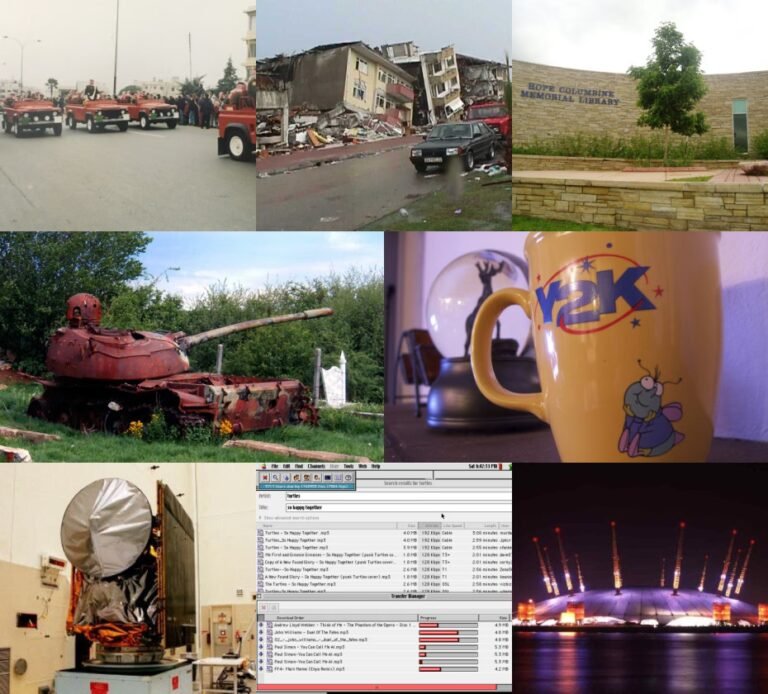
The year 1999 stood on the precipice of a new millennium, a time when Y2K fears simmered alongside an accelerating wave of technological advancement and global change. The collection of 1999 historical events that unfolded during this twelve-month period wasn’t merely a precursor to the 21st century; it was a defining, tumultuous chapter that dramatically reshaped international relations, domestic politics, and the fabric of modern society. From humanitarian crises and geopolitical realignments to cultural breakthroughs and the burgeoning digital age, 1999 delivered a relentless stream of moments that still echo today.
At a Glance: Understanding 1999’s Defining Moments
- Geopolitical Realignments: Witness the first NATO offensive against a sovereign nation (Yugoslavia) and the formal introduction of the Euro, signaling significant shifts in global power and economic integration.
- Domestic Flashpoints: Experience the culmination of the Clinton impeachment trial, major civil rights unrest, and tragic school violence that spurred nationwide soul-searching.
- The Digital Frontier: Trace the early internet’s growing influence, from the launch of new NASA missions to the disruption caused by the “Melissa worm” and initial government attempts at online regulation.
- Cultural & Social Transformation: Explore the debut of iconic pop culture phenomena, the retirement of sports legends, and critical conversations around genetically modified food and LGBT rights.
- Natural Disasters & Human Resilience: Remember the devastating impact of major earthquakes, storms, and avalanches, and the global response to such widespread destruction.
Global Power Realignments: Wars, New Currencies, and Shifting Alliances
Nineteen ninety-nine was a crucible for international relations, witnessing both the introduction of a monumental economic integration and unprecedented military intervention. On January 1, the Euro currency made its debut in world financial markets, initially as an accounting currency in 11 European Union countries. This move wasn’t just about finance; it was a profound statement about European unity and a challenge to the dollar’s global dominance, setting the stage for decades of economic integration and political collaboration. The Euro’s launch represented a daring economic experiment, binding diverse national economies with a shared monetary policy and forever altering the landscape of global trade.
Simultaneously, the world grappled with intense geopolitical conflict, most notably the Kosovo War. After months of escalating tensions and reports of atrocities against ethnic Albanians, NATO launched an aerial bombardment campaign against the Federal Republic of Yugoslavia on March 24. This marked a historic and controversial first: NATO directly attacked a sovereign country without a UN Security Council resolution. The conflict saw intense fighting, including incidents like the Racak massacre, and continued until a peace treaty was signed on June 9, leading to the withdrawal of Serbian forces and the deployment of a NATO-led peacekeeping force (KFor). The intervention reshaped the debate around humanitarian intervention and the responsibilities of international alliances.
Beyond Europe, other critical shifts were underway. Former Warsaw Pact members—the Czech Republic, Hungary, and Poland—formally joined NATO on March 12, a significant expansion that reflected the post-Cold War redrawing of geopolitical lines. In Africa, Nigeria saw Olusegun Obasanjo take office as President, marking the end of 16 years of military rule and a return to civilian governance, a pivotal moment for democracy in the region. These events underscored a year of profound change in global power dynamics, from economic blocs to military alliances. To get a broader understanding of the context surrounding these and other events of 1999, you can Discover what happened in 1999.
Political Upheaval: Impeachment, New Leaders, and Crises of Governance
On the domestic front, 1999 was a year of intense political drama and significant changes in leadership. In the United States, the impeachment trial of President Bill Clinton dominated headlines. Following a legal team’s detailed rebuttal, the Senate acquitted Clinton on February 12, bringing an end to a divisive political saga that had consumed the nation. The trial, marked by partisan acrimony, left a lasting impact on American politics and presidential power.
Across the globe, new leaders emerged, reflecting varied political landscapes. Jesse Ventura, a former professional wrestler, was sworn in as Governor of Minnesota on January 4, a surprise victory that highlighted a growing public appetite for unconventional political figures. In Venezuela, Hugo Chávez began his first term as President on February 2, ushering in an era of socialist reforms and anti-U.S. rhetoric that would define the country for years. The passing of King Hussein bin Talal of Jordan on February 7 led to Crown Prince Abdullah II ascending to the throne, ensuring a peaceful transition of power in a crucial Middle Eastern nation.
Regional governance also saw significant evolution. On April 1, Nunavut was established as a Canadian territory, carved out of the eastern part of the Northwest Territories. This historic creation gave the Inuit people their own self-governing homeland, a landmark achievement in indigenous rights and self-determination. In the UK, the first elections to the devolved Scottish Parliament and Welsh Assembly were held on May 6, leading to the official opening of the Scottish Parliament on July 1. These steps marked a significant decentralization of power from London, granting greater autonomy to these constituent nations.
The Digital Frontier: Promise, Peril, and the Internet’s Growing Grip
The year 1999 cemented the internet’s place as a powerful, albeit sometimes vulnerable, force in modern life. Early in the year, NASA launched its Mars Polar Lander on January 3, part of humanity’s ongoing quest to explore our solar system. Though the mission later failed, it exemplified the ambition of space exploration at the turn of the millennium, driven by ever-advancing technology. Meanwhile, discussions among astronomers regarding Pluto’s classification gained traction, hinting at the future reclassification of our solar system’s outermost “planet.”
The digital world also brought new threats. On March 26, the “Melissa worm” infected Microsoft word processing and e-mail systems worldwide, causing widespread disruption. This event was a stark reminder of the internet’s fragility and the emerging challenge of cybersecurity. Governments, too, began to grapple with regulating the digital realm; on January 20, the China News Service announced new government restrictions on Internet use, especially targeting Internet cafés, signaling early attempts to control online information.
Despite the challenges, technological progress continued apace. The International Space Station (ISS) saw a significant milestone on May 29, when Space Shuttle Discovery completed the first docking with the fledgling station. This collaboration heralded a new era of international cooperation in space, setting the foundation for sustained human presence beyond Earth. The rapid advancement of technology in 1999, from space exploration to the increasing prevalence of the internet, both inspired awe and raised crucial questions about security, privacy, and access in the digital age, themes that would only intensify with the looming Y2K scare.
Societal Shockwaves: From Tragedy to Cultural Transformation
Nineteen ninety-nine was a year of profound societal moments, marked by both devastating tragedy and groundbreaking cultural shifts. On April 20, the Columbine High School massacre in Colorado shocked the world, as two students killed 13 people and injured 24 others before taking their own lives. This horrific event sparked intense national debates about gun control, school safety, and the roots of youth violence, forever changing the way schools and communities approached security and mental health.
Another incident that inflamed race relations was the fatal shooting of unarmed West African immigrant Amadou Diallo by four plainclothes New York City police officers on February 4. This tragic event ignited protests and intensified calls for police reform, highlighting deep-seated issues of racial profiling and police accountability in major American cities.
Amidst these serious events, popular culture provided both escape and reflection. On January 10, HBO debuted “The Sopranos,” starring James Gandolfini as Tony Soprano. The show redefined television drama, exploring complex characters and moral ambiguities, and becoming a critical and commercial phenomenon that influenced countless series to follow. Britney Spears released her debut studio album, “…Baby One More Time,” on January 12, catapulting her to global pop stardom and cementing her status as a cultural icon for a new generation. On January 31, Seth MacFarlane’s “Family Guy” first aired on Fox TV, introducing its distinct brand of irreverent humor to a broad audience.
Sports also saw significant moments. Basketball superstar Michael Jordan announced his second retirement from the NBA on January 13, marking the end of an era for one of the sport’s greatest legends. On July 27, Tony Hawk landed the first 900 (two-and-a-half complete revolutions) on a skateboard at the X Games in San Francisco, pushing the boundaries of action sports and becoming a memorable cultural touchstone. These cultural and social touchpoints, from tragic flashpoints to moments of creative and athletic brilliance, collectively painted a vibrant yet often challenging portrait of society in 1999.
Responding to Catastrophe: Natural Disasters and Human-Made Crises
The year 1999 also brought stark reminders of humanity’s vulnerability to both natural forces and man-made conflicts. A series of devastating natural disasters struck around the globe. On August 17, a 7.4-magnitude earthquake struck İzmit, Turkey, claiming more than 17,000 lives and injuring 44,000. This catastrophe mobilized international aid efforts and highlighted the urgent need for robust disaster preparedness in earthquake-prone regions. Earlier in the year, on January 25, an earthquake in Colombia killed around 300 and injured 1,000, while a 6.8 magnitude quake struck India’s Uttar Pradesh on March 29, killing 103. These events underscored the constant threat of seismic activity and the immense human toll it can take.
Winter also delivered its own challenges. A brutal snowstorm struck the Midwestern United States on January 2, dropping unprecedented amounts of snow and plunging temperatures to dangerous lows, resulting in 68 reported deaths. Toronto, Canada, also faced a major snow emergency on January 14, requiring military assistance for snow removal and emergency evacuations. These events tested the resilience of urban infrastructure and emergency services.
Beyond natural phenomena, human-made crises added to the year’s tumultuous character. On March 24, a fire in the Mont Blanc Tunnel killed 39 people, a grim reminder of the dangers inherent in large infrastructure. In Russia, a series of bombings in Moscow began on August 31, raising fears of renewed conflict and terrorism, while the Chechnya-based Islamic International Brigade invaded Dagestan on August 7, leading to the Second Chechen War later that month. These disasters, both natural and man-made, served as powerful catalysts for reassessing safety protocols, international aid structures, and geopolitical stability.
Practical Playbook: Identifying Lingering Impacts of 1999 Historical Events
Understanding the 1999 historical events isn’t just about cataloging the past; it’s about discerning how those moments initiated trends, shifted policies, and shaped the world we inhabit today. Many of the decisions made, and the crises experienced, in 1999 had long-term repercussions that continue to influence contemporary issues.
- Policy Shifts in Response to Crisis: The Columbine tragedy, for instance, dramatically escalated discussions around school security, gun control legislation, and mental health support for youth. It led to widespread implementation of lockdown drills, metal detectors, and increased counseling services in schools across the US. Similarly, the Amadou Diallo shooting amplified calls for police accountability and body camera programs, influencing police reform debates for decades.
- The Dawn of Cyber-Awareness: The “Melissa worm” was a wake-up call for internet security. It propelled companies and individuals to take antivirus software seriously and sparked the creation of more robust cybersecurity protocols. Government restrictions on internet usage in places like China foreshadowed ongoing global debates about internet freedom versus state control.
- Geopolitical Precedents: NATO’s intervention in Kosovo set a precedent for “humanitarian intervention” without a direct UN Security Council mandate, a concept that continues to be debated in international law and foreign policy. The introduction of the Euro laid foundational groundwork for future European economic and political decisions, especially in times of financial crisis.
- Cultural Legacy and Industry Transformation: The success of “The Sopranos” fundamentally changed the landscape of television, demonstrating the power of serialized, complex storytelling and paving the way for the “golden age of television” we experience today. Britney Spears’s rise exemplified the burgeoning power of pop music and celebrity in the digital age, influencing how artists market themselves globally.
The events of 1999 offer valuable case studies for understanding how societies react to unprecedented challenges, from technological disruption to humanitarian crises. They demonstrate the enduring human struggle for justice, security, and progress, and how individual moments can ripple through history, influencing future decisions and policies.
Quick Answers: Deconstructing the Myths and Realities of a Pivotal Year
It’s easy to look back at a year like 1999 through a simplified lens. Here are some common questions and clarifications that help solidify its true impact:
Was 1999 primarily about Y2K?
While Y2K anxiety was a significant undercurrent throughout 1999, dominating many conversations and news cycles towards the end of the year, it was far from the only defining event. Geopolitical conflicts, major social shifts, technological breakthroughs, and significant natural disasters actually marked the year’s core substance. Y2K was a fear of what might happen; the other events were what did happen.
Did the Euro immediately replace national currencies in 1999?
No, the Euro was introduced as an “accounting currency” on January 1, 1999. This meant it was used for non-cash transactions, financial markets, and electronic payments. Euro banknotes and coins weren’t physically introduced until January 1, 2002, allowing for a phased transition period.
How did the Clinton impeachment trial in 1999 compare to other presidential scandals?
The Clinton impeachment trial was unique in that it led to an acquittal by the Senate, making him one of only a few US presidents to be impeached but not removed from office. Its highly partisan nature and the extensive media coverage set a new precedent for political scrutiny and scandal in the digital age, impacting public trust in government and media.
What was the lasting impact of the Columbine shooting?
Columbine was a watershed moment for school safety in the US and globally. It spurred a massive overhaul of security protocols in schools, increased focus on mental health support for students, and significantly intensified the gun control debate. It moved school shootings from an isolated tragedy to a pervasive national concern that shaped subsequent policy and public discourse.
Did the internet fully take off in 1999?
While the internet was certainly growing rapidly in 1999, it was still far from ubiquitous in every household. Many people accessed it via dial-up, and significant portions of the world remained offline. However, 1999 saw pivotal moments like the Melissa worm and initial government regulatory actions that indicated the internet’s undeniable trajectory towards global dominance.
Lessons from a Tumultuous Turn of the Century
The events of 1999 weren’t isolated incidents; they were interconnected threads woven into the fabric of an evolving world. From the bold economic experiment of the Euro to the devastating human cost of the Kosovo War and the Columbine tragedy, the year laid bare the complexities of a world grappling with globalization, technological advancement, and enduring human conflicts.
Understanding 1999 means appreciating the delicate balance between progress and peril, the resilience required in the face of catastrophe, and the profound impact of individual and collective actions. It was a year that both closed out a century and launched a new one, leaving an indelible mark on our collective history and shaping the geopolitical, technological, and cultural landscapes that define our present. The lessons from these pivotal 1999 historical events serve as a potent reminder that history is not just a record of the past, but a living guide to navigating the future.










