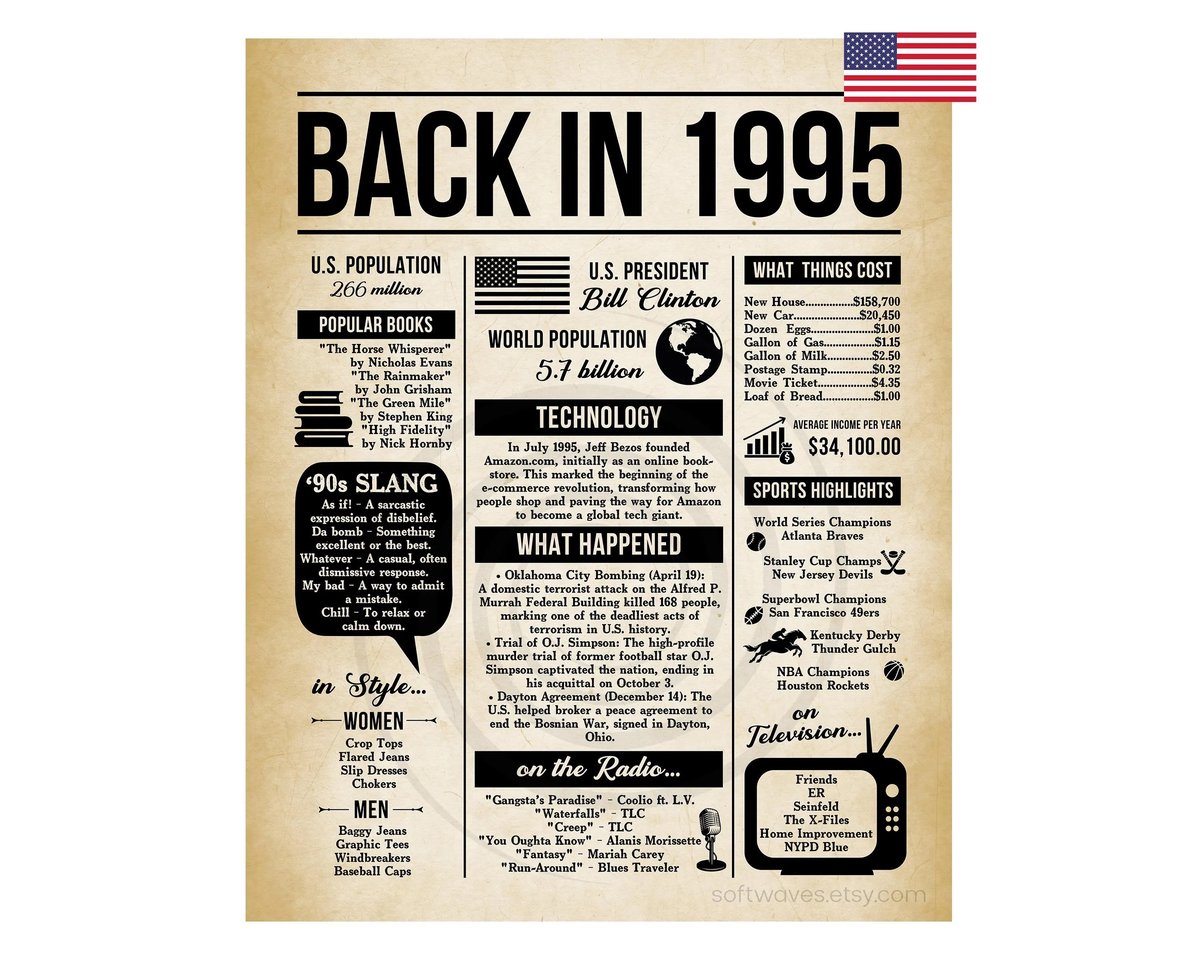
When we talk about “major historical events in 1995,” it’s easy to slip into a chronological list. But to truly grasp the year’s impact, we need to recognize how those seemingly disparate events converged to forge seismic shifts across geopolitical landscapes, technological adoption, and societal norms. From devastating natural disasters and acts of terror to groundbreaking scientific discoveries and moments of profound cultural reckoning, 1995 wasn’t just another year; it was a pivot point that fundamentally reshaped our world.
At a Glance: Understanding 1995’s Pivotal Shifts
- Geopolitical Reshaping: Witness the hardening of international resolve against conflict and terrorism, alongside shifts in global economic and political alliances.
- Human Cost of Conflict: Gain insight into the brutal realities of war and extremism, from Bosnia to Oklahoma City, and their lasting societal scars.
- Defining Moments in Justice and Society: Explore the cultural reverberations of landmark trials, civil rights mobilizations, and iconic sporting achievements.
- Scientific Frontiers Pushed: Discover how breakthroughs in physics, astronomy, and space exploration expanded our understanding of the universe and our place within it.
- Early Tech & Social Linkages: Understand how certain technological advancements, like the release of Java, began to hint at deeper societal transformations.
- Lessons for Future Preparedness: Reflect on how the crises and innovations of 1995 inform contemporary approaches to disaster response, security, and global cooperation.
Global Fault Lines: Geopolitical Tremors and Conflict’s Shadow
1995 was a year where the world grappled with the brutal aftermath of the Cold War, seeing old conflicts flare and new threats emerge. The concept of international intervention and humanitarian responsibility was tested in ways that redefined global policy.
The Enduring Scars of Conflict: Bosnia, Chechnya, and Beyond
The Bosnian War reached a horrifying crescendo in July with the Srebrenica massacre, where over 8,000 Bosniak men and boys were killed, marking the worst act of genocide in Europe since World War II. This atrocity shocked the world and directly led to NATO’s decisive intervention, Operation Deliberate Force, in August. This marked a significant shift, demonstrating a willingness by major powers to use military force to prevent humanitarian catastrophe, laying groundwork for future interventions.
Meanwhile, the First Chechen War saw Russian paramilitary troops commit the Samashki massacre in April, highlighting the brutal nature of internal conflicts and raising international human rights concerns. Elsewhere, the Cenepa War between Ecuador and Peru, a border conflict in the Amazon basin, concluded in February with a UN-brokered ceasefire, reminding the world of unresolved regional tensions.
Defining Borders and Powers: Quebec, WTO, and EU Expansion
The geopolitical landscape wasn’t just defined by conflict but by shifts in national identity and economic alliances. In October, Quebec held its second referendum on national sovereignty, with citizens narrowly voting (50.58% to 49.42%) to remain a province of Canada. This close call underscored persistent questions of self-determination within established nations.
Internationally, the World Trade Organization (WTO) officially went into effect on January 1st, establishing a global framework for trade and economic relations that continues to shape economies worldwide. This was swiftly followed by Austria, Finland, and Sweden joining the European Union, deepening European integration and expanding its influence. The Schengen Treaty also came into effect in March, progressively abolishing border checks at their common frontiers, a tangible step towards a more unified Europe. These moves significantly broadened economic and political spheres, altering power dynamics on a continental and global scale.
Terrorism’s Shadow Lengthens: Tokyo, Oklahoma City, and Early Warnings
1995 tragically revealed the escalating threat of domestic and international terrorism. In March, the Aum Shinrikyo cult carried out a sarin gas attack on the Tokyo subway, killing 13 and injuring thousands. This unprecedented use of a chemical weapon in a civilian setting sent shockwaves globally, prompting a reevaluation of counter-terrorism strategies against non-state actors.
Just a month later, on April 19th, the Alfred P. Murrah Federal Building in Oklahoma City was bombed, killing 168 people. This act of domestic terrorism, orchestrated by Timothy McVeigh and Terry Nichols, became the deadliest terrorist attack on U.S. soil until 9/11, profoundly impacting American society and national security policies.
Adding to the chilling narrative, a chemical fire in a Manila apartment complex in January led to the discovery of plans for “Project Bojinka,” a sophisticated mass-terrorist attack plot involving the bombing of multiple airliners. These events, occurring within months of each other, served as stark warnings of a new era of global insecurity.
Navigating Middle East Peace and Its Perils
The fragile peace process in the Middle East saw both hope and devastating setback. In September, Israeli Prime Minister Yitzhak Rabin and PLO Chairman Yasser Arafat signed the Interim Agreement on the West Bank and the Gaza Strip, a landmark step towards Palestinian self-rule. However, this progress was tragically cut short when, on November 4th, Prime Minister Rabin was assassinated by an Israeli extremist. His death sent a profound ripple through the region, underscoring the deep divisions and challenges to achieving lasting peace.
Shifting Societies: Cultural Milestones and Hard Realities
Beyond political machinations and conflicts, 1995 was a year marked by significant cultural moments, human achievements, and profound tragedies that captured global attention and reflected evolving societal values.
Justice, Race, and Public Spectacle: The O.J. Simpson Verdict and the Million Man March
Few events captivated American society in 1995 as intensely as the O.J. Simpson murder trial. After a lengthy and highly publicized process, Simpson was acquitted of the murders of Nicole Brown Simpson and Ronald Goldman on October 3rd. The verdict, delivered live to an estimated 100 million viewers, exposed deep racial divisions in American perceptions of justice, generating widespread debate and lasting social commentary.
Just weeks later, on October 16th, hundreds of thousands of African American men gathered in Washington, D.C., for the Million Man March. Organized by Louis Farrakhan, the event was a powerful demonstration of unity, atonement, and empowerment within the Black community, calling for greater self-reliance and civic engagement. It stood as a potent counter-narrative to the racial tensions exacerbated by the Simpson trial.
Sports Legends and Unbreakable Records
1995 also celebrated human endurance and athletic excellence. Cal Ripken, Jr. of the Baltimore Orioles played in his 2,131st consecutive game on September 6th, breaking Lou Gehrig’s 56-year-old “Iron Man” record. This achievement was a testament to dedication and consistency, captivating baseball fans and transcending the sport.
On the global stage, the Rugby World Cup final saw host nation South Africa defeat New Zealand in an iconic match on June 24th. The image of President Nelson Mandela, wearing a Springbok jersey, presenting the Webb-Ellis trophy to captain Francois Pienaar became a powerful symbol of national unity and reconciliation in post-apartheid South Africa.
Unforeseen Tragedies and Natural Disasters
The year was also punctuated by devastating natural disasters and human-made catastrophes. The Great Hanshin earthquake, a magnitude 7.3 event, struck near Kobe, Japan, on January 17th, causing widespread destruction and killing 6,434 people. This disaster highlighted vulnerabilities in urban infrastructure and spurred advancements in earthquake preparedness.
In May, the Russian town of Neftegorsk was almost entirely wiped out by a 7.6 magnitude earthquake, killing at least 2,000 people, roughly half its population. This less-publicized event underscored the sheer destructive power of nature. In June, the Sampoong Department Store in Seoul, South Korea, collapsed, killing 501 and injuring 937. This structural failure exposed issues of corruption and lax safety standards in rapid urban development.
Defining Moments in Space and Science
1995 pushed the boundaries of scientific understanding. Researchers at Fermilab announced the discovery of the top quark in March, confirming a fundamental piece of the Standard Model of particle physics. In June, the Bose–Einstein condensate was first created, a new state of matter predicted decades earlier, opening new avenues in quantum physics.
Space exploration also saw significant milestones. Astronaut Eileen Collins became the first woman to pilot the Space Shuttle during the STS-63 mission in February. This was quickly followed by Astronaut Norman Thagard becoming the first American to ride to space on a Russian launch vehicle in March, signaling increasing post-Cold War collaboration in space. In July, Comet Hale–Bopp, one of the brightest and longest-observed comets of the 20th century, was discovered, sparking public fascination with astronomy.
The Unfolding Digital Frontier: Beyond Core Events
While many of the most profound technological changes of 1995 are detailed elsewhere, some core events had undeniable societal ripples. The release of the first version of the Java programming language in May, for instance, wasn’t just a technical advancement; it provided a foundation for the web’s interactivity and cross-platform capabilities that would dramatically change how we interact with technology and each other. These shifts in how technology began to embed itself into daily life are crucial context for understanding the broader societal transformations of the era. For a deeper dive into these profound technological and societal changes, you can Discover 1995’s tech and society shifts.
Understanding the Ripple Effect: A Practical Lens
Looking back at 1995’s major historical events isn’t just an academic exercise. It offers concrete lessons and insights into how the world continues to evolve, demonstrating the interconnectedness of seemingly disparate occurrences.
How 1995’s Events Shaped Future Policy
- Counter-Terrorism: The Tokyo sarin attack and the Oklahoma City bombing directly influenced the development of modern counter-terrorism units, intelligence sharing, and legislation aimed at preventing chemical, biological, radiological, and nuclear (CBRN) attacks. Project Bojinka’s discovery underscored the need for enhanced airline security protocols.
- Humanitarian Intervention: Srebrenica was a turning point, strengthening the argument for a “Responsibility to Protect” (R2P) doctrine, where international communities have a duty to intervene to prevent mass atrocities. NATO’s subsequent actions in Bosnia set a precedent for future humanitarian-driven military operations.
- Disaster Preparedness: The Kobe earthquake, with its massive human and economic cost, forced a reassessment of urban planning, building codes, and emergency response systems globally, particularly in seismically active regions.
Recognizing the Early Warnings: Precursors to Future Trends
1995 offered early glimpses into trends that would define the coming decades:
- The Rise of Non-State Actors: The Tokyo sarin attack and the Oklahoma City bombing highlighted the growing threat from extremist groups and individuals, not just state actors, a trend that only intensified.
- Globalization’s Dual Nature: While the WTO’s establishment promised economic integration, the financial crisis in Mexico requiring a $20 billion U.S. loan underscored the vulnerabilities and interconnectedness of global economies.
- The Power of Media and Public Opinion: The O.J. Simpson trial and the Million Man March showed how mass media could shape public discourse and inflame or heal societal divides, a precursor to the age of pervasive social media.
Case Snippet: The Norwegian Rocket Incident – A Close Call
On January 25th, 1995, a Norwegian research rocket, the Black Brant XII, was launched, carrying instruments to study the aurora borealis. However, its trajectory was initially mistaken by Russian early warning systems for a U.S. Trident missile launch. For a brief, terrifying period, Russia considered a nuclear retaliatory strike, engaging its nuclear launch sequence. President Boris Yeltsin was alerted, and the “nuclear briefcase” was activated. The crisis was averted only when further analysis confirmed it was a research rocket. This incident serves as a stark reminder of the hair-trigger nature of Cold War-era systems and the constant, critical need for clear communication and de-escalation protocols in international relations, even after the Cold War’s official end.
Quick Answers: Your 1995 Event FAQs
Q: What was the most significant geopolitical event of 1995?
A: While many events were impactful, the Srebrenica massacre and subsequent NATO intervention in Bosnia arguably stand as the most significant geopolitical event. It fundamentally challenged the international community’s role in preventing genocide and led to a redefinition of humanitarian intervention.
Q: How did the O.J. Simpson trial impact American society?
A: The O.J. Simpson verdict profoundly exposed and exacerbated racial divisions within American society regarding justice, law enforcement, and media representation. It sparked nationwide conversations about race, celebrity, and the judicial system that continue to resonate today.
Q: Were there any major technological breakthroughs in 1995 with immediate social impact?
A: While 1995 saw many foundational tech advancements, the release of the Java programming language in May had an immense, albeit not always immediately visible, social impact. It quickly became the backbone for interactive web content and cross-platform applications, laying critical groundwork for the internet as we know it, thus connecting technology and society in new ways.
Q: What was the significance of the Million Man March?
A: The Million Man March was a landmark demonstration of African American unity, atonement, and empowerment. It brought hundreds of thousands of Black men to Washington, D.C., to register to vote, encourage community self-help, and emphasize personal responsibility, leaving a powerful cultural and political legacy.
Charting the Course: Key Takeaways from 1995
- Prioritize Preparedness: The scale of disasters like the Kobe earthquake and the tragic outcomes of terror attacks underscore the non-negotiable need for robust disaster response plans and comprehensive security measures.
- Recognize Interconnectedness: Whether it’s global trade frameworks like the WTO, cross-border conflicts, or the immediate threat of a misidentified rocket, 1995 showcased how events in one part of the world can have profound, rapid repercussions elsewhere.
- Value Societal Dialogue: The O.J. Simpson trial and the Million Man March remind us of the power of national conversations – however difficult – to confront deep-seated issues of race, justice, and identity.
- Embrace Vigilance: From early warnings of terror plots to close calls on the brink of nuclear conflict, 1995 taught us the critical importance of intelligence, diplomacy, and constant reevaluation of threats.
1995 wasn’t merely a collection of isolated incidents; it was a testament to a world in transition, a year that, in many ways, ushered in the complexities of the 21st century. By dissecting its major historical events, we gain not just a recounting of the past, but vital context for the challenges and opportunities that continue to shape our present and future.










