1988 was a fascinating crossroads, a year where the bold, brash energy of the 80s met the nascent whispers of a new decade. It was a time when the answer to “what was popular in 1988” wasn’t just about fleeting trends, but about significant shifts in how we consumed entertainment, engaged with technology, and even thought about societal issues. From the music charts dominated by both hair metal anthems and the quiet rise of hip-hop, to the silver screen where action heroes battled alongside critically acclaimed dramas, this year etched a unique chapter in cultural history. We saw the last echoes of one era and the clear emergence of another, shaping the films, songs, and trends that define its iconic status.
At a Glance: Decoding 1988’s Cultural Pulse
- Music’s Meltdown and Metamorphosis: The year CDs officially surpassed vinyl sales, marking a monumental shift while genres like hard rock, pop, and hip-hop battled for supremacy.
- Blockbuster Brilliance: Films delivered a potent mix of high-concept action, heartfelt comedies, and Oscar-winning dramas, solidifying iconic careers and establishing new cinematic benchmarks.
- TV and Tech Takeovers: New television formats and characters emerged, while home gaming consoles like the Sega Genesis began their ascent, capturing younger imaginations.
- Societal Echoes in Pop Culture: Major public health campaigns and political transitions subtly wove their way into the cultural fabric, reflecting a broader societal awareness.
- A Year of “Firsts” and “Lasts”: From groundbreaking tours to final album formats, 1988 was a year of significant transitions across multiple domains.
The Sonic Landscape of 1988: From Vinyl to Digital Dreams
In 1988, the music world was a vibrant, sometimes chaotic, melting pot. It was a year of colossal rock acts, burgeoning hip-hop, and the quiet revolution of digital audio taking hold. The biggest story brewing beneath the charts was a foundational shift: CDs officially outsold vinyl records for the first time. This wasn’t just a sales statistic; it heralded a new era of music consumption, portability, and sound quality for the masses, fundamentally altering the industry’s trajectory for decades to come.
On the rock front, titans reigned. Guns N’ Roses, still riding the wave of ‘Appetite for Destruction,’ topped the Billboard 200, while their follow-up ‘G N’ R Lies’ sold millions. Van Halen’s ‘OU812’ went quadruple platinum, spinning off four Top 40 hits and cementing their post-Roth era success. U2’s hybrid project ‘Rattle and Hum’ proved their global dominance, selling over 14 million copies. Even the supergroup Traveling Wilburys, with legends like Roy Orbison and George Harrison, dropped their debut, a poignant capstone given Orbison’s passing later that year. David Lee Roth, post-Van Halen, also proved his solo prowess with ‘Skyscraper’ selling over 2 million units.
Yet, 1988 wasn’t just about established heavy hitters. George Harrison landed “Got My Mind Set On You” at No.1, making him the last Beatle to achieve a U.S. chart-topper—a remarkable testament to his enduring appeal. And then there was Debbie Gibson, who became the youngest person ever to independently write, produce, and sing a number-one single with “Foolish Beat,” showcasing a new wave of young, self-sufficient pop artists.
Hip-hop, while not new, made significant strides into the mainstream, laying groundwork for the genre’s explosion in the coming years. And as for enduring legacies, Bob Dylan embarked on his “Never-Ending Tour” on June 7, 1988, a phenomenon that truly lives up to its name. While many embraced the future, some traditions saw their last hurrah; Fleetwood Mac’s ‘Greatest Hits’ was notably the final major album released in the 8-track format, a nostalgic nod to a bygone era. Even legendary albums had their limits, with Pink Floyd’s ‘Dark Side of the Moon’ finally leaving the Billboard charts after an astounding 741 consecutive weeks. The top song of the year, Steve Winwood’s “Roll With It,” perfectly encapsulated the smooth, soulful side of 80s pop, providing a counterpoint to the rock anthems.
As we look back, it’s clear that the popular music of 1988 wasn’t just a collection of songs; it was a snapshot of an industry in flux, a cultural barometer reflecting shifting tastes and technological leaps. To truly understand how these elements integrated into the broader tapestry of the decade’s cultural fabric, it’s worth taking a deeper dive into the wider context. Explore 1988’s cultural impact to connect these musical threads to the decade’s overarching narrative.
The Silver Screen’s Defining Moments: Big Laughs, Bigger Action
The film industry in 1988 was a powerhouse of both critical acclaim and box-office dominance, showcasing a diverse range of stories that captivated audiences at an average ticket price of just $4.00. This was a year where genre films not only entertained but often transcended their categories, leaving lasting impacts on cinema and popular culture.
Leading the charge was ‘Rain Man,’ which became the year’s highest-grossing film, pulling in over $350 million. More than just a commercial success, it swept the Academy Awards with four wins, including Best Picture and Best Actor for Dustin Hoffman, showcasing the power of character-driven drama. In stark contrast, yet equally defining, was ‘Die Hard.’ Grossing over $140 million, it not only invented the modern action movie template but also cemented Bruce Willis’s status as an A-list action star, launching a franchise that remains iconic today.
Eddie Murphy continued his reign as a comedic king with ‘Coming to America,’ a culturally significant hit that blended humor with social commentary. Arnold Schwarzenegger and Danny DeVito proved an unlikely but incredibly successful comedic duo in ‘Twins,’ which grossed over $200 million globally. Tim Burton’s ‘Beetlejuice’ became a gothic comedy phenomenon, grossing over $70 million and solidifying his unique directorial vision.
Beyond these giants, the year offered a rich cinematic tapestry. ‘Who Framed Roger Rabbit’ pushed the boundaries of animation and live-action integration, while ‘Big’ offered a heartwarming and humorous take on childhood innocence through the eyes of Tom Hanks. For younger audiences, ‘The Land Before Time,’ executive produced by Steven Spielberg and George Lucas, delivered a poignant and visually stunning animated adventure. This vibrant output even spurred a legendary figure, George Lucas, to address Congress, advocating for the protection of films from alteration, underscoring the growing importance of cinematic heritage.
Beyond the Marquee: TV, Tech, and Cultural Cornerstones
While music and film dominated the headlines, 1988’s cultural impact extended far into our living rooms and daily lives. Television was a crucial battleground for ideas and entertainment, where classic formats met bold new ventures. ‘Saturday Night Live,’ for instance, frequently pushed the boundaries of censorship, reflecting a changing societal dialogue around humor and political satire.
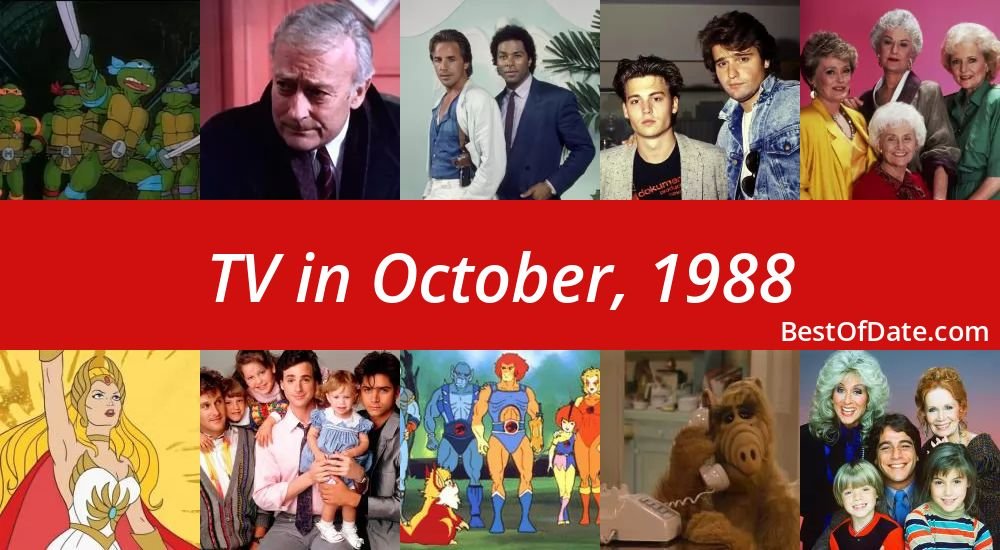
For younger audiences, new cultural touchstones emerged. The debut of the ‘Teenage Mutant Ninja Turtles’ cartoon series immediately engrossed children, launching a multi-media franchise that would dominate the next decade. Meanwhile, the unveiling of the Sega Genesis console signaled a new era in home gaming, setting the stage for console wars that would define the 90s.
Prime-time television also saw significant additions. ‘Roseanne’ debuted on ABC in the fall of 1988, quickly becoming a massive success by offering a raw, unvarnished, and often hilarious look at working-class American life. Similarly, ‘Murphy Brown,’ starring Candice Bergen, became a successful sitcom, tackling contemporary issues with wit and intelligence. Even animated characters crossed over into mainstream fame, with the California Raisins peaking in popularity, complete with a TV special and a hit single (“I Heard It Through the Grapevine”).
Beyond screens, broader societal shifts found their way into pop culture. The “Designated Driver” concept, for instance, became integrated into public awareness through a Harvard Medical School partnership, marking a growing emphasis on public health and safety. People Magazine named John F. Kennedy, Jr. its Sexiest Man Alive, capturing the public imagination, while Roseanne Barr’s undeniable presence made her arguably one of the most famous people in America. Even comic book fans made their mark, with DC Comics’ phone poll famously leading to Robin’s death in ‘Death In The Family’ by a slim margin, illustrating the nascent power of fan engagement. And for the youngest of viewers, Barney the Dinosaur made his debut in the direct-to-video series ‘Barney and the Backyard Gang,’ beginning a polarizing yet enduring children’s entertainment legacy.
The Unseen Currents: Sports, Politics, and the Dawn of Digital
1988 wasn’t just about entertainment; it was a year rich with defining moments in sports, significant political transitions, and the very early rumblings of a digital revolution that would reshape the world. These broader currents profoundly influenced the popular psyche, often subtly feeding into the cultural landscape.
In sports, the year delivered unforgettable drama. Kirk Gibson’s dramatic walk-off home run in Game 1 of the World Series became an instant classic, propelling the underdog Dodgers to a 4-1 series victory. The “Showtime”-era Lakers captured their third championship of the decade, defeating the Detroit Pistons in a thrilling seven-game NBA Finals. Super Bowl XXII saw the Washington Redskins dominate the Denver Broncos, with Doug Williams making history as the first African American starting quarterback to win a Super Bowl MVP. Internationally, table tennis became an Olympic sport, and Steffi Graf achieved the unprecedented “Golden Slam,” winning all four Grand Slams and an Olympic Gold. Even baseball’s history books were rewritten when Wrigley Field hosted its first night game on August 8, 1988, breaking a long-standing tradition.
Politically, the year marked the end of an era with Ronald Reagan leaving the White House after eight years. George H. W. Bush was elected president, defeating Michael Dukakis in a significant electoral victory. This transition also saw the Soviet Union introducing ‘glasnost,’ a policy allowing greater political expression, signaling the thawing of the Cold War and setting the stage for immense global shifts.
Technologically, the year gave us a glimpse into the future’s challenges. The Morris worm, one of the very first internet-distributed computer worms, launched on November 2, 1988, highlighting the vulnerabilities and growing importance of this nascent digital frontier. On a more practical note, the U.S. enacted the Video Privacy Protection Act, a direct response to the controversial leak of Robert Bork’s movie rental history during his Supreme Court nomination, underscoring evolving concerns about personal data. Even iconic branding took root, with Nike launching its now-famous “Just Do It” slogan, inspired by a chilling source—a murderer’s last words—that would become a global motivational mantra.
Quick Answers: Unpacking 1988’s Cultural DNA
Q: What was the biggest technological shift in 1988 that impacted popular culture?
A: The most significant shift was CDs outselling vinyl records for the first time, revolutionizing music consumption. Beyond that, the debut of the Sega Genesis hinted at the future of home gaming, and the Morris worm provided an early, stark lesson in internet security.
Q: How did 1988’s music scene set the stage for the 1990s?
A: 1988 was a bridge. It saw the continued dominance of 80s rock and pop giants (Guns N’ Roses, U2, Van Halen) but also the undeniable rise of hip-hop into the mainstream, which would become a defining genre of the 90s. The shift to CDs also prefigured the digital revolution that would further transform music in the next decade.
Q: What kind of movies defined 1988?
A: 1988 was defined by a strong mix of high-concept action (‘Die Hard’), critically acclaimed dramas (‘Rain Man’), and highly successful comedies (‘Coming to America,’ ‘Twins,’ ‘Beetlejuice’). It was a year for both star-making performances and innovative genre storytelling.
Q: Were there any major social or political trends reflected in 1988’s pop culture?
A: Absolutely. The integration of the “Designated Driver” concept into pop culture showed a growing public health awareness. The Video Privacy Protection Act highlighted concerns over data privacy. The ‘glasnost’ policy in the Soviet Union and Reagan’s departure also signaled a thawing of Cold War tensions that subtly influenced the cultural mood.
Q: What was unique about children’s entertainment in 1988?
A: 1988 was a pivotal year for children’s entertainment, introducing foundational franchises like the ‘Teenage Mutant Ninja Turtles’ cartoon and Barney the Dinosaur, which would become hugely popular in the years to follow. The arrival of the Sega Genesis also began to shape how younger audiences engaged with interactive media.
Decoding 1988’s Enduring Legacy
1988 truly was a year of transition, a vibrant blend of the familiar and the groundbreaking. The answer to “what was popular in 1988” isn’t just a list; it’s a testament to a culture grappling with technological leaps, evolving social norms, and a changing geopolitical landscape. From the ear-splitting guitars of Van Halen and the thought-provoking narratives of ‘Rain Man’ to the critical debates sparked by ‘Saturday Night Live’ and the very first internet worms, the popular culture of 1988 laid significant groundwork. It showed us the enduring power of storytelling, the transformative potential of technology, and the subtle ways our daily entertainment reflects and shapes the world around us, leaving an iconic imprint that continues to resonate today.










